

Is this method of food preservation actually safe?
6 years ago
Featured Answer
Sort by:Oldest
Comments (16)
 6 years ago
Related Discussions
Shocking Best way to preserve food
Comments (4)We seem to push the less healthy and less safe methods of vinegar flavoring pickles instead of fermenting them. WOW! Quite an accusation there! I can only hope you didn't intend it to sound so critical. We don't "push" anything here except safety. And we try to answer the questions posted. If they are about vinegar pickles then that is what gets discussed. If they are about fermenting then that is discussed. And there are many discussions here and in the past on fermenting. But there is no conspiracy on this forum to intentionally deprive others of the information. Many folks simply don't care for either the taste of or the work involved in fermenting and I would strongly dispute the claim that it is easier for beginners to do as it is a more complex process. And despite the claims made above, safety is of a much greater concern when it comes to fermentation than it is with vinegar simply because it is easy to do incorrectly; it isn't done "properly" as the author. He may not be aware of any current "documented cases of food-borne illness" from fermented foods but history is full of them. He might want to review some of the historical documents published on NCHFP about the historical practices of fermenting. Pressurized canning creates an anaerobic environment that increases the risk of deadly botulism, particularly with low-acid foods. Not if it too is done "properly". Don't get me wrong, I enjoy fermenting some things as do many others here but I sure would not go so far as to claim it is the "BEST" way to preserve food. This article, this author, has an agenda to push, one he has apparently devoted his life too studying. So much of what he says needs to be taken with at least a tsp. of salt. JMO Dave...See MoreGo-To Food Preservation Websites and Best Setups
Comments (2)Is there one website that is the arbiter of all things in safe food preservation? That would be NCHFP linked below. All approved resources are based on their testing, recommendations, and recipes. Otherwise, on the web, there are far more places to avoid than places to go and you'll find many discussions here about which are safe to use and which should be avoided. But you will need a copy of at least the Ball Blue Book - the beginners bible for canning. It is for sale anywhere canning supplies are sold. As to what you will need for canning it depends on if you plan to only do acidic foods like pickles and jams which only require BWB canning or vegetables other than tomatoes which require pressure canning. NCHFP covers all the equipment need and basic instructions on how to do both. Dave PS: welcome to the forum! :) Here is a link that might be useful: NCHFP...See MoreEggplant relish frm Small Batch Preserving-safe? + zuke/cuke sub?
Comments (5)reba, I'd feel safe with a USDA recipe from that recently. That full cup of oil is cut with THREE cups of strong acid. I think the magic Ellie works is simply that she worked on developing the recipes and had some recources to TEST them while doing so. The reason for caution about untested recipes isn't that they're known to cause illness, but that they haven't been demonstrated scientifcally to be 100% safe. The bar most home canners want for safety is a 100% guarantee that there won't be a food safety problem if they follow the recipes. (Botulism is such a horribly serious condition that few people want even the teeniest chance of contracting it---after all, home canning is associated with fun, health, and generous gifting.) It's comapratively easy to devise a safe recipe with nothing but fruit, sugar, and acid ingredients. Most combinations of those are going to test perfectly fine on the first try. But combinations involving low-acid ingredients, oil, and thickeners, while not necessarily always UNsafe, presumably often need more tries to find a combo that is both tasty and proven to be completely risk-free. There just aren't a lot of resources committed to developing and testing new canning recipes, presumably because the canning lobby is pretty small and not exactly wealthy and politically powerful. So other than the company that sells canning products, which puts out a few new recipes a year, and the occasional cash-strapped extension office, there aren't a lot of places testing recipes, TRYING to find safe ways of making stuff some of us want to make, like low-sugar or low-acid or fat-involving items. That's why I love Auntie Ellie. She had a cable show in Canada for a while; it was called PUT A LID ON IT (her book is a combination of two earlier books tied to the show and called PUT A LID ON IT 1 and 2), and many of the recipes apparently were created for the show. Presumably the advertising revenue is where the money came from for the testing, and there seems to have been some cooperation with Health Canada, as they are noted as having approved her method for making flavoured oils as a safe one. Clearly what we need is a new canning tv show! Ideally, a U.S. prime-time reality show---THINK of the $$ they would have for recipe development! Way more than some measly Canadian cable show. I foresee a new career for our Annie as celebrity host! ;-) Zabby...See MorePreserving the harvest. What's your favorite method?
Comments (12)The only persimmons we have are the native ones that grow wild here. We have those trees all over our property. I don't pick them until after we've had a hard freeze or two, which generally is November. They are strongly astringent before the first freeze, then they are much better after a freeze or two and even better if they've turned black. I do have to fight the coyotes for every single persimmon from the shorter trees because the coyotes will eat them while they're still green. I think that's why we have so many persimmon trees---the coyotes 'plant' the seeds after eating the fruit. Canned salsa is perfectly safe. Just follow the directions precisely and don't freelance or alter recipes. I made over 140 jars of Annie's Salsa last year and we give them to friends, family members, co-workers and neighbors, and no one has died yet. : ) So far, Annie's Salsa is my favorite of all the kinds I've ever made, and because you do add canned tomato paste to it, it has a texture/thickness much closer to that of commercially canned salsa. The folks who work with my DH love Annie's Salsa so much (we give it as Christmas gifts most years) that they almost cry if their gift bag doesn't have a jar of Annie's Salsa (some years I don't have 100+ jars of each thing I've canned, so they don't all get the same things in their Christmas gift bags). It amazes me that something so simple makes people so happy. Habanero Gold jelly is another great success story from the Harvest Forum. Frozen salsa can thin out a little when you thaw it because of the water content in the tomatoes. You can 'fix' it by stirring in a couple of tablespoons of tomato paste after you thaw it. You can sometimes prevent it by chopping up your tomatoes to make salsa for the freezer and then letting them sit in a colander or strainer over the sink for a couple of hours while all the excess moisture drains out. Most paste tomatoes are so thick and meaty that they don't give you watery salsa, but regular slicing tomatoes will because of their higher water content. For crisper pickles, use only pickling varieties of pickles, pick them younger and smaller, and pickle them as soon as you pick them--not a day or two later. Be sure you're cutting the ends off the cukes and discarding them. You also might want to try some of the recipes that call for the use of "pickle crisp" or for brining or fermenting. I freeze tomatoes all the time. I just put whole tomatoes in the freezer in ziplock bags, and then either use them for canning or cooking, but don't eat them raw half-thawed or fully thawed because I don't like the texture. For cooking, they taste perfectly fine. Most years I freeze gallons and gallons of bite-sized tomatoes after I've dehydrated them and we eat them for months and months. This year I haven't frozen much and haven't canned or dehydrated anything. Fires have kept me busy, so we've just given away all the extra tomatoes and peppers and stuff. I know I'll regret that this winter, but it is a priority to keep our firefighters well-fed and well-hydrated, so gardening/food preservation has taken a back seat to the work with the volunteer fire departments. I don't pickle okra, so cannot comment on it. Did you follow an approved recipe for pickled okra? If you did, I cannot imagine what went wrong. If your frozen okra turned black and slimey, I'm guessing you didn't blanch it first. If you don't blanch it, then the enzymes that cause ripening continue to be active and it can turn all slimey and black. I'd can salsa or any other tomato product with no fear whatsoever as long as I was using a safety-approved recipe. They all have enough vinegar, lime juice or lemon juice to give them the right (as in safe) pH. For Annie's Salsa, we liked it fine when made with vinegar, but then when I followed the safety-approved suggestion to substitute bottled lemon juice (bottled, not fresh-squeezed, because the bottled has a stable, tested, uniform pH level) and/or bottled lime juice, we liked the Annie's Salsa even more. We've canned hundreds of jars of Annie's Salsa during the last 5 or 6 years and haven't had a single jar go bad or a single person get sick from eating it. It is wise to be concerned about botulism, but with salsa properly canned, it isn't going to happen. I do hear a lot more about botulism with green beans or listeria with pickles, but that's because proper canning procedures weren't followed. For example, people will freelance and add some other vegetable to the green beans, which is a no-no, or they'll add oil or meat, also a no-no. Or, they'll use a boiling water bath canner for the beans, instead of a pressure canner, which is not safe. Lots of people make refrigerator pickles without canning them and that's where the listeria problem develops. Some old refrigerator pickle recipes that used to be considered safe have been found via modern-day testing to no longer be considered safe. So, as long as you're using current, tested, safety-approved methods, and not out-of-date, obsolete ones, you do not have to worry. It is good to be concerned about safe procedures, but not good to be paranoid. Canning isn't fun if you make yourself crazy with worry. : ) I freeze all my excess green beans. It is so much faster than canning and we like frozen better than canned. It probably depends on what you grew up with. I grew up on frozen green beans from the garden, so that's what I like. Some people grew up eating canned green beans, so that's what they like. Please don't be afraid of salsa. It is one of the simplest things to can. I believe salsa was the very first thing I canned on my own after I grew up and left home (used to make salsa with my dad when I was a kid) and I haven't had a single batch fail yet. The only thing I think is easier and more worryfree than salsa is jelly. Anyone can make jelly. I feel the same way about salsa though. With a safety-approved recipe that is followed exactly, anyone can make salsa. Even a caveman can do it....See More- 6 years ago
 6 years ago
 6 years ago
- 6 years ago
- 6 years agolast modified: 6 years ago
 6 years ago
 6 years ago
 6 years agolast modified: 6 years ago
- 6 years agolast modified: 6 years ago
- 6 years ago
- 6 years ago
- 6 years ago
- 6 years ago
- 6 years ago

Related Stories
PETSThe Crate Conundrum: A Safe Place for Your Pooch
Get ideas for a comfy den for your dog that works well with your space too
Full Story
KITCHEN DESIGNHow to Waste Less Food
Here are 9 relatively painless ways to throw away less food and stretch your grocery dollars
Full Story
LIFEConsider Avoiding These Plants to Help Keep Your Garden Fire-Safe
Plants that accumulate dead material, are high in oil or have low moisture content in leaves put some homes at risk
Full Story
FARM YOUR YARDHello, Honey: Beekeeping Anywhere for Fun, Food and Good Deeds
We need pollinators, and they increasingly need us too. Here, why and how to be a bee friend
Full Story
FARM YOUR YARD6 Things to Know Before You Start Growing Your Own Food
It takes time and practice, but growing edibles in the suburbs or city is possible with smart prep and patience
Full Story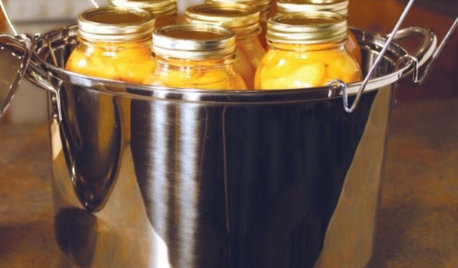
PRODUCT PICKSGuest Picks: Canning, Preserving, Steaming, Dehydrating
20 products to help make fall produce last through the season and beyond
Full Story
VINTAGE STYLEKitchen of the Week: Preservation Instincts Create Vintage Modern Style
Original features in this 1908 kitchen join new custom accents for a look that bridges the years
Full Story
HOUSEKEEPING9 Kitchen Organizing Tips to Help You Waste Less Food
Follow these simple steps to maximize your budget and turn your good intentions into good habits
Full Story
ARCHITECTUREHouzz Tour: Preserving an Untouched Hollingsworth Gem
Heritage status and an architecture-loving homeowner keep a midcentury modern ranch’s spirit alive
Full Story
HOUSEKEEPINGYour Guide to a Sparkling Clean Kitchen
Tackle food messes with this comprehensive collection of targeted and tested cleaning methods
Full Story
KatieC