

50 Old English Words Ye Should Definitely Be Using More Often !
6 years ago
Featured Answer
Sort by:Oldest
Comments (7)
 6 years ago
- 6 years ago
Related Discussions
How Often Should I Fertilize a Meyer Lemon?
Comments (66)I think the comment about a new thread was directed at hottina44 and their question about indoor lighting. That was off topic. alex_g76, Some of those metals are perhaps toxic to mammals when ingested in too high a dose, but that is not the same as with plants. The plants will only take up what they need and leave the rest. Besides, if you look at the actual amounts of metals it is very tiny. Most are MICRO nutrients anyway, and are only needed by plants in very tiny amounts. They might be build up in the potting soil over time, but potted plants should be re-potted with fresh soil every few years anyway, long before the micro-nutrients will build up to any noticeable levels. So you need not worry about that imo. Btw, it's not commonly known, but almost all organic fertilizers are made for and will work best in In-Ground plantings. Organic fertilizers are made of raw ingredients, such as blood meal and bone meal, etc. Those components cannot be used by the plant as food itself. The fertilizer relies on the micro-organisms in the soil to ingest the raw ingredients and convert them to chemicals (yep, chemicals) that the plant can then uptake into it's roots. If those organic fertilizers are used in relatively sterile potting medium, not much happens. They pretty much just sit there. And your plant can starve while there is lots of food sitting right there. The components (nitrogen, potassium, phosphorus [NPK] and other macro and micro- nutrients) that the soil organisms produce from the raw ingredients in the organic fertilizer, is the same at a molecular level as what you find in a standard non-organic fertilizer. The benefits of organic fertilizers in the soil is that they feed and therefore increase the soil micro-organisms, which is great for the soil structure and the roots of the plants. Unfortunately this dynamic is very, very hard to reproduce in potted container plants. Therefore I always recommend standard non-organic fertilizers in container plantings, preferably a liquid type, or a slow-release pelleted type, such as Osmocote. Also, as a side note; the metals and minerals in fertilizers cannot by law be called “organic” because the law states that a component has to have Carbon in it and be derived from a once living source to be labeled “organic” Of course these items do not contain carbon and have never been alive. So if you see a fertilizer labeled “organic and natural”, the word “natural” is in reference to the mineral and metal ingredients only. In reading the posts on the thread that bmelz linked, about fertilizing in containers with organics, it does look like some have done it with success but do note that most of what they are talking about is seasonal vegetables and some short lived ornamental plants. Those are often re-potted annually with fresh mix and compost. That works quite well as there is a lot of micro-organisms in compost and manure. But that type of mix also breaks down very quickly, usually be the end of a growing season. When mix breaks down the speed of water drainage slows down a lot. If you're re-potting every spring that's no big deal and the old soil mix just goes back on the compost pile and new mix is made. But with a long lived plant like a citrus tree that soil break down is problematic. Citrus are very sensitive to soggy soil. Most will say they're sensitive to over-watering, but it's not really the water that's the problem, it's the lack of oxygen in an overly saturated, soggy soil. Plant roots need both water and oxygen, so in a long lived plant like citrus using an open and airy mix that lasts a long time and doesn't break down fast is very important. Unfortunately the components of those kinds of mixes, such as Al's Gritty mix and the 5-1-1 mix are pretty sterile. Hence the recommendations of standard non-organic fertilizers. Now if one was to re-pot their citrus trees annually or semi-annually with a compost based mix, then I do believe an organic fertilizer would work. But for myself, I would find that way too much work....See MoreWords, Words, Words...
Comments (49)Wood - Glad you are enjoying the wonderful "Child/Forest" book. My library has the prettiest edition of this, and I donated the other two in the trilogy, but have a strong feeling they went into the FoL book sale instead of on the shelves which I had intended to make up the trilogy for other people. As for the adding of the "-ie" sound to words in English, that is quite common even now. "Brekkies" - breakfast "Sarnies" - sandwiches "Prezzies" - presents/gifts Also, there used to be a penchant for reducing some names to "-az" such as: Sharon --> Shaz or Shazzer Barry --> Baz or Bazzer Des --> Dezzie This might just be my group of friends though... We had a mixed bunch (social class speaking) and I think this shortening was a lower class trend... I could be mistaken as it may vary in other regions......See MoreWhat is a McMansion? Tell Us In 25 Words or Less
Comments (98)In Los Angeles we went through the overbuilt cycle a number of years ago and the problem was that while the new homeowners could afford the house they were not prepared for the maintenance costs. So my guess is that in several years McMansion will mean suburban blight. When you are a homeowner and realize that maintenance is charged based on square footage having a large house, especially if you are only using a part of it, is very costly. Poor insulation leads to higher utility costs. All the decorative roof peaks and valleys that might leak…and those post tension foundations where a plumbing repair that could be quickly and easily handled on a raised foundation may end up costing thousands......See MoreHow often should I water my Peace Lily & what else can I do for it?
Comments (10)That PLs are usually found in riparian settings (streamside or in boggy environments) where they naturally occur is absolutely no cause to believe they will do well in boggy soils. They adapt well to various types of water culture, and perform very well in fast-draining, well-aerated soils, but should be expected to perform poorly when asked to make the transition in soils from lengthy periods of significant saturation to times when the soil has dried down and become reasonably well-aerated and more hospitable to the plant. The reason, as has been pointed out, is the fact that the plant will grow roots structured to allow the plant to deal with one or the other set of conditions, but not both in a cycle that starts with a long period of saturation transitioning to the more appropriate moist (rather than wet or soggy) medium. How well a soil drains is determined almost exclusively by the size of the particles it is comprised of. While the arrangement you have with the pot sitting above the effluent in the collection saucer is commendable, it has no impact on how well the soil drains or its level of aeration. 1. How often should I water? Intervals will vary with season, light load, amount of air movement, ....... Unless you use a soil that allows watering on a schedule as opposed to on an 'as needed' basis, and yours doesn't, you should absolutely stick to watering only when the plant gets dry to the point it needs water. In fact, in spite of the stress it would create, it would actually be better if you waited for this plant to exhibit signs of the first stage of wilt before you water than to water before the plant need it. I'm not advocating using drought stress indicators to signal the plants need for water - just trying to establish a feel for the idea that a little under-watering is less limiting than over-watering. For this plant, marking your watering date on the calendar and OCCASIONALLY waiting for the first signs of wilt to establish appropriate intervals between waterings is a reasonable strategy. If you'd rather, buy a wooden birch dowel rod (1/4 or 5/16") from a hardware or big box store. Cut into appropriate length pieces for your plants, sharpen the ends with a pencil sharpener, and use the pieces stuck deep into the pot as 'tells' that will let you know the moisture conditions deep in the pot. If they come out wet or stained dark from wet soil, withhold water until they come out clean. MUCH better than "watering gauges/meters". 2. What else can I do for this plant? The answer to that could easily fill a book. You could try reading this (click on link). I read someplace that liquid fertilizer once a month is good too. Yay or nay on that? To be meaningful, any advice regarding frequency of fertilizer applications has to take into consideration your soil choice and watering habits. For example, if you water in small sips to avoid your MG soil remaining soggy too long, a one month interval at the regular rate is an automatic problem for more than one reason, and the type of fertilizer as well as its NPK %s both play a part in determining the criticality of the issue. If you're using a soil that allows you to water at will w/o the need to fear consequences centering on the fact the soil will be saturated for a length of time measured in weeks, you can actually fertilize at low doses every time you water, which is how I choose to fertilize all my plants during the winter. One type of soil (those that are very water-retentive, like yours) make it almost impossible to maintain control over effective nutritional supplementation; other types of soil that support little or no saturation make establishing and maintaining a sound supplementation program monkey easy. Al...See More- 6 years agolast modified: 6 years ago
- 6 years ago
- 6 years ago
- 6 years ago

Related Stories
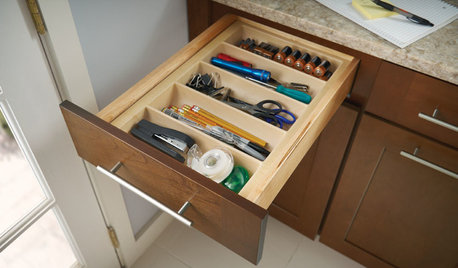
LIFEYou Said It: “Call It the ‘Really Useful Stuff’ Drawer” and More
Houzz design advice, inspiration and observations that struck a chord this week
Full Story
HOUSEKEEPINGThree More Magic Words to Help the Housekeeping Get Done
As a follow-up to "How about now?" these three words can help you check more chores off your list
Full Story
TRADITIONAL ARCHITECTUREHouzz Tour: Taking ‘Ye Olde’ Out of a Nantucket Shingle-Style Home
Vintage and modern pieces mix it up in a vacation house reconfigured to host casual gatherings of family and friends
Full Story
DECORATING GUIDESHow to Use Mirrors for More Light and Style
A well-placed mirror gives a room sparkle, surprise and a bright, open feeling. Here are 15 clever ideas to try in your own house
Full Story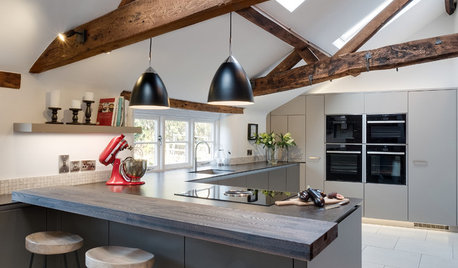
KITCHEN MAKEOVERSOld Meets New in a Restored English Farmhouse Kitchen
Traditional features mix harmoniously with modern cabinets in this 18th-century kitchen that even has an old well
Full Story
DECORATING GUIDESMore Is More: The 10 Tenets of Maximalist Style
Ready to join the school of over-the-top design? Learn how to embrace excess in your interiors
Full Story
DECORATING GUIDESA Handy Guide to English Antiques
Buying and owning old furniture is more fun and interesting when you know a little history
Full Story
EARTH DAY5 Ideas for a More Earth-Friendly Garden
Consider increasing the size of garden beds, filtering rainwater and using plants to reduce energy use
Full Story
REMODELING GUIDESWhat Lies Beneath That Old Linoleum Kitchen Floor?
Antique wood subfloors are finding new life as finished floors. Learn more about exposing, restoring and enjoying them
Full Story
MORE ROOMS8 Ways to Enjoy a Round of English Pub Style
Escape from everyday cares right at home, with a cozy and warm space modeled after a beloved British tradition
Full Story
annpanagain