

Anyone know how to do this?
7 years ago
Featured Answer
Sort by:Oldest
Comments (47)
 7 years agolast modified: 7 years agocaflowerluver thanked littlebug zone 5 Missouri
- 7 years ago
Related Discussions
OK, how do I do this?
Comments (8)"Any ideas on maybe a three season plant that could be used to add some structure to the beds" Pat_tea, I don't know what zone you are in but it's likely warmer than my zone 3. I have a curved path through a perennial bed and have used Dusty Miller with Munstead Lavender behind and between on one side of the path and the Dusty Miller with perennial flax on the other side. I'd have used all lavender but the flax is hardier and I may have to replace all the lavender with flax later if some don't survive the winter. I've been quite pleased with this and would post pics except I've been too busy gardening this year to deal with the pics I've taken. The Dusty Miller is not successfully perennial here but certainly looks very good for 3 seasons. Might be perennial in your zone. Perennial flax is really only 2 seasons as needs deadheading in August otherwise one has a million of them. Lavender is still looking reasonably good here and I've been lucky with it as it's not reliably hardy in this zone. Another plant I like along pathways is Walkers Low Catmint. I first saw this on Freda's blog and loved it. See the link below and other catmint links there. I've propagated my WL but still don't have enough plants to edge the path. Will take more slips in the spring to make more plants and eventually may do the same as Freda. OK, back to the original question as to how to place plants evenly on both sides. What I did was to measure to find the center of each side of the path. My path curves so these are not equal measurements. Then I found the middle point of each side and marked it. Then I took a stake which was approximately the distance I wanted the plants spaced which was *about* 18" and marked out from the center. I then fiddled with it until it worked out fairly well at each end. I'm not a perfectionist in my garden so close enough WAS close enough. This particular perennial bed is somewhat raised from the lawn so I couldn't go too close to the end of the path but IMO it looks good. Hope that helps. :) Here is a link that might be useful: Have I Told You Lately That I Love Catmint?...See MoreAnyone know how to do somatic hybridization?
Comments (15)MacDaddy, "My idea was to cross very cold hardy runner called P. Nuda with P. Henon, P. edulis, and P. Vivax. The idea being to get a very hardy giant bamboo." Sounds like a good idea. "Somatic hybrids don't always work out. I got the idea myself when I found out about polyployed daylilies. The main problem with cross species hybrids like mules is they are infertile because the chromosome numbers and kinds don't match. That wouldn't be a problem if one could only join the nucleuses of two species somatically." As a kid I ran into a similar problem with zinnias. Crossing diploids with tetraploids was difficult and yielded sterile triploids. I had some colchicine, but was unable to double a triploid to a fertile hexaploid. I think it should have been possible. But of course, you can't just keep solving sterility problems by doubling the chromosomes. You get an "unhealthy" large number of chromosomes in your genetic product. All living things seem to have a chromosome number that falls within a relatively limited range. There must be some kind of "survivability barrier" that prevents inordinately high chromosome numbers. As I see it, somatic hybridization is just a kind of "low tech" genetic engineering. The "big boys" just insert a microprobe into a cell and squirt in the genetic material they want there. I always wanted to cross zinnias and marigolds because zinnias had more colors and marigolds had better foliage. I tried a lot of cross pollinations, both ways, with no success. Maybe we both need microscopes and some of those micropipettes. Although many people would be very nervous, probably rightfully so, if a bunch of amateur genetic engineers learned the tricks of the trade. But lay people are starting to learn to do tissue cultures. -- Burton --...See MoreHow do I remove failed program?
Comments (2)AVG has a removal tool just to remove their programs I would suggest first trying that. This is a link to Corrine's blog where she has listed the various links to removal tools, follow the link for your AVG product. Antivirus Product Removal Tools If you still have problems there is a very good program that is free called REVO uninstaller many have used it with good success. Revo Uninstaller...See MoreDoes anyone know how Vique is doing?
Comments (0)I've been thinking of her this week. She was nervous about Tuesday....See More- 7 years ago
- 7 years ago
- 7 years ago
- 7 years ago
- 7 years ago


Related Stories
LIGHTINGWhat to Know About Switching to LED Lightbulbs
If you’ve been thinking about changing over to LEDs but aren't sure how to do it and which to buy, this story is for you
Full Story
KITCHEN SINKSEverything You Need to Know About Farmhouse Sinks
They’re charming, homey, durable, elegant, functional and nostalgic. Those are just a few of the reasons they’re so popular
Full Story
HOUSEKEEPING10 Things Neat Freaks Know to Be True
Do you err on the incredibly tidy side? Then you probably already live by these nuggets of neat wisdom
Full Story
GARDENING AND LANDSCAPING28 Outdoor Projects Everyone Should Know About
Learn how to refinish your wood deck, make a garden fountain, add a shed and more
Full Story
MATERIALSInsulation Basics: What to Know About Spray Foam
Learn what exactly spray foam is, the pros and cons of using it and why you shouldn’t mess around with installation
Full Story
GREAT HOME PROJECTSWhat to Know Before Refinishing Your Floors
Learn costs and other important details about renewing a hardwood floor — and the one mistake you should avoid
Full Story
ANTIQUESMust-Know Furniture: The Hoosier Cabinet
This freestanding cabinet handled all the kitchen bustle in the early 20th century, earning it the motto ‘Hoosier saves steps’
Full Story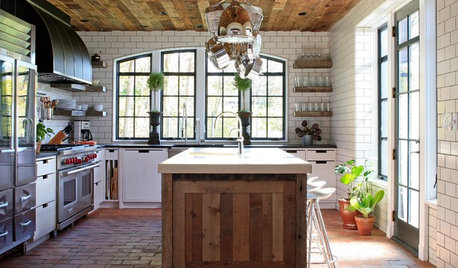
KITCHEN DESIGNWhat to Know About Using Reclaimed Wood in the Kitchen
One-of-a-kind lumber warms a room and adds age and interest
Full Story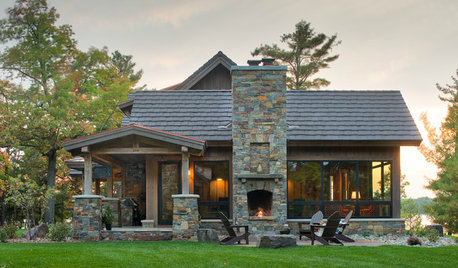
ROOFSWhat to Know Before Selecting Your Home’s Roofing Material
Understanding the various roofing options can help you make an informed choice
Full Story
DECORATING GUIDES7 Things to Know About Foo Dogs
These Chinese decorative statues have a lengthy history and are powerfully symbolic
Full StorySponsored

Virginia's Top Rated Kitchen & Bath Renovation Firm I Best of Houzz



Olychick