

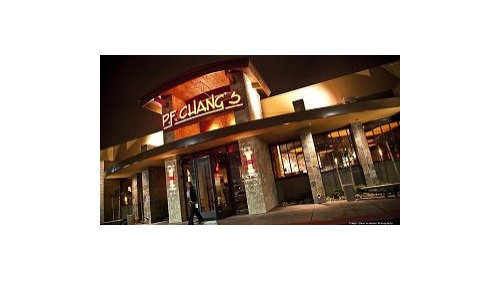
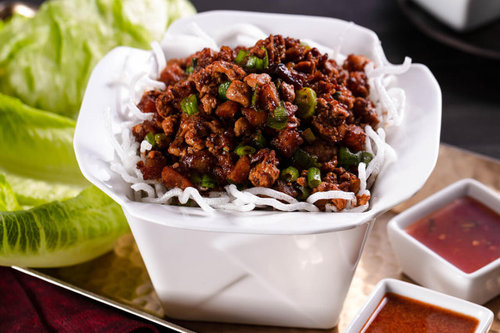
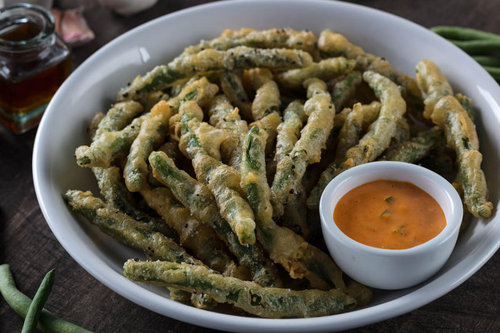
Chang's lettuce wraps were delightful, my first time to try.
6 years ago
Featured Answer
Sort by:Oldest
Comments (27)
 6 years ago
 6 years ago
Related Discussions
My First Winter - Bubble Wrap, heat...?
Comments (51)Ah, I understand. Your GH is also a sort of conservatory, so appearance and the ability to see out of it is also a consideration. But if it's in full sun, you may need to add some shade plantings in your garden, perhaps some that would add an asthetic value along with shade. If you have the space to fit them, you might also benefit by a pair of outdoor (wet location rated) ceiling fans, to mount under the roof vents. The pair in my GH operate with very little electricity, are silent and do a great job of keeping the air moving. Not very expensive either; less than $100.00 each at the local home center. (Hunter brand) BTW: Operating 2 ceiling fans, each turning in an opposite direction really DOES create a circular pattern of air movement, front to back, top to bottom....See Moretest results from trying different growing media for lettuce
Comments (3)Thanks for sharing the results of your experiment. You're right that this would have a hard time passing a formal statistical significance inquiry, but I think it is some basic very important info. Any theory on why the trend seems to favor RR? Looking at your raw data and trusting that you forced randomized the placement of the plants (a very important part of any trial), I would guess that your lettuce is just very thirsty and I bet the RR's were the most moist, followed by rockwool and STG being dryest. The problem in generalizing any of this (and recognizing you did a great job of noting the precise growing conditions), is that the moment one specific factor changes all could reverse. It could be something as simple as water level, or more complicated like how much of a breeze is running by the leaves which will dramatically impact water evaporation from the leaves with a corresponding change in uptake requirements. But the power of the analysis, at least for you; is if that is your growing set up, you have a great handle and a baseline to improve it. Again - thanks for sharing. There are lots of us that don't have much to add but really appreciate learning from discussion just like yours. BTW "I have a dream" that "someday" anyone not following the herd won't have to explain we are 'dorky' or 'geeky' just because we want to do a better job at whatever we do. Looking for fertilizers and just trying to pin down dorky things like purity or geeky things like what the recipe is for bulk commodities being sold as tonics and such...is getting tedious ;-(...See MoreMy first time from seed?
Comments (5)I'm not saying this to discourage you from raising them from seed, but just so you will know....you can buy Cherokee Purple transplants in stores. I see them at Lowe's, Home Depot and Wal-Mart, as well as at smaller, local ma-and-pa type nurseries, every year. So, if you think you have to raise CP from seed in order to grow them...well, you don't. However, I prefer to raise tomato plants from seed rather than buying them at stores. I think I get healthier, happier, stronger plants that produce better for me when I grow my own. Mostly that is because I am able to start the seeds at exactly the right time in order to have them the size I want for the approximate planting date I have in mind. I've grown CP and the closely-related Indian Stripe from seed for over a decade and you have to be careful about your seed source. Some of the seed available commercially just isn't the "real" CP. Jay was the first person here on this forum to mention this years ago, so I started paying attention to the seeds I was using, and sure enough, I found I agreed with him. I changed the seed supplier I was using, and found to my delight that the seeds I purchased reminded me of the "old" CP I grew in the early to mid-2000s much more than the plants I'd grown from seeds purchased from other companies in recent years. The seed supplier whose seed produced the real CP for me is Gleckler Seedmen, and I'll link them below. I'm not saying all other CP seed will give you a lesser plant with smaller, less flavorful fruit, but that is what I found in several instances with seeds purchased from several other sources. For a starting mix, you can use any sterile soil-less seed-starting medium. I've used several kinds and find that any variety purchased off the shelf has worked for me. You can spend a lot or a little on a growing medium, and I don't necessarily think that the more expensive mixes give you any better result than the less expensive ones do when you are starting annuals from seed. I usually just buy the Jiffy sterile soil-less seed starting mix because that is what is on the store shelves when I am ready to plant. You can use whatever size container works for you. Starting small and potting up works, but you also can start with a larger container. It is just easier to manage smaller containers if you are starting lots of plants from seed. I usually start everything in 72-cell flats, planting multiple seeds per cell, and then pot up to individual containers once the seedlings have a couple of true leaves. When I pot up, I usually put two seedlings in each small pot (I use paper cups if I pot up while the plants are really small or larger plastic Solo cups if I am behind and don't get around to potting up until the plants are larger). As long as you have holes poked into the bottoms of the cups for drainage, any of them will work. Plain old shop lights work just fine. I've raised thousands of seedlings under them with no problem whatsoever. Just remember that no matter what sort of lights you use, the seedlings have to be hardened off to outdoor conditions gradually. I start with one hour the first day, two hours the second day, three hours the third day, etc. Remember that plants raised indoors are not used to direct sunlight or direct wind, so suddenly exposing them to a full day of sunlight and spring wind often will kill them that very first day. Proper hardening off is a vital part of the process you cannot ignore. A lot of us make our own seed-starting shelves by suspending a shop light from chains on a shelving unit. My first one was just three plastic shelves and it cost less than $10.00. Each shelf was lit by one shop light that had two bulbs. My current unit has 5 shelves and each shelf is lit by two shop light fixtures, each one containing two fluorescent tubes. It is easy to start small your first year and, then, if you find you enjoy raising plants from seed, you always can invest more money in a larger shelving system and more lights as the years go on. I went pretty slowly from using the 3 shelf unit for a couple of years to a 4-shelf unit for a couple of years and then to the current 5-shelf unit. Actually, my first couple of years of raising plants from seed indoors, I just raised them on an east-facing window sill because that was the only place we had direct sun. The house we lived in then was on a mostly shady lot, so I had to work with what I had. The plants got a little leggy, but not unbearably so. The seed company I'm linking below has seed that is true to type. The Cherokee Purple seeds I purchased from them produced plants that produced fruit that was larger and true to type and taste. I had become increasingly frustrated with growing CP from seed because the seed from many suppliers is producing smaller fruit that was not/is not the same CP I first grew in the early to mid-2000s, so I have been very happy to have found seed that produces the Cherokee Purple that I remember. It sounds nitpicky, but if I am going to grow and eat CP, I want it to be the best CP available and the one that is the most true to what CP is supposed to be. Victory Seed is another company whose seed usually is true to type, and so is Southern Exposure Seed Exchange. I've gotten really picky about who I buy tomato seed from because I'm seeing a lot of heirloom tomato seeds producing fruit that is not the fruit it is supposed to be, and that is very frustrating. I think too much seed is being produced without the proper protection and some seed is cross-pollinating and giving us plants that under-perform. I used to start seedlings in very small containers and progressively move them up every couple of weeks to bigger containers. One year I just decided to skip that step and went from the 72-cell flats to 20-oz. plastic cups and it worked just fine, so I no longer bother progressively potting up to bigger containers. I get ripe tomatoes about the same time every year regardless of how many times the seedlings were (or weren't) potted up while growing indoors. The important thing is just to not start your plants too early. If you start them too early and they grow well, you likely will have to pot them up to larger pots to avoid having them become rootbound. If you start your tomato seeds 6-8 weeks before your anticipated transplanting date, your plants will be just the right size at planting time and you shouldn't have to worry about potting them up more than once. If you grow peppers, by the way, you can start them at the same time you start tomato seeds, but you need to hold them indoors a couple more weeks because they do not tolerate spring''s cooler soil temperatures and air temperatures as well as tomato plants do. I like to put 7 or 8 week old tomato plants into the ground, but will hold my peppers in pots (and this may mean I have to pot them up twice to bigger paper or plastic cups or pots) until the night-time temperatures are sufficiently warm. So, often, my pepper plants might be 10-12 weeks old when they go into the ground. That sounds too old, but from plants put into the ground in early May, we're usually harvesting jalapenos before the end of June. I like to have the first big harvest of paste tomatoes and peppers ready together in June, along with onions, so I can make and can oodles and oodles of salsa from late June through late July. Some years it all works out that way, and other years the tomatoes are ready before jalapenos and onions are. I think you'll really enjoy starting plants from seed. I noticed how much thought you put into building your raised beds and how well they turned out, so I know that you can do this. The big secret about raising plants from seed is that it is pretty easy. Annuals, in particular are a cinch, and once you understand the stratification needs of biennials and perennials, they aren't as hard as you'd think. Once you start raising your own seedlings, you'll have so much fun you won't want to stop. The first couple of years after we moved here is where my seed-starting activity suddenly exploded and got out of control because I finally had enough full-sun areas to plant as much as I wanted. So I did! As soon as I moved one flat of plants outside and had an empty space on the light shelf, I started more seeds. I kept doing it until the weather really was too hot for me to be transplanting young plants into the ground. It amazes me how many flowers, veggies and herbs I can cram into my raised beds, and growing plants from seeds makes it possible to grow lots of interesting plants that you rarely see in stores. Dawn Here is a link that might be useful: CP at Gleckler Seedmen...See MoreMy first try at canadian bacon
Comments (36)Chase, you need the pink salt and/or stuff like it in cured and semi-cured sausages/hams/bacon/etc. Things that you hang to air dry, stuff that will be kept in the rafters all year. So, today's home smoker needn't worry about it too much, I don't think. Except I'd be leery of omitting it from a recipe that had it in. Morton sells a cure mix. If you go to their website there is a smattering of info on it. Sorry, just re-read your post and see that I'm not answering it, heh. No, pink salt is not pink...that is a reference to the fact that it maintains pink in the meat it is curing. So you don't get the grey sausage or bacon. Except when it (the salt) is artificially dyed pink so you don't fill your salt shaker with it I guess. Pink salt is a mixture of table salt and sodium nitrate or nitrite. Nitrite is most common. Its also called Prague powder, probably only in the trade tho. Oh, and for those worried about amount of nitrates/nitrites, pink salt is 94-95% salt and 4-5% nitrites. So very little goes into a batch of whatever. Sodium nitrate and or nitrite is water soluble so any plant grown in soil that uptakes a lot of water has naturally occurring nitrites/nitrates. Lettuce is one. As I said earlier, your Caesar salad probably contains more nitrates/nitrites than your bacon and eggs, no matter who makes the bacon. Celery is another veggie with lots of nitrates/nitrites. Of course depending on where it is grown...the soil it is grown in specifically. Man, I ramble on and on when its late and I'm tired,eh? Here is a link that might be useful: This is what I use....See More- 6 years ago
 6 years ago
 6 years ago
 6 years ago
 6 years agolast modified: 6 years ago
- 6 years ago
 6 years ago
- 6 years ago
 6 years agolast modified: 6 years ago
- 6 years agolast modified: 6 years ago
- 6 years ago
 6 years agolast modified: 6 years ago
- 6 years ago
- 6 years agolast modified: 6 years ago
- 6 years ago
- 6 years ago
 6 years agolast modified: 6 years ago
- 6 years ago
- 6 years agolast modified: 6 years ago
 6 years ago
- 6 years ago
 6 years ago
- 6 years ago
 6 years ago

Related Stories

ARCHITECTUREGet a Perfectly Built Home the First Time Around
Yes, you can have a new build you’ll love right off the bat. Consider learning about yourself a bonus
Full Story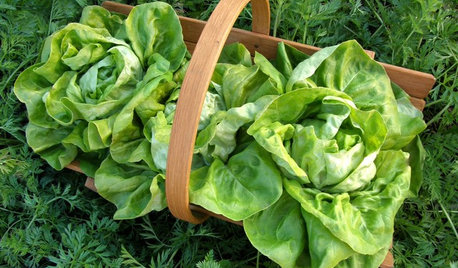
GARDENING GUIDES10 Easy Edibles for First-Time Gardeners
Focus on these beginner-friendly vegetables, herbs, beans and salad greens to start a home farm with little fuss
Full Story
LIFEAt-Home Cures for Autumn’s Time Change Blues
The long, dark evenings of late fall and winter can be daunting. Lighten them up with these tips
Full Story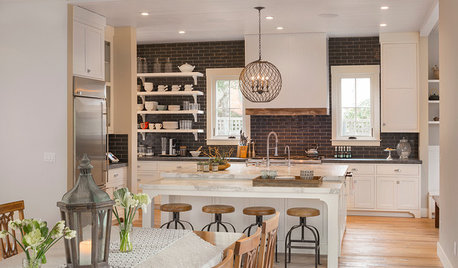
TRANSITIONAL HOMESHouzz Tour: Change of Heart Prompts Change of House
They were set for a New England look, but a weekend in the California wine country changed everything
Full Story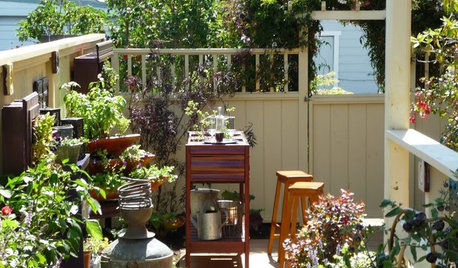
GARDENING GUIDES15 Ideas to Try in Your Garden This Year
These gardening stories were tops among Houzz readers. Which ideas might you try this year?
Full Story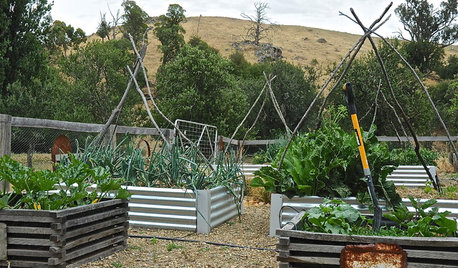
FARM YOUR YARD9 Ways to Change Up Your Vegetable Garden for the Coming Season
Try something new for edible plantings that are more productive than ever
Full Story
EDIBLE GARDENSWhy Grow Quince? For Beauty, Fragrance and Old-Time Flavor
Delightfully perfumed fruit and lovely spring blossoms make this apple and pear cousin worth a spot in the garden
Full Story
LIFEHow to Recharge Your Soul During the Change of Seasons
Sit down, breathe deeply and spend a little extra time making your home a place of calming comfort
Full Story
FURNITURESecond-Life Sofas Show First-Rate Style
With unexpected upholstery, antique sofas can live happily in modern interiors
Full Story
KITCHEN DESIGNHouzz Call: Tell Us About Your First Kitchen
Great or godforsaken? Ragtag or refined? We want to hear about your younger self’s cooking space
Full Story
Elmer J Fudd