

What is Your Favorite Vegetable or Vegetables to Eat Raw
7 years ago
Featured Answer
Sort by:Oldest
Comments (30)
Related Discussions
What's Your Favorite Unusual Vegetable?
Comments (42)Slimy_0kra, you have another unusual vegetable on the way. Two unusual veggies volunteer in my garden every year; Martynia and Litchi tomato. Both are rather anti-social plants (Martynia for its smell, Litchi tomato for its thorns) but I always let a few grow if they come up in an out-of-the-way location... and that is all that is necessary for me to keep a supply of fresh seed. I love unusual greens. Swiss chard is my main green for freezing, but my #2 green is kang kong (a.k.a. water spinach), which is a morning glory relative grown for its edible leaves & shoots. The first planting is from seed, but after the first harvest, I root & plant the stems. After two such plantings, the final harvest of the summer is large - that one gets frozen for the winter. This is a great hot-weather substitute for spinach; as long as it is kept watered, it thrives on hot weather. If you are unable to find water spinach, sweet potato leaves are similar... not surprising, since they are both in the morning glory family. Not all varieties are good for leaves, though; the best ones for that purpose can be found in Asian markets, where you might also find water spinach. Both can be easily rooted from stem cuttings. Egyptian spinach (a.k.a. Saluyot, Molokhia, Jew's Mallow) is another reliable hot-weather green. The leaves are mint-like in appearance, and very mild in flavor. When cooked, the leaves are mucilaginous much like okra, so they are good for thickening soups. They also go great with fish. All of the greens above have something in common - the more you cut them, the stronger they get. Moringa is a fast-growing tropical tree grown for its edible leaves. They are very high in protein, and also have anti-biotic properties. This is probably not a good crop for those with limited space, since the yield is fairly low... but DW makes a soup from the leaves which is to die for, so I grow some every year. Many years ago, I grew some in pots to over-winter; but it was a pain to move those large pots in & out, so now I just grow a lot of plants in the garden, grown as annuals. They will reach 4-5 feet in height by the end of the summer, and yield 3-4 pickings. This year, I will be trying Caihua, a tropical climbing gourd that is edible immature. I have also grown Achocha (which is closely related) and found it to be rather tasteless, so I am hoping Caihua will be an improvement. Bitter melon is a vegetable I grow every year; while we eat a little, we give most of it away to some Filipino friends. It serves other important purposes in the garden: as a wind break (the vines densely cover the trellis); to both attract & isolate pollinators (it blooms continuously all summer); and for the scent of the blossoms, which is very fragrant. Some years I grow Mexican Sour Gherkin and West Indian Gherkin, but not this year. Anyone who has visited the Bean Forum knows I am a bean fanatic, so if a bean relative can be grown to seed in my climate, I will grow it. I am particularly fond of yardlong beans, and grow several varieties each year. Someone on another forum sent me a hyacinth bean which, if accounts are true, could be highly unusual. Most hyacinth beans are climbers, and because they only flower in short days (in or near September) they will not produce seed in Northern latitudes. This one, though, is supposed to be a bush variety which will bear seed in Wisconsin... so I am really looking forward to this trial. This year I will also be growing a yellow mung bean from the Philippines, and a large-seeded reddish-brown garbanzo. And "Madras", an edible-podded radish. Probably a few more oddities, but I've been growing some of them so long I no longer think of them as unusual. Here's a good group photo from one year: I started a similar "unusual vegetable" thread many years ago, but it seems to have fallen off the cliff. Edit: Found it, link below Here is a link that might be useful: Unusual vegetables This post was edited by zeedman on Sun, Mar 16, 14 at 23:56...See MoreWhat are your favorite fruit/vegetable varieties for New England?
Comments (9)Can't help you much with the fruit. I live a half-mile down the road from a berry farm so I let them do the growing! (They also sell pumpkins so I don't grow those either as I don't have the room). I also get other fruits from a local organic orchard. I do grow garlic. I have limited space - well, I have a large yard but limited SUN. So my go-to variety of garlic is called Chinese Pink, and I grow it mainly because it can be harvested by late May, early June, which frees up the space for my summer veggies. Last year I waited too long to order and Chinese Pink was sold out. And for the life of me I can neither remember what two varieties I ordered nor find the invoices for them. I think one of them was something like Western Rose. I know I had decided to try a softneck and a hardneck, but sorry, that's the best I can remember. Last season I discovered the beauty of onion sets! I have grown from seed before (copra is one onion I grew) but last year my friend's husband had extra sets left and gave them to me, and that is the only way for me now! But since they were given to me, I don't know what kind they are. Geez, I don't know why I bothered responding to you - I'm not much help here, am I?! Beans - I always grow Fortex; peas, I like Lincoln; cukes, I often grow Marketmore but like to mix things up; peppers, I like Jimmy Nardellos and Rocket. Herbs - I like (or I should say my husband the cook likes) Genovese basil, although I've grown the purple basil as well (and used it in bouquets!). I also grow the large flat-leaf parsley (Giant of Italy). Ditto on what nhbabs said about the cilantro - needs resowing all season. I also grow rosemary from seed but have yet to successfully overwinter indoors (I can't overwinter anything indoors!). Oregano grows very easily here - actually rip some out every year as it reseeds. And I've had success with thyme as well. Letuces - ah, you are talking to someone who loves lettuce, and who helped grow it at a farm. My all-time favorite is New Red Fire, a red leaf lettuce, but it seems to be a delicate lettuce. I try some every year anyway because I love it. Another red leaf option is Red Sails. Green leaf Black Seeded Simpson is an old standard, and Tropicana is a good variety. Red and green oakleaf are beautiful varieties, as is Lollo Rosso. Summercrisp (we grew a lot of Nevada) I believe holds up better during the heat of summer. A good bibb lettuce is Winter Density, and a nice, somewhat unusual heirloom is Deer Tongue. All lettuce prefers cool weather, and you will get smaller heads during the heat of summer. The woman I grew with was a lettuce magician, lol, and was the only person at the farmer's market who had lettuce in the dog days of summer! I don't quite have the touch that she did but I still try growing it all season long, and I do get some lettuce in the hot days. I also always like to try new things along with my old "stand-bys". I also usually grow some of Johnny's greenhouse mixes, which I cut as baby lettuces, and also some of the greens mixes, which I mix in with the baby lettuces. Yum. Now I can't wait for spring and a REAL salad!...See MoreWhat's your favorite way to prepare your vegetable beds in spring?
Comments (23)It's said to be more useful if applied in the autumn Dan, for that very reason. Nutrients have all winter to break down. Part of the ideal, whether spring or autumn, is not necessarily focusing on feeding the plants, but rather feeding the soil. Feed to the soil life, which is in much more abundance if not tilled, and they feed the plants all the mineral and nutrients they need, that is otherwise harder for the plant to get in the soil when tilling due to less of that soil life, thus the need for more of those nutrients in regular feeding schedules. You COULD just use a thick, heavy mulch of primarily hay and leaves or some other organic matter, and I am doing that as well as the compost, but the compost provides a stronger start for a brand NEW garden due to a space to sow seeds into, transplant plants into, as well as give a quick feed to the soil life. Not to mention it's also full of soil life, which, if taken care of, can possibly provide some long term nutrients to the plant in a brand new garden as that. Its going to be a very interesting experiment. I have some beds tilled to compare of course. I would recommend checking out Charles Dowding if you are interested. I am largely following a combination of his and Ruth Stout's methods. He has website with bi-weekly updates on his market garden as well as all of the experiments he runs. It's a very neat concept. Of course, he is in the U.K. so a bit different climate, making this an even more adventurous experiment....See MoreWhat vegetable do you grow that consistently is your favorite?
Comments (24)For sweet peppers we've grown lunchbox for years ... we grow them in pots and bring them inside come frost/freeze (there's usually a few trips in and out for early cold, sometimes they can just go to the porch and be covered for those), and then they live out the winter in the house, and if they make it through producing well, then back out they go in the spring. They're tasty and thin-walled (but that works well in a little pepper). 'Yummy' and 'Tweety' were some other ones we really liked. I don't know why we stopped growing 'Tweety'; we might have decided we didn't like the shape much (rounder) or it might have been an availability thing. I got 'Yum-yum' seeds for this year, which I'm hoping are pretty much the same as 'Yummy.' I've had generally good results from Antohi sweet frying pepper plants, too ... except last year's poor plant that got broken by an attacking tomato plant and succumbed to its injuries. Antohi is nice because it's a little bigger than the lunchboxes, but still not hot but flavorful and thin-walled. For tomatoes, we've got pretty much a new lineup for this year, so we'll see on those, but 'Sunpeach' and 'Striped/Speckled Roman" are getting to repeat. We've tried a number of different cherry/grape/pear tomatoes, and they're often different, so getting to repeat is high marks for 'Sunpeach;' it's lower acid, thin-skinned, well flavored, and a nice eating side. 'Striped Roman' (sometimes called 'Speckled Roman') is a paste, and it's been repeated a couple years now and is on the list again for this year; San Marzano did well before for us, too, and might come back too (if we can figure out a spot for one). 'Sunpeach' is from seed; 'Striped Roman' we usually buy as a plant, but I'm sure seeds are available somewhere. Lettuce I've taken to growing in my Aerogarden ... it's easy to grab and doesn't have temperature concerns (I'm bad about keeping it fed on time, so one can still have great results even if not perfect at noticing the two week feeding reminder light. Just make sure it doesn't go dry.)...See More 7 years ago
 7 years agolast modified: 7 years ago
 7 years ago
- 7 years ago


Related Stories
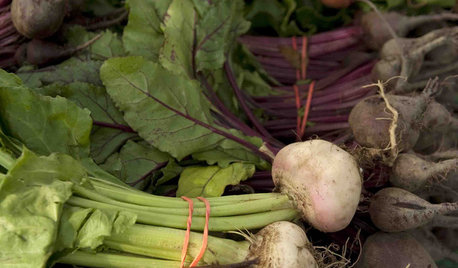
FARM YOUR YARDCool-Season Vegetables: How to Grow Beets
Give canned versions of this fall and spring garden favorite the heave-ho and discover its true flavor and colors
Full Story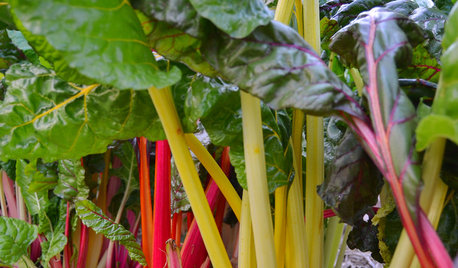
GARDENING GUIDESCool-Season Vegetables: How to Grow Chard
A year-round garden favorite with a colorful stem, Swiss chard comes into its own in early spring and in fall
Full Story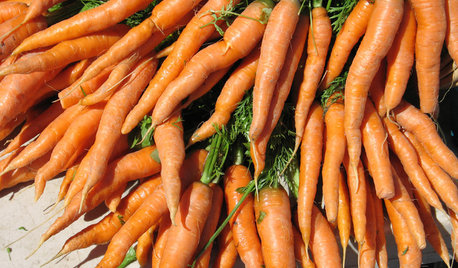
COOL-SEASON CROPSCool-Season Vegetables: How to Grow Carrots
More than just a bunny food, easy-to-grow carrots add lacy good looks to a fall or spring garden
Full Story
PRODUCT PICKSGuest Picks: Everything's Coming Up Vegetables
Get psyched for those healthy 5 servings a day with veggie-inspired kitchenware, art and accessories
Full Story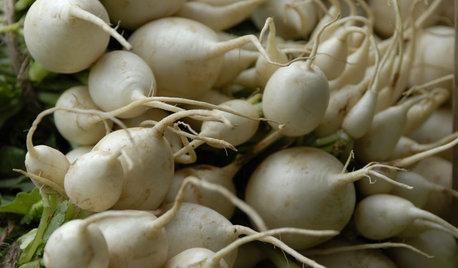
GARDENING GUIDESCool-Season Vegetables: How to Grow Turnips
Sweeter after a taste of frost, these often-overlooked root vegetables can be a surprisingly tasty part of your fall garden
Full Story0
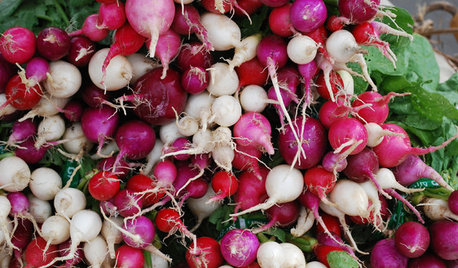
COOL-SEASON CROPSCool-Season Vegetables: How to Grow Radishes
Fast growing and bright, these easy-care veggies are great for kids and bring plentiful color to a fall or spring garden
Full Story
KITCHEN DESIGNKitchen of the Week: Rustic Space Opens to Herb and Vegetable Gardens
Well-chosen recycled and repurposed features create a North Carolina cottage kitchen with a distinctive look and personality
Full Story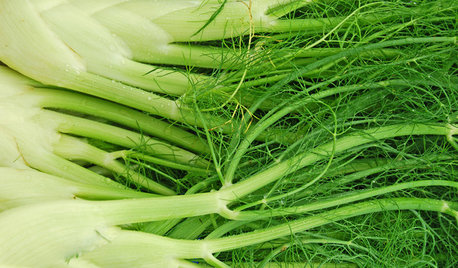
COOL-SEASON CROPSCool-Season Vegetables: How to Grow Fennel
Crunchy and highly flavorful, this herb loves a mild winter or a cool spring in the garden
Full Story0
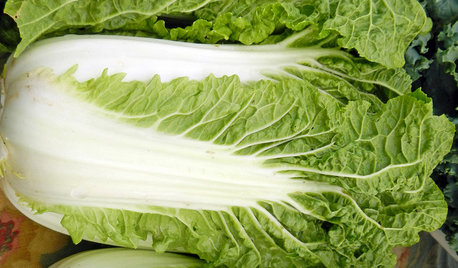
COOL-SEASON CROPSCool-Season Vegetables: How to Grow Chinese Cabbage
Napa cabbage, pak choi, bok choy — no matter what you call it, this edible is a good candidate for fall and spring gardens
Full Story0
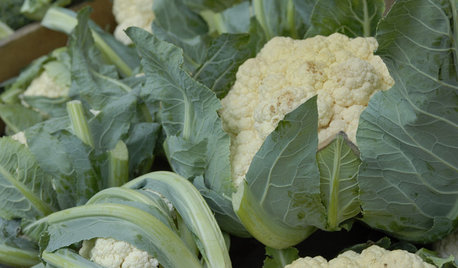
GARDENING GUIDESCool-Season Vegetables: How to Grow Cauliflower
It may be fussy about growing conditions, but the taste of cauliflower fresh from your fall garden is worth the effort
Full Story
joyfulguy