

Non-serrated steak knives
8 years ago
Featured Answer
Sort by:Oldest
Comments (15)
 8 years ago
- 8 years ago
Related Discussions
Please Help Me Choose Steak Knives
Comments (8)Anolon makes a 6-piece steak knife set with a presentation case, a smooth edge and wood handles. The handles are not rosewood, but they are definitely wood. Cutleryandmore.com sells the set for $120. Personally, I think the Sabatier's you linked to would look a little more elegant on a dining table than the Anolons, but if you want a knife case, the Anolons come with one. IMHO, I think you can compromise on the carrying case, or else compromise on the rosewood handles. If you are willing to compromise on the rosewood handles, I recommend Messermeister Meridian Elite, which does come in a lovely case. If you are looking for the hands-down best bargain, it's the Forschner straight-edge steak knife set, with your rosewood handles, but no case, for $75. Cooks Illustrated magazine has mentioned the Forschner brand several times as being a lot of bang for the buck. I am in full agreement that a smooth edge, not serrated. is best for a steak knife. Here is a link to an article that explains why that expensive steak will be more enjoyable when cut with a smooth edge steak knife rather than a serrated edge (better texture and retains juices). I am not sure where that Lamsonsharp Kullenschliff, with its hollows on the sides, fits in with that philosophy though. Here is a link that might be useful: Steak Knife Edge Article...See MoreWhat brand/line knives would you recommend?
Comments (32)A cheap knife that has been properly sharpened will beat an expensive knife that has become dull. Knives get dull quickly, no matter how good they are (if you think otherwise, you don't know what a truly sharp knife is like). Sending knives away to be sharpened sufficiently frequently that they stay properly sharp is not practical. Resharpening services are not an alternative to home sharpening; they serve a different purpose (restoring the edge of a knife after repeated home sharpening). A good knife will take a better edge, and hold that edge longer, than a poor knife, but "good" and "poor" don't correlate precisely to price. How sharp a knife is when you buy it only tells you that it can be given a good edge; it does not tell you how well that edge will last, nor how easy it will be to resharpen the knife. The cheap "Fibrox" handled knives recommended by America's Test Kitchen work very well if you keep them sharp, and they are easy to sharpen. If you abuse them they are cheap to replace. We have expensive Japanese and German knives and cheap Fibrox knives; the expensive knives are better than the cheap ones, but the cheap ones are more than adequate. It would be a crime to run a fine Japanese knife through an electric sharpener or run it up a diamond "steel"; for the cheap knives, who cares? That means it's much less work to keep the cheap knives adequately sharp (not as sharp as I can achieve with a good hand sharpening on expensive Japanese water stones, but plenty good enough for the real world). This post was edited by PeterH2 on Thu, Feb 21, 13 at 18:39...See MoreCast iron question
Comments (53)Bunnyman, If you want to read a bit about the chemistry involved in seasoning a pan you will find that information buried somewhere in the post that I referenced above. It is a rather long post with lots of useful information. I am a retired chemist and know what I am talking about. I am an excellent cook and know how to apply science to my cooking. One day I intend to publish a cookbook and it will contain a chapter on the care and seasoning of cast iron. My love of cast iron began many years ago when I purchased a large cast iron Gypsy pot for cooking Jambalaya outdoors. This first pot was a 12 gallon size. Now I own many other cast iron pots ranging in size from 1 gallon up to 25 gallons. That’s not counting all of my skillets, Dutch ovens, griddles, etc. And yes I do own and use lots of high carbon steel, stainless steel, glass, aluminum, and cast aluminum cookware. The only pot I can find that will hold the huge quantities of rice and meat that goes into cooking a batch of jambalaya is one that is made of cast iron. FYI, that 25 gallon pot will hold 40 pounds of rice along with 40 pounds of onions and 100 pounds of chicken, pork, and sausage. This will provide enough jambalaya for 320 servings. Yes, glass most certainly is a liquid which is contrary to what many people believe. To clean your warhorse glass frying pan use a product called DAWN POWER DISSOLVER and your scrubbing days will be over. You are correct in stating that copper oxide is poisonous. However, aluminum is completely harmless and not at all related to any old timer’s disease. If aluminum caused any health risk whatsoever, we would not be worldwide drinking trillions of beers and sodas from aluminum cans. Theresa, Cast iron pans manufactured prior to 1890 used a completely different casting process than what is used today. These old pans will have what is called a “gate mark” on the underside of the vessel……the gate mark will look like a line. These gate marks were formed as the molten metal was "poured" into the pan mold. These old pans are much tougher and the surface is naturally a lot smoother than pans you see today. After 1890, they began a using a process known as "injection" (i.e. no longer pouring) sand casting to manufacture iron pans. The smoothest of the pan was a function of the quality (fineness) of the sand used in the manufacturing process. Companies like Griswold and Wagner Sidney-O had very good quality control both in the composition of their pig iron and in their casting process. This allowed them to make their pans THINNER and lighter while still retaining its overall strength. These old companies then used labor intensive machines to polish the interior of the pans. Most of today’s’ cast iron pans are inferior in quality to these old pans. The Le Creuset pans are an exception. The quality of their castings is outstanding. Jim, If you look at cast iron under high magnification, you will see that it does contain some tiny pores. Those pores will indeed absorb oil. Those tiny pores become perfectly sealed when you season your pan properly (i.e. the HIGH TEMPERATURE procedure). Low temperature seasoning methods do not give the same excellent results of high temperature seasoning……you will get much different results at different seasoning temperatures. This is because the extent of polymerization (seasoning) if a function of temperature. What many cast iron users simply do not understand…. that if ANY trace of water is left in a poorly seasoned pan, that water will initiate rust. When iron combines with oxygen to from that rust…….its volume expands tremendously. Ever notice how rust lifts the paint off of metal??? Rust will likewise literally lift the seasoning off of the pan. Since this occurs on a "micro" scale, you will know this is occurring on your pan when you observe some of the seasoning actually lifting and falling off. To prevent this from happening......ALWAYS dry your pan using burner heat after cleaning a cast iron pan……..towel drying is not dry enough!! This is especially true with rough surfaced cast iron pans like Lodge. The surface of most cast modern day cast iron products, such as Lodge, is rather rough and will hold/trap water easily. A smooth surface is much superior to a rough surface when searing meat. Those pores will collect meat juices that will steam the meat and will keep the temperature at 212 degrees F until that steam has dissipated. Smooth surfaces do not allow any water to collect between the meat and the pan surface; therefore, the temperature that the meat sees is always way above 212. Different cooking temperatures allow different chemical reactions to occur. Most cooks are familiar with what happens when you put too much meat in the pan and try to sear it. The silky smooth surfaces of those old cast iron pans do not allow meat juices to accumulate under the meat that is being seared…….the result is the buildup of a much better fond. Better fond equals superior flavor in ANY dish.....especially in a Cajun brown jambalaya. Good cooks know that fond can separate a good tasting dish from an truly outstanding dish. Dan...See MoreLooking for a knife
Comments (44)So, party_music 50, didn't folks show you how some of us knife lovers can have opinions and good tips? I found so many good ideas and I too had to waste some money and learn. I've always loved cooking. I have various knives for various tasks, but the one I go to these days for a lot of simple slicing and chopping is the one Sushipup mentioned, the Victorinox Fibrox 8" chef's knife. I have both the 8" and the 6" and bought my cookin' sis the 6". We both love that one. It's sharp, easy to hold, lightweight, easy to clean (just wipe with your soapy dish cloth, rinse, and put away), AND it has a very nice, textured handle that gives a secure grip. I used mine so much I went to a town farm market knife sharping kiosk to get it tweaked. He gave me some tips to refreshing the edge (realigning). I was surprised to find how much I love this little knife. The 8" version is just as nice. I have "too many knives" with some redundancy, for sure. LindaC, I believe I've got the very Chicago Cutlery 6" knife that you have. No longer my favorite for a while, but probably because I let it go dull-ish. I also have some of the older Elephant Sabbatier carbon-steel knives. Just wipe it clean and put away. That one is probably 40 to 50 years old and my father did a "bad bad thing" by trying to sharpen it with one of those electric can opener sharpeners that took a lot of the steel off in a certain area. The 6" knife at the top with the wooden handle is an older Chicago Cutlery forged knife. Above: a Chicago Cutlery 5" parer I bought at Walmart a couple of years ago. Too bad the yellow rubber grip deteriorated. The knife at the bottom with the black handle is the 8" Vitorinox Fibrox. dcarch, I have hung onto the ratty Chi Cut knife thinking that I might fashion a wooden handle for it (it has a sort of long tang). Party, I think people has mentioned this, but don't put kitchen chef's knives into the dishwasher or leave in the sink (one of my siblings does this). I'm with dcarch in thinking that you might want to treat yourself to a nice knife, say that 6" Vitorinox. Than your sister can test it when she visits. I'll have to warn you, however, I was impressed with how sharp they were from the factory. Over the summer, I took my favorite knives to the fellow at our farmers' market and he did a great job. I was going to by one of those pricy but very good Apex sharpening systems, but I decided to take knives to the farmers' market fellow and I will just tweak them sharper as needed on a nice sharpening stone I have for that sort of thing. Ci_lantro, I bet that carbon steel Chinese cleaver is great to use. Photo? I have a few cleavers and a heavy one is good for persuading hard squash to see things my way....See More 8 years ago
 8 years agolast modified: 8 years ago
- 8 years ago
 8 years ago
- 8 years agolast modified: 8 years ago
 8 years agolast modified: 8 years ago
- 8 years ago
 8 years ago
- 8 years agolast modified: 8 years ago
- 8 years ago
- 8 years ago
- 8 years ago
Related Stories
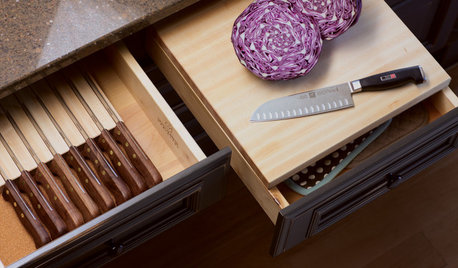
KITCHEN STORAGEKnife Shopping and Storage: Advice From a Kitchen Pro
Get your kitchen holiday ready by choosing the right knives and storing them safely and efficiently
Full Story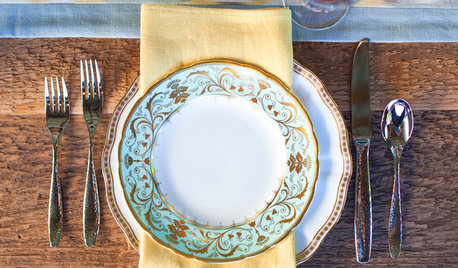
ENTERTAININGHouzz Guide: How to Set a Table
Here’s everything you need to know to prep your table for a get-together
Full Story
PRODUCT PICKSGuest Picks: The Well-Stocked Starter Kitchen
We’ve got all the kitchen basics and tableware you need (or that recent grad needs) to make cooking a joy
Full Story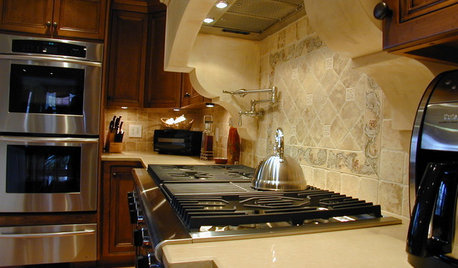
KITCHEN DESIGN8 Kitchen Design Tips for Foodies
If you own at least one pricey knife and have a slew of kitchen tools, you’ll want to read this
Full Story
TASTEMAKERSPro Chefs Dish on Kitchens: Michael Symon Shares His Tastes
What does an Iron Chef go for in kitchen layout, appliances and lighting? Find out here
Full Story
KITCHEN DESIGNJump-Start Your Kitchen With These Minimalist Essentials
These kitchen tools will get you started on your path to culinary success or delicious downsizing
Full Story
KITCHEN STORAGEHow to Store Kitchen Tools and Flatware
Find out the ideal width and depth of drawers, get ideas for vertical storage and see how to work with existing cabinets
Full Story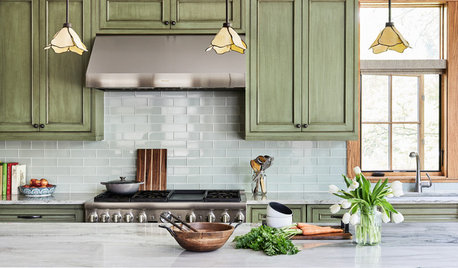
KITCHEN DESIGN11 Must-Haves in a Designer’s Dream Kitchen
Custom cabinets, a slab backsplash, drawer dishwashers — what’s on your wish list?
Full Story
KITCHEN COUNTERTOPS7 Low-Maintenance Countertops for Your Dream Kitchen
Fingerprints, stains, resealing requirements ... who needs ’em? These countertop materials look great with little effort
Full Story
LIFETable Manners for Modern-Day Dining
Elbows and cell phones? Maybe. Forgetting to say 'thank you'? No way. Our mealtime etiquette guide takes the guesswork out of group dining
Full Story



sushipup1Original Author