

Insurance as an investment....
8 years ago
Featured Answer
Sort by:Oldest
Comments (34)
Related Discussions
How to invest an inheritance
Comments (7)Hi Jockewing, Along with the others, my condolences for you & your family with your Grandmother's passing. Some basic rules of thumb for your financial management; A) "Reserves rule" and you want to initially have, at minimum, safe & liquid funds set aside in an account that cannot lose money to the markets, equal to no less than 6 months of your total costs of living (and preferrably 12 months,) B) I suggest your "longterm goal" to be to grow your investments to the eventual point where they can throw off enough passive cashflow (without eating into the principal) to cover 100% of your living expenses. This, of course, is the definition of "Financial Freedom." C) As long as your after-tax interest costs on leverage (loans, mortgage, etc.) remain less than your after-tax average rate of growth on investments, leave the leverage principal alone, and direct every additional discretionary dollar you can into your growth accounts. D) Yes, you will want to build a "risk/reward pyramid" distribution of your newly acquired assets to fit your stage and profile in life (which considers far more than merely your age... but family status & plans, career/educational status & plans, likely longevity (family history,) personal financial attitude, and other factors.) All of this, properly done, will likely require the oversight of a good planner... and even then you're going to see significant differences in planning styles, so its a good idea to take your time to interview various planners (and I suggest from various different "financial cultures." Talk with securities-oriented planners, insurance-oriented planners, legal/tax-oriented planners... get a rounded exposure.) REGARDING YOUR NEW 2nd HOME: Renting it out is more than simply "renting it out." It is more than simply "taking tax-advantaged cashflow" from your held appreciating asset. Doing so is a decision to enter into the business of being a landlord. It is crucial to understand the gravitas of this, as a decision. (Personally I love the business of being a landlord, for so MANY reasons... but as an Advisor myself, I know too many individuals who never realized it is a business, and have financially suffered because of that.) NOW... regarding cleaning up your credit. Contrary to the advice above, DO NOT try to go it via any generic "rules of thumb." You *DEFINITELY* want the guidance of someone who understands how to read the reason codes of your current tri-merge credit report, and translate them into priorities and actions to be applied. The people who can generally guide you on this the best are mortgage brokers (even if you are not going to do a refi.) The "clean your credit" businesses are more often than not a scam. Retail bank loan officers generally don't know or care about the intricacies of credit improvement. CFPs, CPAs, Attorneys, etc. are virtually *always* clueless about how the credit bureaus report their specifics, and how to use the reports as an action plan. Your standard individual Mortgage Broker will be far more likely to dig in & help you work through your plan (even if it takes 2, 3, even 6 months) to get your credit in shape to get a great refinance... and they'll usually do it for no charge (just your honor of doing your refinance with them when (and if) you actually refinance.) Kind of a service "loss leader" for them. To recap; RESERVES RULE! Everything else *AFTER* you've locked-out sufficient reserves. SAFETY FIRST! Get the "guaranteed money" foundation of your risk/reward pyramid in place #1. SHOP PROFESSIONALS (not investments.) Be sure to shop differing "financial cultures." Hope that's helpful! Dave Donhoff Leverage Planner...See MoreBosch Nexxt 500 or Duet? Lowes or Bernies?
Comments (4)I bought my washer from Lowes in Boilingbrook IL. They were fabulous. I started with a Bosch 700 that was defective. They replaced it with a 500 in less than 48 hours of my calling my salesman. 700s are special order at my store and I did not want to wait 2 to 4 weeks without a washer. After the 500 was installed and leveled, and re-leveled, and re-leveled a couple more times, I realized the problem with vibration and walking was my floor, not that the washer was not level. This was confirmed by a friend of mine who is in construction, my floor is apparently too flexible. So, I called my salesman at Lowes. This was about 2 weeks after the purchase. He said to come on in and they would help me pick a machine that would work better for my situation. His suggestions were the Whirlpool Duet or the Whirlpool Cabrio. He said the Duet has a better suspension system than the Bosch, so it often works better when vibration is a problem. The Cabrio does not have the vibration issues FLers do since it is an HE TLer. I went with the Cabrio. I was assured that if I wanted to try the Duet, if it caused too much vibration they would exchange that for the Cabrio. I decided to go right to the Cabrio. As nice as their delivery people were, I was getting tired of seeing them! The Cabrio has been a great choice for me. I love it, it works great, and it does not vibrate at all, even at top speed (1,000 rpm I believe). So if you think vibration could be a problem, you might want the Duet. And if you go with Lowes, get the extended warranty. It is a small amount for your piece of mind knowing that if you do have a problem you just call the 800 number. Oh yes, Between my initial purchase of the 700 to my ending up with the Cabrio, Lowes lost about $500. They were pleasant, easy to work with, and did everything in their power to make me happy. My salesman still stops to talk with me any time I am in the store and I see him. Don't expect too much from any installer in the way of leveling, they usually just eyeball it and make sure the machine does not rock. Lowes did offer to send out a repair guy to level mine when it became a problem, I just had a friend who knew what to do help me. When you go to the store, make sure they will back the machine, and see how long you have to exchange if you are unhappy with your purchase (as opposed to there being a problem with the machine). My salesman at Lowes said you have 1 month at Lowes, although sometimes the will give you a hard time after a couple weeks. He suggested just putting up a fuss if there was a problem, I did not have to do that....See MoreInsurance on an investment home that we're going to re-sell
Comments (8)If the house is fit for occupancy but vacant, you should have little trouble getting insurance. You will likely have some sticker shock at the policy price, but hopefully you'll just have to pay it a couple of months. You existing agent should be able to give you a quote. If the house requires more than just some cosmetic work or is really old, insurance can get substantially more complicated. We bought a 100 year old house to renovate and lived elsewhere for several months. It took a bit of legwork to find a company that would issue a policy and they charged us an arm and a leg....See MoreInvesting for your Future
Comments (22)@ azmom - I am going to answer your questions somewhat out of order, and this is going to be a long post. Sorry. First we need to establish that everyone knows what a stock price is. Many people think that a stock price is a representation of the value of a company. It is not. A stock price is the present value of expected future cash in-flows. As a hypothetical, if a company were started that said from the beginning they will never pay a dividend nor will they cease operations until bankruptcy, then the stock value, regardless of the company's balance sheet, would be zero. The second thing to establish is the idea of risk and reward. There is no such thing as an investment that is too risky. There are just investments that are too risky for the return they offer. An investment with a 90% chance of total loss may still be good if the upside is 20 times your original investment. If you could get enough similar investments then ideally you could make great returns. And finally - the great equalizer - the market can stay irrational a lot longer than you can stay solvent. This happened in the mortgage crisis, everyone knew we were on a real estate bubble and we just stayed there. For years and years and years parts of this country sat on a real estate bubble and a lot of people who bet against it too early lost a lot of money. Now on to answers and opinions. I have been blindly investing in companies/products I personally like ( mistakes such as I like gizmos and hate bonds). - I am a big fan of something called efficient market hypothesis, which you can google for a more detailed explanation. I have some peers who swear by it, while others don't like it, but one apparent truth is, investing as if it is true leads to more successful investing. It basically says that you can't beat the market without some type of insider information. Given this I avoid investing in specific companies whenever possible, I personally identify my risk appetite and invest in different segments that meet the criteria. Even though I have a healthy risk appetite I mitigate losses through diversification in sectors and among sectors. Over the years I have built an aggressive equity portfolio, I know I need to dial down to moderate and balanced one, but I am not sure how to change that. - You simply move your risk appetite down a little. I am personally not a big fan of bonds either, so I avoid them, but there is nothing wrong with moving from emerging markets and small cap to mid and large cap. If one has a paid for home, and living expense (tax, insurance, property maintenance and tax..etc.) would be fully covered by pension and SS, why a 60ish person could not invest as a 30ish? - A risk appetite is a personal thing, but generally if yours doesn't change you probably were a little too conservative early. As you age your risk appetite generally shifts from generation to protection. Sometimes, because people have more money than needed, they will develop a split strategy, where asset protection is a goal for a portion of their portfolio and significant asset generation is a goal for the portion. But, when investing, there is no substitute for time in the market, the cumulative returns of an additional 3% reward over 40 years is just more powerful than the 3% reward over 10. Sometimes the extra money is just not worth the extra risk to get it. I am interested in the "several safe options" you mentioned. - So to be honest, I am not the best person to ask about safe options. I can and will find some for you if you would like, but send me a message and I can ask you some particulars about your situation. As a professor the people I usually give financial advice to are 20 years old. And my personal portfolio has so much risk that even my students cringe at my investing. I have a significant amount of money in the ForEx, mostly because I like doing the work that staying on top of the forex requires. I also play around with Profunds - I am specifically in Asian markets right now (not for the faint of heart. Everyday I am surprised when I haven't lost it all.) But, in general I am a huge fan of the Vanguard funds and have been pushing people to them for as long as I can remember....See More- 8 years agolast modified: 8 years ago
- 8 years agolast modified: 8 years ago
 8 years agolast modified: 8 years ago


Related Stories

LANDSCAPE DESIGNWhere to Invest Your Budget in a Landscape Renovation
Pros weigh in on where to put your money for long-lasting benefits and cost savings down the line in a landscape redo
Full Story
KITCHEN DESIGNSmart Investments in Kitchen Cabinetry — a Realtor's Advice
Get expert info on what cabinet features are worth the money, for both you and potential buyers of your home
Full Story
DISASTER PREP & RECOVERYHow to Prep for Disaster Insurance Claims
Tools and tips for making an inventory list, documenting damage to your home, and working with your adjuster
Full Story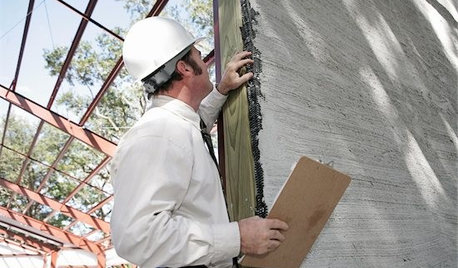
MOVINGHiring a Home Inspector? Ask These 10 Questions
How to make sure the pro who performs your home inspection is properly qualified and insured, so you can protect your big investment
Full Story
FURNITUREHolding Out for Quality
Cheap furniture has its place, but more shoppers are waiting to invest for the long haul
Full Story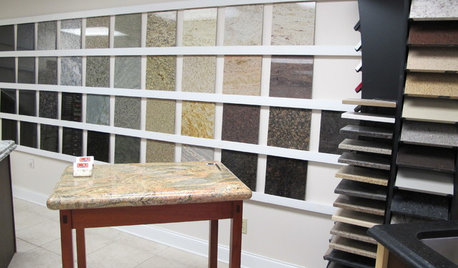
KITCHEN COUNTERTOPSWalk Through a Granite Countertop Installation — Showroom to Finish
Learn exactly what to expect during a granite installation and how to maximize your investment
Full Story
GREEN BUILDINGDesign Workshop: Shutters, All Grown Up
Shutters are back! They’re modern, functional and a sensible investment for a more comfortable, efficient home
Full Story
MOST POPULAR5 Remodels That Make Good Resale Value Sense — and 5 That Don’t
Find out which projects offer the best return on your investment dollars
Full Story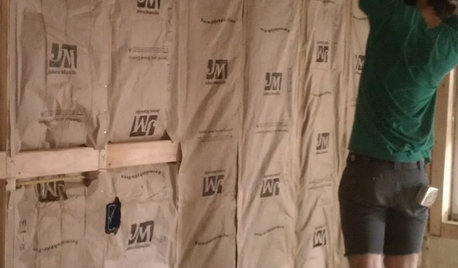
REMODELING GUIDESCool Your House (and Costs) With the Right Insulation
Insulation offers one of the best paybacks on your investment in your house. Here are some types to discuss with your contractor
Full Story
WORKING WITH PROSGo Beyond the Basics When Interviewing Architects
Before you invest all that money and time, make sure you and your architect are well matched beyond the obvious levels
Full Story

Chi