

The 12 good things about book clubs
8 years ago
Featured Answer
Sort by:Oldest
Comments (47)
 8 years agolast modified: 8 years ago
- 8 years ago
Related Discussions
Good Decorating Book Clubs?
Comments (1)Homestyle just recently changed their club so that you have the option of choosing no automatic shipments ever. You have to call and request it though. I just did (after getting yet another thing I didn't order and don't remember getting an email about). So I'm happy that they've changed! (Now -- their prices tend to be higher than amazon's, especially when you factor in their steep shipping charges....so for years, I'd read their brochure then refuse their shipments and order whatever books looked interesting from amazon. But over the holidays, they were running great sales (60% off the cover price with free shipping) so I started ordering from them again. We'll see if they keep their prices competitive now that the holidays are over....)...See MoreHow about a book club ?
Comments (13)Excellent thread! I am a person who turns to books when I want to understand something, so I have a number of suggestions to throw out: First, I'll second what another poster said: Make Your House Do the Housework (Don Aslett) is a great book. Written by a man who's made his living as a custodian, he points out ways to design your house so that less cleaning is needed. I've incorporated some of these things into my current house, but other ideas are really only practical during a new build or remodel. Incidentally, I have not adopted any method of keeping my chairs off the floor. To give an example of his ideas: He suggests that you should limit the number of entrances to your house; the theory being that it's easier to sweep one really dirty entrance than three slightly dirty entrances. Also, he says that every entrance should include a good, long doormat -- one that'll require 5-6 steps -- this keeps the dirt at the entrance rather than allowing it in the house. He wrote a couple other books, which I also read, but this one beats them all. Most recently I've been reading Designing Your Perfect House by William J Hirsch, Jr. I'm not done yet, so I can't really give a complete run-down of it. It's about typical pitfalls and mistakes that people make in design planning. He begins with a good bit of philosophy of architecture, which is new to me, and I'm still digesting that part. It's a good book, and by the time I'm done I think I'll say that it's well worth the time. Not long ago I read Better Houses, Better Living: What to Look for When Buying, Building or Remodeling by Myron E Ferguson. I highly recommend the book. The author is an engineer who worked in the construction field for decades. This very informative book helps with basics like how to decide where to situate your house on a piece of land, and it also discusses details that'll annoy you forever like dishwashers in the corner, doors that open across one another, and light switches located behind doors. He has attached a multitude of photographs to illustrate the problems that you want to avoid (or the proper scenerios that you wish to create). You absolutely should read this book; if it helps you zero in on just 2-3 details in your house that would've caused you trouble, it's worthwhile. In reality, you'll find more. His book isn't particularly easy to obtain; I read about it, but I couldn't find it in bookstores and Amazon was sold out. I had to wait for them to restock. If you find yourself in a similar situation, you can make the waiting easier by reading his blog online. Being a teacher, I have to say, however, that this book deserves an A for content and a D for the writing. Mr. Ferguson knows his stuff, but he is tremendously disorganized in his writing. The book could've been 100 pages shorter, had he chosen not to return to the same topics over and over again. Also he tends towards wordiness and frequently makes grammar mistakes. I know that I read one particular sentence a dozen times (it contained multiple negatives), and I never did figure out what it meant. He really should've employed a writer to help him. Earlier this year I read The Construction of Houses, Fourth Edition on my Kindle. Author: Duncan Marshall. It was a free Kindle book, but it helped me understand things like foundations, trusses, support beams, and so forth -- things that really matter a great deal. Now when I look at floor plans, I understand why things are drawn as they are and why certain things really can't be moved around here or there. It's dry as dirt, but I do recommend it. About two years ago I became enthralled with the The Not So Big House series by Sarah Susanka. She also has a blog online. I bought her entire series (used from ebay -- they're not new books) and enjoyed them all, though they do become a bit repetitive. I agree completely with her main theme, which is that we should build houses only after considering exactly what we need and want from those houses. She advocates building well for your everyday needs rather than stretching your budget to include seldom-used formal living rooms, dining rooms and their ilk. She also discusses in detail how human beings like "cozy spots" -- spaces within spaces -- such as window seats, nooks, areas with dropped ceilings, etc. And she advocates the concept of having "away rooms" that will provide for quiet. Much discussion on trusses and garages and how they've led to houses "looking bigger". I like the exercises that she proposes in her books; for example, she tells you to come up with a list of adjectives you'd want to describe your house. When I realized I was writing words like cozy, homey, light-filled, cottage-like . . . I knew I should stay away from modern, dramatic, show-y and so forth. Another exercise tells you to make a list of all the activities you expect a certain room to support; this helps you decide how you want to use your space. For example, some of us might say that our bedrooms are JUST for sleeping and dressing. Other people might say, no, I want to include a spot for drinking morning coffee and watching the news, I want a small writing desk, and I want storage space for a collection of music boxes. Thinking these things through helps you get your rooms right. Warnings: I find it ironic that her "not so big" floorplans are all larger than any houseplan I've considered. This is a definite must-read, though you should not come into this book thinking that smaller house = less money. Her ideas are expensive to incorporate. Okay, I'm branching out a bit, but when I looked at my house-building shelf, I saw Landscaping With Fruit by Lee Reich. I do recommend this book as well. The author gives a very basic run-down of how to go about choosing trees and bushes that'll provide you with shade, seasonal color and also food. Good discussions on just what will/won't grow in your location. Now that we've picked the site for our house, I am planting pecan trees soon (because they take so very long to "take hold" and begin to produce). I recently bought Designing Your Dream Home: Every Question to Ask, Every Detail to Consider, and Everything to Know Before You Build or Remodel by Susan Lang. I'm not into it yet, but I think it's going to be much like Ferguson's Better Houses, Better Living. That is, descriptions of pitfalls and mistakes that often occur simply because people didn't think things through. I look forward to reading it. One last book on my bookshelf deserves a few words here, but this book I do not recommend: Eat In Kitchens by Catherine Warren Leone. You might enjoy this book if you are completely unfamiliar with kitchens and want an overview of what might be included in such a room. On the other hand, since you very likely are familiar with things like ranges, islands, tile, windows and sinks, you are not likely to actually learn a single thing from this book. She presents many pretty pictures (though not nearly so many as you can see for free on Houzz or similar websites), and she gives mind-boggling facts such as sinks are available in single, double, or triple bowl models -- but she doesn't give any help on why a person would choose one over the other. You could literally learn just as much by walking through Lowe's Home Improvement. I bought this book (used for $3 -- waste of my $3) thinking that it'd help me with appropriate choices and dimensions for an eat-in kitchen. Nope. I think I have a couple other books that might be helpful, but they're not in the right spot on my bookcase, so I can't locate them right now. When I find them -- probably under my bed or sofa -- I'll come back and give you a description....See MoreBook Club Angst
Comments (33)Hmm. I've been in several book clubs for over 20 years. A lot of what I'm reading here sounds familiar. I have a different point of view. I want to read well-written fiction. I don't care if it's depressing or delightful. I don't care if it's historical fiction or science fiction or fantasy or mystery. What I care about is that the author can string words together in a way that draws me in and makes me care about the characters and what happens to them. I hate to see discerning readers discard the Oprah picks just because they were downers...or just because Oprah picked them. I read a fair number of her choices before she ever discovered them, and I was glad to see those authors getting the recognition I felt they deserved. (Fall on Your Knees, by Ann-Marie MacDonald...an exquisitely written novel about an incredibly awful family. I didn't want it to end.) Stories without conflict....not much to write about. Not much to talk about. Shakespeare knew that dysfuntional families and star-crossed lovers brought out the audiences. Tragedy or comedy....there has to be a hook. Someone asked about Broken For You. Loved it; my book club loved it. A downer? In some ways, yes. But also a story to lift the spirits as well. I think the best writers do that. A writer who makes me think. A writer who gives me insight into the actions and motivations of others. A writer who gives me a new perspective on my own world, and on the worlds I will never experience. A writer who challenges my mind; a writer who delights my mind. These are the writers I want to read, in or out of a book club....See MoreThe Plusses and Minuses of the Book Club Book
Comments (14)I belong to 2 book groups. We do not read "currently popular" books; how curious that one would think that would be a de facto requirement of a book group! Each of the groups I belong to has a different but democratic procedure in place for choosing books. We read plays, poetry, short stories, classics, new titles, fiction, non-fiction, etc. We have very rarely ended up reading a book that has qualified as "chick lit" (whether "currently popular" or not), and when we do, I don't mince words about how I feel about it. The point of the group is to have a vigorous discussion about the merits of a book, its relationship to the body of literature, to history, about translations (if applicable), to our other readings, etc. I have only once set aside a book and did not finish reading it, finding it lightweight, poorly written, and manipulative--and I did say so....See More- 8 years ago
- 8 years ago
- 8 years agolast modified: 8 years ago
- 8 years ago
 8 years ago
- 8 years agolast modified: 8 years ago
- 8 years ago
- 8 years ago
- 8 years agolast modified: 8 years ago
- 8 years ago
- 8 years agolast modified: 8 years ago
- 8 years ago
- 8 years ago
- 8 years ago
 8 years agolast modified: 8 years ago
- 8 years ago
- 8 years agolast modified: 8 years ago
- 8 years ago
- 8 years ago
- 8 years agolast modified: 8 years ago
- 8 years ago
- 8 years ago
- 8 years ago
- 8 years agolast modified: 8 years ago
- 8 years agolast modified: 8 years ago
- 8 years ago
- 8 years ago
- 8 years ago
 8 years ago
- 8 years ago
- 8 years ago
- 8 years ago
- 8 years ago
- 8 years ago
- 8 years ago
- 8 years agolast modified: 8 years ago
- 8 years agolast modified: 8 years ago
- 8 years ago
- 8 years ago
- 8 years ago
- 8 years ago
- 8 years ago
- 8 years agolast modified: 8 years ago
- 8 years ago



Related Stories
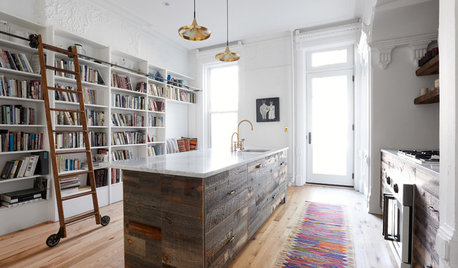
KITCHEN DESIGNSink Into 12 Kitchens That Are Serious About Their Books
See how these precious possessions are showcased in this popular room
Full Story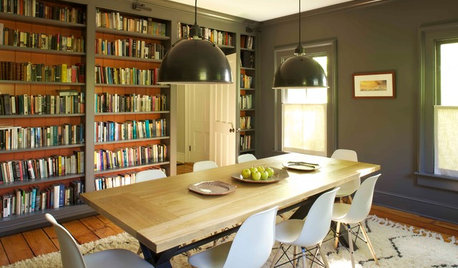
DECORATING GUIDESDinner and a Good Book: 12 Double-Duty Dining Rooms
Create your own library-inspired reading room by pairing a dining table with bookshelves
Full Story
ARCHITECTURE4 Things a Hurricane Teaches You About Good Design
When the power goes out, a home's design can be as important as packaged food and a hand-crank radio. See how from a firsthand account
Full Story
PRODUCT PICKSGuest Picks: Beautiful Things You Can Feel Good About Buying
Upcycled, ecofriendly or just made responsibly, these home accessories and furniture pieces will keep your conscience clear
Full Story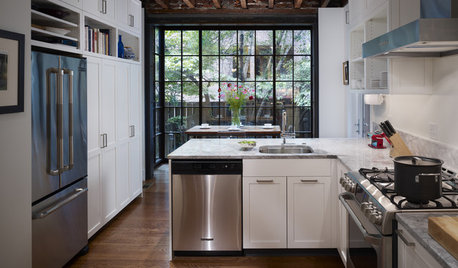
FEEL-GOOD HOME12 Very Useful Things I've Learned From Designers
These simple ideas can make life at home more efficient and enjoyable
Full Story
ENTERTAININGBeyond the Book Club: 10 Creative Groups to Start With Friends
Let the good times roll while you enjoy shared interests like wine tasting, preserving, crafting and cooking
Full Story
REMODELING GUIDES5 Things You Might Learn About Yourself During a Remodel
Prepare to find out who you really are — the good, the bad and the ugly
Full Story
GARDENING FOR BUTTERFLIESGardening for the Bees, and Why It’s a Good Thing
When you discover how hard bees work for our food supply, you may never garden without them in mind again
Full Story
LIFE12 Great Conversation Spaces and What They Want You to Talk About
Comfortable surroundings encourage connecting
Full Story
FURNITURE12 Ways to Use a Good Old Armoire
Add a Hutch for Instant Storage and Style in All Kinds of Places
Full Story
yoyobon_gwOriginal Author