

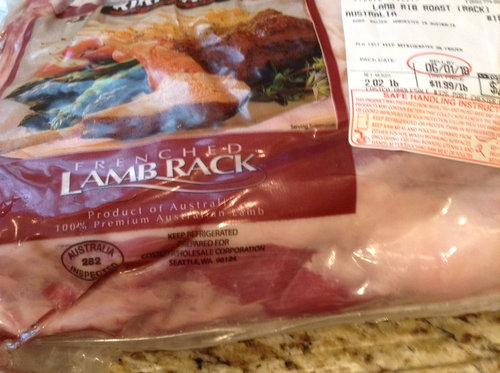
Rack of lamb advice
8 years ago
Featured Answer
Sort by:Oldest
Comments (6)
 8 years ago
Related Discussions
T & T Rack of Lamb?
Comments (14)I also make a MOroccan Spice Rub but it goes on chops. I bet it would be great on a rack and roasted too..... just in case you want to give it a tr, here is the recipe. Alexa ********************************************************* Moroccan Spice Rubbed Lamb Chops From Food Network Kitchens Recipe Summary Difficulty: Easy Prep Time: 15 minutes Cook Time: 10 minutes Yield: 4 servings User Rating: No Rating 2 teaspoons kosher salt, plus extra for seasoning 1 teaspoon freshly ground black pepper, plus extra for seasoning 1 teaspoon freshly ground cloves 1 teaspoon freshly ground nutmeg 1/2 teaspoon ground cinnamon 8 loin lamb chops Preheat the oven to 325 degrees F. Mix the 2 teaspoons salt, 1 teaspoon pepper, cloves, nutmeg, and cinnamon together. Brush each lamb chop lightly with the olive oil and season with the spice mixture. Heat a large nonstick skillet over medium-high heat. Cook the chops in the skillet, without crowding until brown and crisp on both sides, about 3 or 4 minutes for both sides. Finish chops in the oven for 1 minute for medium rare, or to desired doneness....See MoreRamp, Lamb, Thank You Mom
Comments (4)"I'm sure your mom was more than pleased with her Mother's Day Dinner. Ann" Ann, I don't know if my Mom would be pleased with my dish. You see, my Mom is a very smart woman, she decided that Vancouver is the best place on the earth to live, and here I am in messy NYC. fearlessem , thanks. I can eat lamb everyday, every meal, but then I will have to mortgage my house. :-) Lee, thanks. The lamb was SV for two hours. dcarch...See MoreStuffed, Nice Rack of Lamb
Comments (8)I was surprised when I first learned how few people eat lamb anymore! There was nearly as much lamb as beef served at home, and it took me awhile to even learn to like beef stew, since stew was usually lamb. I don't much care for the "Colorado lamb" advertised on fine dining menus. It tends to be old and tough. The New Zealand lamb we get is much better. DCarch, the lamb looks funny to me. I mean I know that's a fork sticking out of it, but the eye seems funny. Maybe from stuffing it? And the shark's tooth cut on the bones? I mean the plating is lovely, of course (though whatever you brushed the plate with makes it look like matzah--it looks nice, but I did a double take). I wish you'd tell us more about the things on your plates......See MoreYike! Lamb out for 3 hrs... okay to eat???
Comments (15)Cut meat from the butcher is frequently contaminated with bacteria-that-can-cause-food-borne-illness like E.Coli (some forms), salmonella, c. botulinum, etc (for brevity, let's just call this stuff "bad bacteria") on the outside of the piece, which has been exposed to the air and surfaces of the processing facility. This is so whether you kept the piece refrigerated at home or not. The bad bacterial contamination occurred when the animal was butchered. The exterior of the meat is normally heated during cooking, to temperatures that will kill bacteria (around 150F), and usually to temperatures that will also de-activate the toxins produced by C. botulinum bacteria (around 170-180 F for 10 minutes). (Temperatures of boiling and above will even kill the C. botulinum spores, but the spores don't cause disease so it's not necessary to kill them.) But what about the interior of the meat? It is frequently not heated to 150 F. People like me cook their meat to internal temperature of 120 F, not even out of the food safety "danger zone", and relish it bloody and red. Some people even eat their meat raw and at room temperature - think carpaccio and steak tartare. Why aren't we dropping like flies? Because there is very little bad bacteria in the interior of meat. Bad bacteria like E. Coli do not normally live inside meat animals' muscle tissue. (Forms of E. coli live naturally in the gut, but not the muscle, and even those are not the harmful forms.) That is why it is not necessary to heat the interior of meat to 150 F or 170 F. Many publications even refer to muscle tissue as "sterile". Of course, "very little" and "sterile" doesn't necessarily mean "zero". But we are not porcelain dolls, we are exposed to bacteria all the time, and we have immune systems that defend us. (Do some reading about what's on the surfaces and in the air of your bathroom . . .) Except in unusual medical cases, you and I can tolerate exposure to modest amounts of bad bacteria. Exactly what that is, would depend on the individual. But it is enough that the interior of meat is safely eaten without being heated to a cuisine-destroying temperature. What about time then? If the interior of that lamb was safe when you got it home, how about 3 hours later? Well, remember that the meat started at 40 F in the store, a temperature at which the bad bacteria was effectively "dormant", i.e. not growing. Once exposed to room temperature, it took time for the interior of the meat to get to room temperature. How long depends on the cut. A thin chop warms up faster. A whole roast will stay internally cold for hours. As the meat warmed, the bad bacteria "woke up" and gradually started to reproduce. At room temperature, bacteria count can double in an hour, more or less (you'll read "every 20 minutes", or "in 90 minutes", depends on the bacteria, the medium, the temperature, etc). So maybe the bacteria inside your lamb - which started at somewhere between "zero" and "very little" - doubled by the time you discovered the roast under the tupperware. Maybe it quadrupuled. Or even rose 8X. The level was still well below what your body is made to tolerate. Okay, fine, it was "very very likely" well below etc. There is some tiny chance that the meat was very badly contaminated when you bought it, or that due to illness your body is much more vulnerable than normal. If you want to take every possible precaution, throw out the meat. And don't use public restrooms. And figure out a way to flush the toilet remotely, after you've left the room. And wash all your fruit, veg, etc in soap and hot water. And cook all your meat to internal 160 F. Etc. It is not necessary, but . . . NB: The above refers to cut meat. Ground meat is a different story. The grinding process distributes the bad bacteria throughout the meat, so store-ground meat has to be cooked to a high temperature (160+ F) throughout. Even I, who am training my body for the zombie apocalypse, am wary of ground beef. So how can you safely have a rare hamburger or a big bowl of boeuf hachee (beef tartare)? Buy a whole piece of meat. At home, sear the outside (killing bad bacteria on the surface), or cut it away (cleaning your knife as you go). Then grind the remaining meat yourself. A food processor or an old-style hand-cranked grinder will do. Clean your knives, board, and grinder well before doing this (soap, hot water, scrub). That ground beef is safe enough to eat raw. "Very very likely" safe. Safe enough for me. General food safety guidelines for cooking meat. http://www.epicurious.com/articlesguides/howtocook/primers/foodsafetymeatpoultry General temperature guidelines for killing/deactivating bacteria, spores, and toxins. http://edis.ifas.ufl.edu/fs104 E. coli in water does not penetrate into fish tissues. http://www.ncbi.nlm.nih.gov/pubmed/3074484 E. coli is not in muscle tissue of cows; poultry is a different story. http://blog.jrsmedical.com/?p=94 Bacteria contamination of intact meat vs needle-tenderized meat, lots of interesting data. http://www.haccpalliance.org/sub/food-safety/NonintactBeefTechRpt.pdf Fun facts about toilet germs http://www.webmd.com/balance/features/what-can-you-catch-in-restrooms...See More 8 years ago
 8 years ago
- 8 years ago
 8 years ago
Related Stories
KITCHEN DESIGNSmart Investments in Kitchen Cabinetry — a Realtor's Advice
Get expert info on what cabinet features are worth the money, for both you and potential buyers of your home
Full Story
KITCHEN STORAGEKnife Shopping and Storage: Advice From a Kitchen Pro
Get your kitchen holiday ready by choosing the right knives and storing them safely and efficiently
Full Story
KITCHEN STORAGECounter Intuitive: Magnetic Racks
Use the power of magnetism to corral your knives, tools, gadgets and more
Full Story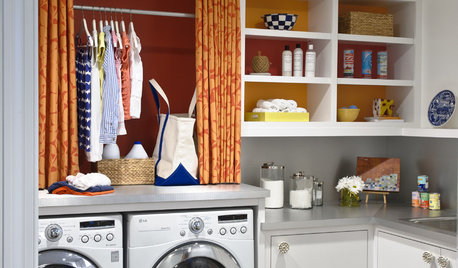
REMODELING GUIDESContractor Tips: Advice for Laundry Room Design
Thinking ahead when installing or moving a washer and dryer can prevent frustration and damage down the road
Full Story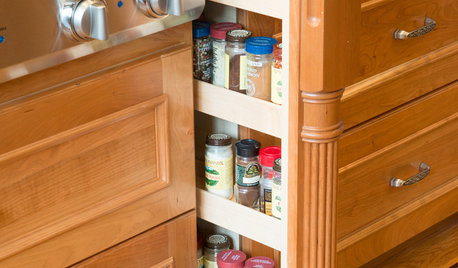
KITCHEN STORAGEHow to Add a Pullout Spice Rack
Keep spices neat and free of kitchen grime by giving them a well-organized home in your cabinets
Full Story
REMODELING GUIDESMarch Motivation: Advice for Rebooting Your Home Projects
Here’s why progress may be lagging on your remodel, refresh or repair projects — and how to get them going again
Full Story
SMALL KITCHENSHouzz Call: Show Us Your Clever Small Kitchen
Have storage ideas? Layout advice? Post pictures of your space and share advice for making a small kitchen work well
Full Story
HOUSEKEEPINGHow to Clean Your Range and Oven
Experts serve up advice on caring for these kitchen appliances, which work extra hard during the holidays
Full Story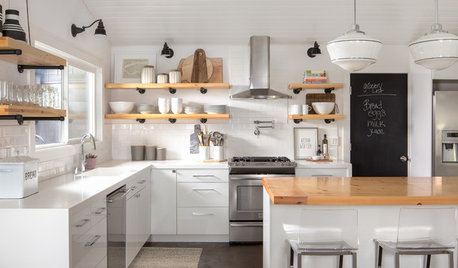
KITCHEN CABINETSWhy I Combined Open Shelves and Cabinets in My Kitchen Remodel
A designer and her builder husband opt for two styles of storage. She offers advice, how-tos and cost info
Full Story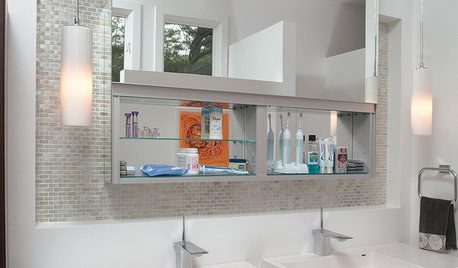
LIFEYou Said It: ‘Or Is It Just Me?’ and Other Houzz Quotables
Design advice, inspiration and observations that struck a chord this week
Full Story
dcarch7 d c f l a s h 7 @ y a h o o . c o m