

Storing sugar
8 years ago
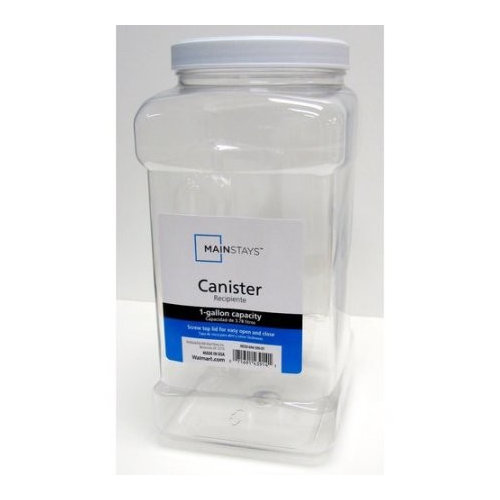
Featured Answer
Sort by:Oldest
Comments (16)
 8 years ago
- 8 years ago
Related Discussions
How to properly store seeds.
Comments (6)Hello, All Thanks for your input and complements. I have a little text on the subject that you may want to read. This file as well as others I can give you info as to where to be able to read them, all you need do is email me. My email is avilable in my profile on GW. First off, let me just say that I am not talking only of tomato seeds, but seeds in general. I am well aware that different seeds require different means of storage methods. I am also well aware that some seeds have a very short life cycle, but in the long run how you store it makes the difference. Yes you can just keep them in the little envelopes and have good success. We think we'er doing the right thing, or are we just lucky. Most people have different rates of success with different modes of seed storage. So in the follwoing text I offer my method of seed storage, take it for what its worth or totally disreguard it, its up to you as to how viable your seed stock will be. I store my seeds in the refrigerator, I use zip loc baggies and add a little dry milk to the main large zip loc bag that I put all the smaller bags of seed into. I then use a large bubble mailer to store the large zip loc into and place it in the upper back of the refrigerator and use rubber bands to keep the bubble mailer sealed. The reason for the dry milk is to prevent mold and or rotting, it is used to control moisture. I change the dry milk as soon as it shows any signs of caking. I do not store seeds any other way due to the fact that keeping seeds at room temperature will cause the embyro to consume its stored sugars within the seed case and either get too weak to germinate or die altogether. Storing seeds in the refrigerator will put the emybro into suspended animation reducing its need to consume the sugars that are incased in the seed. Thus increasing its storage life! In this manner I have kept tomato seeds for a number of years and still get a reasonable germination rate, so I must be doing something right! (Further note) On our website there are lots of links to other websites that have information on the subject of seed saving and storage. My main source of information is the following: The Seed-Starter's Handbook by, Nancy Bubel 1978 Edition Rodale Press, Inc. ISBN 0-87857-209-0 hardcover I do not normally endorse anything, I do not wish to sound like a pitch-man, but I baught the first edition in 1978 and I go through it on a yearly bases to remind me of what I need to do. I do recommend everyone to read it, it is a wealth of information. Farmer Ron:)...See MoreStoring Sugar Cane for the Winter
Comments (3)The ones I have bought from produce markets and grocery stores seem to go bad in a couple of weeks, tops. I strongly suspect that they are being put into refrigerated storage, which could possibly cause chilling injury on this tropical plant. This is just a theory, I don't have any evidence that sugar cane is susceptible to chilling injury, I just know that many tropicals are. I don't have an answer to the question about storage, but I do know the plant overall is tough and a survivor. Although I haven't done this, I don't see any reason why you couldn't start fresh cuttings in the fall in pots, such as 1 gallon nursery containers, and grow those through the winter indoors, possibly with a grow light to supplement the natural light....See MoreStawberry, or anyone, have you tried this?
Comments (9)Hi Kitty: I'm glad you are back, I miss your tons-of-blooms gorgeous pics, and your years of experience ahead of me. When Alana in SC got sick bands from Burlington early april, this is what I wrote to Alana on April 19: "Fish emulsion is very acidic, best mix into your tap water to lower the pH for pale roses. It's great to water your roses with diluted fish emulsion, but NOT to spray the foliage. If leaves are kept wet and slightly acidic, you'll get diseases. Fish emulsion is cited as NPK is 5-2-2, with trace elements. University of Mass. research on marigolds tested chemical, fish emulsion, alfalfa pellets, or a combo. They compared Neptune fish emulsion NPK of 3-1-5, versus chemical fertilizer NPK of 20-2-20. Personally I think the marigold watered with fish emulsion looks better than others, the one with alfalfa meal is worst, very stunt and yellowish. Google that, and you'll see. Another organic way is to use blackstrap molasses, but only the Plantation brand has the highest nutrient. Plantation brand sold at Walmart has 17% potassium, 20% iron, and 20% calcium. Experiments on Soluble fertilizers showed that high potassium plus calcium yielded the best root growth, and the best flowering. Less is best with molasses. People with green plants use 1/2 teaspoon per gallon of water for every 2 weeks. Since roses are tougher, 1 teaspoon would be fine. Too much sugar can make the fungi out-number the bacteria in the soil. A tiny bit of sugar stimulates the endo/ecto mycorrhizal fungi. That group of soil fungi increase the nutrients in soil, esp. phosphorus, potassium, and iron. I posted a thread on mycorrhizal fungi a month ago. " After I wrote the above to Alana, I went to find Plantation brand early April .... no luck. So I'll order low salt soluble fertilizer NPK 2-20-20 with molasses from Kelp4Less. Once diluted, that Mid-Bloom pack has 1/4 cup molasses per 50 gal., plus Myco++ fungi for best root-uptake of nutrients. If you can find Plantation Blackstrap molasses, its high iron will green up your plants. Here's the link to nutrients in different brands of molasses ... they vary widely: Here is a link that might be useful: Nutrients in different brands of molasses...See MoreCanister sets.....?
Comments (36)I prefer to store flour, sugar, etc. in the pantry, cabinet or closet... my favorite things to keep those in are actually olllld Schwan's ice cream buckets! They have to be at least 15 years old, and might be as much as 20. I need to get a couple of nice canisters for DH's coffee, coffee filters, and sweetener packets because I detest the look of the boxes and coffee can just sitting out on the counter, but we're not overendowed with counter space (most of it is peninsula, which is no good for putting things on) so I prefer to keep canisters and such to a minimum. cattknap said: "I have never seen a recipe that instructed you to "spoon" your flour into the measuring cup....in fact I can't recall ever seeing a cooking show, reading a recipe, or attending or teaching (I teach) cooking classes where anyone spooned in the flour." Hate to contradict you, but most of my cookbooks instruct exactly that, including an obscure little oddity called "The Joy of Cooking". :-) Usually it says in the book's introductory or supplementary material rather than in the recipe itself whether the recipes in the book are written to use the spoon-in, sift-before-measuring, or dip-and-sweep (or worse, dip-tap-and-sweep!) methods. When I attended culinary school, we were taught in both the cooking and baking sections that if you're not measuring flour by weight (by far the most accurate way), you should stir/fluff/shake up the flour in the container and use the scoop that you should ideally be keeping in the container to fill the measuring cup. The difference can actually be more than 1 tablespoon, it can be up to a full ounce (that's a lot!) which can really make a mess of a recipe. The talking heads on cooking shows botch a great many things up, so I certainly wouldn't consider how they do things as gospel! squirrelheaven said: "I was just thinking how beautiful and scrumptuous coffee beans would look in one of those glass canisters." If you have the space to spend on a display-only item, why not get some cheapo coffee beans (whole-bean Chock Full O' Nuts or something like that) to put in a pretty glass canister but not use, and keep your good coffee in a cabinet away from the light? You could put a strip of tape with "not for use" written on it over the mouth of the jar under the lid so no one would use the stale coffee beans!...See More- 8 years ago
 8 years ago
- 8 years ago
 8 years ago
- 8 years ago
- 8 years ago
- 8 years ago
- 8 years ago
 8 years ago
 PRO8 years ago

Related Stories
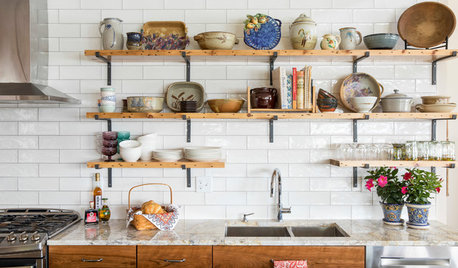
KITCHEN STORAGEThe Best Things to Store on Open Kitchen Shelves
See what items should take up this vital display and storage space, and get tips for styling them
Full Story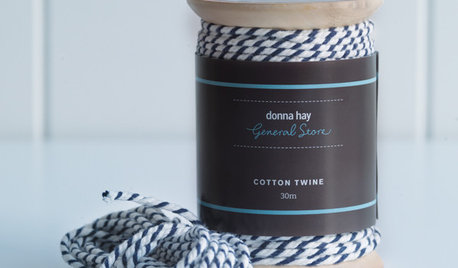
PRODUCT PICKSGuest Picks: The Modern General Store
20 practical pieces that look good and work hard at the same time
Full Story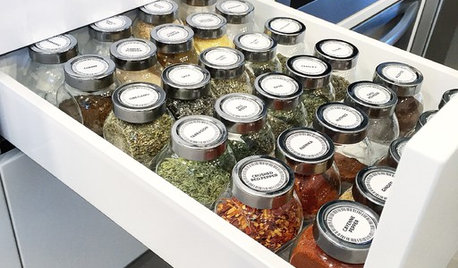
KITCHEN STORAGE16 Ways to Store Your Herbs and Spices
From super neat and organized to surprisingly artistic, there’s a seasoning-stashing solution for everyone
Full Story
DIY PROJECTSHow to Make Cut Flowers Last Longer
Do your store-bought flowers fade too soon? Get expert advice on helping them stay fresh
Full Story
KITCHEN STORAGEHow to Organize Your Specialty Kitchen Storage Areas
Make working in your kitchen easier with these tips for storing pots and pans, spices, cleaning supplies and more
Full Story
HOLIDAYSMy Houzz: A Home Comes Alive With Day of the Dead Decor
Sugared skulls and bright paper flowers keep a Texas home's macabre decorating style on the lighter side
Full Story
DECORATING GUIDESCandy Adds a Sweet Design Touch
From peppermint stripes to gumball dots, these designs will make you feel like a kid in a candy store
Full Story
LIFEThe Family Home: 8 Summer-Prep Sanity Savers
A bit of organizing here, a little storing there, and when summer arrives you'll be kicking back with the kids
Full Story
MONTHLY HOME CHECKLISTSTo-Dos: Your October Home Checklist
Cover or store outdoor furniture and grills, and get your home ready for more time spent indoors
Full Story
LIFEHow to Be More Intentional About Sentimental Clutter
These 7 questions can help you decide whether to keep, store or let go of those once-meaningful objects in your life
Full Story


gardengal48 (PNW Z8/9)