

How did you know your house was "the one"?
9 years ago
Featured Answer
Sort by:Oldest
Comments (71)
Related Discussions
How do you know you're ready for a second one?
Comments (13)Hard to say how the dog will react. Mine did not like it at all. He was 6 at the time. He was so insecure thinking we no longer loved him (would not get out of my lap!), that we were replacing him, that he would be cast off that he would have nothing to do with the puppy. It was sad to watch him ignore the new dog and he continued to treat him that way for the next 12 years. He remained alpha which was good, at least he didn't have to fight for that title because the new dog was by nature very passive. It's best to know from whoever has the dog you plan on adopting if they think the dog has an aggressive or passive personality. Our dogs never fought but if the new dog was aggressive then they may have. When my older dog got to the age where he could no longer keep up on walks it became increasingly more difficult for us because we didn't want the older dog to feel the sadness of being slower. It wasn't fair to the younger dog who needed longer walks. As the disparity grew we were forced to take them on separate walks. That took up more time. When our first dog got to be really old we weren't able to go places anymore because he needed to be looked after 24 hrs a day. That went on for a couple years which meant the younger one stayed at home a lot too. I would never have two dogs again so far apart in age. I have to say though, when it was time for our dog to leave us I did find a lot of comfort having another dog...an heir and a spare. ;-) He made the pain a little less severe. Now he's elderly and slowing down. After taking the back seat all those years to a more dominant dog I want him to live out his remaining time feeling like he is finally the most important dog in the world to us. And he's is loving the attention. The difference between my situation and yours is that you have young children and I don't have any. I would be concerned that a 4 yr old would still be too young not to pester your first dog as he ages. Dogs don't like to be bothered when they're older and children might be nipped at if they aren't taught by the parents to respect the elderly dog's space. So maybe having a younger dog to romp around with would be a good idea for your children. They can focus their high energy on the young dog, allowing the other dog to watch but not be expected to participate. But I wouldn't wait any longer....See MoreHow do you know what you know about old houses, etc?
Comments (14)Whoa, if you get a degree in industrial arts you get to acquire carpentry textbooks along the way?!? Sweet! Kim, I've always enjoyed/appreciated your contributions; given the wisdom of trial and error that was behind them, I see why they stood out. My mom got us a couple of the Reader's Digest fixit books (have to run downstairs, one of them might be the very one you have); I like the way they are encyclopedic and detailed. I know Jane Powell but not the Small Houses books (do you mean The Not So Big stuff by Susanka, or the Small House anthologies from Fine Homebuilding?) Thanks for mentioning books; I think I might start a reference book thread for this forum. Hey Casey, THANKS for taking the bait. And you are NOT a bloody genius, you are an old house DEITY for crying out loud! Would you please start your own show on youtube? Or maybe just a house tour? Even Petch house has youtube videos. Or, do you already have a project blog and everyone knows about it but me? Actually for someone with a degree in historic preservation, I am impressed with how low-key your posts come across; they read more like an old friend who's "been there" and wants to pass along lessons learned along the way, it's really very nice and encouraging. But if you ever want to browbeat me feel free; I would take it as a compliment. To be honest if I post about something I'm thinking of doing to my house, and you don't opine, I figure one of two things is going on: 1) you're not on the forum; or 2) you're politely disapproving. Most of the time I assume it's 2 because you seem to be pretty consistent around here. But I just want to say, and I hope I speak for many, that I love love love your posts, especially when I'm searching on a problem I'm trying to solve and something from you pops up! (PS I finally got around to using that general finishes gel varnish you recommended and it was fantastic, thank you; I will post photos to the woodworking forum sometime before the next census.) Oh, and I love the way you "aged" the color tones in the new pine beadboard in your kitchen; reminds me of the pine in my grandmother's kitchen. When I was really little I used to look at the gleaming pores and think it was the closest wood could get to 24K gold....See MoreHow did you choose your shingle color for your house??
Comments (24)Ok roof guy coming on Friday morning (finally). We don't do a-n-y-t-h-i-n-g fast around here. We mull it, consider it, linger over, wait and wait and wait. But usually we like the end product. Anyway, I'm looking at two colors on the Owens Corning site called Estate Gray and Williamsburg gray. The roof guy said we can choose from Certainteed or Owens Corning colors. All you guys who used Certainteed's Colonial Slate, does it have a lot of pattern to it? Any help or thoughts are much appreciated!...See MoreIf you are building your home, how did you choose the exterior?
Comments (10)It's a leading question, methinks! The answer is (or should be), that every strong and enduring architectural design grows out of its site and climate analysis. For example, one seldom builds an atrium-type home in the middle of Manitoba, or two-story and basement house in south Texas. That said, exteriors are not some sort of cosmetic stage set with magenta lipstick and pink rouge which one simply throws over a floor plan. Floor plans and exteriors are only strong if developed together simultaneously, since they are inextricably linked together. What happens on the inside directly affects the outside and vice versa. One of the biggest mistakes many consumers make is to spend inordinate amounts of time trying to develop the "ideal", "forever" floor plan and then ask an architect or builder to throw some roof trusses over it to keep out the rain! If one has an early preference for a type of architectural style--colonial, federal, mission, etc.--then that will have great impact on how the floor plans may or may not be developed. For example, true colonial houses were only 1-2 rooms deep and organized by climate. In the colder northeast, the fireplaces were centrally located in the middle of the house, with 1-2 rooms on either side. In the more moderate Mid-Atlantic and southeast, a central entry hall, providing access and ventilation might be located between the 1-2 rooms on each side. The rooms on each side would share a fireplace for winter warmth. Thus, if one wants a strong and enduring design for their home, they will consider site, climate, the type of architecture which is appealing if any, and the relationship between interior and exterior. For those who may not care about any of this, just make the exterior pink. The neighbors will never bother you......See More 9 years ago
 9 years ago
 9 years ago
- 9 years ago


Related Stories

HOUZZ CALLDid You Design Your House Around Your Pet?
Doggy doors are just the beginning. We want to know what other pet-centric features have driven your home design
Full Story
VALENTINE’S DAYTell Us: Why Did You Fall in Love With Your House?
What was it about your house that made your heart flutter? Share your photo, and it could make the Houzz homepage
Full Story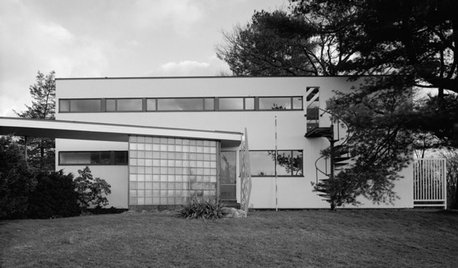
MODERN ARCHITECTUREMust-Know Modern Homes: Gropius House
Dynamic and sculptural, this New England home refutes a common conception of modern architecture by responding personally to its site
Full Story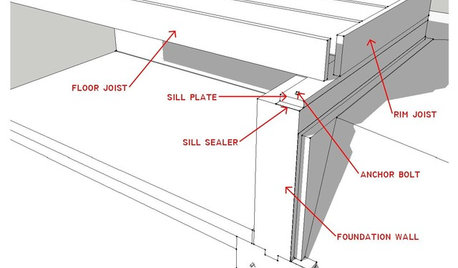
KNOW YOUR HOUSEKnow Your House: What Makes Up a Floor Structure
Avoid cracks, squeaks and defects in your home's flooring by understanding the components — diagrams included
Full Story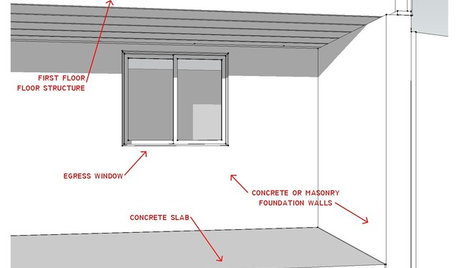
REMODELING GUIDESKnow Your House: The Steps in Finishing a Basement
Learn what it takes to finish a basement before you consider converting it into a playroom, office, guest room or gym
Full Story
ARCHITECTURERoots of Style: Where Did Your House Get Its Look?
Explore the role of architectural fashions in current designs through 5 home styles that bridge past and present
Full Story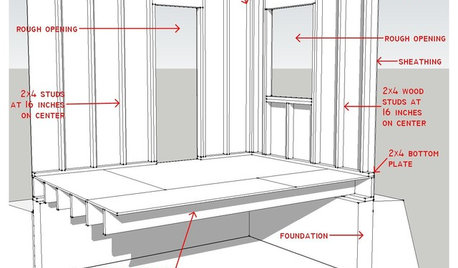
REMODELING GUIDESKnow Your House: Components of Efficient Walls
Learn about studs, rough openings and more in traditional platform-frame exterior walls
Full Story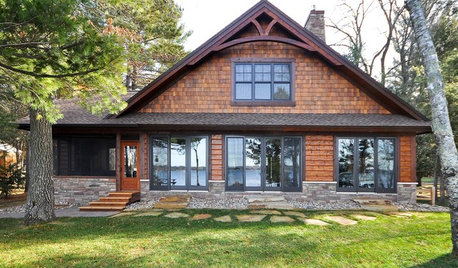
WORKING WITH AN ARCHITECTWhat Architects Want You to Know About Hiring the Right One
Learn from the pros how to find an architect who makes the most sense for you and your project
Full Story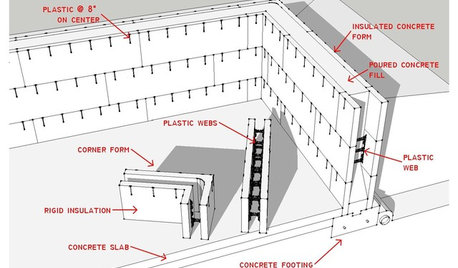
KNOW YOUR HOUSEKnow Your House: The Basics of Insulated Concrete Form Construction
Get peace and quiet inside and energy efficiency all around with this heavy-duty alternative to wood-frame construction
Full Story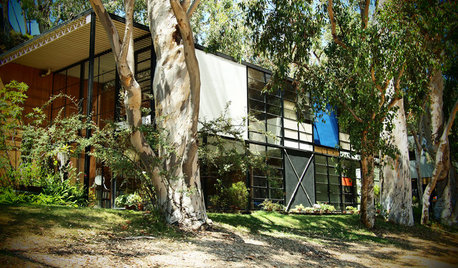
MODERN ARCHITECTUREMust-Know Modern Homes: Eames House
Highly idiosyncratic and personal, this home for two renowned designers shatters modernist stereotypes with its color and livability
Full Story
marilyn_c