

Touring French desserts - Mont Blanc
9 years ago
Featured Answer
Sort by:Oldest
Comments (9)
 9 years agolast modified: 9 years ago
 9 years ago
Related Discussions
New wine drinker needs help
Comments (9)Too many varieties to list them all. Today there is a lot of decent wine available. In general, lower-priced wine will not be vineyard specific (in other words, it can come from grapes grown in a number of different areas), it will not have been aged, it will not have been put in new oak barrels (expensive), it may be a blend of different varietals. None of those things are bad or mean that the wine is not good. White wine is typically made by pressing the grapes and fermenting the juice. Red wine is made by letting the skins soak in the juice for a while. This provides color and flavor. If you do not let the skins soak, you end up with a white or pink wine - "blush" or "white" zinfandel is an example. This wine is actually a rose, but was renamed for marketing purposes. Sometimes the winemaker wants to concentrate the juice, so he bleeds off some juice. This leaves 100% of the skins with maybe 85% of the juice. The red wine will be more concentrated and the "bleed wine" can be a very good rose. Drink it early and enjoy. Extraction is different from concentration - it refers to the amount of flavor that is leached from the skins. Think of a tea bag - if you leave it in the cup for a long time and squeeze it hard, your tea will be stronger. Will also be bitter - that bitterness is tannin, also in grape skins. So you get a lot of flavor, some that you don't want, and you also get a lot of tannin if you soak for a long time and then really squeeze the skins. Thus, some winemakers are really gentle, so that they don't get off-flavors in their wine. The stereotype of "new world wine" (US, Australia, S. America) is that they are fruitier, less tannic, more alcoholic, cleaner. The stereotype of old world is that they are leaner, less "fruit forward", sometimes funky. And some of that is true. But not 100%. Clean for example - literally cleaning the winery can reduce the amount of brettomyces (a kind of mold) that makes the wines stink. A little may be interesting, a lot is awful. And not everyone in the US wants to make big fruit bombs. But after all, wine is from fruit and you should taste some, no? A couple of other things - there is wine made from lots of stuff, but I am only talking about wine from grapes. And those grapes are vinifera grapes - the native American grapes tend not to make good wine, although there is a hybrid called Norton that is used in Missouri that can make a palatable wine. As far as descriptors - don't take them literally. If I describe wine as having notes of chocolate - they are really just hints. I only had one wine that REALLY tasted like chocolate - it was from Portugal and I loved it. Finally, most of the stuff in supermarkets is not really that great. I lived in Indiana for a while - not really wine country. But you can order on-line and I heartily recommend it. Grapes grow around 45 degrees latitude north and south of the equator. Closer to the equator you get tropics so you make rum. Farther away it is too cold so you grow grain and make beer and vodka. White grapes tend to come from cooler areas like Germany, or higher in the hills. That means that in general, they will have more acidity. Grapes like chenin blanc are grown in the Loire - in France they are called by the location, not the grape, so you will see Vouvray or Sancerre. These are really acidic, so drink with steamed mussels or trout or light seafood. Chardonnay is the only white grape allowed in Burgundy, so if you see something called Chablis, you know it is chardonnay. They tend to be more acidic and what wine people call "minerally" than many chardonnays from California, although that is changing. In the US, Kendal Jackson put the chardonnay in oak, starting a trend for oaky chardonnay that is now subsiding. Not bad, but very different. They will feel heavier on your tongue and taste nutty with some vanilla notes. Widely available - California - Chateau Souverain, Chateau St Jean, Martin Ray. Riesling is the great grape of Germany - rarely put in barrels and often making great wine. Germany has elaborate conventions for naming, so I will not get into them here. But look for QBA or Kabinett bottlings - they will be dry (not sweet) and inexpensive (defined by me as under $25, sometimes as little as $12). Columbia Crest is a winery in Washington, part of a large group that also owns Chateau St Michelle in Washington. For an illustration of the different grape varieties (varietals), any of their bottlings are good. Inexpensive and decent wines, especially the whites. Incidentally, CC makes merlot and cabs that they put into barrels. How do they do it cheaply? Re-use - they scrape the insides of the barrels, exposing new wood and therefore do not need to buy new ones each year. If you want to spring for them, the Columbia Crest Reserve series - Walter Clore, Cab Sauv Reserve, or Syrah, are around $20 - $30 but they drink like wines that cost much much more. Australia is another great source of value. Avoid things like Yellow Tail, Penguin, etc. Too many to list, but there is something called shiraz, which is the same grape as syrah, which comes from France (NOT Iran, although people will spread that misinformation around because there is a city w the same name). Australia is huge so one cannot generalize fairly, but the most commone wines over here are from Barossa Valley - very hot place, producing very ripe grapes, meaning they will have more sugar, meaning more alcohol in the wine. These are broad generalizations, but most Barossa wines are towards the fruitier, riper end of things. So look for bottlings by Peter Lehman - always good and very typical. He has a number that is usually under $20 - Clancy's Blend, etc. Australia also makes very great dry rieslings in McClaren Vale - Leasingham has one for $12 and their shiraz is great too. France is going to be expensive if you go for the names, so stick to the south - Rousillon, Languedoc, Corbieres, Cotes du Rhone, even Chateauneuf du Pape. This area is hot and they grow grapes like syrah, grenache, mourvedre, and others. Not usually cabernet sauvignon, pinot noir, and merlot. Grenache can smell and taste like strawberries. Doesn't have a lot of those bitter tannins and it is one of the most delightful wines to drink. Traditionally it is blended with the others I mentioned to make GSM. Australia makes great GSM - Lucky Country, if you can find it, is under $15 and wonderful. Spain has a grape called Tempranillo but again, they name the wine by place, not grape. They also have an aging system. Rioja was the best, at least traditionally, so it is what most people know. Young wines are called joven and can be great values. Next up is crianza, which requires at least 6 months in oak barrels (1 yr in Rioja and Ribera del Duero.) Next up is Reserva, next is Gran Reserva. For great examples of traditional style, look for Marques de Murrieta, Marques de Caceres, and Marques de Riscal. The latter especially makes millions of bottles so it should be easy to find. Not too tannic, kind of funky smelling (old leather) tasting of red cherries and tobacco - some of these wines will last for many years. Just do NOT buy the 2002 vintage. There are many wines made for the American market that are less than $10. Finally Italy. They have so many grape varietals, it is impossible to keep up. Again, remember that part of Italy, most of France, and good chunks of Europe were under water in 2002. So there is some good wine, but if you don't know, just avoid the vintage. 2003 was super hot, but some of the wines are fantastic, especially in cooler areas that generally don't ripen as much. People know the Tuscan wines - Chianti, Brunello, etc. Some are buys - Gabbiano, Felsina, Castello d'Abola all make good wine for less than $15. They are made with a grape called Sangiovese - a little more acidic than cabs with a red-fruit profile. Monte Antico is another worth looking at. But you can do something else. There is a grape called nebbiolo - grown in Piedmont and used in Barolo and Barbaresco. Well, some producers are just bottling nebbiolo as well. Mauro Molino, Vietti, and others are making wines called Nebbiolo d'Alba (or wherever they are from). These can be less than $15 and they are wonderful wines - not as tannic or harsh as the barolos and meant to be drunk young. Italy also makes white grapes - pinot grigio (kind of pointless IMO) and malvasia - which can be very nice. Other white grapes to look for - viognier - smells of flowers and peaches, sauvignon blanc - smells like grass, grapefruit, or sometimes cat pee, semillion - smells like tart apples. Other red grapes to look for - pinot noir (the red grape of Burgundy)- can smell like bright berries or Welch's Grape juice, or sometimes like mushrooms and forest and earth, some are good, some are awful. Gallo has a couple of lines - Anapamu, Gallo of Sonoma, that produce respectable stuff. Zinfandel - America's grape, although it is really from Italy where it is called primitivo. Lower end bottlings that are good come from Cline, Ravenswood (Vinter's Blend), and again Gallo - the Rancho Zabaco series. Also Malbec - originally from France but it has reached perfection in Argentina. Bodegas Norton makes a reserve for around $12 that is fantastic - plummy, rich, delicious. Catena Zapata, Terrazes de los Andes, Gascon and Dona Paula are others to look for. Chile has a lot of stuff over here but I find many of their wines vegetal and green and would not recommend them as somewhere to learn. Not fair, but we are talking gross generalizations. Don't know what you want to spend, but it was much easier to spend less than $10 a few years ago. Now you really need to look. Check out Jancis Robinson's Purple Pages - she is an English wine critic who just re-edited the Oxford Dictionary of Wine. Has a great dictionary on her site. Check out Robert Parker's board - he is probably the most influential critic of anything. And check out Decanter - a wine mag from England. And Wine Spectator - the largest circulation US wine mag. And look at the websites that some stores put up. They have a surprising amount of info. PJWine in NYC has a great site with lots of well-written tutorials. Wine Library in NJ has exhuberant blurbs, but some decent info as well. Near you, Sams Warehouse has an excellent site. E-mail me for more specific info....See MoreAn Ode to the fast food Hamburger
Comments (47)I just remembered. I have had McDonalds burgers many times! Every time I traveled to a different country, I always ended up going to their McDonalds at least once. For instance, when I was in Paris, I was getting tied of French food the last days. Let me tell you, a French Big Mc tasted really good. When I was in Argentina, where they really like meat, I even had a Royal Cheese with wine. Yes, you can get wine with your "Big Mac" there. From Pulp Fiction ------------------------------------------- VINCENT: ...You know what they call a Quarter Pounder with Cheese in Paris? JULES: They don't call it a Quarter Pounder with Cheese? VINCENT: No, they got the metric system there, they wouldn't know what the f??k a Quarter Pounder is. JULES: What'd they call it? VINCENT: Royale with Cheese. JULES: Royale with Cheese. What'd they call a Big Mac? VINCENT: Big Mac's a Big Mac, but they call it Le Big Mac. JULES: What do they call a Whopper? VINCENT: I dunno, I didn't go into a Burger King. -------------------------------------- dcarch This post was edited by dcarch on Fri, Jan 16, 15 at 14:36...See MoreQuebec City and Travel Recommendations
Comments (33)Hello everyone-just got back today and wanted to update and thank you all for your outstanding recommendations. We were very fortunate that the weather was just cold- minimal snow so walking around was not a problem at all. And, there is lots of truth about dressing for the weather. It works! The hotel we stayed at was wonderful. It was at the edge of the walls of the city but still well within everything. It included a terrific breakfast each morning, and they also had coffee and tea available throughout the day/evening with a bit of a bar so there was always an easy place to sit and restore. Location was fabulous, the staff was outstanding. Le Manoir D'Auteuil. We signed up for a walking tour the first day, ToursVoir Quebec as recommended by the hotel was very good and thorough. They book a maximum of 12 or 14 and then just start a new group. It was a 2 hour walking tour with a very knowledgeable guide. It is rain or shine, and I guess 2 hours is really a good time frame when it's freezing. It was still ok (from someone who doesn't do great in the cold). We spent time at the Frontenac of course, and plenty of time walking around and around. What a beautiful city. We also took a carriage ride (they had a heavy blanket so it was tolerable) which also took us just outside of the old city, and was really very good as well. Surprisingly because I thought it would just be kind of redundant to the walking tour; again the guide was quite good. We also went to the Morrin Centre which was a very well done tour. After the tour we were able to revisit the areas we wanted , which for me was the library. Thank you @tartanmeup for mentioning this. I might not have really stumbled on it but it was very worthwhile. (fyi- there were quite a few people on our tour as well.). Had lots of great meals, and just enjoyed the visit so much. We split up the drive both ways and last night was NOT fun driving in the snow- but we got out today and made it home so all's well! Thank you again. Highly recommend!!!!...See MoreTravel planning help - Italy, Switzerland, Austria, Riviera, etc
Comments (37)I was going to warn you that Scotland from Italy in the summer would be a chilly shock and a separate wardrobe. When my spouse had a project in Newcastle, we ventured into Scotland from time to time, from Edinburough to Glascow and up into the Highlands. The Berner Oberland and if you like mountains, heading up into the Jungfrau is spectacular. Staying along the system of cog railways, cable cars and the like is a unique alpine experience I was an expat for a while in Lausanne and there is lots to see and do in that area as well, and into the Valais. If you end in Torino, you could end into Liguria and up into the Cote d'Azur and Provence. It is heading into lavender season (and peak tourist season, though). It can be blazing hot in some of these inland areas, like around Nimes and Avignon with the coast being more moderate. If you are interested in Greece, the islands do tend to stay a bit cooler than some of the more inland areas. There are so many to choose from, and the ferries are a nice way to island hop without a structured cruise....See More 9 years ago
- 9 years agolast modified: 9 years ago
 9 years ago
- 9 years ago
- 9 years agolast modified: 9 years ago
 9 years agolast modified: 9 years ago
Related Stories
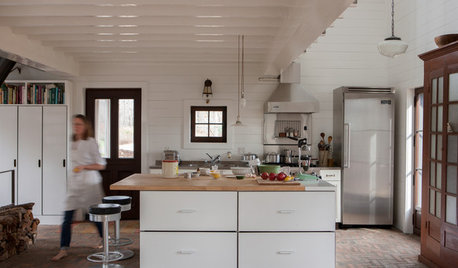
HOUZZ TOURSMy Houzz: Flashes of Industrial Style in a Modern-Rustic Dream Home
In this picture-perfect getaway, you can sleep under the stars without leaving your bed — and heated brick floors keep toes warm
Full Story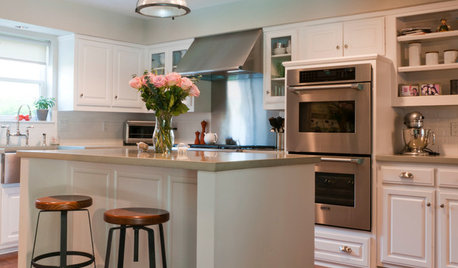
KITCHEN DESIGNShow Us Your Fabulous DIY Kitchen
Did you do a great job when you did it yourself? We want to see and hear about it
Full Story


writersblock (9b/10a)