

YouTube: Anson Mills Grits
9 years ago
last modified: 9 years ago
Featured Answer
Sort by:Oldest
Comments (8)
 PRO9 years ago
Related Discussions
Corn for meal and grits
Comments (43)G'day to all! A Chamber of Commerce day here in central Georgia. Been out in the workshop building a table for a farmer friend of mine and starting to get in the short rows with it. The same table on the internet sells for $549 with shipping. Just a token of appreciation for all the help that my life long friends do for me and my family. I am chomping at the bit to get started planting. Corn will probably be the first thing I plant as it can handle a frost and keep on ticking. Yall mentioned earlier about planting cowpeas in the corn. I tried it, but didn't care for it as corn loves nitrogen and peas don't need much of it or you get a lot of vines and not many peas. Plus, my favorite cowpea is Red Rippers and they make a heck of a bush with runners. It gets too 'snakey' to harvest either of them! I live near Eastman, Georgia (Home of Stuckey's candies) and buy my seed at a local home garden center (Chas Mar) as they have a good selection and are reasonably priced compared to ordering from the internet. Soon I will be taking my wife down there to choose the peas and beans she wants me to plant this season. My wife was born and raised in Jacksonville, Florida, but loves the country. It does my heart good to see her so pleased at looking at the different kinds and making choices. Getting all sloppy now... lol Mr. Brown, I have a friend that lives in Avon Park, Florida (below Orlando) that loves gardening too and wonder if your 'winter home' is near there? George, we should keep quiet about the country life... hee hee We might not be in the country long if the word gets out... Shot...See MoreHelp me make my own flour, cracked grain etc.
Comments (14)Lalitha- Sorry, I don't have any experience with, or information about, the mills you are inquiring about. One rule-of-thumb I can share: stones grind finer than steel burrs, and an impact mill the finest flour of all, and that's about all I can help you with; other than a great respect for German workmanship and they are indeed very handsome mills. The price would be my biggest deterrent. Even though I have a couple stone mills, I also keep extra stones for the mills because they can chip, flake and break (check for stones and grit in your grains/seeds/beans before adding them to the mill hopper), or glaze over from too much moisture in your grains/seeds/beans. The stones are also made from a variety of things, including man-made "stone". When using a stone mill, you may need to mill the grain on a coarse setting, and then run the flour through again on a finer setting in order to get the fine flour (especially necessary for making cakes and a fine-crumb for yeast/naturally-leavened breads. How an impact mill works: "Impact grinders use rows of 'blades' placed in circular rows on metal wheels. One wheel turns and the other wheel is stationary, like the stone grinder. But this is where the similarity ends. The two wheels are aligned so that the rows of blades intermesh, running extremely close, yet never touching the blades on the opposite wheel. The rotating wheel turns at several thousand RPM. As grain is fed into the center of the fixed wheel, the interaction between the two wheels `impacts' the grain and pulverizes it [Grainlady note: the grain "explodes" rather than being crushed] into fine flour as the grain works its way to the outside of the wheels." For REAL sandwich bread--- I would suggest purchasing a Pullman (Pain de Mie) Pan (a square pan with a lid). This pan will allow you to make that crustless, close-grained bread that will help you transition from commercial sandwich bread to homemade. A close-grain crumb is what you want in order to be able to cut thin slices, hold moist spreads (without dripping through a hole), and still be able to hold together to eat out-of-hand. That's the more-or-less "technical" characteristics for sandwich bread. A more open crumb is best used for toast. All those lovely places to hold melted butter and jam. I have a 1-pound Pullman Pan (perfect for hubby and me), and a 2-pound for when the house is full of family visiting. Another tip for making a fine-crumb bread is to add the fat early during mixing. The fat coats the gluten, similar to making short-crust pastry. If you want a more open crumb (as well as more loft), add the fat late in mixing, after the gluten has developed. For making 100% whole wheat bread (or multi-grain where one of the grains is wheat), I suggest using hard (spring or winter) white wheat over red wheat. White wheat flour has a mild flavor and lighter color and is less acidic-tasting than the flavor associated with "whole wheat bread" made with red wheat varieties. White wheat has the same plant traits and nutrition as red wheat varieties, it's just missing the genes for the bran color. There are three genes that make up the bran color. Early varieties of red wheat (such as Turkey Red) had all three genes and are very dark in color (bran, flour and finished product) and a strong "whole wheat" taste. Most of today's varieties of red wheat have one or two of those genes, while white wheat has none. I use and store both red and white varieties of wheat. Step back a generation or two and use a sponge method over the quicker straight (or direct) dough method. You'll find you get a finer texture. The "wait" gives the bran in the wholegrain flour time to soften (the hard sharp shreds of bran can actually cut the gluten strands), and you'll get a high-rising loaf of bread. According to "CookWise": "Researchers suggest that an ideal standing period is 2-1/2 hours." I typically use an overnight sponge with 100% wholegrain flour works well to lighten the bread. If I'm in a hurry, I use a 2-1/2 hour sponge with good results. I also add 1/4 t. ascorbic acid per loaf to counteract the negative effects from Glutathione (found in wheat germ) on gluten-development. This will help prevent baking those squatty loaves of 100% whole wheat bread. -Grainlady Here is a link that might be useful: King Arthur Flour - Pullman Pan...See MoreGrits
Comments (16)As I understand it, southern grits are made from dent corn--it has a soft endosperm and makes great grits. On the other hand, polenta and other types of corn meal are made from flint corn. Here's a posting from another site which is said to have originated at Anson Mills website, although I couldn't find it there just now: "Dent or Flint? Corn is classified by the type of starch (endosperm) in its kernels. The premier mill corn of the American South, known as dent (the name derives from the dent that forms on the top of each kernel as it dries), has a relatively soft, starchy center. Dent corn makes easy work of milling--it also makes phenomenal grits. "Flint corn, by contrast, has a hard, starchy endosperm and produces grittier, more granular meal that offers an outstanding mouthfeel when cooked. One type of American flint--indigenous to the Northeast--was, and remains, the traditional choice for Johnny cakes. In Italy, flint has been the preeminent polenta corn since the 16th century when Spanish and Portuguese treasure hunters brought Caribbean flint to the Piedmont on ships." The first corn was taken to Italy in the hold of ships to hide gold and other treasures from pirates on the high seas. However there were famines and the people used it for food. Finding that they liked it, they began to cultivate it in Italy and another New World crop became part of Italian cuisine." Be that as it may, both polenta and grits are cooked corn meal mush made from slightly different forms of corn. As far as the flavor of grits, it depends on both the freshness of the grits and the particle size. Good grits are larger and take a long time to cook; the smaller the particle size, the more quickly they cook and the more likely they are to taste like library paste. (Instant grits are an abomination.) But the most important part of the preparation has been mentioned by the late Lewis Grizzard, and that is to serve them 'with enough butter to choke a goat'....See MoreBreakfast Rut
Comments (38)I cook grits on the weekends in my rice cooker. Not as messy and I don't have to worry about it sticking! I don't have time on work days. Plus I don't like to eat before around 8 AM. I go to work at 7 AM. I add just a little extra water, about 1/4 cup more than recommended on the package for 2 servings. After it starts boiling hard I turn the cooker off and let it sit for about 5 minutes, stir and then turn it back on. Around 25 minutes total. I start my eggs and sausage, pasture raised by a local farmer, after the grits start to thicken. This weekend I'm eating a lot different and I'm not happy! I'm trying to heal an infection in my foot so I'm trying to go low salt and no red meat until it heals. Swelling in my legs and feet causes drainage, even with compression stockings. Grape nuts for breakfast, with strawberries and blue berries, no sugar added. Lunch is a low salt salmon and egg sandwich on whole wheat. No mayo. :( Same for dinner. After the cereal and fruit breakfast, I am so hungry and sleepy! Even after sleeping 8 hours!...See More 9 years ago
- 9 years ago
 9 years ago
 9 years agolast modified: 9 years ago
 9 years ago
- 8 years ago
Related Stories

KITCHEN DESIGNShow Us Your Fabulous DIY Kitchen
Did you do a great job when you did it yourself? We want to see and hear about it
Full Story
KITCHEN COUNTERTOPSQuartz vs. Granite: The Battle of the Countertops
Read about the pros and cons — and see great examples — of these popular kitchen countertop materials
Full Story
INSIDE HOUZZHouzz Survey: See the Latest Benchmarks on Remodeling Costs and More
The annual Houzz & Home survey reveals what you can expect to pay for a renovation project and how long it may take
Full Story
KITCHEN WORKBOOKHow to Remodel Your Kitchen
Follow these start-to-finish steps to achieve a successful kitchen remodel
Full Story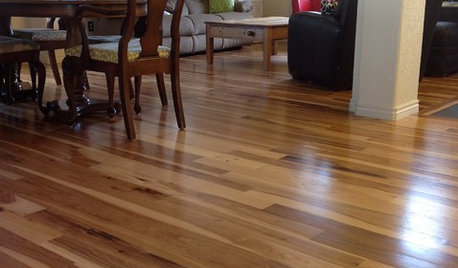
MATERIALSWhat to Ask Before Choosing a Hardwood Floor
We give you the details on cost, installation, wood varieties and more to help you pick the right hardwood flooring
Full Story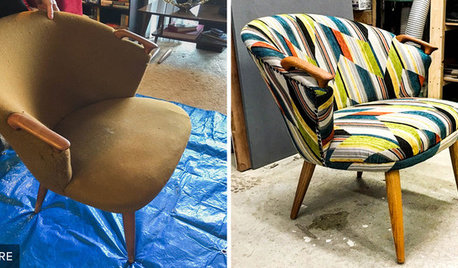
FURNITUREProject Rehab: A Midcentury Chair Gets a Period-Perfect Makeover
See how a vintage midcentury piece was saved from the dumpster and given a second life in a bold new fabric
Full Story
mustangs81