

Bread baking conversation :-)
9 years ago
Featured Answer
Sort by:Oldest
Comments (8)
Related Discussions
Baking cookbooks - Baking With Julia, and the W. S. Bread book
Comments (4)Sally, Baking with Julia is one of my favourite cookbooks. I use her recipe for French bread and it is her recipe I use for Croissants and the Pain au Chocolate. I can highly recommmend both recipes. If you are really in the mood for baking you can't go wrong with the croissants. Make half croissants and half Pain au Chocolate. They freeze well too. I know that there are a few more recipes in that cookbook that I have made, but unfortunately, Moe already boxed up all my cookbooks so I'm without any cookbooks until after we get moved. Or until I have at least 80 feet of bookshelves built. LOL! Ann...See MoreBaking bread in a CSO
Comments (51)I bake 2 loaves of sourdough a week for sandwiches and occasional treats (cinnamon rolls) or a different kinds of loaves during the week. I don't like it to be too complicated but want what I consider excellent results. Personally, what works for me is just preheating the oven (Wolf CSO) to whatever temp I need in convection steam mode. If loaves in a pan 335, ciabatta type 445, free form loaves generally 400-425. I don't use a stone. One of the reasons I prefer sourdough is the 'to die for' crust and I get it w/the straight up steam convection mode. There's always a great poof of steam when putting the bread in and taking it out but you don't notice the steam in the oven as you would if steaming veggies while cooking. As mentioned steam only exists at 210 degrees over that the waters there but not noticeable until it is 210 degrees. I'm not sure how often or exactly when the water is injected, I can hear the valve working but I'm pretty sure it's not constant. I will sometimes use a large gas oven as I can heat it to ~550 or a large electric convection if I need a larger oven. The results from the CSO are always more impressive, the oven 'spring' is more noticeable and the crust is crustier w/the steam. I'm sure adding water to either of the other 2 would work similarly but like I said I'm in the K.I.S.S. group and don't like overthinking things too much. A lot of people get caught up in thinking rather than doing, having a good understanding of what you're doing, the 'why and how', will eliminate a lot of the guess work. Worse case is you mess up, so? You get to do it again but now you know more than last time. I don't use recipes or measure things a whole lot anymore, I have over the years but learned what to look for and the 'how and why' so have the latitude to experiment relatively successfully and don't get too upset when I fail. A fail for me is a boon for the chickens. My audience isn't very large, as long as we're all happy and occasionally overjoyed it's all good. The best night is when the kids say 'thank you for making this wonderful dinner dad!'. I have no idea where that came from, they started it when they were about 4 (now 8 yo twins). I don't get it every night I cook, but it makes my day when I do....See MoreGrinding wheat berries for flour for bread; conversion to ounces?
Comments (9)No. Soaking the wheatberries will make them too soft, and you'll get slurry instead of flour, and it will be hard to control the hydration. Yes, soak the flour, but in the amount of water you want to use for the recipe. It may seem crumbly dry, but just make sure it's as well mixed as you can. It'll be nice and moist at the end of the soaking period. I think I'd soak all the flour, rather than just the WW, but that's something to experiment with. Maybe the white would be greedy and soak it all up before the WW had a chance. Best of both worlds, soak the ww, then do an hour autolyze after mixing the rest. Do soak the WW for at least 8 hrs. Overnight is good. This is even more important if you have little chunks you’re trying to soften. An alternative to having coarsely ground bits of wheat, would be to mix in some interesting other whole grain, like millet. Just toss it into the soak. It's very nice. I've also used amaranth, buckwheat groats, various seeds and whatever took my fancy. Just keep to a small enough quantity that it doesn't impede the rise. Don't chill it unless your baking day gets postponed more than a day or two, and you think you'll get mold. Just cover your vessel, and leave it on the counter. Ambient humidity does make a big difference. I know you baked professionally, but I can't remember what. IME, all that “baking is chemistry” cliche stuff is about cake (which includes quickbreads and cookies). You have to have the right specific ingredients, in the right quantities, with the right methods under the right circumstances, to get a replicable product. Breads are different. They're much more about art, about adjusting for how dry your flour is, how dry the air, how active the yeast. You know there’s enough flour or water when it feels right. Pastry seams somewhere in between....See MoreBritish Baking Show question on bread.
Comments (10)So, I grew up with ”proof“ as you proof your yeast by seeing it bloom and rise. But, you in other contexts it might be ”Well, did your yeast prove?” ... Hm... Really ”prove” as the participle form, which I just figured out now through trying to think up examples, and they came up also like, ”Proving your yeast before mixing it into your dough is the safest way not to waste your whole morning.” Because with the old fresh cake yeast, it could just die, even if it's brethren were fine yesterday, and half the reason for a preferment was to prove that the yeast was active and strong. The bread ”rose” and you ”set it to rise”. Proving/proofing was for yeast. Now think of the huge Germanic population in the USA at the beginning of the 20th Century, and the world reknown for German breads. Think of all the bakeries, the kinds of businesses that give immigrants access to the American economy. ”Proof” in this case is most likely a Germanic pronunciation of “prove”. The final consonant in German is unvoiced (that is, it would be usual for a ”v” to be pronounced ”f”)....See More 9 years ago


Related Stories

SHOP HOUZZShop Houzz: Bake Your Way Through Winter
What gray skies? All we’re noticing is the heavenly scent of bread and pies
Full Story0
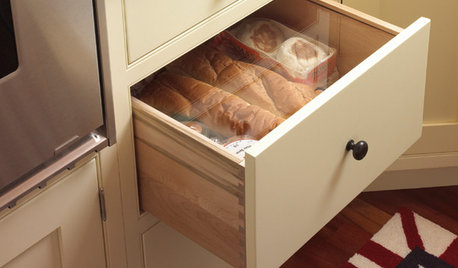
KITCHEN DESIGNKitchen Ideas for Bread Lovers
Any way you slice it, a kitchen designed with bread in mind conveys warmth and homeyness
Full Story
LIFESimple Pleasures: The Joy of Baking
Fill your house with a heavenly scent and your heart with cheer by making time to bake
Full Story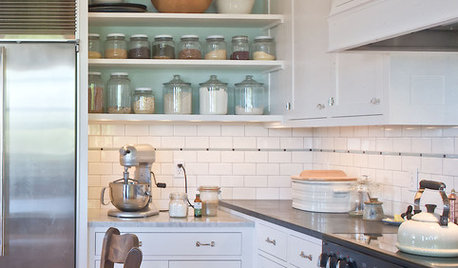
KITCHEN DESIGNLove to Bake? Try These 13 Ideas for a Better Baker's Kitchen
Whether you dabble in devil's food cake or are bidding for a bake-off title, these kitchen ideas will boost your baking experience
Full Story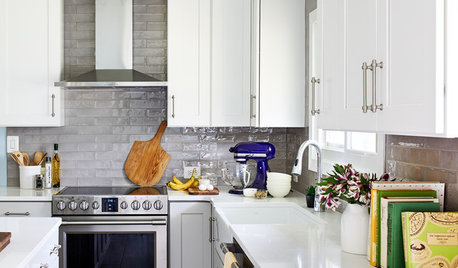
KITCHEN DESIGNGet Organized for Holiday Baking
Before you crack that first egg, establish a game plan for stress-free success
Full Story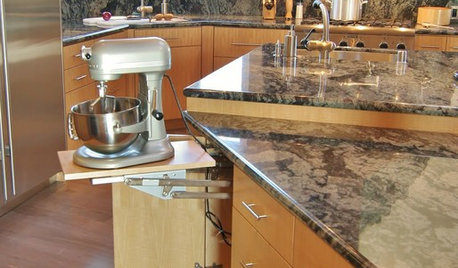
KITCHEN DESIGNKitchen Design: Baking Stations Make Cooking More Fun
Get inspired to cook (and simplify holiday prep) with a dedicated space for baking
Full Story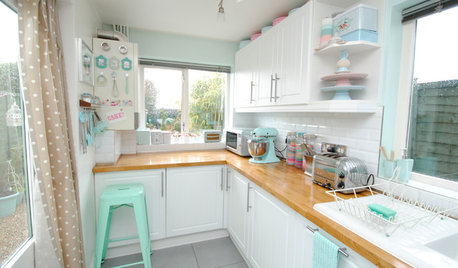
KITCHEN DESIGNGet Your Kitchen ‘Bake Off’ Ready
Make it easy to whip up a cake or a batch of cookies with these tips for organizing your space
Full Story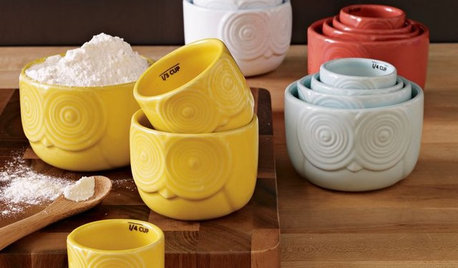
PRODUCT PICKSGuest Picks: Holiday Baking 101
20 stylish finds to help crank out those Christmas cookies like a pro
Full Story
GARAGESHouzz Call: Show Us Your Garage Conversion
Have you switched from auto mode into workshop, office, gym or studio mode? We'd love to see the result
Full Story
BATHROOM VANITIES30 Furniture-to-Vanity Conversions You’ve Got to See
Readers share costs and how-to details on their cherished one-of-a-kind bathroom vanities
Full Story

plllog