

Does your KitchenAid Proline 7 qt mixer CLICK under heavy loads
9 years ago
Featured Answer
Sort by:Oldest
Comments (13)
 9 years ago
 9 years ago
Related Discussions
Good stand mixer? Hate my Kitchen Aid!
Comments (35)Kristin S, I agree, the Ankarsrum (aka DLX/Electrolux) isn't something one buys on a whim! It will last, and most cooks pass theirs down to daughters and sons... I've a friend who dearly loves her KA and wouldn't trade it for anything... Re: the issues you mentioned with your KA, here's a photo I found after my first unboxing of the Ankarsrum... kinda shows you the inside and the most commonly used attachments (2) I use for mixing breads, brownies, and cookie dough's. This shows the 'roller' and 'scraper' attachment: You can move the roller away from the bowl side and fix it to any distance from the bowl side and tighten that setting easily, but the roller will still move outward into the bowl's middle freely on it's own helping to mix/incorporate. Sometimes, if there's a little something (and it's always precious little) in the middle that's not mixing, I just manually move the roller (holding the chrome arm on top) over to the middle, then let it go, so it moves back. It's a bit odd initially, using something called a 'roller' to mix ingredients... but it does an amazing job incorporating unbeaten eggs, sugar, flour, extracts, raisins and choc chips (without crushing - no more hand mixing chips and raisin!), anything, really. The bowl rotates constantly at the speed setting of your choice, it never stops unless you turn it off. I add ingredients as it's moving, and flours never puff out, or get on anything... easy cleanup, too! You've lots of open room to add ingredients even from large bowls. I always make sure my butter or cream cheese is super soft (for the roller and especially the whisks and cake whisk attachments. There is no lifting of anything... not until your batter/dough is mixed. You un-tighten the roller arm, it moves out of the way on it's own, and you lift the bowl out. You can see the scraper is naturally sitting against the side of the bowl. The scraper gets "everything" and I rarely move it unless there's a bit of unmixed floor or ingredient on the scraper, at which point I just move it gently out toward the middle of the bowl, then let it naturally go back to the bowl side. Now, if you need to whip egg whites first, you'd instead use the clear bowl and use the whipping attachment instead. If you are making a thin batch of cookie dough or a cake that's thinner, again, you'd use the clear bowl but with the cake whisks. The clear bowl does not turn on it's own, it stays stationary while the whisks move. Here's a photo of the dials.. One changes speed (variable so any speed, plus the high speed is well, very high! It's not got labels, so you basically just go by how it feels and looks to you. The other turns it on, and if you turn it past the 'on' it acts as a timer as well... you can walk away if you need to and it will shut itself off. Another nice thing is the scraper, a simple plastic spatula that fits into the grooves of the 'roller', making batter scraping so easy! Weight: it's no lightweight at 19 lbs, but I think the KA weighs in at 25-29 lbs. Height: I've got 18" between counter top and cabinets... easy fit. Noise: You can hear it, but it runs on a belt drive... it's much quieter than any mixer I've used. I ordered mine from Pleasant Hill Grain, and after it arrived they sent me an email with a .pdf to print out explaining attachments to use, speed control conversions, etc. So, yes, a learning curve, but it's not a huge learning curve : ) There are a multitude of attachments also, but you turn the Ankarsrum on it's side to use most of them. I think the KA is great for many people, but has drawbacks. The primary drawback of the Ankarsrum is the price, IMO....See MoreKitchenAid Mixer
Comments (32)cotehele - I only use the Zo for mixing/kneading - it replaces what my hands used to do. I used to slowly add the flour into the liquid ingredients, and beat the mixture by-hand using a Danish Dough Whisk, and using as many as 500-700 strokes to develop as much gluten as possible while the dough was in the bowl. This cut down on kneading time and made a finer bread. When making dough by hand, properly mixing the ingredients is an important step people tend to rush through and not do a good job. If a shaggy lump of dough is tossed on the counter for kneading, then there wasn't enough time spent incorporating the flour into the liquid ingredients, and not enough gluten was developed before beginning the kneading. When it comes to using the bread machine, I rarely allow the dough to rise in the bread machine, preferring to use a dough-rising bucket so I can make sure the dough doesn't over-proof. Dough doesn't tell time, and all the rises are according to time on the machines. Dough ACTUALLY rises based on the ambient temperature, humidity, amount of sugar/sweetener in the dough, and the strength of the yeast. A timed rise is just a good (or bad) guess. It's especially important when using 100% whole wheat flour to keep the dough to just UNDER "double" for the rise. Whole wheat doesn't have the extensibility bleached and unbleached flour does, so allowing the dough to rise to double is actually over-proofing it. If I'm not getting a good oven-spring, that means the dough was over-proofed during one or both of the rises and the yeast was spent before it hit the oven - which seems to happen when I leave the dough in the bread machine to rise. When I use the QUICK DOUGH cycle, I can have dough in about 30 minutes. This includes pre-heating, mixing and kneading. There is also an add-in beep (about 25-minutes into the cycle) so you can add raisins, multi-grain cereal, etc. Placing dough in a dough-rising bucket is a perfect little environment for it, normally taking anywhere from 20-45 minutes to rise (depending on the ambient temperature and the type of dough). I may decide to toss it in the refrigerator for a nice long, slow, cool rise to really develop the flavors. It's nice to have options. If using the BASIC DOUGH SETTING, it takes 67-minutes for 2 rises (45-minutes for the first, stir down, and 22-minutes for the second) for a total of 1:50 for the entire cycle. So I save a lot of time there. I can cut that time by 45-minutes to an hour. Not that speed is everything, it's not, unless you are trying to get out several recipes in a 5-hour bake-a-thon. I also never make less than 2 to 2-1/2+ pounds of dough at a time. I can make 2-3 small loaves, or divide the dough for 1 loaf, 6 sticky pecan rolls, and a pan of dinner rolls (or 6 hamburger buns, or 6 hot dog buns) - all from one recipe of dough. I can program my Zo, but I never have (I hate messing with electronics). I generally use the QUICK DOUGH setting - no rising in the bread machine. That's the nice thing about a Zo, you can use it however you like, personalize the cycles to suit your recipes, and use whatever cycle works out best for you. I have a friend who programs hers for specific breads she makes. She sells her breads, so she has using the Zo down to a fine art. Choose to use the dough cycles or bake the loaf in it. Different strokes, different folks. I do an overnight sponge for our "Everyday Bread", so the Quick Dough Cycle is perfect because most of the work was done overnight in the sponge. The flavors developed, the acidic kefir (or buttermilk) provide lactic acid to break down complex starches and irritating tannins in the wholegrain flour, and make the finished loaf easier to digest. Soaking also increases vitamin content and makes all the nutrients in grains more available. The sponge also makes the bread lighter in texture and color and I get a nice high rise not typical to loaves of 100% whole wheat bread when made with a fast mixing method associated with most of today's recipes and methods incorporated when using a bread machine. The Zo X-20 has a Sourdough cycle, but once again, it's timed and I'd never use it for rising the dough. All starters are different. Some are stronger than others, so 120-minutes for a rise may be too long, or not long enough. So for naturally-leavened breads, I use the bread machine for mixing and kneading, but never for the rise. -Grainlady...See MoreKitchenAid Stand Mixers
Comments (26)I have an old (30+ years) KA-Hobart 4.5, which has been a real workhorse. The only limit has been the capacity of the bowl. I also have a KA Pro 6, which DH got for a Christmas gift in 2006. With a special offer from Amazon and a rebate from KA, he ended up paying $275.00. I haven't had any problem with this machine laboring with anything, including heavy whole-grain doughs. Nor have I experienced the loudness some have mentioned. Maybe it differs from machine to machine? Wattage can't be trusted. Most wattage figures only list the amount the machine pulls from the outlet, not the wattage it puts out. For example, the $1500 5-quart Hobart now available for home use actually has a very low wattage. So what? Wattage doesn't indicate power, at least not as the number is commonly used. Here's a quote from Cooks Illustrated's last review of mixers regarding the wattage issue: "If I hadn't included the Hobart in the lineup, I might never have discovered the sneaky truth behind wattage ratings. Most mixers list their power in watts; Hobart is the only one to use horsepower. When I learned that 1/6 HP equals a mere 124 watts, I scratched my head in puzzlement. How could this quiet, powerful workhorse have the lowest wattage rating in such a hacking, shuddering group (from 250 watts to 1,000 watts)? Turns out Hobart is the only mixer to list output power rather than input power. What's the difference? Output wattage is the amount of power the motor actually produces--which flows out of the motor, moves through the mixer arm, and, ultimately, smacks the ingredients around. Every other mixer lists input wattage, which is simply the power that flows from the electrical outlet into the mixer's motor. What does input wattage tell you about the power of a mixer? Absolutely nothing--it's purely a marketing gimmick. To wit, the six models that failed the bread dough test (our initial round) had power ratings ranging from low to high, mostly high (275, 350, 400, 450, 700, 700). In addition, every other test showed absolutely no correlation between mixer performance and wattage. (If manufacturers were willing to provide output wattage figures, comparison would be easy, but this key bit of data is never offered.)" So apparently, whatever mixer you decide to buy, wattage shouldn't be the criterion. Carol...See MoreCarry case for kitchen aid stand up mixer
Comments (24)Hmmm, a second mixer might not be a bad idea and definitely have the extra % from Kohls....I'll have to speak to my son to see what he thinks. Yesterday on a trip to IKEA they had these shopping totes that looked right size wise but not super sturdy and no padding but I was thinking of maybeing reinforcing the bottom and maybe taking an egg crate and cutting it to pad the bottom and sides. It was only $15 and was something i could figure a useful life for if it didn't work. I found a rolling tote that would fit and seemed to be well-padded and fit the bill but when i showed it to my son, he was pretty shocked at the sticker price. I don't think it is worth spending that much for a "tote" for the random times she traipses it back and forth. We will have to discuss it further. But thank you everyone for all your great suggestions! I just love this website; full of smart and experienced people, and i love out of the box thinking!...See More PRO9 years ago
 9 years ago
- 9 years ago
- 9 years ago
- 9 years ago
 9 years ago
 9 years ago
- 9 years ago
 9 years ago
- 9 years ago
Related Stories
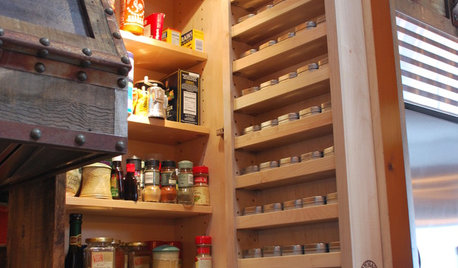
KITCHEN DESIGN7 Steps to Pantry Perfection
Learn from one homeowner’s plan to reorganize her pantry for real life
Full Story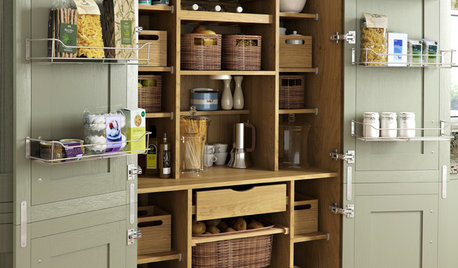
KITCHEN PANTRIES80 Pretty and Practical Kitchen Pantries
This collection of kitchen pantries covers a wide range of sizes, styles and budgets
Full Story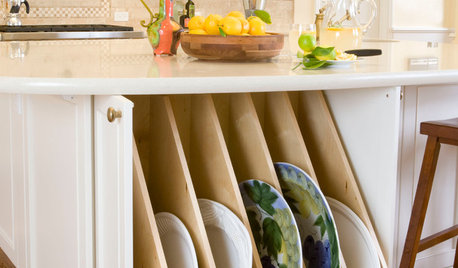
KITCHEN STORAGE13 Popular Kitchen Storage Ideas and What They Cost
Corner drawers, appliance garages, platter storage and in-counter knife slots are a few details you may not want to leave out
Full Story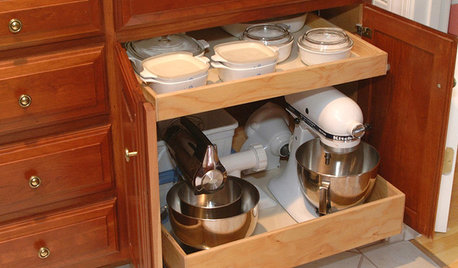
KITCHEN APPLIANCESConsidering a New Kitchen Gadget? Read This First
Save money, time and space by learning to separate the helpers from the hassles
Full Story
KITCHEN DESIGNA Cook’s 6 Tips for Buying Kitchen Appliances
An avid home chef answers tricky questions about choosing the right oven, stovetop, vent hood and more
Full Story
KITCHEN DESIGN11 Must-Haves in a Designer’s Dream Kitchen
Custom cabinets, a slab backsplash, drawer dishwashers — what’s on your wish list?
Full Story
KITCHEN DESIGNA Designer Shares Her Kitchen-Remodel Wish List
As part of a whole-house renovation, she’s making her dream list of kitchen amenities. What are your must-have features?
Full Story
KITCHEN DESIGN8 Kitchen Design Tips for Foodies
If you own at least one pricey knife and have a slew of kitchen tools, you’ll want to read this
Full Story
MOST POPULARSo You Say: 30 Design Mistakes You Should Never Make
Drop the paint can, step away from the brick and read this remodeling advice from people who’ve been there
Full Story
KITCHEN DESIGNKey Measurements for Your Kitchen Design
Get the ideal kitchen setup by understanding spatial relationships, dimensions and work zones
Full Story
arkansas girl