

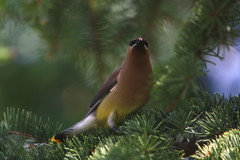
How do i attract cedar waxwings to my feeders?
10 years ago
Featured Answer
Sort by:Oldest
Comments (8)
- 10 years ago
Related Discussions
Cedar Waxwings eating grape jelly
Comments (14)I never have used frozen fruits. I suspect the Orioles and / or Waxwings responsible for taking our blueberries, strawberries and raspberries before WE can get to them. They like our pears too. :-) For offering jelly we use a shallow dish, like the kind you would put under a flower pot so it doesn't spooge water everywhere. Its shallow and heavy enough that they don't flip the thing when they perch on the edge. So how do you give the Orioles nectar? I placed some in a shallow dish and the starlings had a bath in it. LOL! What a sticky mess they made! Then they needed to rinse off in the regular water birdbaths. Would they drink orange juice? C3D...See MoreAnother bird feeder [for boh. waxwing]
Comments (5)Wow, nice pictures! And what a crop of berries on that tree! Al, robins are insectivorous in the breeding season, but change to eating fruit the rest of the year. That's how they manage to winter over (which they do in some number all across the prairies - almost any well wooded area, where people are out looking, will have a few recorded on Xmas bird counts), and how they survive their early migrations in March, when few insects are out and snow may cover the ground. Seems like strange behavior but apparently many groups (warblers, vireos, thrushes, etc.) are fruit-eaters on their wintering grounds, but feed themselves and their young on insects during breeding. The reason I say it seems strange is because on the wintering grounds (e.g. Central/South America), I'd guess insects would be plentiful. Perhaps insects provide superior nutrition during breeding and nesting (protein?)...just a guess. Konrad, the young you see in late summer are most likely Cedar Waxwings (as these are the common breeders on the prairies) - they are easily distinguished by yellow undertail coverts (the area on the underside of the tail and vent area that's brown on Bohemians, visible on your excellent photos); they also have a different wing pattern. If you are interested, keep an eye out for cedar waxwings in your flocks of bohemians; they are normally migratory but it is not too uncommon for one or two to hang out with a flock of bohemians and winter over with them. And the closer you are to the mountains, the greater the likelihood of seeing the odd bohemian, out of range, in the summer. Yes, amazingly beautiful birds - always such a pleasure to see!...See MoreYet Another: How Do I Get Them To Use My Feeder Question
Comments (4)Place a big pot of some hummingbird attracting annual on your back porch and hang the feeder close by. They'll discover it in no time. And I find some feeders are more appealing than others - forget the fancy blown glass ones and go with the cheapo plastic discs. These tend not to spoil as fast in hot weather and give the hummers a perch for feeding......all the better to watch them!! And the species you are describing are most likely Anna's. They are year round residents in the Puget Sound area and are not the most colorful hummers on the planet, especially when juveniles. Adult males often have iridescence and a red throat. And I'd not worry about them being fearful of the house. IME, hummers are not afraid of much - not me , not the house, not my cat (who knows he's not anywhere as fast and just looks) or the dog. In fact, I am a little bit afraid of them coming into the house as a hanging basket they frequent is right by the back door that is almost always open in hot weather. And they hover and stare at me through the windows....See Morecedar waxwing
Comments (28)MM, What a wonderful experience! As you have seen, the story that birds will abandon babies and nests if they smell humans is an old wive's tale. I have been fortunate to have bluebirds nest in my yard, and they will even tolerate a nest change when it has been extremely necessary. Some species are more wary than others, but most have a very poor sense of smell. I have found most of the songbirds that actually take care of their young (other than cowbirds) are actually very loyal to them. They will risk their own safety (to a point) to insure the babies' survival. Nature does bless them with enough sense to preserve their own life in extreme threats (like wasps) however. After all, baby songbirds have a 1 in 2 chance of making through the first year. It wouldn't make sense for the breeding pair to throw all caution to the wind and give up their own lives. They can always go on and raise another brood afterall....See More 10 years ago
 10 years ago
- 10 years ago
 10 years agolast modified: 10 years ago
- 10 years ago
 9 years ago


Related Stories

GARDENING FOR BUTTERFLIESGarden for Wildlife to Reap Rich Rewards
When you plant with animals and insects in mind, you make gardening easier, the planet healthier and yourself more present
Full Story
GARDENING GUIDES13 North American Backyard Birds to Know
Find out about these enchanting native species and learn how to attract them to your yard
Full Story
GARDENING GUIDESPlant Black Cherry Trees for the Birds and Bees
Plant Prunus serotina in the Central and Eastern U.S. for spring flowers, interesting bark and beautiful fall color
Full Story
GARDENING FOR BIRDSFeed the Birds: 6 Plants for Abundant Winter Berries
Be kind to your fair feathered friends during lean food times by planting a shrub or tree loaded with nutritious snacks
Full Story
GARDENING GUIDESMake Your Garden a Haven for Backyard Birds
Create a bird-friendly habitat in your yard with food, water and shelter
Full Story
GARDENING GUIDESGarden-Friendly Native Alternatives to Overplanted Exotics
There are lots of gorgeous, wildlife-friendly native plants ready to make an appearance in your garden
Full Story
GARDENING FOR BIRDSBackyard Birds: How to Identify Two Common Woodpeckers
Downy and hairy woodpeckers have similar coloration and behavior. But there are two big differences that separate them
Full Story
GARDENING FOR BIRDSBackyard Birds: Meet Some Clever and Curious Jays
Boisterous jays provide plenty of backyard bird-watching in winter. Here’s how to identify all the varieties and welcome them into your yard
Full Story
GARDENING GUIDESNew Ways to Think About All That Mulch in the Garden
Before you go making a mountain out of a mulch hill, learn the facts about what your plants and soil really want
Full Story
LIFEHouzz Call: Where (and What) Are You Reading This Summer?
Whether you favor contemporary, classic or beach reads, do the long and lazy days of summer bring out the lit lover in you?
Full Story
More Discussions
catherinet