

Do those electric pest repellers really work?
10 years ago
Featured Answer
Sort by:Oldest
Comments (12)
 10 years ago
Related Discussions
What natural plant pest-repellents haven't worked for you?
Comments (10)I am in agreement with comments above... the single most important thing you can do to reduce pests, in my opinion, is provide healthy soil. It is not often mentioned that most plants _do_ have defenses of their own; what we consider to be "flavors" are often chemical defenses against insects. Provided that the plants are healthy enough for those defenses to be effective, they can often fend for themselves. Cucumber beetles, for example, are attracted to compounds given off by plants under stress. This could be caused by disease, inadequate water, or previous attack by other insects - such as squash bugs. Given a high organic matter, pH-balanced soil with good drainage & adequate water, plants are healthier & less attractive to the beetles. While there may still be some present, their population is considerably smaller. The second thing, as mentioned by Lacyvail, is to create (or at least not discourage) a local ecosystem that encourages beneficial insects. It has often been mentioned by those who purchase those insects, that it's hard to keep them around. To do so, you need to provide a food supply for all points in their life cycle. A wide range of flowers, with long or overlapping blooming periods, is helpful. In addition to perennials _near_ your vegetable garden, plant annuals _in_ the garden. And for the larvae - which represent your true resident population - you might need to learn to tolerate enough of an aphid population to sustain them. If you are accustomed to killing off your aphids early, you might be inadvertently destroying the next generation of ladybugs & lacewings as well. For severe infestations, it might be more effective to go after the ants (which usually spread the aphids) rather than the aphids themselves. There may be some truth to companion planting; I rotate all of my vegetables each year, and have noted some good combinations (such as beans & Swiss chard). There are also some plants that don't play well with others, such as okra. If your garden is high-intensive/high-density, then it is more important to know which plants _do not_ grow well together, than it would be with conventional methods. But I think that for the most part, the issue is not which plants grow with which - it is to grow as wide a range of small plantings as possible, as opposed to large blocks. Large blocks of anything (mono cropping) promote the easy spread of insects or disease, and provide a stronger scent trail for flying insects to follow. When I began saving seeds seriously, it forced me to alter the way that I gardened. If I wanted pure seed, I had to provide space & barriers between different varieties. This meant that my beans & tomatoes, for instance, could no longer be grown together in one place, but were spaced out in different "cells" throughout the garden. In any form of experimentation, there are often unexpected results... and in this case, the fringe-benefit was an enormous reduction in insect damage. This is not to say that I have no damage - only that it has been reduced to the point of being (usually) tolerable. One last note... to encourage greater soil fertility, about 10 years ago I began to leave clover alone when weeding. I would still pull it out if it was directly in a row, but in paths & between rows was OK. After years of this, I now get a good stand of clover in the garden. When rabbits get in (as they always do) they prefer the clover in the paths to almost all of the vegetables. I guess that makes it a "trap crop" for rabbits. ;-) Only when I began to grow soybeans did I find something they like even better (and "like" is an understatement)....See MoreDo deer chasers really work?
Comments (12)Our pond is not very large, about 4' long by 2' wide, kidney shaped. It has lots of aquatic plants in it. We had 4-5 goldfish, and the hawks ate all but one within a short period. The final fish disappeared a few months later. Recently my wife has seen a heron in our back yard, apparently checking out the pond, although we haven't restocked it with fish yet. We are waiting for the pond to warm up, and need to install a new pump, before adding more fish again. BTW, we live near a fairly large nature park on the outskirts of the city. Lots of deer from the park roam through our neighborhood at night, eating all of the gardens and other plants. We also have a lot of hawks, herons, geese and other animals that spill over from the park. We know it was hawks that ate the fish because: (1) I saw one roosting on our arbor near the pond several times the week the week the fish disappeared; and (2) our nextdoor neighbor actually saw a hawk swoop down into our pond, grab something in its talons, and fly off....See MoreCatnip used as Pest Repellent
Comments (27)Cat Deterrents for your Garden: Keep in mind that each cat is different (like people), what works for one may not necessarily work for another. On the plus side, most cats will keep pesty squirrels, moles and other critters out of your garden. Cat's are also great for keeping out moles, rabbits, squirrels, and other critters which can do more damage in your garden than a cat ever will. If the cat's have owners, take it up with them without being non-confrontational. The cat owner who allows his cat to damage other peoples' property is as guilty as the cat hater who kills the cat for trespassing. Remember, cats will be cats, and it is unfair of us to blame them for being what they are. After-all, we praise them when they catch mice or rats or other creatures we deem to be 'pests'. * amonia soaked (corncobs, etc) * aluminum foil * bamboo skewers * black pepper * blood meal fertilizer * bramble cuttings * Carefresh - "recycled" wood pulp * catnip - donated into your neighbor's yards (so they'll stay in their own yards) * cedar compost * chicken wire (metal or plastic) * cinnamon * citrus peels * citrus spray * cocoa bean shells * coffee grounds -fresh & unbrewed (highly recommended) * dogs * electric fence for animals * essence of orange. essence of lemon, lime (citrus essential oils) * fresh manure(ditto) * garlic cloves * gumballs from the Sweet Gum Tree * gutter covers * hardware cloth * heavy bark mulch * holly leaves * keep the area damp, they like dry soil * lavender * liquid manure (good for your garden too) * motion sensor sprinkler * pinecones * pipe tobacco * plastic forks * predator urine * river rocks over the exposed soil * rocks, crushed * rose bush clippings * rue, an herb (Ruta graveolens) (highly recommended in plant form only) * short twigs throughout the planted area about 6" apart * six-inch bamboo skewers (pointy side up) * Spray on your leaves (not the cat): fill a spray bottle with 1/2 t chili powder, 1/2 t cayenne pepper, 1 t dish soap and water * squirt gun with water * talk to your neighbors * thorny berry, lilac, hawthorn, rose clippings * toothpicks * upside down vinyl carpet * vinegar sprayed on areas where they roam * water bottle on "stream" NOT RECOMMENDED: *** chili powder, red crushed pepper, cayenne pepper (NOT recommended), it gets on the cat's paws then they wash themselves and they get it in their eyes, beware cats have literally scratched their eyes out because of this *** Don't ever use mothballs or flakes. Those little toxic waste pellets destroy cats' kidney function, could seriously harm people who handle them, and yes, contaminate your garden soil. Their packaging even warns against using them this way. Give them their own areas: (To keep them out of where you don't want them) (If you don't mind them protecting your garden from other critters) + pick the cat up and bring it to eye level with the plant to see and smell it up close. She noted that once her cat has seen and sniffed at the plant, she usually doesn't bother with it later. + give them their own plants - i.e., pots of grass for her to chew on and a place in a large planted container on her balcony with some miscanthus grass in it (the cat likes to curl up in that for some reason) + if the cats are strictly indoors and attracted to your houseplants, grow catgrass for them. If someone forced you to remain inside one enclosed structure all your life, you might be attracted to the plants too. + Barley Grass + Any type of "catgrass" from the pet store + Carex elata 'Bolwes Golden' but put it in some shade + Catmint Nepeta mussinicultivars (Simply put, Catmints are Catnips without any culinary or feline use. In any case, they are, however, phenomenal, long flowering, hardy perennials that belong in every fairie or flower garden.) + Catnip Nepeta cataria (in your own yard) The oils of which also work as a mosquito repellent that works 10 times better than Deet! + Cat Thyme (Teucrium marum) + Flax + Oat Grass + Jacob's Ladder + Lemon Grass + Loose soil and mulch like small bark mulch + Mints + Purple Fountain Grass so the cat lays in the long leaves all day. Maybe put something in that the cats really like and - you know cats won't winky were they like to hang out. + Sandy area + Silver vine (Actinidia polygama) + Striped Ribbon Grass (can be invasive) + Sweet grass + Trificum aestivum (type of cat grass) + Various Varieties of Cat Mints (Catnips) + Wheat Grass + Wheat Berries + Valerian This list compiled by Violet_Z6, email at violetgw@care2.com for comments and suggestions regarding this list....See MoreCitrosa Geranium - Mosquito repellent??? REALLY?
Comments (3)"Does it work?" - Not really :-) Pelargonium 'citrosum' is marketed as "mosquito plant" or "citrosa geranium" in stores in the United States and Canada, even though research indicates the plant is ineffective against Aedes aegypti mosquitos."Not only was the plant ineffective at protecting humans against Aedes mosquito bites, the mosquitoes were seen landing and resting on the citrosa plant on a regular basis." It is also NOT the source of citronella, which is derived from a type of lemongrass, Cymbopogon spp....See More 10 years ago
 10 years ago
- 10 years ago
- 10 years ago
 10 years ago
- 10 years ago
 10 years ago
- 10 years ago
- 10 years ago
- 10 years ago

Related Stories

MOST POPULARHow to Get Rid of Those Pesky Summer Fruit Flies
Learn what fruit flies are, how to prevent them and how to get rid of them in your home
Full Story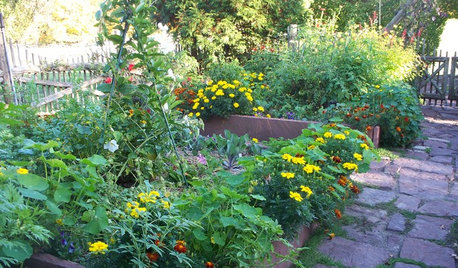
GARDENING GUIDESOrganic Matters: Thwart Insect Pests With Trap Crops
Add a few sacrificial plants to your garden to lure insects away from the harvest
Full Story
MOVINGWhat Those Home-Sale Disclosures Are Really Saying
Avoid costly surprises by knowing what’s included in a home seller’s disclosure, what’s not and what you can do if you suspect foul play
Full Story
EDIBLE GARDENSGarden BFFs? Why Your Vegetables Are Begging for Companion Plants
Foster friendships among plants for protection from pests, pollination support and color camaraderie
Full Story
GARDENING AND LANDSCAPINGBreezy and Bug-Free Modern Porches
Screening keeps pests out of these diverse porches across the U.S., while thoughtful designs keep them visually appealing
Full Story
GARDENING GUIDESHow to Declutter Your Garden Shed, Greenhouse or Potting Bench
Get those pots and tools sorted now, and you’ll be free to focus on your plants when spring arrives
Full Story
GREEN BUILDINGGoing Solar at Home: Solar Panel Basics
Save money on electricity and reduce your carbon footprint by installing photovoltaic panels. This guide will help you get started
Full Story
LIFEHow to Prepare for and Live With a Power Outage
When electricity loss puts food, water and heat in jeopardy, don't be in the dark about how to stay as safe and comfortable as possible
Full Story
LIFE7 Things to Do Before You Move Into a New House
Get life in a new house off to a great start with fresh paint and switch plates, new locks, a deep cleaning — and something on those windows
Full Story
BATHROOM DESIGN10 Living Room Touches to Bring to the Bath
Go ahead, borrow those bookshelves. Unexpected elements can boost interest and comfort in your bathroom
Full StorySponsored
User