

Apropos of the weather
11 years ago
Featured Answer
Sort by:Oldest
Comments (8)
 11 years ago
Related Discussions
Temperature jumped 25 degrees!
Comments (9)Here in "Live-no-more" (as the local kids call it - actually, Livermore, but rather apropos, considering our usual summer weather), it hit 103 today in my yard. The winners in heat-resistance thus far (2 days of blistering heat after an incredibly cool summer, but I watered well ahead of the predicted heat wave) are: Etoile de Lyon (hardly even a brown edge, anywhere!), Stanwell Perpetual, Madame Alfred Carriere, and Marechal Niel. Honorable mention (more than 50% of blooms still presentable): Alliance Franco-Russe, Souvenir de Pierre Notting, Bermuda Spice, and Mrs. B.R. Cant. The "potpourri" crew (I like that term!): Maman Cochet (relatively young, but really...), Le Vesuve (still young, and not THAT bad), Comtesse du Cayla, Duchesse de Brabant, Rhodologue Jules Gravereaux (a surprise considering his thick petals), Clementina Carbonieri, Gilbert Nabonnand, Madame Berkeley (well!), Madame Antoine Mari, Jaune Desprez, Alistair Stella Gray, Cramoisi Superieur (in a pot), and poor Crespuscule (who is one of my real favorites, but not a hot-weather rose here -- however, he does usually recover quickly)....See Moresummer 2011 lets talk about rm weather!!!!!!!
Comments (26)Steve, My peppers in the hoop house in gallon and a half or larger pots produce in mass .Many have been potted up since the end of April.I have about 70 others to plant up who were not picked up when I offered free plants,,LOL,,Mostly the super hots,just cannot toss them to the chickens..so I am doing that today.In the greenhouse we will end up with about 200 pots of peppers when I finish plus a mud tub outside.Last year we picked the last ones with the tomatoes around Christmas time..When I do them out in the garden I get probably about a 1/4 of what I can harvest out of the greenhouse in a season.. Wait can one have to much basil???? hehehehe We added a second house just for the tomatoes this year have about 72 of them in it.It is time to get the support system figured out there as well since they are chest high. Stinking slugs with another cool year,,they do not seem to like the cedar shavings I like to use on the greenhouse floor to much.Just in case though I do have sluggo sprinkled around the perimeter and a bottle of ammonia water to spray them down. LOL oh well they do give us a romantic midnight walk with a flashlight and a bottle of ammonia ,hmmm last night was chilly though.. Dan not sure if this will help or not but it is what we have going up in from the Missoula to Glacier. Up in the Glacier Park area they are looking at one of the latest Going to the Sun openings since it opened.One of the hike in lodges just opened but they are saying very limited hiking around it due to the heavy masses of snow drifts still about 15 ft deep...In Kalispell there is still quite bit of high water moving through and some flooded areas.They are still monitoring the lake and running Kerr Dam open because of of high waters.My son lives on the Flathead river out by Buffalo much of which the bike trails and such are still under water.My other son lives down in the Missions just below McDonald lake area, Post creek is running off pretty high yet with some lower flooding there. I have not been down to the Bitteroots area. But the Clark Fork moving through Missoula and over past the family ranch at Tarkio is riding high and very dirty yet..No one has mentioned any thing about the rafters running yet there.. Mary...See MoreWeekend Trivia ~ Saturday
Comments (13)Well, I should have been back more often with clues but everything is a struggle right now - I have strep and haven't been able to get in to see my Dr. yet - oh well, tomorrow hopefully. 1. El Nino The most dominant pattern responsible for interannual, or year-to-year, climate variability across the globe. During an El Niño event, warmer-than-normal sea-surface temperatures occur in the central and eastern equatorial Pacific, while cooler-than-normal temperatures are observed in the western part of the tropical Pacific. El Niño (Spanish for "The Baby Boy" of the Christmas story) was named more than 100 years ago by Peruvian fishers who noticed the warming water off their shores around Christmas time. 2. La Nina During a La Niña event, cooler-than-normal sea-surface temperatures (SSTs) occur in the central and eastern equatorial Pacific and warmer-than-normal SSTS are measured in the western part of the tropical Pacific. During La Niña, convection over the western Pacific tends to be farther west than the climatological average, bringing heavier-than-usual and more persistent rains to Indonesia and northern Australia, among other teleconnections. Like its brother, La Niña recurs at intervals ranging from about two to seven years, with events typically lasting from one to three years. Researchers believe La Niña behavior could change with global warming, although the exact nature of this change remains uncertain. 3. Montreal Express An informal term for the pattern that results when the polar jet stream arcs from northern Siberia across western Canada, then dips southward across central and eastern North America. Along the northeast coast of North America, a similar pattern in which the cold air originates over Canada is called the Montreal Express. 4. Trade Winds - yep, that's one!! The easterly surface winds prevailing across the tropics. The trade winds, part of the Hadley circulation, got their name at the dawn of the age of oceanic sailing, when cargo traders learned to rely upon them. 5. Vortex The circulation associated with a surface low-pressure area. Vortices can range in size from dust devils to tornadoes to hemispheric patterns. Some more localized weather may be referred to as: 6. Lake Effect Think Buffalo. Lake-effect snow is produced during cooler atmospheric conditions when cold winds move across long expanses of warmer lake water, providing energy and picking up water vapor, which freezes and is deposited on the leeward (downwind) shores. Did anyone see the pictures of the storm-front moving across Lake Ontario towards Buffalo? Truly awesome. 7. Alberta Clipper - An Alberta clipper (also known as a Canadian Clipper) is a fast moving low pressure area which generally affects the central provinces of Canada and parts of the Upper Midwest and Great Lakes regions of the United States. Most clippers occur between December and February, but can also occur occasionally in November. 8. Panhandle Hook - A Panhandle hook is a relatively infrequent winter storm system whose cyclogenesis occurs in the South to southwestern United States from the late fall through winter and into the early spring months. They trek to the northeast on a path towards the Great Lakes region, as the southwesterly jet streams are most prevalent, usually affecting the Midwestern United States and Eastern Canada. Panhandle hooks account for some of the most memorable and deadly blizzards and snowstorms in North America, as well as tornado outbreaks in the Midwest on record. The name is derived from the region of surface cyclogenesis in the Texas and Oklahoma "panhandle" regions. In some winters, there are no panhandle hook storms; in others, there are several. 9. Nor'easter - The usage of the term in North America comes from the wind associated with many different types of storms, some of which can form in the North Atlantic Ocean and some of which form as far south as the Gulf of Mexico. The term is most often used in the coastal areas of New England. A nor’easter is a low pressure area that often passes just off the New England and southeast Canada Atlantic coastline. Winds in the left-forward quadrant rotate onto land from the northeast. The precipitation pattern is similar to that of other extratropical storms. Nor’easters can cause severe coastal flooding, coastal erosion, hurricane force winds or blizzard conditions; these conditions are usually accompanied with very heavy rain or snow, depending on when the storm occurs. 10. Colorado Low - You're right Cynthia, not a rock Mountain High - lol. A Colorado low is a low pressure that forms in southeastern Colorado or northeastern New Mexico, typically in the winter. After forming, the system moves across the Great Plains. Colorado lows produce heavy wintry precipitation, and have a general east to northeast movement, impacting regions as far north as Winnipeg and as far east as the Atlantic coast. If upper level conditions are right, the jet stream can push the low farther south, bringing wintry precipitation as far as Texas. When pushed this far south, the system is often referred to as a "blue norther". Well, thanks for playing!! May the peace of the Season be upon you and yours!! Merry Christmas - see you all next week. I'll leave you with a song. Nancy. Here is a link that might be useful: Southern Cross - CSN...See MoreChina cabinet update/Sorry Beagles: I'm keeping it
Comments (57)To answer a few questions. To start, yes, I do keep going in the room to gape at my new piece. Fortunately we eat all our meals in that room so I see it daily. (I'm tempted to tell DH he now has to eat on the other side of the table since his usual seat is on the side of the cabinet. Kidding. Sort of.) I got the piece from Facebook, on a local version of the "Buy nothing, Sell Nothing" group in my neighborhood. I've given away a lot of furniture and a few times a year, I give around ten tickets or so, to Longwood. The woman who was gifting it had owned it for ten years. She had originally planned on painting it grey, but thankfully life got in the way of those plans. She is a young married work from home mom with a few kids and a seriously untrained one year old golden retreiver. Her house was an 80's split level with a beachy vibe (wasn't my thing, but to each her own.) I gave her five tickets to Longwood as a thank you for the cabinet. She called Longwood her "happy place." Later, I sent her the picture of it in its new home and her response was that it looked better at my house than hers. I've since looked on facebook marketplace and it is crazy how many people give away china cabinets. I get it--no bride wants china anymore, but still!...See More- 11 years ago
 11 years ago
 11 years ago
- 11 years ago
- 11 years ago
- 11 years ago

Related Stories
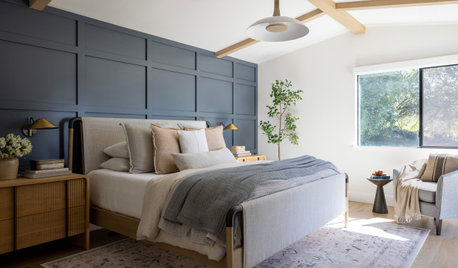
FEEL-GOOD HOMESimple Pleasures: The Joy of Fresh Sheets
Make your bed a place of comfort and relaxation with good-quality linens, ample pillows and other pleasing accoutrements
Full Story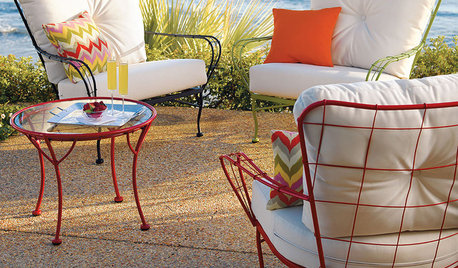
PRODUCT PICKSGuest Picks: Design-Forward Outdoor Furniture
Treat yourself to one of these splurge-worthy patio pieces and enjoy great outdoor style for many summers to come
Full Story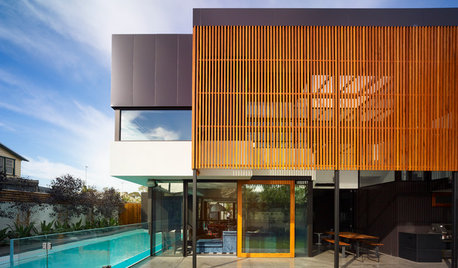
ARCHITECTUREArchitectural Sunscreens Take the Heat Off Homes
Sun-blocking screens help you stay cool, play with light and create a stunning modern exterior
Full Story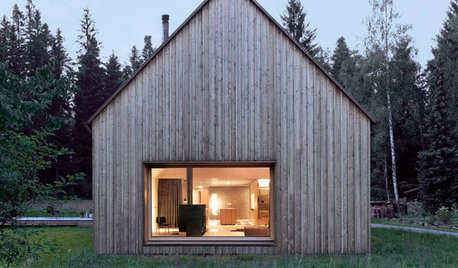
MOST POPULARA Few Words on the Power of Simplicity
An architect considers a pared-down approach to modern home design
Full Story
HOUZZ TV FAVORITESHouzz TV: Life, Love and Purpose Down on the Farm
A Missouri native proves that you can go home again — and discover something entirely unexpected
Full Story
FARM YOUR YARD9 Ways to Change Up Your Vegetable Garden for the Coming Season
Try something new for edible plantings that are more productive than ever
Full Story
GUESTHOUSESHouzz Tour: This Guesthouse’s Former Residents Were Horses
A new insulated exterior for a Vermont carriage barn preserves its rustic interior
Full Story
GARDENING AND LANDSCAPINGGuest Picks: The Autumn Deck
Build a fire and grab a blanket. There's still time to enjoy the crisp fall air outdoors!
Full Story
Cherryfizz