

Another set back in my quest for losing weight...
17 years ago
Featured Answer
Sort by:Oldest
Comments (21)
 17 years ago
- 17 years ago
Related Discussions
Frustrated - Not Losing Weight, No Extra Energy
Comments (11)15 Tips for Breaking through a Plateau (by Weight Watcher Leader Elizabeth): 1. JOURNAL, JOURNAL, JOURNAL -- This is one of the most powerful tools to help you stay on track or get back on track. Your journal can help you see where you are perhaps going over or under on your number of points for the day, or aren't getting in the Guidelines for Healthy Living requirements. Use your journal as a detective tool: Had a good week? Look over it at the end of the week and try and see what you think contributed to that success. Had a not so good week? Again, look over your journal to see what may have contributed to you playing a little looser with the program. Look at last week's journal for clues too, sometimes it takes a full week before the effects of a blown week show up. 2. EATING BY THE NUMBERS (Or are you getting in too many carbs? Protein? Not enough fat?) -- Look at your food choices, are you really getting a wide variety of foods in? Remember, your body needs nutrients from lots of different sources and if you're eating the same things all the time or too much of one type of food, you're probably not getting the proper nutrition your body needs. How is your protein to carb ratio? Look at the Eating by the Numbers chart on page 8 of your Week 1 booklet for suggested guidelines of how to most nutritiously spend your points during the day. These are suggested ranges for someone under 200 pounds, for over 200 take most of your extra points from complex carbohydrates and protein. There's a helpful Excel spreadsheet on Rea's homepage: www.geocities.com/Heartland/Plains/6548/ that is called something like the Points Food Groups Journal that she's got set up for 28-35 points per day, but all you've got to do is input your points range and the suggested guidelines from the Eating by the Numbers chart for the various food groups. This can help too if you're one of those old WW selection plan people who just don't like the Points system. You can use this to follow the points, but use it for the selections of the various food groups so that you keep a healthy balance in your points. Take a look at your food choices as sometimes we have the attitude that as long as our points balance at the end of the day we're okay, but if we keep in mind the Guidelines for Healthy Living on pages 5-7 of the Week 1 booklet, we'll see that we still are asked to do a few steps to ensure we're spending our points in a way that keeps our bodies healthy. 3. WEIGH AND MEASURE PORTIONS -- Too many times our portions have gotten bigger without us realizing it, using measuring cups and spoons and weighing out our portions can give us a better idea if our portions have suddenly grown bigger than we're counting. Remember, portion size does matter. 4. READ LABELS CAREFULLY -- Are you counting your points right for the product that you're eating. I remind everyone of my jumbo dinner frank story where the serving size was half a frank! Who eats half a frank? I was counting 4 points when I should have been counting 8 points. If you're eating a bigger serving size than the one listed on the label you're probably eating more points than you calculated. 5. REMEMBER, ZERO MULTIPLIED IS NOT ALWAYS ZERO (okay, not when it comes to food points) -- If you're eating one serving of fat free sugar free gelatin for 10 calories, okay, that's zero points, but if you're now eating 4 servings plus 2 tbsp of fat free whipped topping, you've got yourself one point! Beware of those hidden extras where we multiply portions, and beware of BLT's: Bites, Licks, and Tastes that never seem to get counted on any journal. These add up. 6. TOO MANY REFINED CARBS? -- Are you eating too many sources of simple and refined carbohydrates, the stuff that's heavily processed and no longer looks like its natural food source. Think of it as the difference between whole grain bread and processed white bread, brown rice vs. white rice, popcorn cakes vs. corn on the cob. Try to include more of the natural sources of carbohydrates in your diet stuff like beans, yams, potatoes, brown rice, and whole wheat anything rather than so many crackers, pretzels, and chips (even low fat chips). This is not to say you can't have any refined carbs, just try to limit the amount of them if you're having trouble 7. NOT ENOUGH FAT? -- Okay, this sounds counterintuitive, but according to the Eating by the Numbers chart and for good nutrition you should be actively adding in about 2-3 points of fat per day. This is stuff like vegetable oils, margarine, butter, regular or reduced fat (not fat free) salad dressing, avocados, regular or reduced fat (not fat free) mayonnaise, olives, and peanut or soy butter. I have personally met a number of people now who weren't losing and when I suggested they start actively adding in 2-3 points of fat per day they started losing again. Our bodies need enough fat in order to properly function. You think there's enough fat in my food already, right? Not when you're limiting your number of points in order to lose weight. We are often making much lower fat choices than we normally would have, and as a consequence our consumption of fat falls far below the recommended guidelines according to lots of nutrition experts of 30% of your total calories in fat per day. If you are limiting your fat intake to only the fat that's naturally in food and even then you're probably taking the skin off the chicken and drinking skim or 1% milk, then you might only be getting around 10% of your calories in fat per day, not enough for your body. So, the reason our bodies need enough fat in our diets each day as opposed to just feeding off of our body's fat stores is because fat contains an essential fatty acid: linoleic acid, that our body can't produce on its own. That fat is needed for proper metabolic and digestive function. Fat provides essential nutrients our bodies need, it transports fat soluble vitamins that our bodies need, it is needed for proper digestion and metabolic function, it helps us keep fuller longer, keeps our hair and skin nice, and is crucial for proper gallbladder function. If you're on a super low fat diet you can develop gallstones that are no fun and super painful. 8. DRINK HALF YOUR BODY WEIGHT IN WATER EACH DAY. -- According to Barbara Levine, R.D., Ph.D., the Director of the Nutrition Information Center at the New York Hospital-Cornell Medical Center and reported in the June issue of Weight Watchers magazine, she says that overweight people need more water than the typical 8 cups a day rule. "Overweight people tend to need more water, because fat cells hold more water than other fat cells in the body. To determine the number of ounces of water you need per day, divide your weight by two. For example, a person who weighs 140 pounds should consume 70 ounces, or about 9 cups. Of course, this is an estimate. The best way to gauge whether you are getting enough water is to monitor the color of your urine. If you're drinking enough, it should be the color of pale straw. If it is a deeper yellow, you're not getting enough fluids" (page 16, June 1999). Lots of times we misinterpret thirst for hunger, try water first, wait 20 minutes, real hunger will not go away. 9. MAKE SURE YOU'RE GETTING FIVE SERVINGS OF FRUITS AND VEGETABLES PER DAY. -- Eating the zero point veggies can often help us to fill up so that we're not eating the other higher points foods instead. If you're hungry, try non-starchy veggies first. Lots of members make the Garden Vegetable Soup recipe in the Week 1 booklet and eat a bowl of that before dinner to fill up a bit so that you can get full on the smaller portions you'll be serving yourself. Try a glass of V8 juice before a meal during the summer when soup sounds too hot. Variety is good here too, try a new fruit or veggie each month to expand your repertoire. 10. INCREASE THE FREQUENCY OR INTENSITY OF YOUR PHYSICAL ACTIVITY. -- Are you exercising? If not, know that you'll be much more successful at losing the weight and keeping it off if you are also physically active. Find something that you enjoy doing and just do it! Start with a five minute walk out of your door, look at your watch after five minutes start heading back, just like that you've done 10 minutes! Next week start adding in a couple of extra minutes, try walking for 7 minutes out of your door, and 7 minutes back, you've now done 14 minutes. Keep adding until you're up to at least 10 minutes out and 10 minutes back. If you're already active, are you exercising at enough intensity? If you can easily carry on a conversation while exercising (you should be able to speak, but it should take a bit of effort) you're not challenging your body enough. Your body becomes really efficient at adjusting to the amount of physical activity you're doing, so you regularly have to adjust either the intensity of your workouts or the frequency in order to continue to reap the maximum benefit from physical activity. Try strength training in order to build lean muscle tissue. As we get older we lose lean muscle tissue which depresses your metabolism in addition severely restrictive diets where we eat too few calories can cause us to lose weight but lots of it is lean muscle which also depresses our metabolism. If we build muscle tissue this can help us to reverse that process and to make us trimmer and stronger. 11. MOVE THE FURNITURE AROUND. -- Do you always have your biggest meal at dinner? Try eating your biggest meal for lunch or even for breakfast, with smaller meals for the remaining meals. If you regularly eat most of your points at one meal your body converts the rest of the food into stored energy...fat...so that if you balance your points out throughout the day better you can actually give your metabolism a boost by keeping it revving throughout the day instead of only one spike at dinner. Food actually helps to boost our metabolism, that's why it's important never to skip meals. There's a saying that you could help losing weight. to lose weight by eating breakfast like a king, lunch like a prince, and dinner like a pauper. This gives us the majority of our points early in the day when our bodies can use them because we're active instead of right before bed if we eat them at dinner. 12. TRY VARYING YOUR NUMBER OF POINTS. -- Do you always eat at a certain number of points per day? Your body gets very efficient at predicting its intake and adjusts itself accordingly. Keep it guessing. Try mixing up the number of points you have...low one day, middle the next, back to low, then high end of your points. Special note: If you're very active never eat at the low end of your points, your body may think it's starving, always eat middle to high end of your points and take those extra exercise points if you need them...let your hunger be your guide. 13. TAKE YOUR MEASUREMENTS AND LOOK FOR OTHER NON-SCALE SIGNS OF PROGRESS. -- Often even when the scale isn't moving, we're still improving our health and our bodies which will show up in other ways other than the scale. Have your measurements gone down? How are your clothes fitting? Can you climb a flight of stairs without being winded? Has your cholesterol gone down? Can you walk now for 20 minutes when before you were huffing and puffing at 5 minutes? How do you feel? 14. ARE YOU ON AN ATTITUDE PLATEAU? -- Are you just tired of feeling like you're going to be doing this forever? Does that translate into that right now your desire to lose weight is equal to your desire for freedom from counting and having to think about points and healthy food choices? If so, then that mental attitude might be the culprit in that you're following a more relaxed adherence to the program but you think you're still doing it to the letter. Remind yourself of why you started this process, look at how far you've come. Is your goal still the same? Is it that you're scared of success, are okay with how you look right now, have you become complacent? Ask yourself these kind of questions honestly. If you're tired of the weight loss routine or have become complacent, try spicing up your food plan by trying more interesting meals and snacks, adding new foods, trying new recipes or new restaurants. Set new goals, setting a new goal can continue to challenge yourself. 15. CONSIDER MAINTENANCE. -- A plateau that lasts a long time can be the practice to show you that you can maintain your weight. Sustaining weight loss is a challenge in itself. Consider doing the maintenance process so as to take a break from weight loss. Taking a break from weight loss and focusing on keeping the weight off can be the best thing to do, especially if a vacation or stressful situation is what is keeping you from continuing on your weight loss journey. It's better to gain some ground, then hold it, then go back and gain more ground than to give up because then you lose all of the ground you've gained (lost!). WHEN YOUR WEIGHT PLATEAUS - Bob Greene (Make the Connection) A plateau occurs when your weight remains the same for a period of time. This can last weeks or even a couple of months. With nearly every successful weight-loss program, you can expect your weight to plateau--probably many times. Plateaus occur for a variety of reasons, and are quite normal. One of the most common reasons for a plateau is a natural adjustment to weight loss. Your body needs to make many adjustments when you lose weight, and it will release the weight only when its ready. Realize that it is virtually impossible to lose more than three pounds of fat in a week. If you lose more than three pounds in a given week, you are losing either water weight or muscle/lean weightÂwhich, as you know, is not what we want. Go to the local butcher counter and ask to see three pounds of fat. You will see that it takes up a lot of space, and your body must make physical adjustments for this loss. At this time, physiologists donÂt know all there is to know about these adjustments, but we can be sure that they serve a purpose. Plateaus caused by these natural adjustments normally last two or three weeks, but could go on for a month or two. So be patient and stay on your program! Another cause of plateaus is water fluctuation. As I discussed earlier, water can be retained for a variety of reasons. This extra water weight can create the illusion that you are gaining weight or have reached a plateau  even when youÂre losing FAT. Plateaus caused by these water fluctuations typically last from three days to one week. Again, just realize that these are temporary fluctuations in your weight, and donÂt be alarmed. Cheating on your program can also cause plateaus. LetÂs say youÂve been good about following the program, and youÂve had consistent weight loss. Now you have a bad eating and/or exercise week. This may or may not make you gain weight, but it could easily result in a prolonged plateau. This type of plateau can last as long as you are cheating on your program. My advice is to take this attitude: "Yes, I went of my program, but everyone slips up from time to time. IÂm going to get right back to work and pay the price for that week." And keep in mind, a bad day or week might not show up right away on the scale. But you shouldnÂt think youÂve gotten away with something, because it will show up at some point. This is why itÂs important to get right back on the program as soon as you stray from it. DonÂt give it up. A Positive Spin On Those Frustrating Weight Loss Plateaus ediet newsletter - April 13, 2000 by Cyndi Thomas, N.D. We live in a society that wants instant gratification. We want our health and weight loss... and we want it now! True health and permanent weight loss takes time. I have so many clients that have the attitude, "Well, I've followed your advice for a month now, why don't I feel better yet?" I have to remind them, "You didn't get sick overnight and it will take time to see the desired results." Now, onto weight loss...Just as the body was formed and operates on a priority basis, so it heals on a priority basis. This means that the most important parts of the body get the healing attention before the less vital tissues. We can't force the body to place its healing priority on weight loss when in fact the liver is about to die, for example. The liver is more important to your body than the extra pounds. So all the energies of the body go to heal the liver and weight loss will stop. The body will not compromise what health and vitality it does have in one part of the body to bring about healing in another. In other words, the body will not "rob Peter to pay Paul." So you may be eating nutritionally and exercising and you start out losing some weight. But then all of a sudden, you become stuck at a certain weight -- the needle on the scale won't budge anymore. The body is rejoicing on the inside and saying things like, "You know, we have all this extra energy now because Mr. Doughnut here has decided to start eating right and exercising -- let's take some of our new available energy and start the healing process on his congested liver!" So the body will take all the available energy and channel it into the liver. As a result the weight loss stops. The body will NOT take away any energy needed for daily activities and maintenance. It will only take what is left over to start the healing process. It's my belief that the body does not completely heal one part before moving on to the next item on its priority list. Rather, it heals a part to the degree that it is no longer a priority. At that point the healing attention is shifted to the part of the body that is now in most need of repair. In the above example, once the liver has been cleansed somewhat, the body will refocus its attention on other areas... perhaps back to weight loss. During my weight loss period, I would hit plateaus where it seemed like I'd never lose another pound. I lost 10 pounds and then nothing for 3 weeks. During that time I woke up one morning and my arthritis was gone and my blood sugar had stabilized somewhat. If you keep on your diet and exercise program, you will eventually lose all the weight you want. A healthy body is not overweight. Remember, "Always strive for health and the weight loss will happen!" Weight-Loss Plateau is a Good Sign By Loni Calie Reed The 1st week of a calorie-controlled weight loss diet is easy. The 2nd and 3rd weeks are not too hard either. But around the 4th or 5th week it seems that the scale will not budge. You have reached your first weight loss plateau. Plateaus, the times when your weight stubbornly stays put, are normal. Of course, plateaus are frustrating  so much so that many people abandon their weight loss efforts. But surprisingly, a plateau is a positive sign. It is a signal from your body that you have lost body fat, but unfortunately, not body weight. This last statement may sound contradictory. How can someone lose body fat and not lose body weight? Basically, the answer is that in place of the fat you lost, your body now holds water. Until the water is lost, the scale will not register your achievement. Scales cannot tell the difference between weight that is fat and weight that is water. Unfortunately, you cannot see inside yourself either. But you can learn what is going on and why. The human body, like the food we eat is composed of nutrients  protein, carbohydrates, fat, vitamins, minerals and water. If you were a trim 150 pounds, your body would contain about 90 pounds of water, 30 pounds of fat and 30 pounds of all the other nutrients. As you can see, you (and everyone else) are mostly "all wet". Water is not just blood. Much of the bodyÂs water is part of the chemical configuration of cells, tissues and organs. For example, muscle hold considerable water within its structure. Generally, 1 pound of muscle tissue in the body is associated with 4 pounds of water. Even fat tissue is about 15% water. So for example, 7 pounds of body fat contains about 1 pound of water. When you are eating fewer calories than you are burning up, your body must get the energy it needs from somewhere. That somewhere is you. When you lose weight, you are in fact consuming your own fat and protein to get the energy (calories) that you need. In effect, you "eat" yourself. During the first few weeks of any weight loss program, your body tends to use up more body protein in the form of muscle and organ tissue than in later weeks of dieting. As time goes on, your body becomes more selective and relies mostly on fat stored for energy, and less on the protein tissues essential to body functioning. When body protein and fat tissues are used for energy, the water associated with these tissues generally hangs around for awhile. In other words, you remain "water logged." This is what accounts for the plateau periods. It is like the body is resting before it goes down to the next lower weight. To see the pounds disappear, you may want to assist your body to lose its excess water weight. You can do so safely by reducing your sodium intake. Try to keep from adding much salt in cooking, and do not put a salt shaker on the table. Cut down on condiments like pickles, mustard, catsup, and soy sauce. Instead of salty condiments, try applesauce, spiced peaches and other fruits to perk up meats and fish dishes. Use lemon, spices and herbs for flavor in cooking, but avoid monosodium glutamate. Avoid canned foods with salt. Buy fresh or frozen foods without added salt. For normal water loss, diuretics are not necessary, nor even advisable. Also saunas and steam baths provide only momentary dehydration, not lasting effects. Because one pint of fluid perspired away in a hot sauna equals 1 pound less of water, dramatic weight changes are possible in record time. However, as soon as you drink again, and you should drink, your water weight returns. While water weight fluctuations are frustrating, they are temporary. The true test of dieting success is the pinch test, not the scaleÂs numbers game. ItÂs how much real fat you lose, not how much protein and water, that makes for a leaner and healthier you....See MoreI am ashamed I gained my weight back, but I want to try again???
Comments (15)rosiequilts, I lost 50 pounds last year by calorie counting, which is just another way of saying "eating-loads-of-fruits-&-veggies-so-you-can-eat-the-most-food-with-the-fewest-calories". I learned to love vegetables! A pile of eggplant, onions, mushrooms & peppers with a little spaghetti sauce on just 2 oz. of pasta & 1/4 cup grated mozzarella is delicious & filling. Spaghetti squash can be substituted for the pasta (just put the spaghetti squash whole in a crock pot & it's done in 4-6 hours). For salads, I love to mix spinach, lettuce, diced raw green beans, carrots, celery, cherry tomatoes and use 1/3 cup dried cranberries for dressing, or sometimes green olives and a little of the olive juice in the jar. If fresh produce isn't on hand, then combining frozen veggies & cooking in the microwave is tasty: kale, lima beans & cauliflower, for example. Veggies in combination taste much better than just plain. In winter I enjoy turnip greens & squashes. Cabbage is a versatile veggie, good for filler in soups & stews, sauteed, microwaved, or sliced for low-fat cole slaw made with Splenda. For munchies, I love to microwave a tub of Brussels sprouts or cauliflower & keep it in the fridge for mindless snacking (you know, when you get those urges to eat but you're not really hungry). A little butter or oil won't hurt you and, in fact, makes the vegetables more nutritious. Your body absorbs the nutrients better when a little fat is present with the veggies. Sometimes I like to make a green sauce of chopped fresh spinach & French parsley in a little cream & parmesan cheese, heated in a sauce pot. I serve this over a big plate of broccoli & cauliflower, and it's delicious. There are so few calories in the veggies that you can afford to indulge in the cream sauce. But then, that's dinner -- no bread, no side dishes, no heavy meats. Anyway, didn't mean to hijack this thread. Just wanted to pass on some good veggie food ideas. When you walk through the cookie/cracker aisle with indifference, but your mouth starts watering when you get to the produce section, you know you've made a good change!...See MoreWould YOU take him back? - {EverQuest Part 2}
Comments (49)I have been involved with this woman now for 5 years. After 4 years I broke up with her because her ex husband was stalking me and impersonated a sales man to talk to my children to get information, among other things. Also he poisoned his kids to not accept me which made things very difficult for us. She was very depressed, so I decided to break up the relationship because this was the right thing to do at that time. Giving her time to build her relationship back with her children and family. I know I hurt her immensely, but at that time I thought it was the good thing to do. She called me back after a week and tried to win my heart back and told me she loved me and only wanted me. I told her that we should be friends for now. However, after a couple of weeks of seeing each other every day, I started to feel that our relationship was worth fighting for; I told her I love her too. We were doing everything together, dinners, movies, dancing and we were intimate. But later I found out that she was chatting online with someone from a dating site for 10 weeks. During that time she was trying to win my heart back which she did About 7 weeks before this. She kept me a secrete from all her friends, but she was telling all her friends about the guy she was chatting with and wanted to go see him. Her friends told her to wait because it may be dangerous. So she continued her affair and became emotionally attached. After spending a long weekend with me she decided to tell the other guy that she is getting back with me. Then she told me about it. But, when she told her friends that she was back with me they all told her to dump me. So she started to treat me very badly and did not get rid of the contact of the other guy on MSN. She was waiting for him to reply back to her because he said he wanted to be friends. The problem is she lied about the whole thing. She told me that she chatted with him only 5 times. But I found out the truth. That she was using me as a crutch to move on. She lied, denied and manipulated her way into my home with her kids. Now I feel betrayed. What should I do? I feel she picked me second. She told me 2 months after she got rid of the contact that if she gave the other guy a chance it would of worked out. That hurt. She new me for 4 years and she never even met this person. Now she tells me she loves me very much....See MoreYour holiday goals & losing weight & living healthy
Comments (41)I re-post U. of Michigan link on how brewer's yeast help with diabetes: http://www.uofmhealth.org/health-library/hn-2816000 Also another link on how brewer's yeast work to lose weight for reference: http://www.naturecity.com/blog/weight-loss/brewers-yeast-extract-may-help-with-weight-loss/ "At the six week point, the researchers noted that the yeast hydrolysate group already had significant reductions in calorie intake. This reduction was maintained through the end of the study. At the conclusion of the study, the researchers noted an average 5.7 lbs reduction in body weight and a 17.3 cm2 reduction in abdominal circumference in the yeast group, compared to 1.8 lbs and 7 cm2 reductions in the control group. Researchers from Jeonju University in South Korea conducted the study. It was published in the January 2014 issue of Nutrition. Previous studies have found an association between yeast hydrolysates and increased energy, better immunity, and improved gastrointestinal health." **** From Straw: The biggest help with my sleep & losing weight is CUTTING OUT SOY MILK ... I was so sleep-deprived when I used soy milk. I didn't know that soy interferes with the absorption of magnesium (necessary for sleep & help with diabetes). I have 3 older sisters who are diabetic, and they consume soy-milk daily. I already informed them of the inflammatory carrageenan in soy products, plus depletion of magnesium. Carrageenan is in many products, including ice cream, milk-substitutes (almond & soy & coconut), coffee creamer, and cake-mixes. Here's a link of what contains carrageenan: http://www.cornucopia.org/shopping-guide-to-avoiding-organic-foods-with-carrageenan/ Here's a National Institute of Health abstract on the link between carrageenan and diabetes: "This is the first report of the impact of carrageenan on glucose tolerance and indicates that carrageenan impairs glucose tolerance, increases insulin resistance and inhibits insulin signalling in vivo in mouse liver and human HepG2 cells. These effects may result from carrageenan-induced inflammation. The results demonstrate extra-colonic manifestations of ingested carrageenan and suggest that carrageenan in the human diet may contribute to the development of diabetes." http://www.ncbi.nlm.nih.gov/pubmed/22011715/...See More- 17 years ago
- 17 years ago
- 17 years ago
- 17 years ago
- 17 years ago
 17 years ago
- 17 years ago
 17 years ago
- 17 years ago
- 17 years ago
 17 years ago
 17 years ago
- 17 years ago
- 17 years ago
- 17 years ago
 17 years ago
- 17 years ago
- 17 years ago
Related Stories
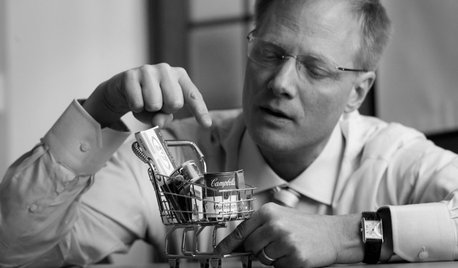
MOST POPULAR7 Ways to Design Your Kitchen to Help You Lose Weight
In his new book, Slim by Design, eating-behavior expert Brian Wansink shows us how to get our kitchens working better
Full Story
DECORATING GUIDESUse It or Lose It: How to Get Rid of Old Keys
Clean out your junk drawer by getting rid of keys in an earth-friendly way
Full Story
DECORATING GUIDESDeclutter Now: Lose That Old Sports Equipment
Make more room in your closets and give your home a fresh start the eco-friendly way
Full Story0

BEFORE AND AFTERSSee 6 Yards Transformed by Losing Their Lawns
Wondering whether a turf lawn is the best use of your outdoor space? These homeowners did, and they found creative alternatives
Full Story
KITCHEN DESIGNHow to Lose Some of Your Upper Kitchen Cabinets
Lovely views, display-worthy objects and dramatic backsplashes are just some of the reasons to consider getting out the sledgehammer
Full Story
EARTH DAYThe Case for Losing the Traditional Lawn
Work less, help the environment and foster connections by just saying no to typical turf
Full Story
GARDENING AND LANDSCAPINGYour Yard: Are You Ready to Lose the Lawn?
Save time and water with good-looking alternatives to turf grass
Full Story
MIDCENTURY HOMESInside Houzz: Setting a Midcentury Mood in Portland
Wanting to keep their home’s 1950s vibe but lose the outdated functionality, a couple finds help on Houzz
Full Story
HOUSEKEEPINGAnother Independence Day: When Kids Can Do Their Laundry
Set yourself free and give your child a valuable life skill at the same time
Full Story
HEALTHY HOME12 Ways to Set Up Your Kitchen for Healthy Eating
Making smart food choices is easier when your kitchen is part of your support team
Full Story
heather_on