

Female cardinals
13 years ago
Featured Answer
Sort by:Oldest
Comments (13)
 13 years ago
Related Discussions
ID bird looks like a female cardinal with BAD hair day
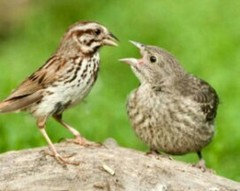
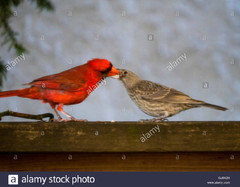
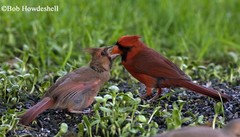
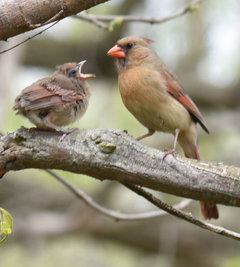
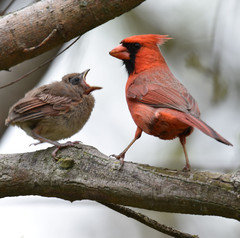
Comments (6)It most likely is an older baby cardinal. The photo above is a very young bird. What you have described sounds like a bird that is at an age between the fledgling photo above and an adult. We have many here in NJ and it took me awhile to figure out what they were. It takes some time for there color/markings to come in. They have a similar pitch to their call as an adult, but the pattern is a "tweet tweet tweet" or "peep peep peep". They are very vocal when hungry and the parents are usually close by. We had a mating pair that had a female and male baby. The father would constantly be feeding the male, but the female baby was so much more self-sufficient. She would eat seeds off the ground with her mother. Eventually the mother went over and gave the male baby a peck. It was hilarious!!...See MoreUnable to identify unusual bird
Comments (4)Pyrrhuloxia came up in our online search, but according to the info, we are not anywhere near its range and the markings of our bird are not quite right. The patches on the wings are almost orange. A leucistic Cardinal is a possibility, although the tail seems a little long for a cardinal. There are probably a lot of variations on the markings of these, so that could be it. It was still frantically fluttering around the barn this morning when we opened it up. Hopefully the bird will make its way out today. Thanks for the ideas!...See MoreFemale cardinal still pecking on window after about 3 months
Comments (0)I don't know if the drought this summer has thrown off Bird hormones, but this female cardinal has been pecking at our windows for about 3 months now. I feel so bad for her. There's a male hanging around with her too. I hope he's trying to discourage her from having this spring behavior in the late Fall. Its constant......all day long, every day. There's a term for this behavior that I can't remember right now. Its when other environmental factors sort of throw off their hormones. Poor thing. Anyone else with more of this behavior in the Fall, than usual?...See MoreFemale Cardinal
Comments (7)Gldno 1 I was not familiar with your camera so I did a quick online search for it. Although it is advertised as a point & shoot camera technically speaking it falls into a category known as "Bridge Cameras" because they bridge the gap between point & Shoot and SLR's. Generally speaking (although not in all cases) SLR's have interchangeable lenses however with a 12x zoom your camera has a full focal range from normal to about 400mm. I could not find all the specs on the user definable exposure settings for your camera, but I did manage to glean enough information that I think you will be able to take the same kind of shots I am taking very simply. As you already mentioned, you will no doubt need a tripod, But be very careful here. There are perhaps as many variations of tripods as there are cameras to mount on them, and sadly, some are not worth the labor to drag them to the curb. Believe me, that is coming from one who has purchased 5 tripods in the last 6 months before I found a descent one. When selecting a tripod you will find that they come with either a Tilt & Pan head or a Ball Head. Personally, I prefer a Tilt & Pan head, but that is merely a matter of personal choice. one word of advice, whichever type head you select, be sure to get one that will allow you to rotate the camera base from horizontal format to vertical format. Unless you are buying a high end professional tripod built with high tech graphite I would strongly suggest you stear away from any tripod that is advertised as "light weight". The lightweight ripods are fine for the little pocket sized point & shoot cameras, but in most cases they lack the stability to hold a larger camera steady. It could be argued that your camera is lightweight, but it must also be noted that your camera has no provision for a shutter release cable or infra red remote, therefore you will have to press the shutter button with your finger, and that action could introduce vibration therefore in my humble opinion you would need a slightly heavier tripod to compensate. I would suggest you look for one that is rated in the load range of 8 to 12lbs. Many of the amateur grade tripods come with a bubble spirit level built in. That is a nice sales gimmick, but in the real world it is highly unlikely that you would ever have need of it. Another feature that is commonly found on contemporary amateur tripods is the quick release head. I fell for that nonsense, but in the real world it turned out to be a real pain in the butt. First off, it doesn't take that long to mount your camera on a tripod screw. Secondly, the screw that holds your camera on the quick release plate has a very small head and it is difficult to get it tight enough to be secure, not to mention that on my camera, if the plate is secured on the camera base, that is one more step I have to go through to open the battery compartment. (That tripod has now been relegated to a light stand for an external slave flash). Your tripod should have an extended height of at least 40 to 48" with a telescoping center that will extend up another 10 to 20". Some people find a geared crank type elevator convenient, but I find on the cheaper amateur grade tripods they are usually just a piece of plastic junk that will soon strip the gears. When discussing a center elevator rod there is one feature that i would highly recommend. Get one where the elevator can be removed then inserted up from the bottom. That may sound silly, but I shoot nature and quite often I am shooting a subject that is very close to the ground. By inserting the elevator up from the bottom I can suspend the camera upside down off the bottom and get good stability with the camera right down to 4 or 5" off the ground. I would strongly suggest looking for a tripod that has all metal construction. You can expect to pay $50 to $75 for an all metal amateur grade tripod, but the up side is, you will not wear it out in your lifetime and if you are lucky enough to find a second hand one, you may get it for less money than the plastic and thin aluminum junk that is currently offered. (I got a professional all metal tripod from and online auction sponsored by Goodwill Industries for $13.75 + $8 S+H.. Check out WWW.shopgoodwill.com). From what I could gather you camera does not have user definable shutter speeds, however it does have numerous "Scene Modes". If you set your camera scene mode selector to "Sports" it will operate as a shutter priority system. This means that it will select the highest possible shutter speed and compensate by opening the lens to the widest aperture. For shooting bird pictures that will give you a two fold advantage. 1. But keeping the shutter speed higher, you will be able to get stop action and should be able to capture birds in flight coming and going from the feeder and 2. by keeping the aperture wide open it reduces the "Depth of field". Depth of field is the area in front of and behind the specific focal point that will remain in focus. By example, in your pictures above the bird, being the focal point is in perfect focus, but because the aperture was open to 3.3 the depth of field was only about three feet, which made the background blur, giving you that nice faded pastel background rather than showing all the trees and bushes behind the scene. Early this morning I took four pictures to give you a visual lesson of how I get the shots and how you will be able to do it with your camera. The first shot is taken from the shooting position in my bedroom with a 50mm normal lens focused on the bird feeder. The camera was mounted on a tripod about 5ft from the window. In this photo I used the flash to illuminate the window frame, however you will not that it had no effect on the outdoor scene. In addition, the flash reflected off the glass causing the bright light flare appearance on the tree. Notice that with this lens the depth of field is from almost immediately at the camera all the way to infinity on the trees in the far distance (over 300yrds away) You will get the same shot by setting your lens to normal length and set the scene mode to Sports". For the second shot I removed the normal lens and mounted the tele but I did not make any adjustments to the camera settings. Once again the lens is focused on the bird feeder. (With your lens set to maximum tele you will have approximately the same focal length) With a 300mm lens focused at 50ft you can see that the depth of field is very short, causing the brush in the background to blur, leaving a soft background. However you will note that the snow is bright, and therefore fooling the meter into thinking there is more light than what is really available, which causes the scene to appear darker than desired. In this shot all things are equal, except I set the Exposure Compensation (EV) to +1 to lighten the print one f stop. To this point all photos are as taken straight from the camera with no post processing. The last photo is cropped from the previous photo to produce the final print...See More- 13 years ago
- 13 years ago
 9 years agolast modified: 9 years ago
- 9 years agolast modified: 9 years ago
- 9 years ago
- 9 years ago
- 9 years ago
- 9 years ago
- 9 years agolast modified: 9 years ago
- 8 years ago
 8 years ago
Related Stories
GARDENING GUIDESBackyard Birds: Northern Cardinals in the Snow, and Other Red Birds
Brilliant crimson feathers make these friends stand out in a crowd
Full Story
GARDENING FOR BIRDSWild Birds Transform a Woman’s Garden and Life
How Sharon Sorenson created a wildlife haven and became the Bird Lady of Southern Indiana
Full Story
GARDENING FOR BUTTERFLIESA Quick-Start Guide to Bird-Watching for Fun and Learning
Set out some seed and grab your field guide. Bird-watching is an easy, entertaining and educational activity for the whole family
Full Story
GARDENING GUIDES6 Rockin’ Red Plants for Winter Gardens
Use the bright berries or branches of these cold-climate favorites for outdoor garden interest or container arrangements anywhere
Full Story
GARDENING FOR BIRDSBackyard Birds: Marvel at Chickadees This Winter
These North American natives flock to bird feeders and entertain with their complex birdcalls
Full Story
GARDENING GUIDESHow to Bring the Joy of Bluebirds to Your Garden
Attract these beautiful songbirds with nesting habitat and food sources, including berry-producing trees and shrubs
Full Story
GARDENING GUIDESBackyard Birds: How to Care for American Goldfinches
The American goldfinch is a bright-in-the-summer visitor and one of the only vegetarian songbirds. Here's how to give them a healthy habitat
Full Story
GARDENING FOR BIRDSWhat to Know About Birds Nesting in Your Yard
Learn how to observe, record data and help ornithologists with NestWatch’s citizen science project understand bird trends
Full Story
GARDENING GUIDESBackyard Birds: Invite Entertaining Hummingbirds Into Your Garden
Hummingbirds — unique to the Americas — zip through open landscapes seasonally or year-round. Here’s how to attract them
Full StoryGARDENING GUIDES13 North American Backyard Birds to Know
Find out about these enchanting native species and learn how to attract them to your yard
Full Story
More Discussions
donnas_gwOriginal Author