

How to Stop Birds From Building Mud Nests on My Front Porch
17 years ago
Featured Answer
Sort by:Oldest
Comments (110)
 11 years ago
- 11 years ago
Related Discussions
Birds nest - complete with real birds!
Comments (6)OMG, Evelyn! If you knew how many baby mockingbirds I hand fed while working at Audubon, you'd die! People would bring in baby birds all day long, and you couldn't convince them to leave them alone, so my job was to take care of them and get them prepared to be released back into the wild later on. One of the reasons we do not encourage people "rescuing" the baby birds is that there comes a time when the bird has imprinted so strongly on the parent bird, it will not take food from a person. You can cram it down their throats, but it will just sit in the crop area and not be digested. So removing them from the parent's care is often a death sentence. Now if a whole nest comes down (like during a storm) sometimes there is no recourse but to rescue them and try to feed them. And I know techniques have improved GREATLY from the days I was involved in bird rescue. So the odds might be better now. But lordy, lordy...I must have handraised at least 200 baby mockingbirds in a couple years time. Not to mention jays, grackles, thrashers, titmice, and maybe 1,000 mourning doves! (My least favorite baby birds of all time.) Anyway, your picture is a trip down memory lane for sure. Saintp, the length of time it takes an egg to hatch varies from species to species, but usually it is not very long. A week or ten days, often. I'll see if I can find out about bluejays. I don't remember. Maybe I never even knew. But the info is probably out there somewhere. Will get back to you later. Marcia...See MoreRevisiting How to Keep Swallows From Building Nests...
Comments (114)I just stumbled upon this post as I try to prevent the recurring problems from Barn Swallows again this year. Unfortunately, the image is no longer available and I cannot see how you hung the netting. We have a colony of Barn Swallows that roost at our apartment building each year. The landlord hates them, but a former tenant had posted signs everywhere about how it was illegal to remove the nests. It was only through my own research that I realized it was only illegal while eggs or babies were in the nests, and those tenants moved out this winter. In addition to nesting on top of our buildings lights, covered walkways, and eaves, my apartment and the one next door have outdoor entrances from our gorgeous courtyard and patio which have covered stairwells. Each year, the swallows fly through these two stairwells like its the Lincoln Tunnel, dive bombing anyone who tries to walk on the stairs. They build their nests on the outlet boxes or porch lights. The first summer we lived here, I thought it was really neat to have such a close view of their lives, as I would often sit on my steps and could watch the babies as they grew, taking great care to be quiet and non-threatening. However, I also found that my porch steps and exterior wall were covered with bird droppings. They are also very very noisy when there is an entire colony of them outside of your windows. All of the "teenage" birds hang out in one of our courtyard trees outside of my window, which my cat loves but can actually drown out any conversation or television in our living room. Then I experienced what I thought were bed bugs in our house. I had tiny bites head to toe and could constantly feel them crawling on me despite rarely being able to see anything. It got so bad that I was getting the bites infected from itching all the time, and I couldn't sleep because I could feel the bugs crawling on my skin as soon as I tried to relax. I finally captured a few and took them to the University's Department of Entymology, who identified them as bird mites. That experience was HORRIFIC. I was ready to burn our entire building down after reading that the bird mites multiply much more quickly than bed bugs and are nearly impossible to remove. Luckily, the mites died off when the birds finally left for the season, but I can no longer sit outside on my wooden stairs because I fear contracting them again. The next spring, I tried the knock-down method, just on my own stairwell. I would open my screen door 2 inches and use a broom handle to knock down the nests up to 7 times a day. The swallows became very agitated, and and two attacked my daughter's head when she got home from school one of the days. I couldn't sit inside and repeat this process forever, though, and they got their nest up one day while I was off at a 12 hour work shift. The outlet covers they use are too high up to see into, and I knew that some other nests already had eggs, so I couldn't knock it down, more out of compassion than fear of charges. This will be our third summer here. Our elderly landlord has given up trying to prevent them from nesting even in the building entryways. I have removed my porch light cover so there is no solid surface to nest on, but the outlet box cover is too high up and I can't put a ladder on the stairs to reach it. I have considered trying to throw a cotton ball soaked with peppermint oil up there (it has worked in the past for mice and spider problems), or hanging a bunch of cut aluminum as a mobile at the top of the steps (I have heard that the reflections off the metal scare birds off), but I simply can't go through another year of this if those methods don't work. I saw that I could use something to create a 45% slope where the nest to prevent them, but again... getting up there is an issue. I am curious to see how you used the mesh. Could you please share the picture again?...See MoreBuilding/forming a concrete front porch...
Comments (3)I"m not getting a clear mental picture of what your describing, you should post a pic. What I can tell you is that you don't need 12" thick solid concrete. If the need is there on the perimeter for the additional thickness fill in the center with form fill (sandy clay dirt) and dig a footer beam around the circumference then use additional steel to reinforce the beam. Inside of the form all you need is 4" of redimix for the floor. Dirt is a much cheaper filler. You can use plywood and/or dimensional lumber with kickers for your form setting. I would also say to take some post hole diggers and place some post holes down through the topsoil to some harder dirt beneath your outside beam. If the elevation of your finished floor is at a level equal to or below your existing brick ledge it doesn't matter when you pour the concrete. You should also drill into the existing concrete and use a two part epoxy to place some dowels into it across the cold joint (the spot where both concretes poured at different times meet) This is work a DIY'er homeowner can perform himself. See ya, Kelly...See MoreHow do i keep birds from nesting in my hanging baskets? ughhhh
Comments (18)I have the same problem in Florida with my orchids. They hang in various baskets under the trees. Not only do the birds try to nest in the baskets, they love the sphagnum moss which is part of the potting mix. They also love the coir baskets, pulling chunks off the baskets which leaves big holes where all the potting mix falls out. One thing I did last year which seemed to work was to add small lava rock to the top of the potting mix. They do not like it and have left the plants alone. I removed it after nesting season and saved it for this year. I found a bunch of house wrens and finches landing in the baskets this morning and I knew it was time to get the rock out. You could probably use small gravel. Would work the same. Good luck and let us know how it goes... Jane...See More- 11 years ago
- 11 years ago
 11 years ago
- 11 years ago
- 11 years ago
- 11 years ago
 11 years agolast modified: 11 years ago
- 11 years ago
- 11 years ago
- 11 years ago
- 11 years ago
- 11 years ago
 11 years ago
- 11 years agolast modified: 11 years ago
- 11 years ago
 11 years ago
- 11 years ago
 11 years ago
- 11 years ago
- 10 years ago
- 10 years ago
- 10 years ago
- 10 years ago
- 10 years agolast modified: 10 years ago
- 10 years ago
- 10 years ago
- 10 years ago
- 10 years ago
 10 years ago
- 10 years ago
- 10 years ago
- 10 years ago
- 10 years ago
- 10 years ago
- 10 years ago
 10 years ago
- 10 years ago
- 9 years ago
- 9 years agolast modified: 9 years ago
- 9 years agolast modified: 9 years ago
 9 years ago
 9 years agolast modified: 9 years ago
 8 years ago
- 8 years ago
- PRO8 years agolast modified: 8 years ago
 8 years ago
 8 years ago
- 8 years ago

Related Stories
GARDENING FOR BIRDSWhat to Know About Birds Nesting in Your Yard
Learn how to observe, record data and help ornithologists with NestWatch’s citizen science project understand bird trends
Full Story
LAWN ALTERNATIVESStop Fighting the Patchy Lawn!
Here are 3 situations where a garden may be a better idea than more turfgrass
Full Story
GARDENING FOR BUTTERFLIESBring on the Birds: Natural Habitat Ideas for Gardens of All Sizes
Provide nesting, watering and perching spots inspired by the Costa Rican jungle and watch the birds flock on over
Full Story
MODERN ARCHITECTUREKeep Your Big Windows — and Save Birds Too
Reduce bird strikes on windows with everything from architectural solutions to a new high-tech glass from Germany
Full Story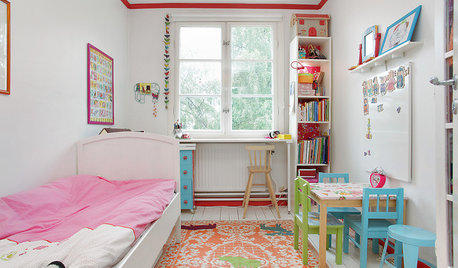
LIFEStop the Toy Takeover by Changing the Way You Think
Make over your approach and get gift givers onboard with your decluttering efforts by providing meaningful toy alternatives
Full Story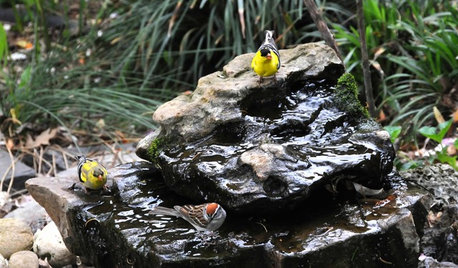
OUTDOOR PROJECTSBring In the Birds With a Homemade Bubble Rock
An avian expert from Southern Indiana shows how to make a burbling fountain that migrating birds will love
Full Story
REMODELING GUIDES8 Lessons on Renovating a House from Someone Who's Living It
So you think DIY remodeling is going to be fun? Here is one homeowner's list of what you may be getting yourself into
Full Story
GARDENING GUIDESBackyard Birds: Healthy Home Habitats for Northern Flickers
These colorful woodpeckers found across the U.S. and Canada love berries, seeds and ants and often nest in deep burrows in trees
Full Story
TILETop Tile Trends From the Coverings 2013 Show — the Wood Look
Get the beauty of wood while waving off potential splinters, rotting and long searches, thanks to eye-fooling ceramic and porcelain tiles
Full Story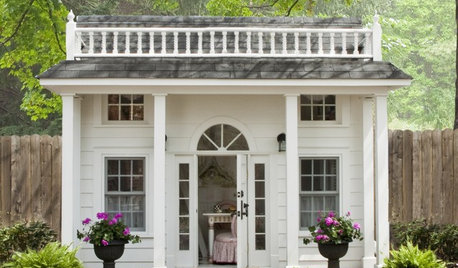
OUTBUILDINGSBirdie's Nest: Storybook Style Makes for a Marvelous Playhouse
Enter an adorable mini home with just enough room for tea parties, play cooking and snuggly story times
Full Story
More Discussions
ladya0