

Zoysia and Weed killer
19 years ago
Featured Answer
Sort by:Oldest
Comments (10)
 19 years ago
- 19 years ago
Related Discussions
Safe Weed Killer For Juniper Bed?
Comments (3)I have used a product that kills grass in my juniper beds effectively and safely,----"Vantage", but it doesn't kill the other weeds that I know of, Pauline...See MoreRegular Vinegar as Weed Killer (With Pics)
Comments (37)Thought I would chime in with a thought or two on RU versus vinegar. First both are most effective when the target 'weed' is younger and is growing fast. I use both depending on the situation and target 'weed'. I do use a few drops of sticker spreader aka any dish soap in both products. Over 90 degrees seems to be most effective for vinegar. A few days after a good rain is my favorite time to attack weed problems. Active growth is key to both. Young makes for better odds of complete kill. Water the target area if need be. Plants with a waxy look to them don't absorb either product very well and so is not generally very effective. On unwanted shrubs and or woody materials I cut the plant down to close to the ground and then scar up around the sides to expose more of the cambial tissue. ( a one cell layer located between the heartwood and bark layer). Cambial tissue is what allows a plant to heal a cut and goes from root to top of most woody type plant. Then I use full strength 25 to 41 percent glyphosphate (the active ingredient in RU) with a foam brush and brush all these exposed areas with it. It is also good to use a squirt of dish soap in this solution. Be careful to only touch the areas you want killed and don't slather it on. Just a light brushing over the exposed cut and scrapped area. I have found this to take out many shrub, tree and vine like materials without affecting the surrounding plants to any noticable degree. I didn't want to be long winded but wanted to very clear about the technique. Any futher questions about this email me and I will try to clarify further. David a garden center manager at Canyon Lake...See MoreWeed Troubles While Growing Zenith Zoysia from Seeds
Comments (9)OMG! Stop IT! STOPIT! Slow down!! Relax. Chill. Take this weekend off from the lawn and go to Schlitterbahn or something. You are waaaaay over thinking this. And you're, well, let's just leave it at that. I have a lot of questions about how and why you did what you did, but I'm not going to ask - I assume someone you trust told you to do all that stuff. For the most part they were misinformed about what works in Austin and other places, too. Here's how you do a lawn in Round Rock. First look around you and notice that nobody has a zoysia lawn. There must be a reason for that. The first thing to know about gardening is to select plants that are well adapted to your climate and soil. That's the reason about 80% of the lawns are St Augustine and 15% are one form of bermuda or another. The rest are either xeriscaped or some form of zoysia, but those can be hard to find. The reason everyone has St Augustine is that it is dead simple to grow. The reason they don't have zoysia boils down to disease. Once it gets a spot of fungus, it goes dormant for the rest of the season. It will come back next April, but most people choose to replant with St Aug or bermuda. People will tell you that St Augustine requires too much water, but all grass needs to be watered once a week to look good. You've done something that you will be reminded of over the course of the next 3 years. You rototilled. I realize the Seedland website suggests rototilling. I'm not sure where that comes from but it is universally a bad idea. Scott's website also tells you to rototill in preparation for new grass. That's dead wrong. What is going to happen is your fluffy rototilled soil will settle back and form a new structure over the next 3 years. As that happens it settles unevenly leaving holes and hills for you and your mower to run over. It you try to level it now or next year it will continue to settle and recreate new hills and holes until the soil structure is finally finalized. The new structure will be formed by soil microbes, chemistry, soil mechanics, and gravity. You should have ignored the hard soil and rocks under the top layer of soil. That can be addressed from the surface without damaging the existing soil structure. I did not see any zoysia in the pictures. The first close up pic might be crabgrass but is more likely dallisgrass. Crabgrass would be much preferred because it will all die in about November with the first frost. Dallisgrass is perennial and will come back if it freezes out or not. Your second picture shows nutgrass. Nutgrass is a sedge (more formally it is called nut sedge). As a sedge it needs a sedge killer to affect it even slightly. Nutgrass is a swamp type grass that much prefers continually moist soil to even occasionally moist soil. But if it gets continual moisture it will take off and not look back. There is another sedge called green kyllinga that looks a lot like nut grass. Green kyllinga is not nearly as aggressive as nut grass, but it also will survive in deeply dried out soil. Either one needs a sedge killer to kill it. Sedgehammer is one and Image is the other one. If that is nutgrass and you get yourself on a deep and infrequent watering program, the nutgrass has a good chance of going away permanently. In step 6 you sorta wasted the bags of fertilizer. There were no roots for the fertilizer to fertilize. By the time the grass would have come in the fertilizer would have been washed through. At step 8 the thing to do would have been to roll the seed down. Rollers are not used to level the soil. They are used to press the seed down into the surface of the soil. Leveling is done with a drag which picks up soil/sand from the high spots and drags it to the low spots. Then the soil is wet down and soil added to the low spots that appear when it was wet down. But I digress. Step 9!! You're using my favorite sprinkler. I have six or seven of those (several houses with large yards). Step 10. Yes you could have done something else to the soil, but you didn't need to. And you did not need more soil. More soil too often leads to new drainage issues. The worst case is the soil backs up rainwater causing it to flood the house. You did not need the 20 bags. Step 13. Are you going to leave the hoses buried or, sometime in the future, dig them up? I have hose splitters on top of the ground to cover all the grass at once. Sears hoses, by the way, have a lifetime guarantee and you don't need to keep the receipt. Step 14. Hmmm. Those oscillators barely put out any water. 15 minutes 4x per day is probably fine even running through the night. I can't imagine that would be too much water. Step 15. The bastard weeds sprouted in 9 days which too often leads the home owner to stop watering frequently enough to sprout the real grass seed. What you should have done was water exactly like you did immediately after applying the RoundUp. That would have sprouted all those weed seeds that you now have. Then you could have reapplied RU to kill the newly sprouted weeds. THEN you put down the grass seed after all the weeds are outta there. Step 17. Don't use any more starter fertilizer until you have your soil tested ($25) at Logan Labs and you post the results here for feedback. With Texas soil you have to worry about P and K levels. No other test labs will give you the quality of results that Logan Labs will. TAMU, in particular, has a terrible reputation for their soil testing problems. Step 19. The new grass coming in might be the zoysia. The problem now is the weeds are up and shading out the new seedlings. Zenith needs sunlight to take root. But at this point you have a mostly dallisgrass lawn. Dallisgrass can be killed with atrazine. If I remember correctly zoysia is safe with atrazine. But is NEW zoysia seedlings safe from atrazine? I'm not sure of that. At this point you're going to have a weed lawn. What do you want to do? I would suggest rethinking the logic behind zoysia. Let's discuss that with respect to how to proceed. If you're working with a tight budget let us know. Some lawns are a lot more work over the long haul. What are you looking for? Do you want the nicest lawn on the block or just something to keep the mud out of the house? Or something in between? To have a really nice bermuda lawn is a lot of work with mowing 3x per week and monthly feeding. To have a really nice St Augustine is dead simple with mowing every week or two and feeding 3 to 5 times a year. I'm not mentioning watering because all lawns need to be watered once a week in the summer heat, so that's just the way it is. There are some non traditional grasses that can be used for low water usage if you want to go that direction. Even prairie grass is preferable to zoysia. So what do you want?...See Moreweeds in zoysia lawn
Comments (2)I'm not sure what you're reading, but I think you should slow down and take this in. Zoysia is a grass. If you think of it as a weed, then it is a weed. The definition of a weed is an unwanted plant. For example bermuda grass is considered by many to be a weed, and by many others to be the finest turf grass available. As far as weed killers go, zoysia may or may not be affected by the chemicals. There are no organic weed killers that work. 20% vinegar will kill the tops of most plants but not the roots. Hand pulling and solarizing are the non chemical approaches that will eventually get rid of unwanted plants in the lawn. There is no organic lawn police watching to see if you do every single thing with organic materials. People who claim to be organic with their lawns generally are talking about fertilizing and insect control. Weed control cannot be done with any organic product. So what many of these people do is fertilizer with organic but kill their occasional weed quickly with a light blast of the proper herbicide. Once the weeds are gone then the lawn becomes fun again and they get back to organic fertilizer. Dragging this process out by hand pulling can be discouraging instead of encouraging. Ragweed is the kind of plant that should be killed by regular Weed-b-Gon. WBG kills broadleaf plants but it does not normally hurt grassy plants. There is another product called Grass-b-Gon which kills grassy plants but not broadleaf plants. You could spray the WBG product on the ragweed areas and kill the weeds without affecting the surrounding grass. For the crabgrass you could either carefully spray Grass-b-Gon being careful not to spray the surrounding zoysia. Or you could spray another product that only kills crabgrass which does not affect the zoysia. Someone else can help you with the name of that. Cornmeal is not a preemergent herbicide. You are thinking of corn GLUTEN meal. The idea that CGM worked against weed seems to have been dreamed up by the University of Iowa. Even their testing showed that the best they could do was 80% control and that was after Herculean amounts of CGM were applied on a very specific schedule. 80% is not very good. Even if 20% of the crabgrass seeds germinated, you would still end up with a full crabgrass lawn by July. And nobody but a university would ever do what they did to prove their fanciful theories. Still, we (organiphiles) tried it over and over. After many years of using CGM I can tell you for certain that it has absolutely no practical effect on weed seeds. Several years ago I used it at a rate of 20 pounds per 1,000 square feet every month of the growing season from April through October. That was 140 pounds per 1,000 square feet over the course of a season. I never saw any reduction in weeds. On the other hand, both corn meal and corn gluten meal are organic fertilizers when applied at 15 to 20 pounds per 1,000 square feet. CGM works better as a fertilizer, but both work fine....See MoreRelated Professionals
Middlesboro Landscape Architects & Landscape Designers · San Marcos Landscape Architects & Landscape Designers · Roanoke Landscape Architects & Landscape Designers · Lewiston Landscape Architects & Landscape Designers · Middlesboro Landscape Contractors · Sedalia Landscape Contractors · Chattanooga Landscape Contractors · Barnstable Landscape Contractors · Albany Landscape Contractors · Salinas Landscape Contractors · Amarillo Landscape Contractors · Kalispell Landscape Contractors · Kissimmee Cabinets & Cabinetry · Durango Cabinets & Cabinetry · Magog Cabinets & Cabinetry- 19 years ago
- 19 years ago
- 18 years ago
- 17 years ago
- 17 years ago
- 15 years ago
- 15 years ago
Related Stories
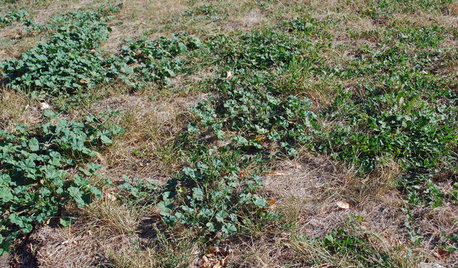
GARDENING GUIDESWeed War: When and How to Use Chemical Herbicides
Before you spray, arm yourself with knowledge about which weed killers — natural or synthetic — are right for your yard
Full Story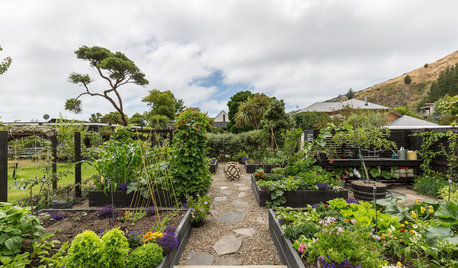
EDIBLE GARDENSNatural Ways to Get Rid of Weeds in Your Garden
Use these techniques to help prevent the spread of weeds and to learn about your soil
Full Story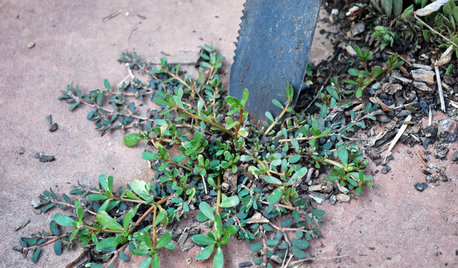
GARDENING GUIDES5 Ways to Naturally Win the Weed War
Show irksome weeds no mercy with these tricks for combating them sans chemicals
Full Story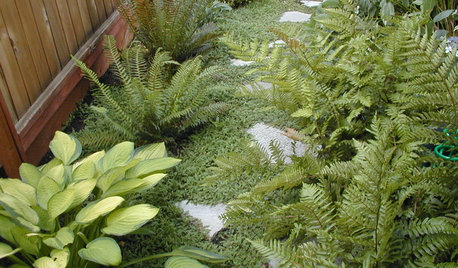
LANDSCAPE DESIGN6 Great Ways With Garden Ground Covers
Use them as problem solvers, weed killers, color and texture providers ... ground cover plants have both practical and visual appeal
Full Story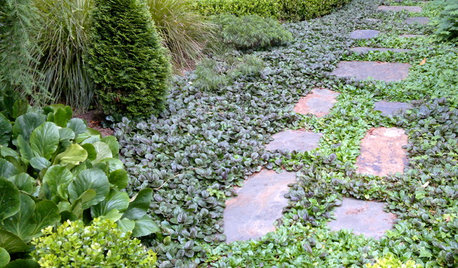
GROUND COVERSGround Force: 10 Top Ground Covers for Your Garden
Protect your soil from weeds and drought this summer with a living mulch of ground covers
Full Story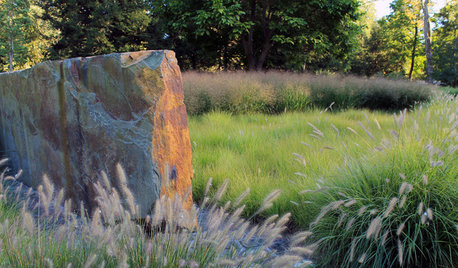
EARTH DAYThe Case for Losing the Traditional Lawn
Work less, help the environment and foster connections by just saying no to typical turf
Full Story
LANDSCAPE DESIGNPlant Your Steps for a Great Garden Look
There are benefits to allowing plants to invade your garden stairs
Full Story
GARDENING GUIDESHow to Fix Bare and Yellow Lawn Spots
Restore your turf’s good looks by reseeding unsightly patches
Full Story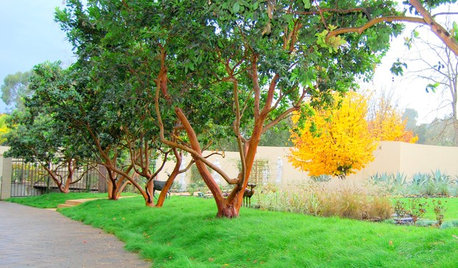
GARDENING GUIDES5 Great Grasses for a New Lawn
Learn about maintenance, wear tolerance, ideal climate and more for these top turf choices to pick the right one for you
Full Story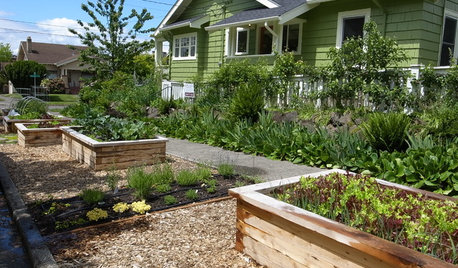
BEFORE AND AFTERSSee 6 Yards Transformed by Losing Their Lawns
Wondering whether a turf lawn is the best use of your outdoor space? These homeowners did, and they found creative alternatives
Full StorySponsored
More Discussions
christopher_williams2_us_army_mil