

White corn meal?
2 months ago
Featured Answer
Sort by:Oldest
Comments (18)
 2 months ago
 2 months ago
Related Discussions
For Roseseek (Kim): Need your expertise on these
Comments (10)Is the thought of planting the band in a partially submerged bucket without a bottom to prevent it from baking in hot weather/direct sun? My experience is immature plants benefit from warmer roots to stimulate them to grow faster than they do in cooler/colder soil. I can understand hilling a dormant plant set out in the soil to prevent it from being stimulated into growth before it's developed sufficient root mass to support it. I guess hilling a band to cover more of the main cane might afford a similar benefit. Here, I have best success with newly rooted plants and small seedlings planting them in one gallon nursery cans in good potting soil, then placing them in partial sun where I can pay attention to them and keep them watered. Once they develop enough root mass to begin filling the gallon size, I transplant them into two gallon cans. If they are growing vigorously by the time they are ready to be up sized, I may plant them in the ground or move them to five gallon cans, depending upon where they are to be planted or if they are for someone else, or if I'm too lazy to actually dig a hole for them at the moment. Your experience may well vary greatly, but here, I don't have any success letting the rain water pots. Often, the foliage canopy prevents much water from penetrating the plant and sufficiently wetting the root/soil ball, so I have to water the cans any way. We don't get rain eight to nine months of the year and when we do, it's not always hard enough to force its way into cans. Hand watering is necessary here for anything canned, mostly all year. Burying cans in the ground prevents any soil moisture from moving into the confined soil ball, so they have to be hand watered. I've cut the bottoms and about a third of the sides of many fifteen gallon cans so I could plant larger shrubs on a short, but rather steep slope in back. Those have to be watered more frequently than those directly planted in the soil as they dry out faster. I'm not sure what the benefit of planting bands in a can without a bottom will provide. Not that there isn't one, it just isn't logical to me. I'm all in favor of creating berms around plants to catch the water and focus it into where the roots are probably going to be. Otherwise it spreads out too far and may not actually penetrate deeply enough to encourage the roots to follow it down deeper, resulting in more drought tolerant plantings. Your experience with own root plants is going to vary greatly due to your climate and soil type; the type of garden culture you practice; the types of roses you grow and even the particular cultivars you choose to grow. The specific roses which will perform perfectly for me here are not necessarily those which will perform acceptably for you where you are. If the variety is a weak grower to begin with, it's going to be smaller most places own root compared to budded. If it's not suitable own root because it doesn't form a vigorous root system by itself, it isn't going to be as good anywhere own root. It may be better in some climates and soils than others, but if it's not a good rose own root because it doesn't GROW vigorous roots itself, it isn't going to be as good as it could be anywhere own root, period. The types which are slow to mature own root are going to be slower to mature everywhere own root compared to being budded on a root stock suitable for where it's being grown. Whether an own root plant will eventually mature to the same or larger size as the same rose budded will is also going to vary somewhat. Some, Iceberg being an excellent example here, can actually be inhibited by budding and result in a smaller plant than it can mature to own root. Some, such as Grey Pearl, Fantan and any other really weak growing, insufficiently rooted types, will never become the size they can become when budded. Those two will actually live much shorter, less productive lives own root than they can when budded. Any roses which suffer the same grow issues they do will perform similarly, and are always going to be better performers and garden specimen when grown on a stock suitable for the climates they're grown in. A rose's genetic ability to form a sufficient root mass is as variable as its ability to develop its foliage, flowers, suitable immune system and resistance to extreme conditions. Not every variety has a root system suitable to all soil types. An excellent example is the inability for strongly multiflora types to overcome chlorosis in alkaline conditions. Budding them on a suitable stock which isn't as extremely affected by alkalinity will overcome the chlorosis issues without the constant need to acidify the soil to release the iron and supply nitrogen. Budding types which aren't usually as strongly affected by chlorosis on multiflora will actually force them to suffer chlorosis they otherwise wouldn't experience in the same conditions. Some types' roots are more suited to warmer soils. Others are happier in cooler soils. Only experimentation and experience are going to tell you which is which and which will be good in your soil and climate. There is little reliable information out there because so many have been budded for so long. When you do find that kind of information printed in books, it's often not due to the rose's roots, but to the particular stock upon which it was grown. British writers have long warned against moving Elizabeth of Glamis because she "resents transplanting". The variety wasn't grown own root in Britain, being always produced on their stock of choice. If Elizabeth of Glamis resented transplanting, how could it have been offered as new bare roots annually and for so many decades? I agree with the statement that a suitable own root plant, when grown in a climate and soil type suitable to it, is usually longer lived than most budded plants. You more frequently find stands of Odorata and other types used as stocks in old cemeteries and gardens here in the West than you do actual budded plants. These are often the remnants of old budded plants where the stock has outlived the scion. When you do find old roses in abandoned or neglected situations, they are own root survivors and are always types which develop appropriate root systems for their genetic requirements. Not that they are going to perform similarly everywhere, but they are more likely to perform adequately more places than those which have narrower zones of suitable conditions. But, slow growers are going to be slow growers in virtually every climate. The only ways around that are to bud them on suitable stocks, or to provide them warmer, richer soils and push them to grow by disbudding them, preventing them from flowering until they develop the size you desire. Weaker growers will continue being weaker growers in most places because that is what is genetically programmed within them. They are inhibited naturally against either forming suitable root systems, producing much wood or foliage or both. "Forcing" them by supplying them with more vigorous roots is the most suitable way, in most situations, around that. It's your choice how you want to try growing them, and it's your choice what level of performance you are willing to accept. Kim...See Morefried green tomatoes
Comments (13)My mother in law was from Western Kentucky, and, among a few other great southern dishes, she shared with me this method of cooking fried green tomatoes. Slice tomatoes about 1/4 inch thick, sprinkle both sides with salt, let sit for at least an hour or so. In a bowl, combine white cornmeal mix and flour,(about a third more flour than cornmeal) and pepper. Melt shortening in a cast iron skillet, and fry till golden. I have tried different recipes for fried green tomatoes in the past, and will probably still do so now and then, but, so far, anyway, I always come back to this one as my favorite. Mom passed away last month at 86. She was a grand lady, and certainly more like a mother to me than an "in-law". She will be missed!!...See MoreWhat happened to white corn meal?
Comments (4)I would also be sure it is marked GMO free. Genetically Modified Corn is prevalent in everything. It's cheap and makes those corporations even richer for buying it. May be harmful to humans. Might take five years until the "leaky guts" -- that are even showing up in very young -- are linked to the bt corn. The corn makes its own pesticide. Day and night. 24/7/365. No known tests on humans. (Animals have shown problems, but for some reason it gets hushed). The pesticide works by basically blowing up the stomachs of the caterpillers. Hmmmmm........See MoreCorn ''Bread'' - they called it
Comments (10)Frankly, I like it all. For breakfast I like a sweeter corn muffin, with butter and honey or jam, or just by itself. For eating with beans I like a savory cornbread with no sugar better, but I'll use whatever is available.. I don't really care whether it's white or yellow but Elery's sister lives in Tennessee and tells me emphatically that if it's not made with white cornmeal, it is NOT cornbread. I live in Michigan, home of Jiffy Mix, so I just smile. I always bake mine in my cast iron skillet, because the crust gets so nice and crunchy. I think cornmeal has changed, though, or is different depending on brands. The cornbread recipe I used for years suddenly started turning out dry, crumbly, just not right. I've been "playing" with recipes for a while now, adding cheese, bacon, jalapenos, creamed corn, sour cream, whatever suits my fancy. A mildly sweet corn muffin with bacon and jalapenos goes really well with chili, and I'm as likely to sop up pot likker with Jiffy muffins as I am with Elery's white savory cornbread. Lately my favorite has been this recipe from Ellie Krieger's "Comfort Food Fix", although it's a spoon bread, not your typical corn bread. It has all corn, no flour. Corn and Cheddar Spoon Bread 2 cups 1% milk 1 1/2 cups fresh or frozen thawed corn kernels 2/3 cup yellow cornmeal 1/2 teaspoon salt 1/2 cup grated extra-sharp cheddar cheese 2 large eggs, yolks and white separated 1/4 teaspoon cream of tartar 1. Preheat the oven to 375°F. Spray a 2-quart baking dish with cooking spray. 2. In a medium saucepan, combine milk, corn, cornmeal, and salt over medium-high heat and bring to a gentle boil, stirring constantly. Reduce the heat to medium and simmer until the mixture thickens, 3 to 4 minutes. Remove from the heat and stir in the cheese. Allow to cool for 10 minutes. Add the egg yolks to the cornmeal mixture and stir until well combined. 3. In a stand mixer or using a handheld electric mixer, beat the egg whites and cream of tartar until soft peaks are formed, 1 to 2 minutes. Fold the egg whites into the corn mixture until just incorporated and pour into the prepared dish. Bake until browned on top and set but still slightly loose in the center, 40 to 45 minutes. Serves 6 Per Serving (3/4 cup) Calories 180; Total Fat 7 g (Sat Fat 3 g, Mono Fat 2g, Poly Fat 0.8 g); Protein 10 g; Carb 22 g; Fiber 2 g; Cholesterol 85 mg; Sodium 320 mg This is Elery's recipe, handed down from his mother. She always used white cornmeal (self-rising was preferred), bacon grease or lard and always cooked in a hot cast iron skillet. If it stuck at all, it didn't get turned over and it was still fine, but if you turn it over the top gets a bit more crunchy. Corn Bread 2 cups white cornmeal (use yellow if that's what you have on hand) 2/3 cup flour 1-1/2 tablespoons baking powder 1/2 teaspoon baking soda (omit if you use regular milk rather than buttermilk) 1/2 teaspoon salt Dash of black pepper 1 1/2 cups buttermilk (more or less) 3 to 4 tablespoons of bacon drippings, lard or cooking oi Preheat the oven to 400 degrees. Placing the bacon drippings in the skillet and place the skillet in the oven while preparing the batter. Combine all the dry ingredients and mix well. Add about 1/2 cup of the buttermilk and stir. Remove skillet from oven and slowly add about 1 or 2 tablespoon of the hot oil (bacon grease) from the skillet into the batter, stirring well. The skillet and bacon grease should be very hot but not smoking. Sprinkle the inside of the skillet with (dry) cornmeal and return to oven. Add rest of buttermilk to batter a bit at a time while stirring. The consistency of the cornbread batter should look like a thick pancake mix. This may require a little more or less of the remaining buttermilk. If the mix is too thick, add more buttermilk. If the mixture is too thin, add more cornmeal. Remove the skillet from oven and pour the batter in the skillet. Return the skillet to the pre-heated oven and bake until the top begins to brown, approximately 25 minutes. Remove the cornbread from the oven and flip the cornbread over in the skillet then continue baking another 5 minutes to brown the top. Annie...See More 2 months ago
 2 months ago
- 2 months ago
- 2 months ago
 2 months agolast modified: 2 months ago
 2 months ago
- 2 months ago
 2 months ago
- 2 months ago
- 2 months ago
- 2 months ago
- 2 months agolast modified: 2 months ago
 2 months ago
- 2 months ago
Related Stories
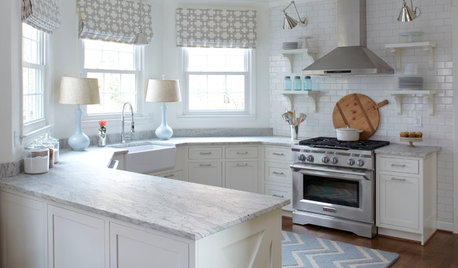
KITCHEN DESIGNHow to Keep Your White Kitchen White
Sure, white kitchens are beautiful — when they’re sparkling clean. Here’s how to keep them that way
Full Story
ORANGEInspired by Halloween: Candy Corn Color Palettes
The iconic orange, yellow and white Halloween candy suggests sunny colors for every season
Full Story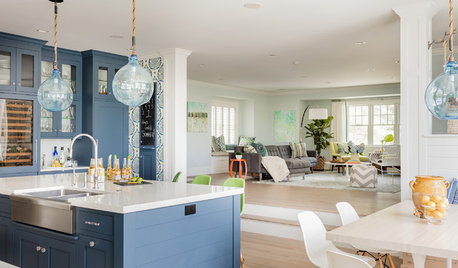
KITCHEN MAKEOVERSTranquil Blue-and-White Kitchen Packs In Style and Function
A formerly dark kitchen in Massachusetts is refreshed, taking cues from its oceanside setting
Full Story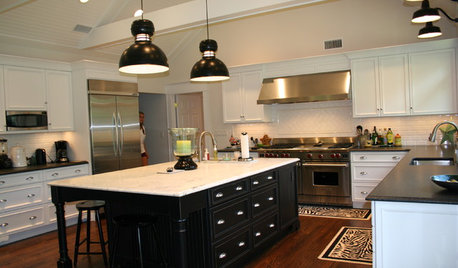
KITCHEN DESIGNKitchen of the Week: Black-and-White Elegance for 7
Carefully Planned Layout Creates a Family-Friendly Kitchen Built for Entertaining
Full Story
SUMMER FRUITS AND VEGETABLESHow to Grow Your Own Fresh, Sweet Corn
Here's how to plant and care for your own mini cornfield
Full Story
KITCHEN OF THE WEEKKitchen of the Week: Crisp White Cabinets and Room for Family
A Victorian home near Chicago gets an updated kitchen to improve brightness, beauty, function and flow
Full Story
KITCHEN MAKEOVERSBefore and After: 4 Kitchens Updated in White, Wood and Gray
Discover how neutral tones and natural finishes create spaces that are both elegant and practical
Full Story
ENTERTAININGGot Hand-Me-Down Dinnerware? Make a Memorable Meal
They might be mismatched and not your style, but those inherited plates and forks can help bring meaning to your table
Full Story
KITCHEN DESIGNA Butler’s Pantry Helps Serve Up Big Family Meals
High-gloss cabinets, hidden storage and warm wood make this kitchen beautiful and functional for entertaining
Full Story
LANDSCAPE DESIGN15 Outdoor Kitchens That Serve Up Meals With Style
Inviting and hardworking spaces take grilling, cooking and entertaining to the next level
Full StorySponsored


martinca_gw sunset zone 24