

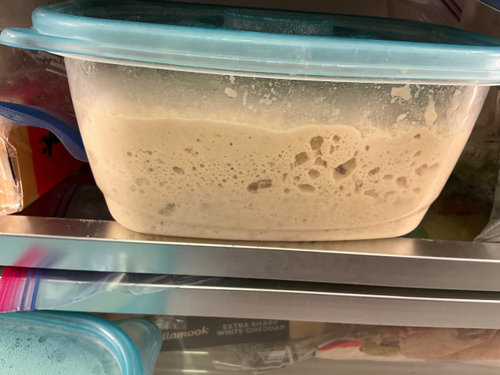
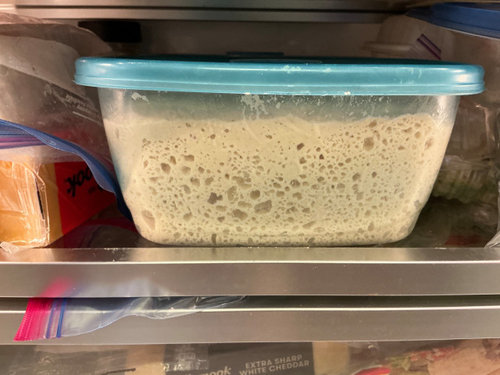
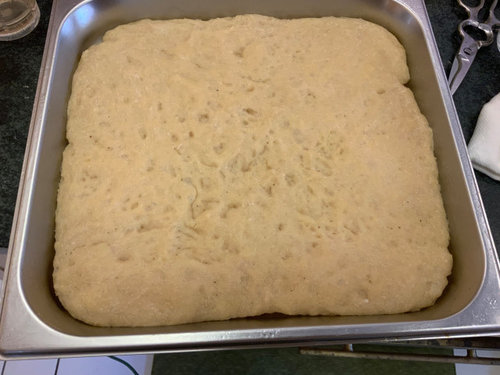
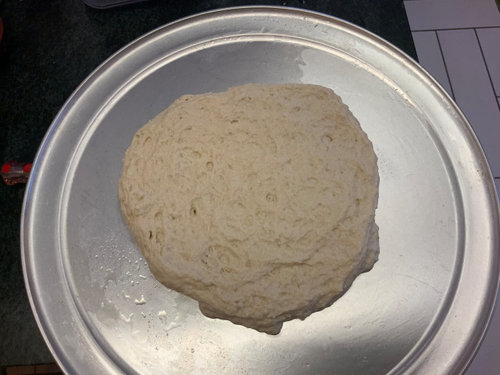
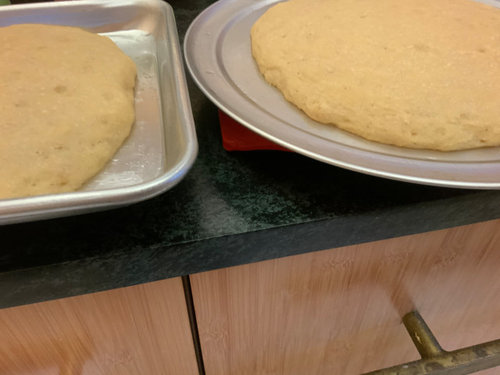
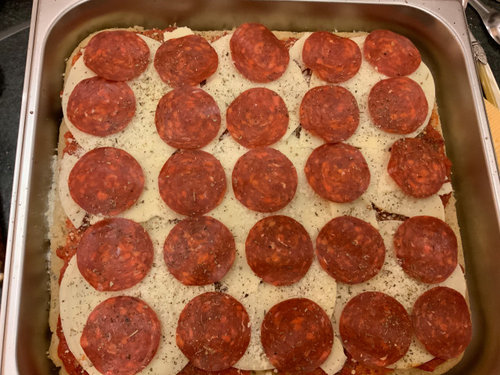
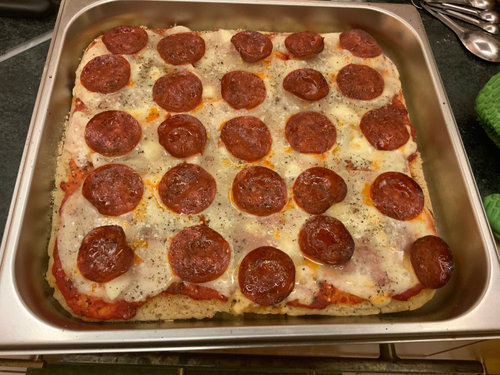
Long report on making puffy white flour pizza with Trailrunner's.
4 months ago
last modified: 4 months ago
Featured Answer
Sort by:Oldest
Comments (13)
- 4 months ago
Related Discussions
White Spelt flour as substitute for all purpose flour?
Comments (7)Thanks, Grainlady. Actually, I went ahead and experimented by sort of combining the above recipe and a recipe I found on line for spelt bread. I used a combination of King Arthur whole wheat flour and the white spelt flour, about half and half, partly because I had already made the biga with the whole wheat flour. Then, I used the following recipe, adjusting the spelt flour amounts and water amounts to try and have the correct total for each ingredient. I used the technique for making ciabatta, where I let it sit, turned the dough, let it sit, turned the dough, until I was ready to bake the bread. It ended up making 2 loaves, which I baked in loaf pans, instead of ciabatta style. Surprisingly, it turned out surprisingly well, considering at the last, I tried to make one loaf out of it, and when I saw the dough spilling out of the pan I realized I had to deflate it yet once again and put it into two loaf pans. Here's the other recipe I used. I used dark honey instead of brown sugar. It's from Versagrain.com. Spelt Flour Recipes Sweet and Hearty Spelt Bread Recipe To cook this Spelt bread recipe you will need a 9 x 5 inch loaf pan and patience. Unlike white bread this recipe for Spelt bread will take twice as long to leaven. From start to finish, it will take 2 - 3 hours. Ingredients (Makes 1 Loaf) 1 1/2 cups warm water (just barely hot to the touch) 1 package active dry yeast (1/4 ounce) 2 1/2 tablespoons brown sugar 1 tablespoon whole flaxseed (optional) 2 1/2 cups whole spelt flour 1 1/2 tablespoons butter, melted 2 1/2 tablespoons brown sugar 1/2 tablespoon salt 1 3/4 cups whole spelt flour 1 tablespoon butter, melted Directions In a large bowl, mix warm water, yeast, 2 1/2 tablespoons brown sugar, and 1 tablespoon of flaxseed (optional). Mix in 2 1/2 cups of spelt flour. Let set for 30 minutes, or until big and bubbly. Mix in 1 1/2 tablespoons melted butter, 2 1/2 tablespoons of brown sugar, and salt. Stir in 1 3/4 cups of spelt flour. Flour a flat surface and knead with spelt flour until it pulls away from the counter but is still sticky to touch. This may take an additional 1 to 2 cups of spelt flour. Place in a greased bowl, turning once to coat the surface of the dough. Cover with a dishtowel. Let rise in a warm place until doubled (about 30 minutes). Punch down and place in greased 9 x 5 inch loaf pan. Allow to rise until dough has topped the pan by one inch. Depending on your yeast this will take between 1 - 2 hours. Bake at 350 degrees F (175 degrees C) for 25 to 30 minutes; do not over bake. Lightly brush the tops of loaves with 1 tablespoon of melted butter when done to prevent crust from getting hard. Cool completely. TIP: Place a loaf pan of the same size over the top of the loaf while baking to create a better crust. Substitutions and Additions Honey can be substituted for the brown sugar in this whole spelt bread recipe. Substitute white spelt flour, hard white wheat flour, or bread flour for the 2 1/2 cups of whole spelt flour to create an even lighter and fluffier loaf of whole grain bread. To give this recipe a crunch, consider adding walnuts. In this whole grain bread recipe we included the option for flaxseed because here at versagrain.com we are big proponents of incorporating flaxseed into your diet. Its high protein, fiber, and omega 3 fatty acids makes flaxseed a nutritional powerhouse your body can use to fight depression, cancer, and heart disease....See MorePizza Oven?
Comments (24)OK, I know this sounds like an insane idea, We love pizza! This solution was so simple, cheap and utterly a joke when my husband and I first came up with it many years ago before the idea of marriage, or new kitchen was even born yet. I went to the local home store. Purchased a dozen unglazed eight inch floor tiles. Put them on the oven rack. Preheat while prepping. The tiles were less than a dollar a piece. I don't have to wash them because the heat from the oven turns any residue to ash. Just brush with a dustpan brush (only for the oven) when the tiles are cold. If I'm doing a turkey or baking, I just remove the tiles & put them back in if we're doing pizza. The bottom crust is so perfect! Preheat to 500F then turn it back to 450F when the pie goes in....See MoreChristmas Eve Pizza Party ! Kitchen in Action...
Comments (17)Yes, lol, and a maid, LOL! After the Bistro and then Papashon, he returned to being his own boss catering. Half Moon Bay "Red Ginger" (exceptionally beautiful space still available if you're interested) chef was a favorite and last I heard, he is now a private chef for a movie mogul traveling the world. Devils Slide closing Hwy 1 destroyed the perfection they had created, Huge loss for us, I still cry, but hope he's happier than ever. Crab Landing just opened with a two story view of Pillar Point Princeton in the Harbor Village Mall. I'm most eager to dine there, I'm hearing good reports so far. www.Oceanohalfmoonbay.com have a delightful chef in their lounge. Nothing quite like upscale room service, lol. Most people have no idea how hard the work is behind the scenes. Thank you so much for La Tienda, one taste of the white anchovies and I was addicted. Do you serve them? I first tried them showcased as a salad and I'm so glad I did! Haven't been in your neck of the woods for a long time and would love to stop down to explore next trip to Indiana....See Morea few bread baking tips and the pizza dough recipe
Comments (33)I've been reading these and all of trailrunner's post. They are just great. All the hints were great. I bake bread out of boredom, I rarely use a recipe, for better or worse and like the wet doughs as well as quicker higher yeast doughs for pizza. Someday I'll get that "super peel" with the cloth belt thingy. I am forced to pre-cook my thin pizza crusts without one- My favorite bread is an olive bread that is made locally in the East Bay and sold now only at the local Berkeley farmer's market- you can go to their bakery, and they will sell stuff to you, but it's not a store front, no sales help, no hours- if they are there they'll sell it to you- they're also fresh pasta makers- 'Phoenix Pastificio'- if you're ever in the area. I've never tried to make that bread, it's almost Holy to me...( although I know he uses a biga and those black Kalamata olives). It has a thin almost black burnt crust, with large ciabatta holes to the crumb and flavor to die for....See More 4 months ago
- 4 months ago
 4 months ago
- 4 months ago
- 4 months ago
 4 months ago
- 4 months agolast modified: 4 months ago
- 3 months ago


Related Stories
SMALL KITCHENS12 Ways to Make Your Kitchen Look and Feel Bigger
Try these clever design moves to get more storage and create a roomier feel
Full Story
SELLING YOUR HOUSEKitchen Ideas: 8 Ways to Prep for Resale
Some key updates to your kitchen will help you sell your house. Here’s what you need to know
Full Story
MOST POPULARBefore and After: 13 Dramatic Kitchen Transformations
See the wide range of ways in which homeowners are renovating their kitchens
Full Story
REMODELING GUIDES5 Trade-Offs to Consider When Remodeling Your Kitchen
A kitchen designer asks big-picture questions to help you decide where to invest and where to compromise in your remodel
Full Story
KITCHEN DESIGNWhy a Designer Kept Her Kitchen Walls
Closed kitchens help hide messes (and smells) and create a zone for ‘me time.’ Do you like your kitchen open or closed?
Full Story
INSIDE HOUZZA New Houzz Survey Reveals What You Really Want in Your Kitchen
Discover what Houzzers are planning for their new kitchens and which features are falling off the design radar
Full Story
KITCHEN DESIGN20 Kitchen Must-Haves From Houzz Readers
We asked you to tell us your top kitchen amenities. See what popular kitchen features made the list
Full Story
KITCHEN DESIGN11 Must-Haves in a Designer’s Dream Kitchen
Custom cabinets, a slab backsplash, drawer dishwashers — what’s on your wish list?
Full Story
KITCHEN APPLIANCESConsidering a New Kitchen Gadget? Read This First
Save money, time and space by learning to separate the helpers from the hassles
Full Story
Still trailing