

Cross fingers — maybe a break in the Brown Univ shooting and killer of
10 months ago
last modified: 10 months ago
Featured Answer
Sort by:Oldest
Comments (10)
Related Discussions
Broken side shoot, tree philodendron
Comments (21)now i just air-layer the tip in moist long fiber sphag: the aerial roots near the tip are still white or i see little white root nubs. these grow very fast if wrapped in cling wrap with moist sphag. it needs to stay moist. a couple of weeks (at most 1 month if in winter) and i can pop the tip off. this way i do not loose the leaves. i lay it on the side to let the cut dry up and callous with roots still wrapped in sphag for a week or so. then it can be potted. i dust the cut with fungiside and wrap it with a bit of coir to keep direct contact with moist soil: it can still mildew otherwise. sometimes i lay it in shallow tub with mix with the tip sticking out sideways dry in the air. and grow it it like that until established. then i plant it vertically....See Morecitrus killer alert
Comments (4)this contains a pretty comprehensive list of the host plants with a lot more info on the little bug: PEST PROFILE Common Name: Asian Citrus Psyllid Scientific Name: Diaphorina citri Kuwayama Order and Family: Hemiptera, Psyllidae Description: The Asian citrus psyllid is 3 to 4 mm long with a brown mottled body. The head is light brown. The wings are broadest in the apical half, mottled, and with a dark brown band extending around the periphery of the outer half of the wing. The insect is covered with a whitish waxy secretion, making it appear dusty. Nymphs are generally yellowish orange in color, with large filaments confined to an apical plate of the abdomen. The eggs are approximately 0.3 mm long, elongate, almond-shaped. Fresh eggs are pale in color, but then turn yellow and finally orange at the time of hatching. Eggs are placed on plant tissue with the long axis vertical to the surface of the plant. History and Economic Importance: Asian citrus psyllid was first found in Palm Beach County, Florida, in June 1998 in backyard plantings of orange jasmine. By 2001, it had spread to 31 counties in Florida, with much of the spread due to movement of infested nursery plants. In the spring of 2001, Asian citrus psyllid was accidentally introduced into the Rio Grande Valley on potted nursery stock from Florida. It was subsequently found in Hawaii in 2006 and in Alabama, Georgia, Louisiana, Mississippi, and South Carolina in 2008. The Asian citrus psyllid has the potential to invade California at any time, with the most likely sources of infestation being Mexico, other infested U.S. states, or Asia. There were 170 interceptions of Asian citrus psyllid at US ports on plant material with an Asian origin from 1985 to 2003. Distribution: The Asian citrus psyllid is found in tropical and subtropical Asia, Afghanistan, Saudi Arabia, Reunion, Mauritius, parts of South and Central America, Mexico, the Caribbean, and the U.S. (Alabama, Florida, Georgia, Hawaii, Louisiana, Mississippi, South Carolina and Texas). Life Cycle: Eggs are laid on tips of growing shoots, on and between unfurling leaves. Females may lay more than 800 eggs during their lives. Nymphs pass through five instars. The total life cycle requires from 15 to 47 days, depending on environmental factors such as temperature and season. The adults may live for several months. There is no diapause but populations are low in the winter or during dry periods. There are nine to 10 generations a year, with up to 16 observed under observation in field cages. Host and Damage: The Asian citrus psyllid feeds mainly on Citrus spp., at least two species of Murraya , and at least three other genera all in the family Rutaceae. The most serious damage caused by Asian citrus psyllid is due to its ability to effectively vector the phloem-inhabiting bacterium Candidatus liberibacterasiaticus that causes citrus greening disease. In the past, this bacterium has been extremely hard to detect and characterize. In recent years, however, DNA probes, electron microscopy and enzyme-linked immunosorbent assay tests (ELISA) have been developed that have improved detection. Symptoms of citrus greening include yellow shoots, with mottling and chlorosis of the leaves. The juice of the infected fruit has a bitter taste. Fruit do not color properly leading to the name "greening". Citrus greening is one of the most devastating diseases of citrus in the world. Injury caused by psyllids results from the withdrawal of large amounts of sap from the plant as they feed and produce copious amounts of honeydew. The honeydew coats the leaves of the tree, encouraging sooty mold to grow. The once flourishing citrus industry in India is slowly being wiped out by dieback. This dieback has multiple causes but the major cause is due to greening disease. Partial Host List COMMON NAME SCIENTIFIC NAME Bael fruit Aegle marmelos Chevaliers aeglopsis Aeglopsis chevalieri Afraegle gabonensis Afraegle paniculata Atalantia spp. Uganda powder flask Balsamocitrus dawei Curry leaf Bergera koenigii Cape chestnut Calodendrum capense Calamondin Citrofortunella microcarpa Citrange Citroncircus webberi African cherry orange Citropsis schweinfurthii Citrus Citrus spp. Clausena anisum-olens Pink wampee Clausena excavata Clausena Clausena indica Wampee Clausina lansium Desert lime Eremocitrus glauca Eremocitrus hybrid Kumquat Fortunella spp. Wood apple Limonia acidissima Merrillia caloxylon Finger lime Microcitrus australasica Round lime Microcitrus australis Microcitrus papuana Microcitronella sydney. Mock orange Murraya spp. Naringi crenulata Pamburus missionis Trifoliate orange Poncirus trifoliata Chinese box orange Severinia buxifolia Tabog Swinglea glutinosa Orange climber plant Toddalia asiatica Toddalia Toddalia lanceolata Triphasia trifolia White ironwood Vepris lanceolata Xanthoxylum fagara...See MoreCreating A Homestead Daylily 101
Comments (10)Thanks for all of the positive comments..You are all way to gracious as I'm really not a writer..I always have all of this stuff in my head but I hate to write or type so it never gets down on paper too often..I suppose one of these days I'll write some sort of memory type book before mine(Memory) has diminished to the point where it's all fuzzy..It's funny, this little thing we call life..How when your young you wish it would hurry up and as you start reaching into middle age, you wish nothing more that it would slow down..LOL..I feel in my heart where I differ from the "franchise" is that I would do it anyway whether I made another dollar from it or not..I really do enjoy it..I do not like the business aspect of it that much as far as the filling of orders and dealing with habitual complainers. But that's part of it and it goes with the territory...I do not want to be known as someone who just introdused a pretty face or another mauve with a eye and matching edge...LOL..Not slamming them..Just think that the eye and edge thing has run amuck..I would love to see even bigger full forms up to 10" or so on statuesque plants in the 4-6 foot range..That would be a worthy path I feel..Instead of clogging up the 24-30 inch height range with more of the same..(we still hybridize full forms btw) I just got off the phone with Brian Mahieu earlier tonight telling him how excited I was to see such good plants in our intro's...Plants, not just a face...As I have filled hundreds of orders this spring it has become evident that both Brian and myself have taken the right path in selecting for the plant before the bloom. Details such as mature clumps that just fall apart instead of having to hack up woody type clusters of crowns..Things like beautiful cool mint green foliage that almost has a waxy look to it, and foliage of different colors of burgundy and purple and a few stable variegated ones as well...I loved digging a clump of Svenska today..The fans were spaced apart far enough to lay your fingers in between them on mature clumps..And then to discover this mint green foliage with burgundy pink edges on every leaf was a nice treat as well..I noticed a clump of a select seedling that was completely chartreuse in color..The only one in the field. Not sick or iron defficient, just a very healthy chartreuse...Can't wait to see it bloom..This is a few of the reasons I do this..To really try to get "plants" out there..I lopve trying to figure out why a cross isn't taking..I did probably 30-40 attempts with Scandinavian pollen on Brushed By Bluebirds with not one pod...on my last attempt I selfed BBB and it pulled the trigger and all 20 of my BBB pods with Scandinavia pollen took giving me 96 seeds..Things like that is why I do it...To try and get pods on plants that are pod infertile is a goal for me..I have had some luck doing everything from spraying different sprays to just pleading with the daylily Gods..LOL..Another thing Brain and me play around with is utilizing Tet. pollen via unreduced gametes..We have alot of luck with this and what better way to get Tet genes into your programs..I love good buds and branching..Someting I'm getting better at than when I started...I have some insanely branched and Budded seedlings with amazing increase and rhisomates growth like Kwanso that have come out of crosses like (Citrina X Linda)X (Galaxy Explosion X Hankow)X (Jungle Fowl X Thorhalla) X (Species X Species)..Once you get a line of breeding like that, you can then be assured of a total plant and then have an aweful lot of fun playing around with the blooms..I dont do it for recognition..I dont do it to conform to the standard..I dont go to shows, and don't have time to visit other gardens..I don't care about awards or ribbons..My fulfillment for this is rather simple and I am rewarded every morning I get to see the sunrise and watch all the Bluebirds we have, to watch our little pygmy goats and donkeys play..To have my faithful sidekick cat Mango come to me and love on me without judgement..and to be able to see that seedling bloom for the first time..And of course my family whom without my wife Laura, I would in no way be able to get it all done..My boys are a big help as well...I love all the people I have met..I love seeing peoples faces when they see a bloom that is speacial to there eye and then laugh when they leave with a yellow nose without telling them..I hope all of us who enjoy gardening and daylilies in particular can reflest like this from time to time and not forget why we do this...Antway, enough of my ramblings...Hope I didn't bore the heck out of ya..Later Taters...David....See MoreHelp with quickly browning of mugo pines
Comments (19)Promised to touch back. Somewhat depressing morning walking around the property diagnosing issues all of which appear to be "plumbing" related. Too much rain has contributed to drowning and needlecast, and has exasperated other deficiencies. Species experiencing needlecast are not always the normal suspects and why it is so widespread in recent years along the mid-Atlantic is unknown. He could not tell why the mugos died specifically, but he said they are definitely dead. What is green on them is dry like a Christmas tree's needles. Serbian spruce and other spruce types are being badly hit with needlecast. Evergreen species that are usually disease free and hardy are suffering from needlecast all over the greater Baltimore area. Based on the conversation, there maybe a chance to save three out of five Serbian spruce. These were sprayed three times last year but removal of two will provide more circulation for the remaining three. These trees are at least 30 feet tall and a key focal point of our landscape. All three 20 foot boulevard cypress are probably too far gone to try to save. They showed little signs of trouble last season, but they have dropped so many needles now that you can see through them. Dragonlady holly most likely drowned or received so much water that key nutriates were washed away or the plant was unable to access them. We await a full report and recommendations. Depressing....See More- 10 months agolast modified: 10 months ago
 10 months agolast modified: 10 months agopetalique thanked 41 North (Zone 7a/b, NE, coastal)
- 10 months agolast modified: 10 months ago
- 10 months agolast modified: 10 months ago
- 10 months agolast modified: 10 months ago


Related Stories
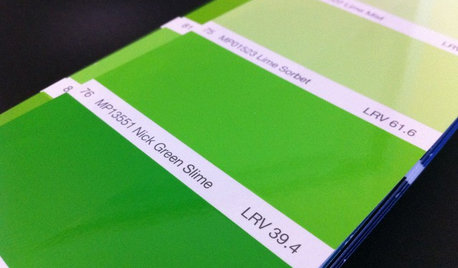
DECORATING GUIDESFrom Queasy Colors to Killer Tables: Your Worst Decorating Mistakes
Houzzers spill the beans about buying blunders, painting problems and DIY disasters
Full Story
WINTER GARDENING6 Reasons I’m Not Looking Forward to Spring
Not kicking up your heels anticipating rushes of spring color and garden catalogs? You’re not alone
Full Story
FUN HOUZZ10 Things People Really Don’t Want in Their Homes
No love lost over fluorescent lights? No shocker there. But some of these other hated items may surprise you
Full Story
FUN HOUZZHouzz Call: What’s on Your Refrigerator?
Magnets, menus, children’s art, coupons, perfect-attendance certificates, song lyrics — what is fridge-worthy in your house?
Full Story
HOUSEKEEPINGHow to Clean Your Fridge, Inside and Out
Keep your refrigerator clean and fresh, while you gain storage space and lose those ‘UFOs’
Full Story
EARTH DAYThe Case for Losing the Traditional Lawn
Work less, help the environment and foster connections by just saying no to typical turf
Full Story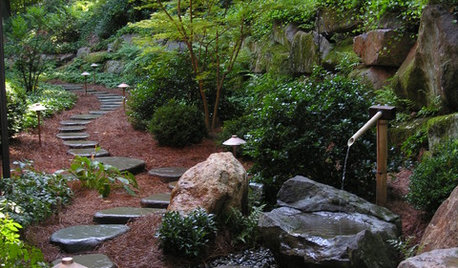
GARDENING GUIDESLowly Mulch Makes Magic in the Garden
Find out why you should be mulching your garden beds and what material is right for your site
Full Story
PETS50 Dog Photos Worth a Wag
Design hounds: Share in the pet love with Houzzers' snapshots of their beloved dogs at home, in the workshop and at play
Full Story
INSIDE HOUZZA New Houzz Survey Reveals What You Really Want in Your Kitchen
Discover what Houzzers are planning for their new kitchens and which features are falling off the design radar
Full Story
HOUZZ CALLHow Are You Passing the Time at Home Right Now?
Share your thoughts about how you are coping with stress and staying grateful during this difficult time
Full StorySponsored

Customized Award-Winning Interior Design Solutions in Franklin Cnty OH



41 North (Zone 7a/b, NE, coastal)