

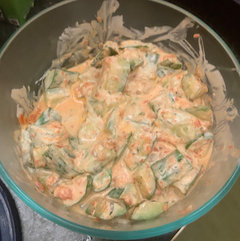
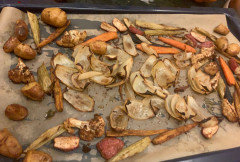
What to make with these?
9 months ago
Featured Answer
Sort by:Oldest
Comments (19)
 9 months ago
- 9 months ago
Related Discussions
what makes an annual die?/ what makes an annual an annual advice
Comments (1)An annual, in a natural setting, will set seed and then wither and die--it's done what it was supposed to do. Be transient and pass on its genes. Biennials and perennials live for more than one season. Biennials generally establish a crown and root system the first season and then set seed and die in the second season, should they survive long enough to go another round you might describe them as a short-lived perennial. I see this with foxgloves in my garden--if I deadhead them after bloom some might return the next year, but usually the basal clump is scruffy and the bud stem short and the flowers scrawny. A true perennial returns through several seasons, some are short-lived and survive a few years, some can go for decades. Climate plays a big roll in determining survival. A tomato plant is a tender perennial, and in a frost free zone can live an extended amount of time, especially if it is sprawling and the stems are on the ground so the root nodes along the stems sprout and grow into the soil; it can, if severed from the parent plant, continue on and produce fruit and seed. But eventually it will crap out from exhausting the nutrients in the soil and if it cannot extend its reach to new soil by sprawling and laying down new roots from the stem nodes, it will wither and fail....See MoreHOTness: what makes a gas burner hot? what makes a wok hot?
Comments (13)Kitchenmonkey -- in one of your other threads, you mentioned you had an existing stove with an 18.6k power burner and were looking at maybe buying a friend's Wolf AG range. Did you get a chance to check out using your wok on that range? If so, how did it compare to your existing range? That info might help us provide a better answer to your questions here because we would have a better frame of reference for how to explain this to you. Traditional wok cooking uses a rather narrowly spread flame. As lazy_gardens explained -- the idea is to aim the heat at the bottom third of the wok. You've apparently been using a major brand stove with an 18.6k power burner that probably throws the flames to a much wider area. (Maybe it doesn't?) Some folks will tell you that this is "all wrong" and that you are some kind of ignorant cretin for not doing it "the right way", but who cares about those kinds of opinions if you like the food you've been making? You asked what does open burner mean. Well, it can mean a lot of things, but not all open burners are created the same. What people are talking about here (in this context), they are talking about a burner that is in a star or ring shape that sits in a open well allowing air to flow up from all around the burner. This tends to give a more concentrated flame and, of course, means that stuff you spill can go down inside the range. (The brands mentioned above typically have pull-out trays to catch spillage and make it relatively simple to clean out the interior). There are, of course, other kinds of open burners that tend to look and work like the sealed burners you are probably used to seeing. A "sealed" burner sits in a closed well or pan so that spills generally won't go down inside the range. The flame spreads can wider to a whole lot wider. You asked about whether a 20k btu burner is hotter than a 15k btu burner. Well, undertand the btu-ratings just tell you how much gas is being burned. To figure out what is hotter you have to ask: hotter for what? A big tri-ring burner on full power can put a lot of heat into thebase of a big pot, like 20-quart canning kettle/stock pot with a 13" base. That is a lot of heat for boiling big quantities of water, for example. If you put a 3-quart sauce pan on that same burner -- which may have a six inche base --- most of the heat will be going outside the saucepan and around it. That 20k-btu burner isn't putting 20k btu into the smaller pan. The advantage of a tri-ring burner is that you can turn down the gas and maybe use the center ring to get the saucepan to boil, but you using maybe 9k-btu to do it. So, when would a 16K btu burner "outperform" a 22k btu burner for the wok cooking you want to do? Well, if you want to do traditional "bottom third heating" when the 16k-btu burner that puts the majority of the flames on the bottom third of your wok may be better for you than a 22k btu burner spreads it wider. OTOH, if you want a wider flame spread, as you likely are getting with the 18.6k btu burner on that major brand range, the the smaller burner may not be what you want. Some of these differences will vary with how big is the wok you've using to get the results you like. I believe you said something in your other thread about making smaller quantities of food. Consider that a 15k btu open burner on a Blue Star RCS range may give you everything you want where 22k btu burner might be more heat over a wider area than you want. If you've got a really potent burner, it can be a very short trip from char to charcoal. So, back to that Wolf range you mentioned in your other thread. If you test it out and like the food from your wok on its 15k-btu burner better than what you've been getting with that unnamed major brand range's 18.6k btu burner, you figured out something very useful to you. If you conclude that you don't like the results from that Wolf burner as much or better, then you've figured out that a larger sealed burner style range isn't going to give you what you want and you can start considering spending $3500 to $3800 for Blue Star or AR. Something else to consider. If you decide that you really do want massive huge amounts of wok cooking power, and your kichen has 240v outlet in it, maybe what you really want is a 3500-watt concave induction wok burner. When you factor in the relative efficiency of induction heating (84% to 94% of the energy goes into the pan) versus gas burners (only about 33% of the heat actually goes into the pan), the induction burner may be the equivalent of 36,000 BTU gas burner. Plus the induction wok burner is specfically designed to put a whole-lotta-heat on the lower third of a standard sized wok. Cooktek makes 2500 and 3500 watt induction burners. (Actual full-on commercial products if that turns your crank.) Last time I checked, I think the street price was around $1700 from the likes of Katom.com. A lot less expensive than buying a whole new range just to get one wok burner. This post was edited by JWVideo on Thu, Jul 24, 14 at 21:28...See Morewhat would make your hydroponics experience easier?
Comments (2)There are pros and cons for both types of growing but this idea is to make hydroponics easier for everyone....See MoreQ: What is making large irregular holes in young zinnia leaves? NE zn5
Comments (6)Thanks, Ken. Right after we bought plants in May or June, we had five weeks or rain. That was followed by 5 weeks of very hot and very humid weather. Plants stayed in little flats for a long long while. A lot of trees have grown fuller over the years and our gardens and ”lawn” struggle for ample sunlight. Plus we are on a north slope in a clearing in woodlands with tall trees everwhere and blocking a lot of the southern exposure. Lots of wetlands. I can grow moss, mildew, saponaria, goldenrod and weeds very easily. I was didn’t get outside last night (“Little Richard” docu), but I will try tonight and will also look under the pots. Thanks for the comment on the media.Any suggestions on what is good? or affordable or innexpensive and decent? Soon, I must query you on ”moving” paper birch saplings and an American Beech sapling. These warmer summers are pushing me beyond my coping window. Ugh....See More- 9 months agolast modified: 9 months ago
- 9 months ago
- 9 months ago
- 9 months agolast modified: 9 months ago
- 9 months ago
- 9 months agolast modified: 9 months ago
 9 months ago
- 9 months ago
- 9 months agolast modified: 9 months ago




Related Stories
FEEL-GOOD HOMEThe Pros and Cons of Making Your Bed Every Day
Houzz readers around the world share their preferences, while sleep and housekeeping experts weigh in with advice
Full Story
FEEL-GOOD HOMESimple Pleasures: Make Do and Mend
Experience the satisfaction of fixing, repurposing and creating things yourself around the home
Full Story
LIFEHow Do You Make Your Tea and Coffee in the Morning?
A morning cup is a must for many, and preparation comes in many guises. We look at coffee and tea habits across the Houzz community
Full Story
FEEL-GOOD HOMEWhat Really Makes Us Happy at Home? Find Out From a New Houzz Survey
Great design has a powerful impact on our happiness in our homes. So do good cooking smells, family conversations and, yes, big-screen TVs
Full Story
LIFEHouzz Call: What Makes Your House Feel Like Home?
Sometimes just one thing gives you that warm and fuzzy feeling. Let us know what it is for you
Full Story
LIFE12 House-Hunting Tips to Help You Make the Right Choice
Stay organized and focused on your quest for a new home, to make the search easier and avoid surprises later
Full Story
BATHROOM DESIGN12 Designer Tips to Make a Small Bathroom Better
Ensure your small bathroom is comfortable, not cramped, by using every inch wisely
Full Story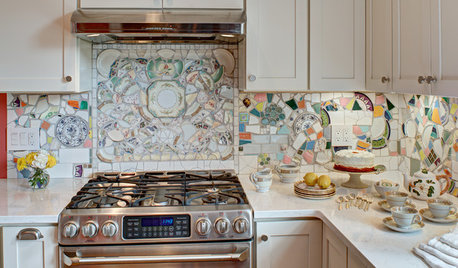
MOST POPULARKitchen of the Week: Broken China Makes a Splash in This Kitchen
When life handed this homeowner a smashed plate, her designer delivered a one-of-a-kind wall covering to fit the cheerful new room
Full Story
BUDGET DECORATING14 Ways to Make More Money at a Yard Sale — and Have Fun Too
Maximize profits and have a ball selling your old stuff, with these tips to help you plan, advertise and style your yard sale effectively
Full Story
LIFEHouzz Call: What Has Mom Taught You About Making a Home?
Whether your mother taught you to cook and clean or how to order takeout and let messes be, we'd like to hear about it
Full Story
hobbitmom