

How can I make this bread using wheat flour?
11 months ago
Featured Answer
Sort by:Oldest
Comments (7)
Related Discussions
Grainlady, I make the Bulgur Wheat Bread
Comments (13)First off, I meant to say, "I MADE THE BULGUR WHEAT BREAD"! I have no idea how I ended up sounding like a three year old. Secondly, the recipe was incredibly easy. I especially like its lightness & soft texture, and, as I said before, the fact that it was not overly sweet. BULGUR WHEAT LOAF Grainlady from CF/ Pillsbury 3/4 c. water 1/2 c. bulgur wheat 2-1/4 to 2-1/2 cups Pillsbury's BEST All-Purpose or Unbleached Flour 2 T. brown sugar 1 to 1-1/2 t. salt (I only used 3/4 tsp.) 1 pkg. active dry yeast 1 c. water heated to 120°-130°F 1/4 c. oil 1 c. Pillsbury's BEST Whole Wheat Flour 2 t. water 1 egg white 1 t. bulgur wheat Grease cookie sheet. Bring 3/4 c. water to a boil in small saucepan. Remove from heat; stir in 1/2 c. bulgur. Let stand 20-25 minutes or until water is absorbed. Lightly spoon flour into measuring cup; level off. In large bowl, combine 1 cup all-purpose flour, brown sugar, salt, yeast, 1 cup hot water and oil; beat at low speed until moistened. Beat 3 minutes at medium speed. By hand, stir in bulgur mixture, whole wheat flour and additional 1 cup all-purpose flour to form a stiff dough. (At this point, I let the mixture rest for 20 minutes before kneading.) On floured surface, knead in 1/4-1/2 cup all-purpose flour until dough is elastic, about 5 minutes. Place in greased bowl; turn greased side up. Cover loosely with greased plastic wrap and cloth towel. Let rise in a warm place (80-85°F) until light and doubled in size, about 45 minutes. Punch down dough several times to remove all air bubbles. Shape into round loaf. Place on greased cookie sheet. Cover; let rise in warm place until light and ALMOST doubled in size, about 30 minutes. Heat oven to 375°F. Uncover dough. With very sharp knife, cut a 1/2-inch deep slash across top of loaf. Cut another at a right angle, making a cross. In small bowl, beat 2 t. water and egg white until blended. Brush over top of loaf; sprinkle with 1 teaspoon bulgur, if desired I omitted the sprinkling of bulgur). Bake at 375°F for 25-35 minutes or until golden brown. Remove from cookie sheet; cool on wire rack. One loaf = 17 slices. My notes: I always reduce the salt content of breads because my husband is on a salt restricted diet. To add a bit more flavor because of the lower salt, I added 4 tbsp. dry buttermilk powder. I let the dough rest (autolyse) for 20 mins. before kneading. Grainlady had a personal note about forming a tall loaf, so I made sure to keep the dough ball high & round rather than flat. I put the shaped dough on parchment paper on a wooden peal and then baked the bread directly on a preheated baking stone. I removed the parchment about ten minutes before the bread was done....See MoreWhat do I need to know about WHITE whole wheat flour?
Comments (26)Kari & Clare - Kari - My sources for wheat: 1. locally grown hard winter red and white wheat (free or very cheap, but usually NOT chemical-free or organic) 2. Heartland Mill, Marienthal, KS - organic grains 3. Bob's Red Mill - soft white wheat (and other grains) 4. Wal-Mart - Hard Spring White Wheat - Prairie Gold (from Wheat Montana - chemical-free) - they also carry hard red wheat Bronze Chief. Wal-Mart has only recently started carrying Wheat Montana wheat around here - $5 for 25-pounds. Mills: 1. (A very old) Whisper Mill - which is an electric impact mill (now known as a Wonder Mill) - this mills most grains/seeds/beans into a very fine flour - fine flour = fine bread, coarse flour = coarse bread. 2. Marga Mulino Flaker Mill - for cracked grain, flakes, and coarse farina (for cooked cereal) 3. Corona Corn Mill - for coarsely milled grain and corn meal. 4. Porkert Seed Grinder - for small seeds, such as amaranth, poppy seeds, teff, etc. 5. Bosch Coffee/Spice - for milling flaxmeal. 6. Family Grain Mill - a hand mill, that also has an electric-powered motor to run it as well, that has a lot of attachments available for other uses (meat grinders, flakers, etc.). This is my back-up mill. You have to mill the flour twice to get a reasonably fine grind of flour. Source for recipes: I suggest you start by substituting unbleached/bleached flour in your favorite recipes with a portion of wholegrain flour. There are all kinds of books out there on whole wheat baking. I have a collection of 28 beans, seeds, and grains that I use milled and whole - included in that, several types of wheat. I develop many of my own recipes because I use really "odd" ingredients, including gluten-free baking. Here's a few books I like from the large selection in my library: RECIPES FROM THE OLD MILL (Baking with Whole Grains) by Sarah E. Myers and Mary Beth Lind WHOLE WHEAT COOKERY (Treasures from the Wheat Bin) by Howard and Anna Ruth Beck THE AMAZING WHEAT BOOK by LeArta Moulton THE SPLENDID GRAIN (all kinds of seeds and grains) by Rebecca Wood WHEAT COOKIN' MADE EASY by Pam Crockett --------------- Clare - Wheat comes in HARD (strong/high-gluten) and SOFT (weak/low-gluten) varieties. Whole Wheat Pastry Flour is milled from (low-gluten) soft red wheat, just like you thought. It's best used just as you described - in baked goods where you don't want a lot of gluten development - for the most part, anything other than yeast breads. Low-gluten bleached flour would include White Lily and Martha White - which are great for quick breads, pastry, etc. I purchase soft white wheat berries from Bob's Red Mill to mill into whole wheat pastry flour. I also use freshly-milled spelt and some rye, barley, and triticale for baked goods that need low-gluten flour, as an alternative to soft wheat flour. All wheat has a protein level that determins if the grain is hard or soft. Even in the same field you'll find protein (gluten) level differences from one side of the field to the other. If a portion of the field is shaded(usually at the edge of the field) and/or there's a low place in the field that retains water after a rain, the wheat that receives a lot of water/shade will usually have a low-protein count. Even though hard wheat may have been planted, the protein level is also determined by the amount of rainfall, and other factors. Soft wheats are characteristicly plump (a lot of endosperm), while hard wheat varieties (especially winter wheat) is small, wrinkled, and very hard when you bite it. When soft whole wheat is milled, the flour is exactly that - very soft to the touch. Hard whole wheat is much 'grittier' - due to the higher percentage of bran to endosperm ratio. All bleached/unbleached flour is milled from a combination of wheat protein levels to formulate the amount of protein for the type of flour needed. High-protein wheat is used for yeast breads, a combination of hard and soft wheat is milled for all-purpose flour, and pastry flour is milled from soft wheat. There are also fields of extremely high protein wheats (15% or more), but they are mixed with lower protein wheat to make flour. I've used some wheat that was 16% protein, and it took forever (lots of kneading and a very long fermentation) to develop the gluten in bread - 12-13% protein level is much better for yeast bread. Too much gluten will make a tough loaf of bread. The highest protein level wheat is durum wheat. Unlike hard red and white wheat varieties which are used for yeast breads, durum wheat is used in pasta. I mill durum for whole wheat pasta - NOT red or white varieties of wheat. Commercial whole wheat pasta is made with wholegrain durum wheat. The elements in wheat protein that we call "gluten" are actually a gluten group - GLUTENINS and GLIADINS. Glutenins provide the elasticity quality that allows bread dough to expand. Gliadins contribute to the viscosity and extensibility of bread dough. Red and white wheat varieties have a dominance of GLUTENINS and less GLIADINS. Durum wheat has a dominance of GLIADINS and less GLUTENINS. Therefore, even though durum wheat has a high protein level, it's unsuited for bread making, due to the type of protein. -Grainlady...See MoreBread bakers - how can I adapt this to a non-bread machine method
Comments (11)The yogurt shouldn't be a problem reacting with yeast. Yeast actually works best in a mildly acidic environment, which is why ascorbic acid is often mixed with dry yeast products. To improve the rise of breads containing wheat germ and whole wheat flour (which contains wheat germ), I always add an acid ingredient to counteract the gluten-damaging effects of glutathione in the wheat germ. Bacteria (in yogurt and also present in bread dough made without yogurt) produces those tasty acids in bread dough that improve the flavors of bread when we refrigerate it. The acidity already present in sourdough starters help sourdough breads keep longer, inhibit mold growth and also slows staling, and you'll see the same qualities in breads made with yogurt. -Grainlady...See MoreSoft whole wheat/miulti grain bread...can you make this?
Comments (18)White whole-wheat (also called whole wheat pastry flour) will yield a softer bread and still have the fiber. The vital wheat gluten is a must. Here is David's (Lakeguy) recipe which I have saved but have yet to make (still no oven, but soon!). It looks great. Struan Bread Makes 1 large loaf or 2 small loaves Soaker 3 tablespoons polenta 3 tablespoons rolled oats 2 tablespoons wheat bran 1/4 cup water Dough 3 cups unbleached bread flour 3 tablespoons brown sugar 1 1/2 teaspoons salt 1 tablespoon instant yeast 3 tablespoons cooked brown rice 1 1/2 tablespoons honey 1/2 cup buttermilk 3/4 cup water topping 1 tablespoon poppy seeds Mix together the ingredients for the soaker. Cover and allow to soak for at least half an hour or as long as overnight. In a larger bowl, combine the dry ingredients, then stir in wet ingredients and soaker. Add more flour or water until the dough can be formed into a ball that is tacky but not sticky. Place the ball of dough on a clean work surface and knead it for 10 to 12 minutes, then return it to the bowl. Cover the bowl with plastic wrap and allow the dough to ferment until doubled in size, approximately 90 minutes. Remove the dough from the bowl, degas it gently, and split it for two loaves or shape it as is for one. Place the loaves in greased bread pans, spritz or sprinkle water on top, and sprinkle a handful of poppy seeds on top. Cover the pans loosely with plastic and allow the loaves to rise until doubled in size again, approximately 90 minutes. Bake these loaves at 350 for 40 to 60 minutes, until the internal temperature is around 190 degrees. When ready the loaves will be quite brown on top and will make a hollow thud when tapped on the bottom. Nothing like homemade bread...I love it! David...See More


Related Stories
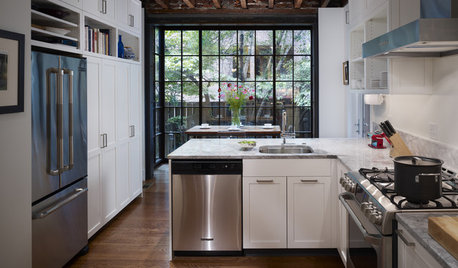
FEEL-GOOD HOME12 Very Useful Things I've Learned From Designers
These simple ideas can make life at home more efficient and enjoyable
Full Story
LATEST NEWS FOR PROFESSIONALSDesigning a Business: How Can I Add Income Streams?
Design business coach Chelsea Coryell offers up several easy ways pros can increase their cash flow
Full Story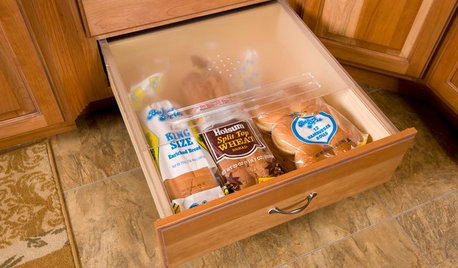
DESIGN POPBakers’ Home Storage Tips for Sliced Bread’s 90th Birthday
In honor of the bread slicer’s debut in 1928, we offer the best bread storage tips since, well ... you get it
Full Story
ENTRYWAYSMake the Most of Your Entryway
Whether you have a grand staircase or a tiny front hallway, you can maximize your home's entryway for beauty and usefulness
Full Story
HOUZZ TVThis Light-Filled Tennessee Dream Home Was 40 Years in the Making
A retired couple used Houzz to find design professionals to help build a spacious home that can easily host 100
Full Story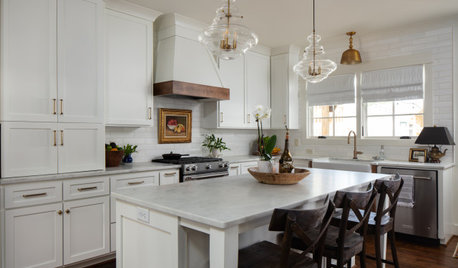
KITCHEN LAYOUTSHow to Make the Most of Your L-Shaped Kitchen
These layouts make efficient use of space, look neat and can be very sociable. Here’s how to plan yours
Full Story
DIY PROJECTSDining Set Makeover: Paint and Tea-Tinted Fabric Make Old Chairs New
Reclaim dated dining chairs for far less than buying new, using spray paint, modern fabric and a handful of tea bags
Full Story
GARDENING GUIDESHow I Learned to Be an Imperfect Gardener
Letting go can lead to a deeper level of gardening and a richer relationship with the landscape. Here's how one nature lover did it
Full Story
SMALL SPACES9 Organizing Lessons We Can Learn From Small Spaces
Are you designing a little room or a studio apartment? With these clever tips, you can make every inch count
Full Story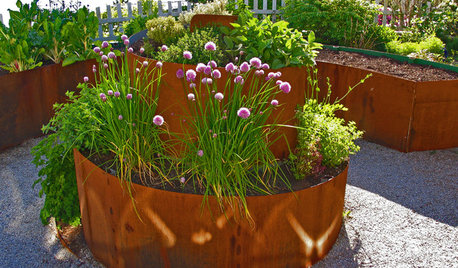
URBAN GARDENSContainers Make Growing Edibles a Cinch
If life hands you a lack of land, grow lemons — with a few basics, you can proudly reap the fruits, veggies and herbs of your labor
Full StorySponsored

Central Ohio's Trusted Home Remodeler Specializing in Kitchens & Baths

jehanne hansen