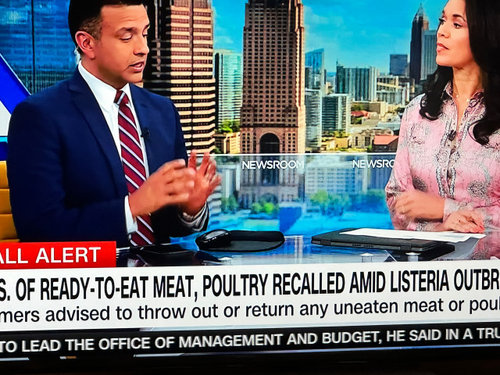
More recalled food — 11-23-24
last year
last modified: last year
Featured Answer
Sort by:Oldest
Comments (22)
- last year
Related Discussions
link to article on new pet food recalls
Comments (8)Here is a report of the Press Conference by the FDA. If this organization is this confused, how can we expect to understnad this mess! Steve Dale discusses this issue in a WGN Radio News podcast, available by clicking here. ITS ALL VERY CONFUSING:Here You Go, Figure It Out for Yourself, from the FDA Press Conference  Dry Foods May Be A Problem Too, Or Not By Steve Dale March 30, 2007. The messages seem confused, contradictory to what the Food and Drug Administration has previously stated. For starters, aminopterin (the rodenticide previously announced March 23 to be responsible for the tainted food) is no longer being considered by the FDA. Melamine contained in wheat gluten from China is now being targeted as responsible for the deaths and illness of mostly cats, and also dogs. Previously the FDA touted clearly, dry foods are safe. While Dr. Stephen Sundlof, director of the Center for Veterinary Medicine at the FDA refused to specify names, he now said dry foods may or may not be affected. "We are trying to trace out all the contaminated wheat gluten, the identified source  there are obviously many sources of wheat gluten distributed to pet food companies. WeÂve identified one particular supplier of the wheat gluten with melamine. We are aware of the company  and they do produce dry food. We are trying to determine if they did use the product in the dry food. At this point we donÂt have any additional information." Later in the press conference, I attempted to pressure Sundlof to elaborate on the potential danger dry food. I indicated numerous anecdotal reports from my readers and listeners telling me they believe their pets have gotten sick as a result of the dry food. Angrily, I simply asked if it is true or not. He began by conceding that "We are hearing from pet owners on dry foods (also)." Sundloff continued, "Unlike the human food, there is no CDC (Centers for Disease Control) for animals and normally that would be the responsibility of the CDC to develop criteria for confirmed cases of poisoning. This is very early  it may turn out the dry food wasnÂt even used. We need to find out lot numbers, and then need to get the information to the general public." Still another reporter continued to pressure Sundloff, even pointing out that people may be right now, during the press conference, feeding dry food  why canÂt they tell us? HereÂs the reply, "We know the public is extremely concerned, as we are, about this issue. We feel itÂs better to give information as we know it, and to reassure consumers that their pet food is safe but not giving any false expectations. WeÂre following every lead we have. My sense is that we have most it under control." As for wheat gluten with the melamine contaminating human food, Sudnloff said, "We are not aware of (contaminated) wheat gluten in human food." Michael Rogers, supervisory consumer safety office at the office regulatory affairs at the FDA pointed out that the agency is initiating a 100 per cent sampling of wheat gluten from China (He did not respond to a reporterÂs question about what ChinaÂs response to this is). I also asked Sundlof about the wildly varying discrepancies of reports between the number pets who have died as a result of the tainted food according to the FDA (under 20 pets) to the figures presented on some websites and in some broadcasts and printed reports, which are into the thousands. There just seems to be such a dramatic difference in the numbers. "We (at the FDA) have not had the luxury of time to confirm the numbers," he said. Sundlof added that there have been 8,800 calls of from concerned consumers as well as veterinarians. FDA complaint coordinators for all 50 states have answered phone calls. More than 100 samples of pet food have been analyzed at the FDAÂs field labs, according to Sundlof. Dr. Donald Smith, dean of the College of Veterinary Medicine at Cornell University (Ithaca, NY) spoke primarily at the start of the press conference. It was his lab who confirmed the melamine, after a tip from an unnamed pet food company which was involved in the Menu Foods recall of over 90 brands. That company was actually the first to identify and self-report the contaminant. Melamine is not typically toxic when used is such way as to make such items as durable kitchen utensils and pipes, but itÂs also used in Asia as a fertilizer (melamine is not approved for use as a fertilizer in the U.S.). High doses of melamine does cause pronounced diuretic affects in rats and dogs, developing unique crystals in the urine, which Smith described. He used illustrations to make his point (which, of course, I did not see by phone). He described the dramatic changes to the distal tubules (small tubes leading off the back of the kidneys) and more changes to the proximal (front) tubules. The spaces around the tubules, he said, had inflammatory cells. As he concluded his presentation, he was quick to add his Âevidence remains, for now, presumptive. Smith offered this timeline: March 21, the laboratory in Albany made the initial diagnosis of aminopterin, which was confirmed 36 hours later. He said at Cornell theyÂve been unable to find aminopterin. On March 26 and 27, Cornell positively confirmed melamine in the food, specifically in wheat gluten as well as urine in cats, and the kidney of a cat who died in the Menu Foods feeding trial. Sundlof said the problem doesnÂt seem to the same in Canada or Mexico as for impacting health of dogs and cats. He said there were no reports of illness or deaths in Canada, but did not mention reports of pets affected from Mexico. But he said heÂs contact with health authorities from both countries. Steve had experts on the air Sunday, speaking about the pet food recall, and some provided some national news. Among those listening, longtime WGN listener Linda Frahm of Palatine who lost her cat Basti to tainted food. BastiÂs story is below: The feature is followed by a listing of links and useful information; and then a description from the March 23 FDA Center for Veterinary Medicine Conference (Steve Dale was on the air with Steve Cochran moments after that press conference offering the latest). Most Sick Pets Survive Illness from Tainted Food, Too Many Do Not; Researchers Seek Further Explanation By Steve Dale "I felt I had killed my cat; I mean who would expect buying the best possible food for her might kill her," says Linda Frahm of Palatine, IL (a Chicago suburb). Basti, who was found outdoors, Âadopted the Frahm family three years ago. Basti adored Linda and husband TimÂs three children, demanding affection and gave twice as much back in return. Basti became ill shortly after eating the tainted pet food, and was quickly treated by the family veterinarian. Feeling their cat would be more comfortable at home, Linda administered fluids and followed her vetÂs instructions. LindaÂs 17-year old daughter slept on the floor with Basti, stroking her beloved pet all night. The next day, Linda encouraged her two oldest (her daughter and 11-year old son) to attend an event at the local high school. When they returned Basti was dead. "ItÂs so hard to watch this happen to a family member who we loved with all our hearts," says Frahm. "It was harder to tell my kids. Dying of old age or a natural illness is a part of life. This is not what happened to Basti." The family veterinarian confirmed that Basti ate food which had been recalled, and died of acute kidney disease, which is consistent to whatÂs happened to other pets who became sick as a result of the contaminated food. The good news is that the majority pets have been luckier than Basti, and seem to be recovering, according to Dr. Richard Goldstein, an internal medicine specialists and assistant professor Small Animal Medicine at the Cornell University College of Veterinary Medicine, Ithaca, NY, Sadly, even when cats recover from kidney failure, often the healing isnÂt 100 per cent. Sometimes affected cats may then suffer chronic problems on and off throughout their lifetimes. "ItÂs too early to say whether that will be the case with these cats, he says. In fact, cats do seem to be more affected than dogs, and smaller dogs more so than larger dogs. Presumably, whatÂs made them sick is the contaminant found in the recalled foods (produced by Menu Foods manufacturing plants in New Jersey and Kansas), a rodenticide called aminopterin, Over 90 brands were included in the historic pet food recall, all moist foods. To date, there is no reason to believe dry pet foods or prescription diets are affected. The New York State Food Laboratory in Albany identified the foreign substance as aminopterin on March 23. "The finding is real," says Goldstein, who is working with the FDA at his lab, the New York State Animal Health Diagnostic Center at Cornell. Goldstein adds, ""This is preliminary finding. WeÂre working to further validate this finding and also to seek any other possible contaminants. This may not be a done deal." Dr. Stephen Sundlof, director of the Center for Veterinary Medicine at the FDA also confirmed that the search continues for a complete explanation, that there may be more to the story than aminopterin. Meanwhile, some consumers are seeking alternatives to traditional pet foods. "I understand this is a difficult and confusing time," says Dr. Kathryn Michel, veterinary nutritionist and associate professor of nutrition at the University of the Pennsylvania School of Veterinary Medicine, Philadelphia. "Raw food may have harmful bacteria or protozoa and we have seen many problems as a result. Home cooking requires a lot of work and a lot of homework since nutritional needs are so different for our pets than it is for people. Just opening a can or salmon or tuna (meant for human consumption) and feeding that to cats, for example, can cause serious nutritional deficiencies." Officially fewer than 20 pets have died, according to the FDA, though Sundlof concedes the number may ultimately be many times that. Goldstein says websites exaggerating with solely speculative figures are only creating further problems, even unnecessary panic in some circles. "The reality is that is that we move further away from the original recall, at some point soon we will see no new cases illness." Frahm says, "I know many people are working hard to get to the bottom of this so this can never happen again. They need to  so we know Basti didnÂt die in vain." Information: What to doÂWho to Contact Despite sensationalized reports elsewhere, the simple truth is that no one knows how many pets have become ill or died as result of the tainted pet food, while that number may be well into the hundreds or even higher, it may not be. At this time, the number of animals affected is conjecture. Enhancing confusion are the multiple websites being used to report incidents. The FDA is the only official reporting agency if you have cause to believe your pet has become ill or succumbed as a result of tainted pet food. http://www.fda.gov/opacom/backgrounders/complain.html If you believe your pet has been affected: Save all your veterinary records, save food samples and packaging (if possible). Excellent additional advice is offered by the American Veterinary Medical Association: http://avma.org/press/releases/070319_petfoodrecall.asp Menu Foods recall information, and list of the affected products: www.menufoods.com/recall/index.html Menu Foods has set up a hotline (though the number doesnÂt seem to operate): 866-895-2708. Dry pet foods and prescription diets are not affected. So-called ÂSuper Premium foods (available at boutique pet stores and online) are also not affected. A listing of pet foods not impacted by the recall which can purchased at PETsMART locations (and also further general information): www.banfield.net. A listing of cat foods which are safe: http://hubpages.com/hub/Cat_Food_Safe_To_Feed_After_The_Cat_Food_Recall Websites which have credible up to date information that you can count on: American Veterinary Medical Association, www.avma.org American College of Veterinary Internal Medicine, www.acvim.org Taking You To the FDA Center for Veterinary Medicine Press Conference March 23, 2007. In a teleconference at 4:30 (ET) with the Food and Drug Administration, officials confirmed that the New York State Animal Health Diagnostic Center at Cornell and the New York State Food Laboratory identified aminopterin (a folic acid inhibitor used both as a rodenticide and at one time as a cancer treatment in humans) in the recalled pet food. Although, they say they donÂt know how it this could have gotten into the pet food supply. They added they have also not ruled out other additional causes for the deaths and illness in cats and dogs, which they say they are continuing to rule out. The panelists answering reporter questions were Dr. Stephen Sundlof, director of the Center for Veterinary Medicine at the FDA; Dr. Daniel McChesney, director of the Office of Surveillance and Compliance for the Center for Veterinary Medicine at the FDA and Michael Rogers, supervisory consumer safety office at the office regulatory affairs at the FDA. Sundlof did most of the talking. The conference began with an opening statement from Sundlof before he took questions for reporters. In that statement he pointed out the recall has been expanded. Menu Foods has recalled all the products on the list, regardless of the date. ItÂs the same exact list of products but for all dates. The message is, for now, not to buy the products listed in the recall  no matter what the date on the package says. Sundlof said he does not know the number of pets affected, but later indicated that 14 pets that have died as a result of the tainted foods. ThereÂs no comment on the number of animals who were ill and recovered, or who are now sick. He conceded many reports indicate many more have died, but he said he can only confirm 14. One point of major confusion is simply where to report if you believe your pet is ill or if your pet has succumbed as a result of eating contaminated food. I asked Sundlof, exactly where people should email or phone. Sundlof said the only place to report is through the state FDA Consumer Complaint Coordinators. He said thereÂs been some degradation of service because the lines have been overwhelmed with over 4,400 calls. "If you keep trying youÂll get through," he said. In some places, staff has been added to handle the extra volume of calls. No other website, or reporting procedure is appropriate other than contacting the FDA. http://www.fda.gov/opacom/backgrounders/complain.html Sundlof said if you make a report to the FDA offer whatever information you can. and the more the better. He said, be prepared to answer Âwhat food your pet consumed, and when. Also, what the veterinarian reports as the cause of death. He suggests to help clarify, pet owners who suspect their pet died as a result of eating the contaminated food should consider, "A post mortem examination including microscopic pathology so we can look at specific lesions. Then we can put all the information together and come up with whether it was likely the food or not. This takes time and follow-up with veterinarians. A part of the reason we donÂt have good numbers (of fatalities) at this time." He repeated he did not know how the contamination occurred in the first place, though he agreed with previous printed reports that wheat gluten is suspect. "Still, we have not limited our investigation to wheat gluten," he added. Interestingly when one reporter asked about sabotage, he did not discount the question. He simply said, "We have not ruled out sabotage. We have no leads, and not even theories." About wheat gluten. Sundlof said he wasnÂt sure of the source (providing the ingredient), and was "checking into it." He said the source may be outside the country, or there may be multiple sources. But then later when another reporter inquired, he did indicate "We know the broker (of the wheat gluten)." But he wouldnÂt answer when a reporter asked who that broker is. He added, "We can confirm that (the wheat gluten used in these pet foods) has not made it into the human food supply. We believe thereÂs no risk to public health. Still, we canÂt rule out that possibility entirely, so weÂve contacted our colleagues at the CDC (Centers for Disease Control) to monitor for increased signals. We have no reason to believe whatsoever that this chemical has entered the human food supply." That contaminant again, aminopterin, is pretty potent stuff, and not approved by the EPA in the US to control rodents. Interestingly a drug very closely aligned to aminopterin (methotrexate) is used to treat cancer patients. Not discussed at the press conference, but later veterinary toxicologist Dr. Steve Hansen, director of the ASPCA Animal Poison Control Center told me that one potential adverse reaction (side effect) methotrexate is acute renal failure, the same illness that is affecting the pets who get sick as a result of eating the tainted food. (Methotrexate also inhibits DNA/RNA synthesis by inhibiting folate synthesis. From current evidence, it appears that aminopterin toxicity is analogous to methotrexate toxicity). Sundlof said "ItÂs very potent," pointing out 3 milligrams per kilogram of aminopterin is toxic to rodents. He guessed that perhaps cats are more sensitive to the toxicity occurring in pet foods than dogs, hence explaining why reportedly more cats than dogs have been affected. Rogers said Menu Foods (the manufacturer responsible for these products, at their Kansas and New Jersey plants) is cooperating with the investigation. He also seemed to indicate that the reported deaths are all from products manufactured at the Kansas plant, but did not say or hint products manufactured in New Jersey would then be safe. No one from the press asked why Menu Foods has not returned press calls, and has a hotline number which never seems to operate. Sundlof conceded that his office has taken reports of pets being affected by dry foods, but he maintained none of those instances are confirmed. He insisted, "Dry pet food is safe." I also asked Sundloff about eroding consumer confidence in pet foods, particularly moist foods and semi-moist foods, and opting to perhaps cook their own or to purchase so-called Âraw diets. He replied, "We are concerned about that, about (people purchasing) raw diets which can contain harmful bacteria and be detrimental to pets. As a veterinarian myself, I want to make sure the public understands that we have not found hard evidence that animals had had ill effects from products that are not a part of this recall. We believe pet owners should continue to buy products outside the recall list, and they can feel confident." Sundloff conclulded with a timeline: He said the FDA learned of the problem on March 15th. On March 16th, the FDA visited the plants. "Prior to us learning of the recall, the company had already sent samples for analysis to Cornell." [ Back ] Advertisement...See MoreMore dry food recalls - Cal Nat, Evo, Innova, Karma
Comments (1)Now they have broadened the recall to all dry foods by: California Natural Karma Healthwise Innova All Sizes, All dry dog and dry cat food and treat varieties. All UPCs, All Lot Codes. All expiration dates prior to and including MARCH 24, 2014 EVO All Sizes, All dry dog and dry cat food and treat varieties. All ferret food varieties. All UPCs. All Lot Codes. All expiration dates prior to and including MARCH 24, 2014....See MoreMore recalled food- Royal Canin
Comments (2)Yes, two of us posted about this last Friday - threads are now on the second page. In addition, there have been hogs with urine samples positive for melamine after feeding on rice protein concentrate. It is very scary and one wonders what the final outcome will be. This one panicked me as we feed RC, but fortunately our particular food uses rice, not rice protein concentrate....See MoreMore Cat and Dog Food Recalls 4-26 and 4-27
Comments (1)sink...See More- last yearlast modified: last year
- last year
- last year
- last year
- last year
- last year
Related Stories

KITCHEN CABINETS11 New Kitchen Cabinet Ideas You’ll See More of This Year
Black, high-gloss, embossed and other new cabinet looks are popping up in homes
Full Story

EVENTS5 Top Design Events: Dec. 23, 2011 - Jan. 27, 2012
Architecture walking tours, 9/11 Memorial lecture and more: See what's on the Houzz list of things to see and do now
Full Story0

MOST POPULAREasy Green: 23 Ways to Reduce Waste at Home
Pick from this plethora of earth-friendly ideas to send less to the landfill and keep more money in your pocket
Full Story

KITCHEN DESIGNDetails That Count: 11 Designer Secrets to Work Into Your Kitchen
See a pro’s suggestions for rollout pantries, tray storage, cabinet depth, corner sinks and more
Full Story

5 Top Design Events: Dec. 1-Dec. 23, 2011
Pop-up shops, holiday home tours and more: See what's on the Houzz list of things to see and do
Full Story0

DATA WATCH11 Things to Know Before Your Next Renovation
Here’s what the 2026 U.S. Houzz & Home Study reveals about remodeling trends, spending and more
Full Story

LATEST NEWS FOR PROFESSIONALS11 Things to Know About Home Renovations Today
Here’s what the 2026 U.S. Houzz & Home Study reveals about remodeling trends, spending and more
Full Story
DECORATING GUIDES11 Tricks to Make a Ceiling Look Higher
More visual height is no stretch when you pick the right furniture, paint and lighting
Full Story

LANDSCAPE DESIGN24 Garden Paths to Inspire Memorable Journeys
Winding or straight, narrow or wide, densely or sparsely planted — there’s more than one way to design a walk
Full Story

KITCHEN ISLANDS11 Must-See Kitchen Islands
Consider these anything-but-ordinary designs to enhance cooking, prepping, storage, entertaining and more
Full Story

Olychick