

All terrain vehicles can be very dangerous
2 years ago
Featured Answer
Sort by:Oldest
Comments (24)
Related Discussions
Recommendations for mower to large plot of land, rough terrain
Comments (8)I feel your pain. Been thee and done that with inadequate equipment. It gets better. The Bad-Boy AOS series with a 72" deck, 35hp Briggs and Stratton, and a chassis built stronger than anything else on the market period. The Bad-Boy has great features like swing away fuel tanks for easy service access. It also has a suspension system to absorb jolts from that uneven terrain you encounter. There are 15 dealers in TN so you should have access to them. They are built in Batesville, Arkansas. Check out the link below link for info. They have a great website. My brother owns a Bad-Boy that is several years old.. They are built tougher than army tanks and do everything advertised. Here is a link that might be useful: Bad-Boy AOS series. 72...See MoreVery High Fire Danger For Friday and Saturday
Comments (2)Apparently it turned into really scarey stuff in a few locations today. We have soaker hoses laid all around the house and turn them on once every couple of weeks to soak the foundation beds when it is dry and rain is not falling. I strive to keep the soil evenly moist and to never let it get dry enough to crack. The moist soil should protect not only your foundation but also your perennials and reseeding annuals because dry plant roots (in terms of the perennials) suffer freeze damage more easily. With reseeding annuals, mine tend to sprout based more on temperatures than moisture, although even if the temps are right, they will struggle to sprout and grow if there is a near-total lack of soil moisture at the seed's depth. Here at our house, the cool-season reseeders usually sprout in Dec. or Jan. (the malva sylvestris, larkspur, pink evening primroses and Texas bluebonnets already have sprouted), the poppies don't usually sprout until March, and warm-season flowers like zinnias tend to sprout in late March or in April, and the timing of their sprouting doesn't change much in wetter weather than in drier weather. I can't address frost heave because I don't experience that down here in zone 7B. Our ground rarely gets cold enough to freeze, so I don't think I've ever seen frost heave. The NWS seasonal outlook through April says some parts of OK will be drier than average, and the rest has an equal chance of being drier or wetter or average. What that means could vary from one location to another, but it isn't looking good overall. We are sort of at the mercy of the La Nina weather pattern through at least April. What happens after that partially depends on whether the current La Nina weakens slowly or more abruptly. I'll use my location as an example since I know all my own numbers. Our county's average rainfall for January (which is our driest month) is about 1.4". So far this year, the official precipitation total recorded for Marietta is 0.18" and the official precip total for our Mesonet station, located several miles west of Marietta in Burneyville is 0.50". Luckily, at our house, we've had just about the same 0.50" as Burneyville, but we still have a big deficit. So have many parts of Oklahoma. Unless a lot of precip falls before January ends, I think 2011 will rank high on the list of "driest Januaries" in Oklahoma. For the perennial beds, just supply moisture enough that they are moist but not sopping wet. That's all you can do. I don't think many of us will get heavy amounts of precipitation next week, but it is too soon to tell. The form the precipitation takes is so critical at this time of year. Three inches of rain would be heavenly, but 3" of snow likely would melt down to the equivalent of about 3/10s of an inch of rain, more or less. I'm hoping for rain and not snow, and since I'm so far south, there's probably a decent chance that's how my precip will come, if any falls here at all. The further north you are in Oklahoma, and esp. if northwest, the great the chance of snow. Dawn Here is a link that might be useful:...See MoreVery High to Extreme Fire Danger Friday
Comments (3)Randy, I know it's been there for at least a year. I think that when they reformatted (was that last year?), it suddenly appeared out of nowhere. There was a prior fire info page I used to look at, but it wasn't nearly as wonderful as this one is. I look at this page every single day (sometimes many times a day because it updates so often) and check our Keetch-Byram Drought Index numbers which, right now, are the highest I can remember seeing since we've been here. I had a harder time finding the KBDI back during the 2005-2006 drought and usually could only find a color-coded map that gave an approximate range. Every now and then a local weather forecaster or a NWS fire weather advisory statement would give us an approx. KBDI range for southcentral OK. On bad fire weather days, I tell our firefighters what the burning index and spread component are so they can have them in mind while fighting fires. The spread component, humidity and wind speed/direction are critical numbers we need when fighting a large grassfire. The ignition component and fuel moisture loads are helpful, too, and I use the dispersal conditions not just to estimate how heavy smoke will be, but to figure out if it is a good day to spray something or to run the sprinkler. Sometimes, this year, the spread component has been scarey-high, especially on days when the wind exceeds 30 m.p.h. At our monthly fire meetings, I tell the firefighters the current KBDI--and when it got to 630, we thought things were as bad as they could be Now that it is at 669, we all are really nervous about leaving our homes for more than a few minutes. It is very rare for anyone here to ever have a KBDI of 700 and I think it would take prolonged exceptional drought, or daily winds that were exceptionally high, to cause that to occur. Once the KDBI exceeds 600, even live plants, organic material in soil, underground roots, etc. will burn. When the town of Ringgold, Texas, burned in 15 minutes on Jan. 1, 2006, I believe their KBDI was only about 630 and the firefighters had no chance of stopping a wildfire driven by winds in excess of 50 m.p.h. One of the reasons that the prospect of grassfires and wildfires bothers me so much is that I know I'd lose organic material in the soil that I've been putting there for 10 years now. I'm not even worried about the house burning.....it is insured. My veggie garden and flower beds are not. : ) In 2005-2006 we had underground roots smoulder and smoke for days and days after a fire. People would see smoke literally rising from the ground and would call 9-1-1 to report a "fire". It was insane and kept the fire depts. running to certain areas repeatedly to check out the reports of smoke. There, I've told you more than you asked, but I just wanted to emphasize how much I love this page. Since our idiot county commissioners (and they know who they are) lifted the burn ban "temporarily" this week to let people burn accumulated trash, brush, pastures (awful decison!), etc., the fire depts. have been busy, esp. the ones in the western portion of the county. I've been spending a lot of time monitoring the OKFIRE page because of it. I also like the Burn Ban map.....just because it is a good barometer of how dry it is around the state. I hope our commissioners reinstate the burn ban next week. I have the sprinkler running outside right now because today's fire danger is so extreme. Enjoy the lovely weekend weather. I bet your plants are loving the heat in the greenhouse! Dawn Here is a link that might be useful: Burn Ban map (updates constantly)...See Moreall pods and STPP....a dangerous combo. LOL
Comments (18)It has been my experience that STPP causes liquid detergents to suds more than the powdered versions. I have mechanically softened water, and you really do not need much STPP to boost detergents. There are no minerals for the STPP to suspend, only the soil from the wash. A teaspoon should be sufficient for a full load of normally soiled clothes. One teaspoon goes very far in soft water, and in a just a few gallons of water that a FL uses. Higher water levels will absolutely whip up more suds. I sometimes get a little slap happy with my detergent dosing, afraid that I am under-dosing. It happens....See More 2 years agolast modified: 2 years agoJeb zone 5 thanked littlebug Zone 5 Missouri
 2 years agolast modified: 2 years agoJeb zone 5 thanked carolb_w_fl_coastal_9/10
- 2 years ago


Related Stories
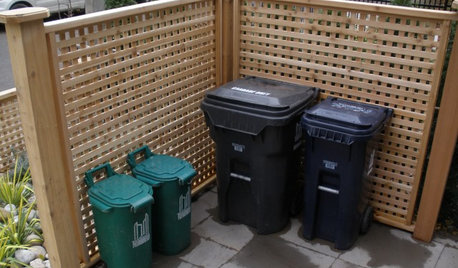
THE POLITE HOUSEThe Polite House: What Can I Do About My Neighbors’ Trash Cans?
If you’re tired of staring at unsightly garbage way before pickup day, it’s time to have some tough conversations
Full Story
FEEL-GOOD HOME12 Very Useful Things I've Learned From Designers
These simple ideas can make life at home more efficient and enjoyable
Full Story
SMALL HOMESHouzz Tour: Stylish 515-Square-Foot Backyard Unit Packs It All In
This accessory dwelling unit in Portland, Oregon, has everything — and can do everything — the homeowners need
Full Story
VINTAGE STYLEGet Away From It All in a Glamper
A glammed-up camper can transport you to a happy place, whether in your yard or on the highway
Full Story
DIY PROJECTSHide All Those Wires in a DIY Charging Station
Keep your gadgets handy and charged with a flexible storage board you can design yourself
Full Story
DECLUTTERINGTame the Toy Chaos: Bin Storage for All
New project for a new year: With bins, totes and shelves, a clutter-free playroom can be yours
Full Story
ARCHITECTUREAll the Possibilities: 4 Homes at the Edge of the Earth
Travel to the far reaches of land, where these residences straddle rocky cliffs, leafy lakeshores and choppy inlets
Full Story
GARDENING GUIDESNew Ways to Think About All That Mulch in the Garden
Before you go making a mountain out of a mulch hill, learn the facts about what your plants and soil really want
Full Story

GREEN BUILDINGWhat's LEED All About, Anyway?
If you're looking for a sustainable, energy-efficient home, look into LEED certification. Learn about the program and its rating system here
Full Story
Patriciae