

What to do with Cream of Wheat
3 years ago
Featured Answer
Sort by:Oldest
Comments (21)
 3 years ago
 3 years ago
Related Discussions
Shrimp Etouffe Roux How do I do it without wheat flour
Comments (8)You can also use file powder as a thickening agent, and this could be added to the separate dish of etouffee at the end. I think it would also provide flavor that would compliment the dish, although I don't think it has much power as a thickening agent. If you are serving the etouffee over rice, it doesn't have to be that thick anyway. File powder can also be added at the table just before eating. Lars This post was edited by publickman on Fri, Jan 18, 13 at 18:47...See MoreHow do I clean wheat berries for grinding?
Comments (1)I'm not familiar with Insecto. I'd check to see if it's safe for human consumption. Contact your County's Cooperative Extension Office and talk to an Ag. Agent. They may have specific information, or can get it for you. 1. Are you purchasing new crop wheat (yet to be harvested this year)? If so, wheat that is 2-3 years old is best for milling, although new-crop wheat CAN be used. If you get new crop wheat, you might want to store it for a year or two, if possible, before using it. 2. Is this field run grain? Are you getting it straight out of the combine hopper and will need to remove the "solids", including chaff, beetles, cricket and grasshopper legs (and other bits of them), stones and other assorted solid matter? Or will it be cleaned at the elevator - harvested with a combine and then cleaned by passing through screens, sieves, or fans to remove chaff and foreign material at the elevator and bagged? 3. Are you getting food-grade wheat (for humans) or feed-grade wheat (normally destined for animal use)? 4. If possible, get the protein and moisture count so you'll know whether it's best used for yeast breads or low-protein and best used for quick breads and other baked goods where you don't want a lot of gluten development. If it's running 10% protein, or less, you will want to add some vital wheat gluten when using it for yeast breads. If the wheat has 14% protein, or over, that's flour you can expect will take a LOT of kneading to develop that much gluten in it. If it's high in moisture, you'll have to dry it before storing or milling it. 5. If you "wash" wheat, you MUST make sure it's well-dried in an oven or dehydrator before you use it. Wheat high in moisture will glaze over mill stones (if your mill grinds with stones), or clog an electric mill and ruin it. Glazed stones have to be removed and cleaned, dried, and reinstalled. It's always good to have an extra set of mill stones for your mill, should they glaze over. Personally, I've never washed wheat, even wheat I got straight out of the combine and had to winnow the chaff and sift the solids out of it myself. After it was winnowed and sifted, we blew the dust off with air from an air compressor. 6. Wheat is normally "cleaned" (or triple-cleaned) by passing it through screens, sieves and air from fans, not washed. Some operations even use de-stoners to make sure any small rocks/stones are removed, as well as a magnet to pull out any foreign bits of metal, and get the dust blown off it with air from a series of large fans. Triple-cleaned food-grade wheat means it's relatively dust-free and you get primarily whole seeds. Feed gain will be lower-quality grain, have more broken seeds and who knows WHAT else in it, and require further cleaning for human use. If your grain has a lot of broken seeds in it, then you chance having it go rancid during storage. Once the bran (coat) is cut or cracked, the germ oil is exposed to oxygen which quickly goes rancid. After purchasing hundreds and hundreds of pounds of wheat over the years, I'd rather spend the money on quality wheat with a known protein and moisture level, that has been triple-cleaned, and is food-quality, than clean my own; although I've never passed up free wheat from friends and relatives, even if I had to clean it. It's a LOT of work to clean a bushel of wheat. Nothing like sitting out on the patio on a July day in 100F heat with a bowl of wheat in your lap. First you pick out, or screen out, all the "solids". Then, with a huge fan blowing, you pour small amounts of wheat between two containers (over and over again) and the "stuff" (chaff, beards, bug-bits, weed seeds, etc.) blows all over the place. Then you sift it through screens to remove any large bits you missed, through another screen so the broken grain is separated from the whole. Last, blow the dust off with the air compressor. -Grainlady...See MoreWhat do I need to know about WHITE whole wheat flour?
Comments (26)Kari & Clare - Kari - My sources for wheat: 1. locally grown hard winter red and white wheat (free or very cheap, but usually NOT chemical-free or organic) 2. Heartland Mill, Marienthal, KS - organic grains 3. Bob's Red Mill - soft white wheat (and other grains) 4. Wal-Mart - Hard Spring White Wheat - Prairie Gold (from Wheat Montana - chemical-free) - they also carry hard red wheat Bronze Chief. Wal-Mart has only recently started carrying Wheat Montana wheat around here - $5 for 25-pounds. Mills: 1. (A very old) Whisper Mill - which is an electric impact mill (now known as a Wonder Mill) - this mills most grains/seeds/beans into a very fine flour - fine flour = fine bread, coarse flour = coarse bread. 2. Marga Mulino Flaker Mill - for cracked grain, flakes, and coarse farina (for cooked cereal) 3. Corona Corn Mill - for coarsely milled grain and corn meal. 4. Porkert Seed Grinder - for small seeds, such as amaranth, poppy seeds, teff, etc. 5. Bosch Coffee/Spice - for milling flaxmeal. 6. Family Grain Mill - a hand mill, that also has an electric-powered motor to run it as well, that has a lot of attachments available for other uses (meat grinders, flakers, etc.). This is my back-up mill. You have to mill the flour twice to get a reasonably fine grind of flour. Source for recipes: I suggest you start by substituting unbleached/bleached flour in your favorite recipes with a portion of wholegrain flour. There are all kinds of books out there on whole wheat baking. I have a collection of 28 beans, seeds, and grains that I use milled and whole - included in that, several types of wheat. I develop many of my own recipes because I use really "odd" ingredients, including gluten-free baking. Here's a few books I like from the large selection in my library: RECIPES FROM THE OLD MILL (Baking with Whole Grains) by Sarah E. Myers and Mary Beth Lind WHOLE WHEAT COOKERY (Treasures from the Wheat Bin) by Howard and Anna Ruth Beck THE AMAZING WHEAT BOOK by LeArta Moulton THE SPLENDID GRAIN (all kinds of seeds and grains) by Rebecca Wood WHEAT COOKIN' MADE EASY by Pam Crockett --------------- Clare - Wheat comes in HARD (strong/high-gluten) and SOFT (weak/low-gluten) varieties. Whole Wheat Pastry Flour is milled from (low-gluten) soft red wheat, just like you thought. It's best used just as you described - in baked goods where you don't want a lot of gluten development - for the most part, anything other than yeast breads. Low-gluten bleached flour would include White Lily and Martha White - which are great for quick breads, pastry, etc. I purchase soft white wheat berries from Bob's Red Mill to mill into whole wheat pastry flour. I also use freshly-milled spelt and some rye, barley, and triticale for baked goods that need low-gluten flour, as an alternative to soft wheat flour. All wheat has a protein level that determins if the grain is hard or soft. Even in the same field you'll find protein (gluten) level differences from one side of the field to the other. If a portion of the field is shaded(usually at the edge of the field) and/or there's a low place in the field that retains water after a rain, the wheat that receives a lot of water/shade will usually have a low-protein count. Even though hard wheat may have been planted, the protein level is also determined by the amount of rainfall, and other factors. Soft wheats are characteristicly plump (a lot of endosperm), while hard wheat varieties (especially winter wheat) is small, wrinkled, and very hard when you bite it. When soft whole wheat is milled, the flour is exactly that - very soft to the touch. Hard whole wheat is much 'grittier' - due to the higher percentage of bran to endosperm ratio. All bleached/unbleached flour is milled from a combination of wheat protein levels to formulate the amount of protein for the type of flour needed. High-protein wheat is used for yeast breads, a combination of hard and soft wheat is milled for all-purpose flour, and pastry flour is milled from soft wheat. There are also fields of extremely high protein wheats (15% or more), but they are mixed with lower protein wheat to make flour. I've used some wheat that was 16% protein, and it took forever (lots of kneading and a very long fermentation) to develop the gluten in bread - 12-13% protein level is much better for yeast bread. Too much gluten will make a tough loaf of bread. The highest protein level wheat is durum wheat. Unlike hard red and white wheat varieties which are used for yeast breads, durum wheat is used in pasta. I mill durum for whole wheat pasta - NOT red or white varieties of wheat. Commercial whole wheat pasta is made with wholegrain durum wheat. The elements in wheat protein that we call "gluten" are actually a gluten group - GLUTENINS and GLIADINS. Glutenins provide the elasticity quality that allows bread dough to expand. Gliadins contribute to the viscosity and extensibility of bread dough. Red and white wheat varieties have a dominance of GLUTENINS and less GLIADINS. Durum wheat has a dominance of GLIADINS and less GLUTENINS. Therefore, even though durum wheat has a high protein level, it's unsuited for bread making, due to the type of protein. -Grainlady...See MoreHas anyone used Behr Whipped Cream? What do you think?
Comments (1)We measured it and compared and it is indeed a match to Chantilly Lace. Blog post about it....See More 3 years ago
 3 years ago
 3 years ago
- 3 years ago
 3 years ago
- 3 years ago
- 3 years ago
- 3 years agolast modified: 3 years ago
- 3 years ago
- 3 years agolast modified: 3 years ago
- 3 years agolast modified: 3 years ago
- 3 years agolast modified: 3 years ago
- 3 years agolast modified: 3 years ago
- 3 years ago
- 3 years ago
- 3 years ago
- 3 years ago
 3 years ago
Related Stories

NEUTRAL COLORSCreams and Champagnes Warm This Guest Room
The homeowners said, ‘No gray in this house,’ so in come golden-wheat, tan, beige and off-white shades
Full Story
LIFESimple Pleasures: Indulging in Teatime
Get out the china cups and cream-slathered scones. Tea with treats can make even an uneventful day feel extravagant
Full Story
COTTAGE STYLEHouzz Tour: 1950s Ranch Home Remade Into a Charming Cottage
A Westchester County, New York, home’s garden landscape inspires a cozy, eco-friendly renovation
Full Story
COLORTime to Step Out of Your Color Comfort Zone?
If you always seem to pick warm tones, or you stick to the cool ones, bucking your natural inclination could bring new energy to a room
Full Story
DECORATING GUIDESThe Case for In-Between Colors
These mutable hues defy easy description, but their appeal all around the home isn't hard to get
Full Story
SMALL SPACES9 Organizing Lessons We Can Learn From Small Spaces
Are you designing a little room or a studio apartment? With these clever tips, you can make every inch count
Full Story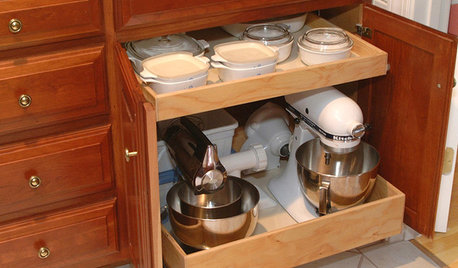
KITCHEN APPLIANCESConsidering a New Kitchen Gadget? Read This First
Save money, time and space by learning to separate the helpers from the hassles
Full Story
COLOR12 Tried-and-True Paint Colors for Your Walls
Discover one pro designer's time-tested favorite paint colors for kitchens, baths, bedrooms and more
Full Story
MOST POPULARThe Unexpected Color That Goes With Everything
Move over, beige. Green is staking its claim as the freshest neutral around
Full Story
LIFESimple Pleasures: The Joy of Baking
Fill your house with a heavenly scent and your heart with cheer by making time to bake
Full Story

LoneJack Zn 6a, KC