

Gruyere rind. Save?
3 years ago
Featured Answer
Sort by:Oldest
Comments (6)
- 3 years ago
Related Discussions
Seed saving- crook-neck squash
Comments (4)First, is it a hybrid variety? If so, the seed won't be true but rather will revert to the characteristics of the original breeds. Second, were you growing any other kinds of C. pepo summer squash or pumpkin? If so the seed may not be true because the bees might have crossed them. If the answer to both of the above is no, you'll need to let a squash ripen FULLY -- all the way to the deep, golden-orange, almost pumpkin-like color with a HARD rind like a winter storage squash. It may take until the plant dies down to get it to the right stage. After that its easy -- cut the squash open, scrape out the seed, wash the stringy goo off (this can take some doing -- getting most of it is OK), and dry the seed thoroughly in a cool, dry, dark place with good air flow. Squash seed doesn't have to be fermented like tomatoes because it doesn't have the gel-coat on it....See MoreWatermelon rind
Comments (17)Well, I too had never thought of using the watermelon rind for anything but pickles or preserves. My old Ball Blue Book has the two I always used -- one for sweet pickles and one for preserves. To the best of my memory, the preserves did not call for any vinegar at all, and when I made them one year I found them cloyingly sweet. Since I and DD are the only ones who like sweet pickles and we're both trying to stay away from sugary things, the only reason I would make watermelon pickles would be for gifts, and I always have trouble figuring out what's the best way to cut the rind. Strips? Squares? Maybe long strips, about dill pickle length, would look prettier in the jar and would be easier to put on a sandwich. I've always done little squares before but they do tend to fall out of a sandwich. Those of you who post on this forum are so smart and I really like how you think outside of the box. I have learned a lot here, so keep up the good work! The next time we have watermelon, I will save that rind and prepare it for cooking. I have a FP that has julienne blades that would be perfect, I think (do you?), after I've cut the rind in 3" square chunks. I'm looking forward to trying this! I wonder how this freezes? Has anyone tried it? How about dehydration?...See MoreSaving money on food
Comments (12)Ole Joyful - I can't disagree at all about "save money simply by eating less". People seem to be unconscious about what they eat, and how much they eat. It's not uncommon for me to observe people (guests in our home or at a restaurant) eating as much as hubby and me put together, or more.... Serving sizes at most restaurants are obscenely large. My cousin recently treated us to a restaurant that serves a home-style fried chicken dinner. I brought home 7-pieces of chicken and most of the side dishes . Enough for at least 4 more meals. 1. My first way to save money on food is to have a budget - $125.00 per month for 2 adults - for food ONLY. To date for 2015 I have spent $577.31 and have a surplus of $172.69 for the year (unspent). Most people don't have any idea how much they spend on food and eating out. It's an emotional thing....not a budget thing. They like it, can afford it, so they eat it! I use surplus funds for large purchases (bulk amounts of grains/seeds/beans, powdered milk, etc.). We practice home food storage, so I try to purchase food at rock-bottom prices and rarely pay retail for anything. 2. Of that budget, $10/week is my limit for meat. Some weeks I can't find a bargain, so I'll save the meat money until I find a stock-up price. 3. Since meat is the most expensive food item I purchase, I am also careful to figure the price per serving, not just the price per pound, which can be deceiving. There can be about 1/3 waste from bone-in chicken, 1/6 waste in bone-in pork, and 1/5 waste in bone-in beef. I keep a chart with me so I can figure how many 3-oz. servings of meat I can expect to get from meat that is boneless, with some bone, and with much bone. Here's an example where bone-in chicken breasts are actually more expensive than boneless: Boneless - $2.39/pound Bone-in - $1.89 Take the cost-per-pound $1.89 x 1.5 (amount of waste) = $2.83 when you factor in the waste. But in my home "waste" is also used. I serve many meatless meals (using high-protein meat alternatives) as well as meals where I use a small amount of meat and mix it with low-costing meat alternatives to control costs, yet still provide a full serving of protein. Be willing to compromise. When the price of ground beef skyrocketed, I switched to ground turkey at half the price. Buy turkey thighs and make my own ground turkey. Now that eggs are no longer a great bargain (I won't pay over $1.50/dozen), I'm using powdered eggs we've had in storage for just such a need as high-prices, and a variety of egg substitutes (flax and chia seed gel) until the price stabilizes again. 4. Avoid waste as much as possible.... I realize this part doesn't appeal to most people, and may even seem a bit extreme (some present have attacked me on this before, but since this is about saving money on food - I'll address that issue), but "extreme" has it's place when people don't have ample funds to go ahead and WASTE perfectly good food, or for people who have a conscience about waste. Most people can't be bothered to save! Wastefulness is just so much easier. Save and use bones to make broth/stock. Make homemade soup more often. Collect chicken skin to render schmaltz - a useful fat that is just a fond memory that our frugal parents/grandparents made, now that people purchase "I Can't Believe It's FAKE Butter". Consider how much we toss in the compost (or trash if you don't compost) each time you peel potatoes, instead of scrubbing them and eating them with the peel on. Same goes for many other fruits/vegetables. I use citrus rinds to flavor water kefir, rather than chucking them out. I make water kefir instead of buying bad-for-you and expensive beverages. I use pineapple cores and apple cores to make homemade vinegar. These things are second nature I've done them so long. There are charts on-line that will show you how much waste there is in most fruits/vegetables so you can begin to realize the real cost per serving. Try to choose food you can eat whole and not have any, or very little waste, to maximize your food dollars. 5. Know what a serving size is, and how many servings one requires. I've been following the old BASIC-4 since the 1970's and make sure there is a wide variety of foods to consume from the 4 food groups. Bread & Cereal - 4 servings (I choose wholegrain and avoid processed foods) Fruits & Vegetables - 4 (or more) servings Meat or Meat Alternative - 2 servings Dairy (if tolerated, or substitute) - 2 servings I also add a serving of nuts each day. Gluttony is still one of the 7-Deadly Sins. Overeating ANYTHING, at least in our home, is wasted food and wasted money. And we eat very well, thank you. Never doing without - it just needs to fit into the food budget....See MoreMelon rinds
Comments (10)Emily, here are a few more of their favourites: zucchini, cooked yams including peels, mangoes, old mushy cucumber (you know.....the ones you find at the bottom of your crisper drawer that's been hiding for weeks), and tea leaves. My wife brings home about 1/2 gal of used tea leaves from her tea shop every day and the worms really love 'em. I'm always peeking in the bins to see how much they enjoy different foods. I've also noticed that not all my bins show the same level of enthusiasm for exactly the same food sources. In some bins it takes the worms a bit longer to respond, or they feed more from just below the food. While in other bins with the same food and feeding time, the worms will be all over the top of the food within 24hrs......... with the aforementioned cucumbers for example. have fun, Harry...See More- 3 years ago


Related Stories
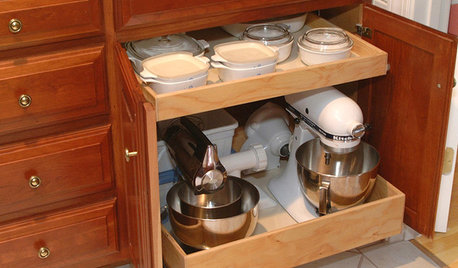
KITCHEN APPLIANCESConsidering a New Kitchen Gadget? Read This First
Save money, time and space by learning to separate the helpers from the hassles
Full Story
HOUSEKEEPING10 Quick and Easy Cleaning Hacks
Save time and money with these tips for keeping your microwave, toilet bowl, garbage disposal and more in tiptop shape
Full Story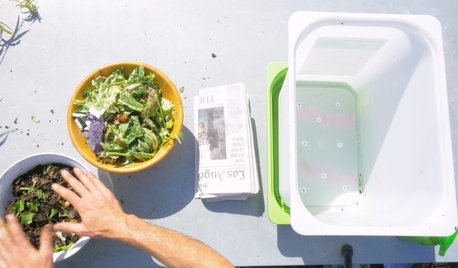
GARDENING GUIDESHouzz TV: Make a Worm Bin for Rich Soil and Happy Plants
A worm-powered compost bin that can fit under a sink turns food scraps into a powerful amendment for your garden. Here’s how to make one
Full Story
LIFE10 Ways to Live With a Smaller Carbon Footprint
Take these simple steps to reduce your energy use and cut back on waste
Full Story
ENTERTAININGSimple Pleasures: Movie Night for Film Buffs
In a world of rising cinema costs ... at a time when gathering comes naturally ... small screens are hitting the big time
Full Story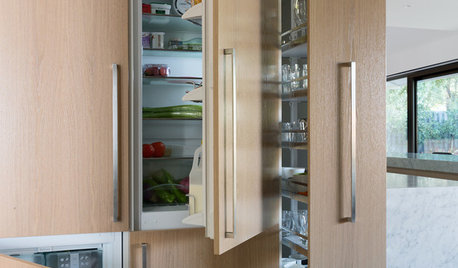
KITCHEN DESIGNHow to Waste Less Food
Here are 9 relatively painless ways to throw away less food and stretch your grocery dollars
Full Story
CLEANINGThe 8 Germiest Places in Your Kitchen
Learn the top hot spots for bacteria in your kitchen and what to do about them
Full Story
FEEL-GOOD HOME12 Very Useful Things I've Learned From Designers
These simple ideas can make life at home more efficient and enjoyable
Full Story
MOST POPULAR10 Smart Ideas for Your Laundry Room Remodel
Make washing and drying easier and more comfortable by considering ergonomics, storage and special features
Full Story
HOUSEKEEPINGHow to Clean Stainless Steel Appliances and Surfaces
Protect this popular kitchen material with a consistent but gentle cleaning routine
Full Story

laceyvail 6A, WV