

Anyone try the Cucinapro mini pie and quiche baker
3 years ago
last modified: 3 years ago
Featured Answer
Sort by:Oldest
Comments (7)
 3 years ago
 PRO3 years ago
Related Discussions
Pie Crust - What am I doing wrong?
Comments (33)Lard has a larger fat crystal than other fats, which is one reason it works so well in pastry. Butter gives great flavor but has a lot of water in it and it melts quickly. The combination of lard and butter in pastry is a great twosome. When I use coconut oil (frozen and grated on the large hole on my box grater), I can reduce the amount of fat by about 25 percent, especially when using pastry flour or milling soft wheat or low-gluten spelt into flour to use for pastry. Good pastry is a combination of tenderness and flakiness and each characteristic is developed differently. Pastry is all about reducing the gluten development in the flour, so choose flour (pastry flour or Southern All-Purpose flours like Martha White, White Lily, Gladiola, Red Band) that has a low protein/gluten content to begin with as a great way to reduce gluten-development up front. If you want more tender pastry while using all-purpose flour you can add a little more fat and add an acid ingredient. Divide the cold fat in two portions and mix one half in the flour until it's very finely mixed. This will coat the flour so it develops the gluten in short strands (hence short-crust pastry) when the liquid is mixed in and will give a tender crust. Quickly add the remaining fat and keep it in larger blobs. When the heat of the oven melts the blobs of fat the steam will raise those layers in the pastry we recognize as a flaky pastry. Vinegar in a recipe is another way to decrease the gluten-development. Adding an acid brings one more tenderizer into play. "Acids soften gluten, breaking apart gluten strands and keeping the pastry tender." When eggs are used in a pastry recipe it is best used for something like a meat pie. The protein from the egg will reinforce the structure of the pastry, making it strong enough to hold a hefty filling. When liquid vegetable oil is used to make pastry it is considered a "warm fat", which coats each particle of flour so completely than no gluten develops. Oil pastries are very tender and tend to be more mealy than flaky since you don't have steam raising those flaky layers. Oil pastry is generally easier to handle and is easy to roll between two sheets of waxed paper. It's neither right or wrong what type of pastry you make - it's just one of those cooking/baking choices we make - BUT - as a general rule of thumb don't take an oil pastry to the fair because it will tend to get judged down because they rarely come up to judging standards. If a sticky dough that is hard to roll-out is your problem, you have too much gluten developed - probably from adding too much liquid and/or using flour that has a high protein content. Northern all-purpose flours like King Arthur and Robin Hood really don't make good pastry because of the high amount of protein. Add as little water as possible!!! As soon as lumps of dough stick together during mixing, stop mixing and adding water. It takes very little extra water, as little as 1/2 teaspoon, to quickly toughen the dough. -Grainlady...See MoreFor Those Of You Who Make Homemade Pie Crusts
Comments (47)linelle, if I lived in another state, the vodka would be cheaper, but here in Michigan it's taxed like crazy. I've been known to bring a bottle back from Chicago, but that's illegal. Ahem. Here a pint is $11 and that's for the cheap Popov stuff. Another poster said you had to have good vodka, that affected the taste, so that ups the price. And I'd rather die of whatever ailment than to ever drink vodka, LOL, although I did spring $22 and buy a bottle to make Lemoncello. We drank a little of it mixed with cranberry juice and I ended up dumping most of it out after about 14 months in my refrigerator, I'm told THAT won't last forever. Hey, I wonder how lemoncello would work in pie crust, for a lemon meringue pie. Hmmmm..... Annie...See MoreIf anyone's not totally sick of talking about pie crust
Comments (57)I debated on whether to add this since it is long. It was submitted by Marys1000 back in Oct '08. Don't know which forum. But it was a lot of fun to read and you might enjoy it: Here is an article I found very informative in my search for info on pie crusts. She spent a lot of time actually baking with lard, oils, goose fat, and even suet. November 15, 2006 Heaven in a Pie Pan: The Perfect Crust By MELISSA CLARK A FEW years ago, I achieved perfection in a pie crust and it smelled like pig. Not in a muddy, barnyard way, but with a very subtly meaty, nutty aroma. Carefully confected with part butter and part freshly rendered lard, this pie pastry was everything baking-book authors and bloggers wax poetic about: a golden-brown-around-the-edges epiphany richly flavored and just salty enough to contrast with the sweet apple filling, the texture as flaky as a croissant but still crisp. It shattered when you bit it, then melted instantly on the tongue. The only problem with my masterpiece, I told my guests as they licked the crumbs off their plates, was that I was never, ever going to make it again. Because what they didnt see was the outsize effort that went into acquiring and preparing the not-so-secret ingredient: leaf lard, the creamy white fat that surrounds a hogs kidneys. The veritable ne plus ultra of pig fat, its far superior to supermarket lard, which is heavily processed stuff that can have an off taste. But leaf lard is hard to track down (I special-ordered it from a friendly butcher) and a headache once you get it. Step one: pick out any bloody bits and sinews, chop the fat into pieces, and render it slowly in a double boiler for eight hours. At the end of the day, be prepared for a kitchen that smells like breakfast at a highway diner, and a pan full of dangerously molten fat crowned with cracklings. The leaf lard may have made great crust, but, like homemade cassoulet and puff pastry, this was a culinary Everest I felt no need to climb twice. Everest became a lot more manageable when I discovered that rendered leaf lard was available at the Flying Pigs Farm stand at the Union Square and Grand Army Plaza Greenmarkets on Saturday and by mail order. With this convenience at hand, I decided to have a pre-Thanksgiving pie crust baking binge to see whether, with the prep times and mess not being a factor, lard pastry was really the best when tested next to my favorite standby, an all-butter crust. Or was my memory of the lard pie crusts sublimity simply a hallucination caused by long hours of porcine toil? And while the kitchen was a floury mess anyway, why not test a variety of other fats to see how they affected the flakiness and flavor of the final crust? With fat as my variable, I decided to keep all the other ingredients in the crust as straightforward as possible. That ruled out using a mix of flours with different protein levels (like bread flour, cake flour and Wondra). For this pie, I went with all-purpose all the way. But before I started baking, I did some research in the pie crust recipe canon. Most crusts were a combination of shortening and butter, or all butter, so I started there. I first made five crusts: all-butter; all-shortening (I used the trans fat-free kind now on the market); 50-50 butter and shortening; 70 percent butter to 30 percent shortening; and vice versa. Crisp, flaky and sweetly luscious with deep, browned flavor, the all-butter crust was the hands-down favorite. The shortening crust, however, was a bust among tasters. Even when combined with 70 percent butter, all agreed that the unpleasant greasy film the shortening left on the palate was not worth the vague texture improvement. Shortening is much less expensive than butter. Is it popular with bakers because of the cost? Rose Levy Beranbaum, author of "The Pie and Pastry Bible" (Scribner, 1998), gave another explanation. Because shortening is manufactured for stability at extreme temperatures (both hot in the oven and cold in the fridge), it is very easy to work with, she explained in an interview. "Shortening crusts enable you to get fancier decorations that will hold up when you bake," she said. Once she mentioned it, I realized that even the quickly crimped borders on my shortening crusts stayed pert in the oven compared to the butter border, which melted into Gaudí-like undulations. With round one going to butter, I next experimented with oil crusts inspired by the Mediterranean appeal of a pie pastry scented with extra-virgin olive oil holding a caramelized pear-pomegranate filling. I tested several olive oil variations, chilling the oil in the freezer before cutting it into the flour, and trying other desperation measures like adding egg to one, baking powder to another, and some butter to a third. Then I went on to test canola oil, grapeseed oil, coconut oil and ghee. Not one managed to even get close to a minimally acceptable flakiness level. I had better luck using chilled mixed-nut butter (you could use any natural nut butter, such as peanut, hazelnut, cashew, almond and so on). Combined with regular butter, it turned out a marginally flaky, cookie-like crust with a toasted nut flavor that goes particularly well with pumpkin pie. A dozen or so pies down, it was finally time to pull out my hero, the rendered leaf lard. I pitted it against an array of animal fats beef suet (the fat surrounding the kidneys), duck fat and processed supermarket lard just to see what would happen. The processed lard was not available at my Park Slope supermarket, but I scored it in a nearby bodega. I ordered rendered duck fat online, and picked up suet from the butcher, who charged me a token dollar and told me he usually threw it away. Then I baked and baked. The whole house took on a rich pastry scent with undertones of roasted meat and butter, tinged with ginger, nutmeg, thyme and honeyed apples from the fillings. Not wanting to give up the flavor of butter entirely, I tested all the recipes using half butter, half other animal fat, and also at a ratio of 70 percent butter to 30 percent other fat. I also made a few crusts using all high-fat, European-style butter. The crusts were spectacular, each in its own way. The high-fat butter produced a crust that was markedly flakier, more tender and puff-pastry-like than those made with regular butter. It also shrank a bit less when I pre-baked it, and had an irresistible, browned butter flavor. This was the perfect crust for anyone not inclined to include meat products in a dessert. But overall, the favorites were the crusts using 70 percent butter and 30 percent animal fat. Any more animal fat pushed the meatiness factor too far onto the savory side of the pie spectrum, making these better for quiches than for fruit and custard fillings. Of the three animals, pig, cow and duck, the duck fat crust had the lightest flavor and, texturally, struck the best a balance between crisp and flaky. The pie crust revelation, however, was the suet pastry. As easy to work with as the shortening crust, it retained its shape perfectly in the oven, baking up crisp yet marvelously tender and flaky. It was nearly as delectable as the leaf-lard crust, tasting rich and slightly meaty, though not identifiably beefy. Suet is easy to find (most butchers can get it for you) and inexpensive. One caveat: suet is sold unrendered, but, as I discovered by way of my own laziness, you do not need to render it. Simply cut out the pinkish bits, finely dice or grate the chilled white fat, and toss it in with the butter. More refined bakers might blanch at the idea; if youre one of them, go ahead and render to your hearts content. Still, the leaf lard crust was as gorgeous as I remembered. Puffing up in the oven, and crumbling deliciously when you cut it, it took the crown. That very mild hint of bacon was happily still there. Not so with the processed lard pastry, which had an off flavor veering toward barnyard. Now, after my brief moment of pastry satisfaction, Ill move onto the next obsessive round of pie crust testing. Theres a whole roster of fats Ive yet neglected goose fat, marrow, foie gras fat, browned butter, truffle butter ... and if anyone out there has a source for bear fat, Ill try that too....See MoreCan we talk pie weights?
Comments (22)Yeah, I actually do that for the veggies, even tomatoes. Not going to fuss with it for the berry pies, I don't even like cooked berry jams. I think I have said before that I don't particularly enjoy time in the kitchen or anything about the process of cooking, so the less I have to do of it the better, but I do REALLY enjoy good food, so that's why I cook. The easier the better. I also try to not use a lot of plastic and other resources when I cook. Spray cans for nonstick coatings are another thing I try to avoid. I like the idea of parchment sheets, that would be helpful for a whole lot of things! Of course I can measure and cut them, but not having to think that hard would be fine. If I could hire myself a home cook I would, that's how much I dislike kitchen stuff. I love the garden time though . . . even the tedium. I love pies. But my aversion to fussing with them is well entrenched and no amount of cajoling from anyone here has worked. Usually do store bought refrigerator crusts. If I had a really great pie bakery anywhere near me, I would be a regular customer. The worst part is, how bad for my figure my pie and ice cream loves are!! If you didn't know AnnT, one of the greatest cooks every to grace this board, her pie creations were legendary! Well, almost all of her food was, and it was matched by her photographic abilities....See More 3 years ago
- 3 years ago
- 3 years ago
Related Stories
SHELTERING AT HOME15 Essentials for the Baker’s Kitchen
You can turn out delicious home-baked goods with ease when you own these utensils, tools and pans
Full Story
PRODUCT PICKSGuest Picks: Gifts for Foodies
20 gifts for the cook, baker or food lover in your life
Full Story
KITCHEN DESIGNHow to Create a Dedicated Baking Station
Avid bakers love having a designated kitchen space. Here’s what to consider when planning yours
Full Story
KITCHEN DESIGNHouzz Call: Tell Us About Your First Kitchen
Great or godforsaken? Ragtag or refined? We want to hear about your younger self’s cooking space
Full Story
KITCHEN DESIGNGet Organized for Holiday Baking
Before you crack that first egg, establish a game plan for stress-free success
Full Story
KITCHEN DESIGNLove to Cook? We Want to See Your Kitchen
Houzz Call: Show us a photo of your great home kitchen and tell us how you’ve made it work for you
Full Story
KITCHEN APPLIANCESConsidering a New Kitchen Gadget? Read This First
Save money, time and space by learning to separate the helpers from the hassles
Full Story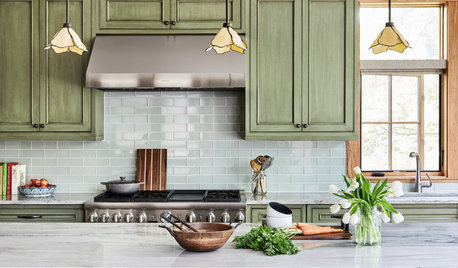
KITCHEN DESIGN11 Must-Haves in a Designer’s Dream Kitchen
Custom cabinets, a slab backsplash, drawer dishwashers — what’s on your wish list?
Full Story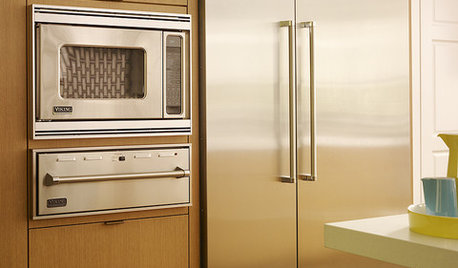
KITCHEN DESIGNA Cook’s 6 Tips for Buying Kitchen Appliances
An avid home chef answers tricky questions about choosing the right oven, stovetop, vent hood and more
Full Story

roxanna