Houzz Logo Print
vgking

Water & Sewage Bill?

4 years ago
last modified: 4 years ago

Might as well ask this question while we're on the monthly electric bill topic. We're on Well and Septic here so there's no real bill for either other than the electricity to run the well pumps and every 5 years we pay a charge to pump out the septic tank (~$300). 20 years ago when we lived in the city (Richmond) our monthly water/sewage bill was about $60. What's coming out of your wallet?

Comments (56)

  • 4 years ago

    I have a friend who runs a small peony selling operation outside of Philadelphia. She wanted to expand a garage to provide work area. One of the requirements was what I think she called a "rain vault". The runoff from the garage could not be directly dumped onto the soil but had to go into a large holding tank similar to a french drain. Being very intelligent and having the space she had installed a much bigger tank similar to a septic tank to run all of the water into. She also has two pumps, one electric, one manual. She uses the water in the tank to care for her plants that are all in pots.


    Not certain if it would be allowed here but have been considering something similar. We have been having 3-6 inch overnight rains which would provide for any outside watering.

  • 4 years ago

    This month's water bill was $66 due to the dry conditions and having to water my garden so much. During rainy times or non gardening season, with just me here it's around $30-50.

  • Related Discussions

    How much does you water bill go up in the summer due to gardening

    Q

    Comments (26)
    Thanks for all the replies. As long as you are talking about other utilities, here is my rundown for all my utilities and car insurance in the Ohio Valley. BTW, I really like the $6 per month water bill person! We pay about $25 for 2 months of trash pickup.(just went up 18%) We pay $1800 per year in property tax on our $190,000 house Our water bill averages about $64 with college kid and $45 per month without kid and covers our sewage as well. Car insurance is pretty cheap. About $400 to $450 per year for a new car under $20,000 with full coverage and $500D We use NG to heat. We keep the thermostat set at 64 at night and keep the heat off during the day. House gets down into the low 50's in daytime. I usually turn on the heat around 9 PM and shut it down at 8 or 9 am. To heat this way cost us $250 a month to heat a modern 2400 sq ft house. (including garage as it has some water pipes in its ceiling). We've been told our gas bill will go up almost 30% this season. Summer gas bill is the minim about $24 per month. As the NG runs out prices for all heating methods will only keep climbing. Even the coal will run out someday. Winter '08 they said they had a coal crisis brewing in China. Some say water will peak too and we had better know how to do the 'rain catchment' thing.
    ...See More

    In this dreadful heat how is the water and sewer bill?

    Q

    Comments (5)
    we live in a SERIOUSLY rinky dink area with a township brand new to sewer - it was just put in like 2 years ago. We have horrible water and sewer standard fees cause we're paying off all of the debt on those facilities, but they even base our summer bill of our april one (jan - mar) cause it's typically the lowest sewer bill. We are only charged as much for sewer in summer as whatever our April bill had for usage - the rest is assumed to be outside use water.
    ...See More

    water/sewer bill is higher than normal, do we have a leak?

    Q

    Comments (2)
    Same in our area, for example, if our water bill is $15.00, our sewer bill is the same. Our bill also shows our useage compared to a year ago. Look on some of your previous bills and compare water consumption.
    ...See More

    Winterized Home Still has Huge Water Bill. Why?

    Q

    Comments (35)
    Talked to my husband whom worked for a water authority for 35 years in every aspect from fixing water lines, treatment, to service rep and as puzzled about this as yinz are. He never heard of a meter at the house and one at the main, but every area could be different. He said to follow the line at were the water comes in from the main and see if there is another meter beside the one at the house. Except for a sewer reduction meter. If there is another meter see if it is registering water. If not call the water company and have them send out a service rep to analyze the problem. Every water company is different depending on where you live. Some are public and some are private. If you have a problem with the water company then call your states utility commission and see if the water system is governed by them. Some aren't. As far as who is responsible for a line it also depends on where you live. In our area the homeowner is responsible for the line from the curb shut off to the house. Good luck.
    ...See More
  • 4 years ago

    My home has 2 water meters - one for inside the house and a separate one for outside ( hose bibs and irrigation). We don't pay sewage on water that goes back into the ground or the storm sewers.

  • 4 years ago

    Our small, rural town on the outer Cape decided at Town Meeting several years ago that well water contamination was a looming health threat (despite scientific evidence to the contrary) . So a town water system was installed. Our well tests fine, and we continue to enjoy the non-chloroinated and non-metered water but our propery taxes increased by about $1k per year for about the next 10 years and our roads are all torn up and still need paved because of the project.

  • 4 years ago

    We are on a well and septic, our septic has a grinder pump and it is pumped into a sewer line that runs past our house. We pay $107 quarterly for this.

  • 4 years ago
    last modified: 4 years ago

    Seagrass, you were lucky they didn't make you hook into the water. The reason we have both well and public is when the authority put in the water and sewage lines all the homeowners were forced to hookup. The previous owner had no choice. Of course at the homeowners expense.

  • 4 years ago

    @functionthenlook - it's postulated that whenever a property changes ownership, requirement will be that town water be installed. Just like upgrading to the most current septic requirments. We have a fragile aqua system out here. Our community is comprised of a majority of non-residential homeowners (2nd/vacation homes). I think about 40/60% (year round residents in the minority). I think the Town Meeting vote on municipal water was driven by fear of new development, chemicals to contain weeds and lawns...I dunno know. We always voted against it.

  • 4 years ago

    $25 monthly. Unless kiddo is home, then it's $30. Monthly. Trash pickup doesn't exist in my neighborhood even though we're within the county (we have slightly lower taxes, and our parking laws are different. I don't get it, but there you go). The rest of the county gets it for free. But, I can take it 3.2 miles away and use the dump for free. It's very inexpensive to live here. I ride the bus or train for free (work has a deal with them). We have no state income tax. We do have sales tax on everything. Though, we get breaks from that. This weekend is the back to school, all the school supplies are tax free (computer, clothes, etc. I think we're getting a break from food products all of the month of August.

  • 4 years ago

    Seagrass, they probably did it to spur or in anticipation of the towns growth since apparently it is turning into a second home destination. Sounds like your town is turning into a tourist town. There is probably more growth ahead.

  • 4 years ago

    I'm on a small community water system (9 homes). Great well water - we have it tested quarterly for contamination. We just raised our rates from $10 a month to $15 for unlimited usage. We voted to raise our rates so we can more quickly build up a fund to buy a generator and build a structure to house it, for when the power is off. Most winters it's off here for several days and none of us has water then either. We are on septic systems. Mine is 40 years old and I keep my fingers crossed that it stays intact. Because I am close to Puget Sound, if it needs replacing, it would require an expensive mound system and I'd like to avoid that. I have it pumped every 4-5 years. I live alone and it's sized for a 4 bedroom house, so it doesn't need pumping too often.

  • 4 years ago

    Water is expensive where I am and usage is restricted. I expect continued price increases and allowable usage decreases in the coming years.


    I would never live in a home that relied on well water. Personal choice. Contamination is far too common and many with wells don't have them tested as often as olychick reports. Some never do so.

  • 4 years ago

    I mostly agree with you Elmer but not concerning my well water. My next door neighbors built their house here back in 1972 with a 30' deep well. Their kids now have kids of their own now and the long retired couple are in their mid 80's and in very good health. They never have used a filtering system, not even a Brita type. Our old home (on 80 acres of original land in 1910) had it's own 30' well but I added a 2nd deep well (220') mainly for the garden and to eventually plumb into the house for 2 water sources. Our county offers annual well testing for $60 which includes a wide ranging battery of tests, it comes through with flying colors. That being said, wells located near factories, military bases, refineries, chemical plants, etc are another matter.

    As for public water from river sources, I suppose it's safe to drink but I doubt that it's tested for everything that people flush down their toilets upstream or the multitude of chemical "cides" which run off from farms and other sources. The last time I tasted city water it reminded me of swimming pool water. I'll stick with our well water, we've been drinking it for 20 years now and if we both reach our mid-80's like our still healthy neighbors who drank it for 50 years now then that's good enough for us.

  • 4 years ago

    Per the CDC wells should be tested only once a year. I've never had any problems with using well water. Nor have I've heard of anyone else that has wells in the area. On my road at camp there is 2 springs . People are always stopping to fill up containers for drinking water instead of drinking the public water.

  • 4 years ago
    last modified: 4 years ago

    Here it would depend on how deep your well was as to what quality or type of water you have. A neighbor of my parents had a deep well for his cattle. Worked fine except we have small earthquakes that make it either too salty for the cattle to drink or an oil sheen on the surface.

    Something to watch for but if you live in an area where municipal water and /or sewers are available some areas, where my FIL lived on a lake, required any house be connected before being sold. There were a couple of sales where the owner refused that were delayed for about a year before they gave in.

  • 4 years ago
    last modified: 4 years ago

    "we've been drinking it for 20 years now and if we both reach our mid-80's like our still healthy neighbors who drank it for 50 years"

    Smokers, alcoholics, sun bathers, obese people, and others with potentially risky habits or exposures often use such rationalizations to justify making no changes. "Never had a problem with it". Pardon the pun, such rationalizations hold no water for me.

    Good that you have yours tested regularly. You may want to use an independent lab rather than your county in alternate years as a double check. I'll stick with a preference for municipal water systems for myself. For drinking, we use bottled water because we prefer the taste but have no concern about cooking, ice cubes, or other water we ingest that comes from the tap.

  • 4 years ago
    last modified: 4 years ago

    Our water, sewer and trash pickup are all in one - around $160/month.

    The water table here is very high. We are on developed barrier islands made up of a lot of dredged up seabeds, so very sandy. The house was built with a septic tank that was never hooked up - I think all that were built around that time (mid to late 1950s) may have the same. It's right under the kitchen window too, so I'm glad it's never been used.

    I'm not sure if anyone has new wells put in any more, but when I was a kid, some people had them for their lawns, and the water from them is very sulfurous - really stinky! You can always tell when someone's watering with well water here. It leaves yellowy brown stains too.

    Nowadays people within our city can get reclaimed water hooked up for their lawns/landscapes, and its use is unlimited. Not sure what it costs though...

  • 4 years ago

    I would never (if I had a choice) live where there was only a municipal water source. I cannot even stand the smell of city water, I don't want to drink the chemicals used to purify it, nor fluoride if it's added. Much bottled water is municipal water - I don't often drink that either. I would definitely taste and test well water before purchasing a home. Not too often around here, but some wells have water with high iron or sulphur content and that wouldn't be good either. It would be a deal breaker for me.

  • 4 years ago

    If you don't buy water to drink then you may not realize there are different types and labeling standards. "Purified water" or "drinking water" indeed can come from a pipe in the street but it's subject to further processing, that can include physical filtering, reverse osmosis, light sterilization and ozone treatment, etc. Much of the same as what's done with water used for brewing beer or for canned sodas. Not surprisingly, Dasani, a popular brand of drinking water, is a Coca-Cola product.

    We buy spring water. Yes, it has to come out of the ground in a spring on its own, not be pumped from an aquifer. Even within one given brand when similarly labeled, water from different springs has different tastes.

  • 4 years ago
    last modified: 4 years ago

    We’re on septic and if there’s any local sewer tax it’s on my property tax. Can’t quote the water bill because their web site is annoying so I rately pay it. Whatever I don’t pay directly ends up getting tacked onto my tax bill. It can’t be more than a few hundred bucks a year, though there is currently a surcharge to deal with 1,4-dioxane bringing it up $20 a quarter.

  • 4 years ago

    Olychick, I agree. Public water stinks. After only drinking well water in our first home for 14 years I can't drink tap water. I can drink the cold filtered water dispensed from the fridge and bottled water if cold, but it took me years before I could.


  • 4 years ago

    Sewer rent bill: $421 for the year. calculated by water used/ what goes down the drain not what is used outside, eg. washing the car, watering the plants etc...

    Water bill: average $70 monthly

  • 4 years ago

    "Smokers, alcoholics, sun bathers, obese people, and others with potentially risky habits or exposures often use such rationalizations"

    Those are indeed known risky habits with a couple addictions included where people will rationalize away or hide any ill effects, not even closely related to drinking well water. I'm sticking with my neighbors results of 3 generations drinking the same well water with no ill effects. btw, the country contracts Va Tech labs to perform the comprehensive testing. As upstream surface water runoff from rivers become more polluted over time I'll stick with our well water. Even if public water is "clean" as it flows from the treatment plant there is also the many miles of very old pipes that it runs through to consider before it even reaches the faucets at homes.

  • 4 years ago

    “calculated by water used/ what goes down the drain not what is used outside, eg. washing the car, watering the plants etc...”


    @sprtphntc7a How is that done? Several years back a friend outside of Boston had a separate water main installed (or just split to different meters?) for his irrigation, to lower his sewer bill. Short of that, how do they tell the difference? If household use is just estimated by occupancy then it doesn’t really matter how much you use.

  • 4 years ago

    In reference to FOAS post above, at my old city residence our summer monthly sewage bill was based upon our average winter sewage bills. They were fair about that as many do use water for gardening, lawn, etc. during the warmer growing season months.

  • 4 years ago

    I am on sewer and city water, each is about $41 dollars a quarter. They call the sewer one "waste water useage" and it always matches what the water bill is.

  • 4 years ago
    last modified: 4 years ago

    I'd love to have a separate source for irrigation, and we only irrigate about a third of our lot. That would also be a help when a leak goes undetected for days. Summer bills are five times higher than winter ones, and of course sewage is charged on all of it, although irrigation water that's not absorbed goes into the storm sewer and doesn't require treatment.

    Our city has a combined monthly bill that includes police/fire pensions, refuse collection (twice weekly for trash and garbage and once weekly for recycling), sewer and water. All together, with municipal taxes: $1K annually. $200 of that is 'customer charge' -- just to *have* the service. This includes costs of running the city's water treatment facility, drawing water from Lake Michigan.

    The sewage bill is separate: $200/annually.

    I don't notice any difference between tap water and the filtered water from the fridge or bottled water. I'll probably skip filtering when the cartridge that came with this new fridge is full and disposed of. (More landfill?)

    If you have 'city water', what is the source?

  • 4 years ago

    "Even if public water is "clean" as it flows from the treatment plant there is also the many miles of very old pipes that it runs through"


    Well water runs only through dirt, no monitoring or treatment, before it comes out your tap. I much prefer pipes to dirt.


    Water "reservoirs" underground can extend for tens and hundreds of miles. It's been some years ago but I remember when it was discovered that nearly every underground tank at nearly every gas station leaked gasoline and other fuels into the ground. The dangerous chemicals could often be found in ground water taken from test wells located at a fair distance from the contamination sites. Industrial and agricultural ground water pollution are also quite common. Residential wells are frequently found in areas with septic tank systems rather than regional sewage service. In many areas, dangerous substances are present normally in the ground and leach into the water tables. For all these reasons, I find it hard to understand why people would ignore the obvious risks of unmonitored well water. In such cases where there are no alternatives, having some kind of industrial strength home water purification equipment installed should be a minimum precaution.

  • 4 years ago

    Well water runs through dirt? What does that mean?

    Elmer, have you ever lived where pubic water service isnt available?

  • 4 years ago

    Happen to have paid just now ...

    $28.13 Water, $14.00 Sewer; $12.75 Trash Service; and my Electricity was $168.40 @ 70-72 degrees. I have the best trashman...he told me to just put it outside my garage and he comes up and gets it so I don’t have to bother getting it to the street...got to love small town USA!

  • 4 years ago

    Elmer your comments leave me more perplexed than I already was when you suggested my neighbor’s potentially leaking oil was none of my business. Our water, while municipal and monitored, is sourced from wells.

  • 4 years ago
    last modified: 4 years ago

    I just got my hydro bill today for June 6-July 6.

    Water charges

    Fixed charge - $19.55

    Water Main Replacement Levy - $12.57

    Water charge 12CM @ 0.698/CM - $8.38

    Total charges $40.50

    Waste Water charges

    Fixed Component - $17.59

    Consumption Component 9 CM@2.9/CM - $26.10

    Total Waste Water Charges $43.69

    I used to buy bottled water all the time years ago, small bottles plus the 10 gallon bottle with dispenser I think that was back when we had horrible tasting water from Zebra muscles. Once the city took care of that our municipal water was really good and it is all I use for drinking now. One person in my house who came from an area that had good tasting water from artesian well refuses to drink the water here without it being filtered through a Brita filter. I also let my cold water run for at least 5 minutes to get rid of the standing water in the pipes.

  • 4 years ago
    last modified: 4 years ago

    If your well is recently dug and securely capped you might be fine. Elmer is partially right because water picks up all kinds of chemicals however like the well that was so tasty at my husband's grandmother's that the family drove miles to get pure clean water. Your well may not be tightly capped. When there was a problem with clogging in the pipes and the well was cleaned no one ever drank out of it again. Lots of things can enter through very tiny cracks or unless fully lined by digging holes into it. I will take the chemically treated water every day.

  • 4 years ago
    last modified: 4 years ago

    Ok, one at a time:

    patricia - "Well water runs through dirt? What does that mean?"

    Do you think pipes are "dirtier" than the dirt ground water seeps through from the surface to reach the underground water table? Where it's also in contact with dirt? I'm fine with ground water so long as it's filtered, treated, and monitored on a continual basis.

    No, I've never lived anywhere where domestic water came from an unmonitored, untreated private well. Nor would I. Personal preference but with a reason I think is rational. Not coincidentally, my lifestyle preferences are best met by living in inhabited and urban/suburban areas where water systems are always the norm.

    food - no reason to be perplexed. The incident you described a while ago hinted of a kind of neighborhood snoop/vigilante attitude that I questioned the reasonability of. If your neighbor has a "potentially leaking" oil tank, that's his concern in my view, not yours. All oil tanks eventually leak, that's reality. If you want to prevent fuel oil contamination of ground water, work to ban all residential fuel oil appliances and require tanks to be inspected annually in your community. You've no doubt read of the growing number of communities in my area that have imposed phased-in bans on natural gas appliances of all kinds. It can be done.

  • 4 years ago

    Elmer, you drink bottled spring water (which you say comes directly from the ground) but don't want to drink water that comes from the ground and prefer it from pipes???

  • 4 years ago
    last modified: 4 years ago

    I was answering patricia's comment suggesting that system water runs through miles of "old" pipes, implying that imparted some kind of contamination. My response was that nothing is dirtier than "dirt" (lead pipes and joints excepted, of course), and that so long as water is filtered, monitored and subject to continuous testing, I'm ok with ground water. But not straight from a private well.

    I prefer the taste of certain (not all) spring water. Commercial spring water is filtered and subject to continuous testing. Flavors differ from spring to spring. The spring water we get delivered in large jugs in the Bay Area is delicious. The same brand delivered at another residence in SoCal comes from a SoCal spring and while we also like its flavor, it's different.

    Tap water is often quite bland. There are exceptions. SF City and Peninsula water, direct from snowmelt into granite rock formations and the Hetch Hetchy reservoir near Yosemite, is pure and delicious. But monitored and filtered all the same.

    The alternative to specifying "spring water" when water is delivered is to get "drinking water". Whether it's "purified" or just normally processed, it's usually quite bland.

    Mineral water, both still and bubbly, is quite popular in Europe. The taste of each varies depending on where it comes from. Most people have favorite brands, chosen for the flavor they prefer. Most Americans would never know it because they drink bubbly mineral water over ice (which kills the flavor) but Perrier, as an example, from Alpine snow melt, has a particular and delicious flavor. Different from the flavor of other brands from other sources.

  • 4 years ago

    I was answering patricia's comment suggesting that system water runs through miles of "old" pipes, implying that imparted some kind of contamination. My response was that nothing is dirtier than "dirt" (lead pipes and joints excepted, of course), and that so long as water is filtered, monitored and subject to continuous testing, I'm ok with ground water. But not straight from a private well.

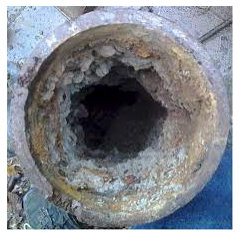
    Actually that was my comment, and I wasn't "implying". A city with old water main pipes can look like this on the inside for miles and miles. No thanks, I'll stick with my well water which runs through new plastic/pex plumbing from well to faucet. Plus when it comes to contamination, 30' of soil filtered well water beats polluted river run off sources any day.


  • 4 years ago
    last modified: 4 years ago

    My understanding - and man I hate to wade into this - is that the water main pipe build-up is not harmful to humans. I feel almost qualified to say this, only because my significant other runs our municipal drinking water treatment plant & distribution system. However I did not stay at a Holiday Inn Express last night.


    What I've heard him explain about a million times over the decades is that while scale and whatnot can build up in the pipes, it's all coming from treated water which is safe to drink.


    Nothing flows through those pipes other than safe water. So minerals can certainly build up, and they may even discolor water when they break free - but they are in no way harmful, and in fact some minerals are even good for you to drink.


    Flint Michigan notwithstanding, I will drink municipal water 8 ways to Sunday over well water.


    I accept well water can taste much better than (some) municipal water, but you will not convince me that on the whole, well water is safer than municipal water. Again, Flint (and Walkerton Ontario) notwithstanding.

  • 4 years ago

    Well water and private septic in both our main residence and vacation home. Test the wells annually and have had no issues.

    Also have an 1,000 SF single family rental house with a retired couple as tenants and with low usage the water and sewer bills run $1,600 per year. It's crazy!

  • 4 years ago
    last modified: 4 years ago

    Our monthly water bill is usually around $30 but sometimes goes as high as $60 in the summer if I am watering the garden a lot. We are on septic with a potty pond so no charge for that other than a little electricity to run the aerator and pump and some chorine for the chlorinator.

  • 4 years ago

    Our municipal pipes were recently relined. They put in some type of lining that doesn't require digging up the entire system. I can't recall if it both water and sewer, or just sewer, but I do recall it happened during the pandemic lockdowns and our street was blocked by equipment for weeks.

    I have a countertop distiller that I use for drinking/cooking water. I'll cook pasta or boil eggs in tap water, but that's about it. Our water is flouridated and they use something called chloramines(?) to treat it, so I prefer distilled.

  • 4 years ago

    Carol, one drawback to drinking only distilled water is that you may be missing some important minerals.

  • 4 years ago

    Agree, sjerin. Distilled water also tends to not taste very good or indeed to be flavorless, for the same reason (absence of minerals).

  • 4 years ago

    We lived in NY for 50 yrs. Our home was in an area that was on well water. It was an area where the homes were 2acre zoned so the homes were not close together. Same area where some well-known people lived, Rockefeller's, Clintons, Martha Stewart and many celebrities.

    The homes are all on wells. When we moved, we were shocked our home was on well and septic.

    I was most concerned about the well water. Requested the latest test results from the Town. My late husband was a doctor and looked at the results. He made a few phone calls and said we need to get independent lab testing. We did.

    You would be very surprised how many important things are not tested, revealed by the Town or County tests. They do not test for those properties.


    Our test results was very unsettling, especially Nitrite levels. The Town tested for Nitrates but not Nitrites. The lab included explanations on all the test results. We decided to go in person to speak with them.

    Their recommendation was to install a Reverse Osmosis System on our water. This can be done to filter all the water entering the home or just at sinks where people might drink. They recommended it should be installed on any ice maker. High Nitrite levels can cause serious health problems especially for newborns. We were planning to start a family.


    Interestingly, the lab person asked if we had chickens or horses on our property or lived near a farm. The levels showing in our well water was extremely high usually found on farms.


    We installed Reverse Osmosis on all our sinks and ice maker. We left the well water for showers, baths and hoses.


    I would never trust Town testing results. I highly recommend getting independent testing on something as important as drinking/cooking water.

    I completely agree with Elmer.


    Jane

  • 4 years ago
    last modified: 4 years ago

    Lake Michigan water is filtered through our city water plant and tastes fine to me. IDK the conditionof the pipes that bring it to our house, and I know the piping from the street to our house dates to 1950.

    DS and family live in Chicago, where the huge and expensive task at hand is to replace all the LEAD PIPES laid down a century ago. The family uses a Brita, and they let cold water run several minutes before using it. They replaced all the piping within their century old house when they bought it, but the feed is still through lead piping. The city can only budget for X miles a year. There's also controversy over *how* to do it -- digging up every foot means losing mature parkway trees. There has been consideration of re-lining existing pipes rather than excavating whole lines. And, of course, what to DO with the all those old lead pipes?


    Jane -- Did the Reverse Osmosis system "eat" your pipes? Did you supplement the lost intake of minerals?

  • 4 years ago

    29,300 gallons, no sewage, $223.99.

  • 4 years ago
    last modified: 4 years ago

    Jane Well water quality doesn't have anything to do with the occupation of the people who live in the area. 2 acres isn't a lot of property when everyone is drawing on the water. Each well needs to be tested individually, not as a group. It should be tested once a year or sooner if you did work on the well. Quality can change just down the road. I'm surprised the town did a blanket test for the water. Of course that was 50 years ago. Most places with such a high concentration of people or if enough wells tested unsafe usually have public water.

    Well water is so easy to test now. You don't even have to send it to a lab anymore. We test ours with kits we order online. The kits do test for nitrites. In our first home my hubby use to take a water sample to work for testing. He worked 30+ years for a water authority. The same chemicals used in the at home test are the same as he used at the water plant.

    I have no problem drinking the well water at our camp. But I can't drink a glass of water from our public water at home. I can smell the chemicals. They are both safe to drink though as long as you trust the water authority who treats the public water and the lines. In the city they have old lead main lines. They only started to addressing the issue when people were independently made aware of the issue.and started complaining.


    "The most commonly used chemicals for water treatment process are:

    1. Algicide
    2. Chlorine
    3. Chlorine dioxide
    4. Muriatic acid
    5. Soda ash or Sodium bicarbonate

    In additions to the above chemicals, there are numerous other water treatment chemicals used. Coagulants, flocculants, clarifiers and filter cleaners also form an important part of water treatment methods."

  • 4 years ago
    last modified: 4 years ago

    Might the nitrites be from lawn fertilizers?

    I have read some rather disturbing reporting about contamination of well water that is not detected by the most common testing. I know there was that case some years back of the army base in (I think) So.Carolina...?

    I knew someone would point out that distilled water is lacking in minerals! I rarely drink it plain, but use it to make teas and coffee - which contain minerals, as does all the food I eat, and I take a daily multivitamin too. So far I haven't had any symptoms of mineral deficiencies - and we've been using distilled water for decades now.

    TBH, I do not care for the taste of any kind of plain water, so to stay well hydrated, I drink flavored unsweetened seltzers, weak green & herbal teas, and organic coffee - and also eat lots of fresh organic fruits.

    And the breakdown on our past month's city utility bill is :

    Total water - $34.89

    Total sewer - $74.70

    Total garbage (1X weekly) - $29.92

    Storm water - $12.68

    Tax - $4.39

    Total - $165.58

    They also helpfully show your average daily use compared this year to last, which is 179 gal. vs. 253 gal. for the same period last year. We've been having lots of rain.

  • 4 years ago

    Chisue, the homes in NY were 2 acre zoned which meant they couldn’t be under 2 acres. Most were much more than that. Rockefellers had thousands, others had hundreds. No shared wells, all individual wells.

    RO tanks were under the sinks had their own faucets. Did not run through common pipes.
    As Carol said, I don’t worry about lack of minerals, I do not drink plain water except to take a pill or vitamins. During the day, I drink seltzer which I flavor with fresh lemon and pineapple and whatever fruit is in season.
    RO water makes the best coffee and tea. Our dogs/ cats only drank RO.
    I now live in Florida. We have County water. We called Culligan before we moved in and had a large, charcoal house filter installed outside to service the showers and all water inside.
    We had RO installed under the kitchen sink for drinking and cooking. I have them come every two years to change the filters.
    I send water samples to a private lab once a year.
    Florida is a joke as far as water quality and laws. The beaches are all closed now because they are deemed unsafe to swim. Extremely high bacteria levels and nitrite levels.
    I would never drink well or town water here. There is little to no regulation on quality of health.

  • 4 years ago
    last modified: 4 years ago

    Just got my latest water/sewer bill and it was $150! I have been watering my gardens quite a bit this past month since it's been so dry.

Sponsored
Hope Restoration & General Contracting
Average rating: 4.7 out of 5 stars35 Reviews
Columbus Design-Build, Kitchen & Bath Remodeling, Historic Renovations