

I need a bacon tutorial
5 years ago
Featured Answer
Sort by:Oldest
Comments (20)
 5 years ago
 5 years agolast modified: 5 years ago
Related Discussions
Need Free EASY tutorial for ???
Comments (6)You can make and test the "site" on your own computer, as long as the directory and file names match what you will be using on the web and you stick to plain HTML and JAVA applets. It gets tricky if you want to do server-side things like CGI and PHP. Example: If you have a home page as ~fred just make a directory called website and make all the subdirectories you willuse. website/images website/auctions website/blah As long as you keep the links RELATIVE (/images/picture.jpg and not C:\\website\images\picture.jpg) you can test the links and debug the site structure. Then up-load....See MoreMiele Tutorial Needed
Comments (12)Hi Guys! Livebetter, what happened at the appliance show? Did your dealer have any news for you? I am looking forward to hearing what you find out. I know there is a learning curve with any new appliance, so I am not going to let this spoil my fun and pleasure with these machines. Miele is a great product with many happy users, and I plan to be one of them. I can't figure out how to get the machine to do a cool water rinse, but I don't think the hot and cold are reversed. I checked and I think it is correct. I will do a wash with a pre-treat or soak to verify soon (these always start with cold, correct?). I have done some loads where I reduced the spin, but it seems that it should work well at whatever spin is already programmed for the cycle I select. I am not overloading the dryer. It must have something to do with the warm water rinse and fabric type. I was somewhat successful in reducing wrinkles when I did a fluff cycle after the initial one, but again, it shouldn't be necessary. It must be operator error. The 3 Tbs of Persil produced almost no noticeable sudsing, but the vaksa suds were huge! I used 50 ml, and even tho I added and extra rinse, there were still suds. Bummer! I'm going to have to figure that one out, too. Maybe not enough clothing (it was a smaller load). I will try the wrinkle free option too, and see what happens....See MoreIn need of picture posting tutorial.
Comments (5)The instructions on this page here might help: http://www.pbase.com/weed30/posting_photos Read through the entire page, as people have added additional tips further down. I think that if you put your pictures on something like PhotoBucket, it will display the HTML code that you would copy and paste into your Kitchens Forum thread message to get the picture to show up. The HTML code is something like: <a href="http://s8.photobucket.com/albums/blahblah/?action=view&current=blahblahpic.jpg" target="_blank"><img src="http://i8.photobucket.com/albums/blahblah/blahblahpic.jpg" border="0" alt="test pic"></a> (where "blahblah" will get set by whatever the name of your album is on PhotoBucket and the name of your jpg file). I have not posted a picture yet myself, but plan on using that instruction page. Good luck!...See MoreNeed tutorials for growing a few things...
Comments (9)It rarely is too late to plant anything at this time of the year since we're in the winter doldrums. Technically speaking, garlic can be planted any day of the year. It typically is planted in September, October or November here, depending on how warm the autumn is, but still will produce even if planted in January or February. It just won't produce as well as it would have if it had been planted earlier. The later you plant it, the less time it has to grow before the summer heat pushes it towards harvest time. Also, the later you plant it, the less time is has to accumulate enough chilling. If you've got it, you certainly should plant it because whatever it produces will be a lot more than you'll get if you don't plant it. You probably can grow some of the smaller squash plants in 20 gallon grow bags, but heat will be your (and their) enemy. Squash plants tend to wilt in the summer heat, and that is more of a heat reaction than a reaction to dry soil, as they'll wilt even in wet ground. However, the plants do suck up and use a lot of moisture to keep those large leaves hydrated, and you may have trouble keeping the root zone consistently moist enough in the worst of the summer heat. If I wanted to grow squash in a grow bag, I'd select one of the varieties bred expressly for growing in containers. Squash may stay too stressed when grown in containers and stressed plants attract insects more readily, so keep that in mind since squash pests almost always have trouble with squash bugs and squash vine borers even when the plants are not stressed. Shallots normally are planted in the fall, just like garlic and perennial onions. They probably would do well if planted now as I don't think they are day-length sensitive, but they will do better almost always from a fall planting. Most retailers only ship them for fall planting. Sometimes retail stores have them in bags at this time of the year because people want them and ask for them, but that doesn't necessarily mean they should be planted at this time of the year. It is doable, but it is not ideal. Beets like to germinate in warm weather and grow in cooler weather, making them ideal for a fall crop. It often can be difficult to get them to sprout outdoors in winter because the soil temperatures are so low. I don't grow beets often, but when I do, I germinate them indoors and then move them outdoors when the weather gets warmer in spring. The issue with the beet seeds being so slow to sprout in late winter/early spring is that often the seed rots in cold, wet soil or washes away in heavy rainfall or gets eaten by pests before it can sprout, and meanwhile the gardener is waiting, waiting, waiting for endless weeks for the beets to sprout. Every one of us gardens in different conditions depending on our location, the type of microclimate we have (mine is colder than the surrounding area, so I have to take that into consideration), our weather pattern in any given week, month, season or year, our soil or growing medium, etc. It takes time to work out what works for a specific gardener in their location with their specific growing conditions and their specific soil, soil pH, water, prevailing wind, etc. You shouldn't be afraid to experiment widely with how to grow different things because it is that very experimentation that will show you what works best for you. While we can offer general guidelines, none of us is growing in exactly your same location or same conditions, and most of us are not growing as much in containers as you do. Anything planted outdoors in January through March, and often April and earliest May as well, may occasionally need protection from extra-cold weather, and that is doubly true of containers since they sit above grade level and lack the insulation provided by the ground to in-ground plant roots. When you grow in a container, the plants are considered to be growing one USDA zone colder than your actual USDA zone. As Bon briefly alluded to by mentioning how some wintersown seeds can sprout here and then freeze afterwards, this is one of the hazards of wintersowing in an area that often lacks snow cover and which often has wildly erratic temperatures even in winter. People who wintersow in milk jugs that get buried in snow can rely on the snow to insulate the containers and keep the temperatures from fluctuating wildly like they do here. This both prevents germination from occurring too early and also helps keep the temperature inside the jugs from fluctuating wildly. I almost never wintersow since I have a light shelf indoors and a greenhouse outdoors. Wintersowing can be useful for perennials that need cold stratification, but I can provide that cold stratification by sowing seeds in a small flat in a sterile soil-less growing medium and then putting them in a ziplock bag in a dorm-sized fridge left over from our son's college days. We just have too much erratic winter weather most years where our highs can hit the 60s and 70s, followed by nights in the 20s and 30s or even colder, and uninsulated wintersown jugs can perform erratically in wildly fluctuating temperatures. When I wintersow, I have to keep everything in a transluscent plastic tote with a lid that snaps on securely or the varmints that roam at night will get into everything, even when I keep the wintersown stuff on the porch. When growing in containers, always use a soil-less medium made to drain exceptionally well. The specific brand doesn't matter that much as quality can be inconsistent even with well-known brands. If I wanted the best growing medium available, I'd buy Pro-Mix but it can be very pricey, and while I might use it for seed-sowing, I wouldn't spend the bucks required to fill large containers with it. The worst stuff I ever purchased was Miracle Grow Organic, which smelled terrible and killed tons of plants. I rarely lose plants, but the MG Organic killed oodles and oodles of them. I'll never, ever, ever, ever buy it again. Based on the horrific smell and the quick plant death, I'd say it had too much poultry litter or something similar in it. I'd check with a reputable local nursery that sells its own soil mixes and see if I could buy it in bulk if I had a lot of containers to fill. You can make your own using Al's 5-1-1 mix from the Container Forum here at GW or his gritty mix, but sometimes it can be hard to find all the ingredients locally....See More 5 years ago
- 5 years ago
 5 years ago
 5 years ago
 5 years ago
- 5 years ago
- 5 years ago
- 5 years ago
- 5 years agolast modified: 5 years ago
- 5 years ago
- 5 years ago
 5 years ago
 5 years ago
- 5 years ago
- 5 years ago
- 5 years ago
 5 years ago



Related Stories

LIFEThe Polite House: How Can I Kindly Get Party Guests to Use Coasters?
Here’s how to handle the age-old entertaining conundrum to protect your furniture — and friendships
Full Story
DIY PROJECTSHow to Replace a Button on a Tufted Chair
Fix a popped button on a tufted chair back with this upholstery teacher's step-by-step tutorial
Full Story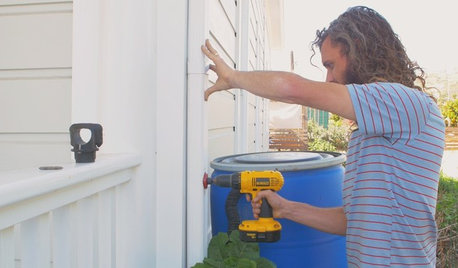
HOUZZ TVHouzz TV: How to Install a Rain Barrel
This DIY tutorial shows how easy it can be to capture rainwater from your roof to use in your garden later
Full Story
DINING ROOMSRoom of the Day: Putting the Dining Room to Work
With a table for meals and a desk for bringing home the bacon, this dining room earns its keep
Full Story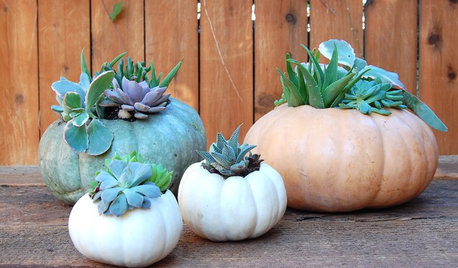
DIY PROJECTSDIY: Pumpkins and Succulents Combine as Holiday Decor
Follow this easy tutorial to turn your favorite pumpkins into a fresh update for your home or a gift item
Full Story
HOLIDAYS3 Fun Ways to Fold Napkins Into Christmas Trees
Follow this tutorial to add a little holiday flair to your table setting
Full Story
DIY PROJECTSThe Family Home: 8 DIY Projects for All Ages
Banish "I'm boooored" with these delightfully simple home decor projects that you can do with your kids
Full Story
COFFEE WITH AN ARCHITECTHow Words of Legendary Architects Live On
Quotable quotes from architecture's version of the telephone game. Feel free to pass them along
Full Story
DECORATING GUIDESMake a Cool Block-Printed Coat Rack
Hang fall's hats and scarves on great patterned coat hook you can make for less than $25
Full Story
lindac92