

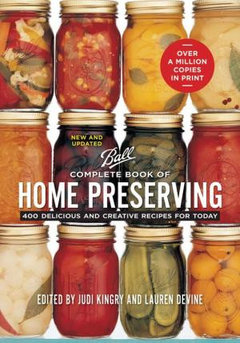
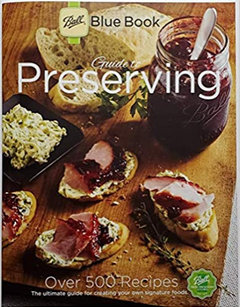
What's a good book to learn how to can?
5 years ago
Featured Answer
Sort by:Oldest
Comments (25)
 5 years ago
Related Discussions
How do I learn to can?
Comments (29)Just wanted to add that aside from this forum, you can get tested recipes from the National Center for Food Preservation (http://www.uga.edu/nchfp). They set the guidelines for safety in home canned food. At Ball's website, www.freshpreserving.com, a ton of information. I find their recipes mush easier to follow than the NCHFP's. They also have step by step video tutorials for using a canner and a boiling water bath. There are several great "problem solver" charts which list the problems along will all possible causes for each problem....See MoreHow hard is it to learn budding, and which rootstock is good?
Comments (3)Lux, Pink Clouds is Burling's preferred stock as she says it remains ready to bud much of the year. Her Chip Budding method Donald shared above is particularly suited to it. Being mainly multiflora, it roots very easily. You need to root it this year for budding next. I can happily share cuttings with you if you need/want them. It's a largish, often once flowering climber with potential for repeat in good circumstances. Private message me if you'd like cuttings. Priority Mail gets things from El Lay to NorCal (and vice versa) in two to two and a half days. More than you would ever want will fit in a small Priority box. I just budded to some last week and they appear to be doing fine. Another I like very much is using Cardinal Hume as under stock. It roots as easily as Pink Clouds and has accepted everything I've put on it. To hedge my bets, I budded the wood I received to both Pink Clouds and Hume, as well as tried rooting the remaining material. Normally, rooting here in the heat doesn't work, but I massaged it a bit, using seed starter mix instead of potting soil. I placed the pot in filtered direct sun for the morning hours. They're nearly two weeks old and still green and plump. The largest one actually has swelling buds. But, if you'd like either or both of these stocks to play with, I'll be happy to share. A main issue to keep in mind is, match the guage of your bud wood with that of the stock. A bud from an inch thick stem won't work on a half inch thick stock. You can do the reverse, but the stock has to be at least as thick as the bud stick or the bud won't make sufficient contact to callus. Kim Here is a link that might be useful: Pink Clouds....See MoreWhat are Good Gardening Books for the Mid-Atlantic?
Comments (0)*Posted by donnad z6 MD (My Page) on Thu, Jun 13, 02 at 22:56 What's your favorite gardening book? What book would you recommend to a gardener moving to this area? Thanks in advance for any replies! *Posted by: drtynails z7 MD (My Page) on Fri, Jun 14, 02 at 11:39 "Gardening for Dummies" series. Very informative and amusing. * Posted by: donnad z6 MD (My Page) on Fri, Jun 14, 02 at 22:37 My favorite book which is currently "Home Landscape: Mid-Atlantic Region" by Roger Holmes. It has several landscape designs you can really use - or in my case adapt. * Posted by: Madgardenr z7WDC (My Page) on Thu, Jun 20, 02 at 21:57 My truly favorite, semi-regional book is "Time-Tested Plants" by Pamela Harper. While she lives a bit south of DC, her book is a wonderful compendium of what has worked for her and what hasn't over many years of gardening in heat and humidity, both of which we have in abundance. I love all her books, but this is my favorite. You might also look at "The Washington Post Garden Book" by Adrian Higgins. * Posted by: Julia z7 MD (My Page) on Sat, Jun 22, 02 at 16:18 "Time Tested Plants" is a good one. Just thought you might want to know that the MD Extension Service sells its Maryland Master Gardener Handbook for $49 and has many other short publications for free or for cheap including a new one on natives I just ordered for $5. Most public libraries have a copy of the MGH you can look at in the reference section. Still reading copies of Henry Mitchell's books for inspiration. Of course, Dirr's "Manual of Woody Landscape Plants" is the one reference book you can't live without. * Posted by: VALily (My Page) on Mon, Jun 24, 02 at 23:43 American Horticultural Society "A-Z Encyclopedia of Garden Plants". My all time favorite reference bible! Also really enjoy "Passalong Plants" by Steve Bender and someone else. Great read with loads of good information on Southern, easy to grow plants! * Posted by: razmataz z7 VA (My Page) on Sun, Aug 18, 02 at 13:22 "Sunset Northeastern Garden Book" is my bible & I also like "Gardening with Native Plants of the South" by Sally Wasowski. Moved from CA to Va a couple of years ago & both have been extremely helpful. * Posted by: foxbuild 6b (My Page) on Wed, Aug 28, 02 at 20:52 "Lasagna Gardening". Love it *Posted by Mrsgreenjeans z6/7 SE/PA (My Page) on Fri, Nov 29, 02 at 14:10 Well, it's that time of year again when I start to spend more time indoors than I would like to. With the holidays coming, gardening books are always welcome. I would like to recommend "Month-By-Month GARDENING in PENNSYLVANIA" by Liz Ball. I do wish the chapters went from month to month rather than topic divided month by month, but very informative for our area. Also pertinent to our area, and excellent for information as well as the beautiful inspirational, photography are books by Ken Druse. I have "The Natural Shade Garden" and "Making More Plants", which happened to be one of last years favorite presents received. (thanks Jevon) * Posted by: Blueheron z6 PA (My Page) on Fri, Nov 29, 02 at 21:14 I also like "The Pennsylvania Gardener" by Derek Fell who gardens in Bucks County. * Posted by: jenny_in_SE_PA 6b/7a Sunset 32 (My Page) on Sun, Dec 1, 02 at 15:45 One of the best books that I found last year was the "Sunset Northeast Garden" book (published 2001, Sunset Publishing). It is put out by the folks who do the Sunset Western Gardening Zones/book. I really enjoyed the fact that they described our climate here so well and that I could go through the plant listings and "relate" to and/or find ones that I see growing around here. So many "general" garden enyclopedias list generic plants and cultivars of them that I just don't see planted here or even offered at the local nurseries. They even had a picture of a box turtle in the middle of some hardy geraniums and by golly, I have raised enough of those turtles (found by the creek) when I was little! BTW, the book does include New England down through the Mid-Atlantic states. * Posted by: Mrsgreenjeans z6/7 SE/PA (My Page) on Sat, Jan 11, 03 at 9:35 Well, my son picked a winner of book for me this Christmas; "Gardens of Philadelphia and the Delaware Valley" by William Klein, Jr. and georgeous photos by Derek Fell. It has detailed chapters ranging from Private gardens to public parks, preserves, history. Several of the locations described are near and dear to me, several will be "must sees" this year. *Posted by jgwoodard z6 TN (My Page) on Fri, Jan 17, 03 at 17:28 I mainly care about herbaceous perennials, but ironically, my favorite book is: Reunion of Trees: The Discovery of Exotic Plants & Their Introduction into North American & European Landscapes - by Stephen A. Spongberg. I like it so much that I made a visit to the Arnold Arboretum before I finished it. I am now reading a related work: The Plants that Shaped our Gardens - by David Stuart. Both of them deal with plant history, geography, and logistics....sort of in the "plant hunter" genre. They are both published by Harvard University Press and easily obtainable. As far as botanical reference stuff, I mainly rely on Allan Armitage's books, (particularly: Herbaceous perennial plants : a treatise on their identification, culture, and garden attributes) because of its applicability to my climate here in middle Tennessee, although I use a great variety for specific purposes.....just wondering what you folks like. * Posted by: Bill_zone6 W. Pa (My Page) on Fri, Jan 17, 03 at 17:47 Manual of "Herbaceous Ornamental Plants" by Steven M. Still is what I refer to a lot. * Posted by: TamaraVa z7bVa (My Page) on Sat, Jan 18, 03 at 21:01 I have this HUGE Botanica book that I refer to whenever I think of adding a new plant to my garden. It has an amazing listing for thousands of perennials, shrubs and trees. It has saved me a few times from making costly mistakes. I picked it up at the bargain bin at Barnes and Noble.The last few years I have really enjoyed "Garden writing". I love to read and re-read Henry Mitchell ,for instance, he makes me chuckle.It's as if he is looking over my fence commenting on a day in a gardeners life. I feel I learn much more from gardeners stories than from how to books. I just finished Diane Ackerman's book "Cultivating Delight, A Natural History of My Garden" Fantastic reading. * Posted by: nasj z4/5 and z7 NY (My Page) on Thu, Jan 23, 03 at 12:10 Allen Lacy: Gardening with Groundcovers and Vines, and The Garden in Autumn. * Posted by: booboo1410 (My Page) on Mon, Jan 27, 03 at 18:02 I enjoy reference books best rather than "reading books", my faves are: "The American Horticultural Society A-Z Encyclopedia of Garden Plants" by Christopher Brickell, Judith Zuk (DK Publishing) "Botanica" by R. G. Turner, Jr. (Barnes & Noble - the name on this book has recently been changed!!) These two cover perennials, trees and shrubs. I also have specific books on a particular genus, but these 2 generally give enough info. to get what you need. For herbs, I recommend: "The Herb Society of America Encyclopedia of Herbs & Their Uses" by Deni Brown (DK Publishing) * Posted by: VTSKIERS z6a CT (My Page) on Mon, Jan 27, 03 at 19:28 Well it used to be "The Well Tended Perennial Garden" by Tracy DiSabato-Aust but I just received my copy of her new book, "The Well Designed Mixed Garden" and my initial impression is that this one will far exceed my expectations. If you don't have it, get it. * Posted by: Lilac5 5A (My Page) on Mon, Jan 27, 03 at 21:36 The 20-Minute Gardener by Tom Christopher and Marty "Something". Lots of fun, good ideas, and a nicely irreverent attitude. * Posted by: Iris_gal z9 CA (My Page) on Tue, Jan 28, 03 at 3:30 ?Perrenials For American Gardens? by Ruth R. Clausen & N.H. Ekstrom is one book that combines photos with accurate information. A treasure. * Posted by: buxusareyou z6 NC (My Page) on Tue, Jan 28, 03 at 7:29 Southern Gardens - A Handbook for the Middle South by Elizabeth Lawrence * Posted by: CarrieB z6b/7a Phila. (My Page) on Tue, Jan 28, 03 at 10:02 buxusareyou, have you read Two Gardeners . Letters between Katherine White (EB's wife, and a gardener & garden writer) and Elizabeth Lawrence? I just got it out of the library. Lovely. * Posted by: Avid Z5IL (My Page) on Sun, Mar 2, 03 at 12:53 Allen Armitage - Herbaceous Perennial Plants, Clausen/Ekstrom - Perennials for American Gardens, Fred McGourty - The Perennial Gardener, Although I admit I don't seek out new books that much and these are a few years old, I always enjoy them. Armitage and McGourty are also funny guys. * Posted by: ChrisMD 7 (My Page) on Sun, Mar 2, 03 at 13:57 All time favorites are Henry Mitchell's four books. He was the local Washington Post garden writer here in DC so I've been reading his columns since forever. He died several years ago and I still miss him and I've been told the same by many local gardeners. Other favorites: "Gardening for Love" by Elizabeth Lawrence "Washington's Gardens at Mount Vernon" by Mac Griswold "The Medieval Garden" by Sylvia Landsburg. I was so smitten with this book that I paid big buck$$$ for it at the Cluny Museum in Paris, thinking I would never see it again. It is remaindered now and you can get it for about $7 if you look for it. Very useful for plant lists. Roger Phillips and Martyn Rix's series for Random House. It is really useful to see 20 clematis cultivars (or whatever) laid out on one page for photography so that you can make direct comparisons. Also, since the series originates in England, there are a LOT of plants that are very rare for us Americans. "Naturalizing Bulbs" by Rob Proctor. An excellent book and unique when it was published. "Gardening with Groundcovers and Vines" by Allen Lacy. Full of great ideas for layering plantings. I like Lacy's other writings too, but since he spent a lot of time on cultivars, they're beginning to look dated. Eleanor Perenyi's sole book - can't remember the title but it has recently been reissued. A collection of tiny elegant essays on all aspects of gardening. "French Dirt" by Richard Goodman. A vicarious vacation. Heronswood Nursery catalogs - excellent if quirky reference books. * Posted by: superphosphate 5a, NH (My Page) on Tue, Mar 4, 03 at 0:20 "The New Generation Guide 'WILD FLOWERS of Britain and Northern Europe' " by Alastair Fitter, general editor, David Attenborough. University of Texas Press, 1987. ISBN 0-292-75535-X . A few wildflowers (and weeds by American standards) have not crossed the Atlantic. About half the book an enthusiastic and very readable detailed treatise over the whole landscape of botany. Charmingly British. If this is not in print now, it ought to be. * Posted by: buxusareyou z6 NC (My Page) on Tue, Mar 4, 03 at 12:47 ChrisMD - I loved French Dirt, too. What a delightful story about the birth of a gardener. Russell Page's, The Education of a Gardener was an inspiration. * Posted by: back40jen 5 (My Page) on Tue, Mar 4, 03 at 14:18 I highly recommend "People with Dirty Hands" by Robin Chotzinoff, especially for those of us trying to distract ourselves from the long, dreary winter. The book has profiles/interviews with passionate, eccentric gardeners and is just plain fun to read. I agree with the poster that likes the 20 minute Gardener, I like that too, especially the sense of humor, rare in gardening books. * Posted by: Gazania z5PA (My Page) on Tue, Mar 4, 03 at 16:33 I own or have read nearly all the books mentioned here. All are good books, but the one I most often turn to is the Sunset Northeastern Garden Book. I think that many of the people on this forum are new to gardening and will look in on this thread hoping for a guide to good basic information on many aspects of gardening. The Sunset Books cover it all in an easy to navigate format. From annuals to vegetables and everything in between. It not only tells you what is desireable about a specific plant, but also what kinds of problems that plant is susceptible to. It lists detailed information of many species. For instance there are 42 named varieties of magnolia listed giving characteristics of each. Whether you know it as catnip, catmint or nepeta, you will be able to find it. For the novice gardener, this is the perfect book for learning, and for the well seasoned gardener, a quick reference. I would like to see more credit given to Sunset for putting together these invaulable garden books. It seems that the "professional" plant people look down their noses at Sunset. At $30.00 it is a good buy, and you can find it online much cheeper. * Posted by: Shelley_R 7b NC (My Page) on Sun, Mar 16, 03 at 6:42 Made for the Shade, by Judy Glattstein. This book is much more than a listing of shade plants. It discusses the different types of shade, solutions to specific shade problems, all types of plants, and more. It's well-organized and has beautiful photos. Really both a reading and reference book. If you garden in the shade, get this book. I also find myself frequently referring to Don Hastings' Month-By-Month Gardening in the South. It inlcudes all types of plants and has info and instructions on all basic gardening activities (planting a tree, pruning a rose, renovating a lawn, etc). This is my number one choice for a beginner book for anyone gardening in the South. * Posted by: Storygardener 5/6 central oh (My Page) on Sun, Mar 16, 03 at 7:06 One book that I particularly like is "The Well Tended Garden" by Tracy DiSabato-Aust. Traci lives in the Greater Columbus, Ohio area too...so for me and other gardeners of this similar climate the book is invaluable. So many tips on general care, pruning for longest and most interesting blooms of many plants, and wonderful ideas. I learned about his book at this forum about 3-4 years ago. It is very very worthwhile! * Posted by: PaulaCat Z8 Coastal SC ) on Fri, Mar 28, 03 at 12:58 "Passalong Plants" by Steve Bender and Felder Rushing. While it deals with "classic" southern plants, it's really about the first great joy of gardening...sharing your treasures with others and remembering those who shared with you. * Posted by: flower_fairy z6a MA (My Page) on Fri, Mar 28, 03 at 17:21 Second Nature: A Gardener's Education by Michael Pollan is wonderful reading....See MoreBook recommendation to learn the basics of interior design
Comments (21)girl wonder, some books I've found useful and enjoyed: Interior Design Master Class: 100 Lessons from America's Finest Designers on the Art of Decoration by Carl Dellatore: "Creating a library-worthy resource on design, the volume’s editor, Carl Dellatore, recruited one hundred top American interior designers to contribute essays on a particular aspect of design, interspersed with examples of their work. Useful for both aficionados and professionals, the volume reveals the meticulous and often heady process that goes into creating great interiors." There's a very good good write-up and interview with the author at the design blog Quintessence. Habitat: The Field Guide to Decorating by decorator Lauren Liess (who is basically self-taught, which is why she calls herself a decorator rather than an interior designer), who has a great blog (not updated much anymore) where she has explained her choices and decisions. Mary Gilliatt's Interior Design Course by Mary Gilliatt Domino: The Book of Decorating: A Room-by-Room Guide to Creating a Home That Makes You Happy by Deborah Needleman The Perfectly Imperfect Home: How to Decorate and Live Well by Deborah Needleman A few of the interior design books I've picked up in the past few years, which gave me a greater sense of appreciation for what interior designers and decorators do: The Interior Design Reference & Specification Book: Everything Interior Designers Need to Know Every Dayby Linda O'Shea, Chris Grimley, Mimi Love Interior Design Course: Principles, Practices, and Techniques for the Aspiring Designer by Tomris Tangaz Some earlier helpful threads in the GardenWeb Home Decorating forum: Where to go for "Home Decorating 101"? What's your favorite Interior Design Book?...See More 5 years ago
- 5 years ago
- 5 years ago
 5 years ago
 5 years ago
- 5 years ago
- 5 years agolast modified: 5 years ago
 5 years agolast modified: 5 years ago
- 5 years agolast modified: 5 years ago
- 5 years agolast modified: 5 years ago
- 5 years ago
- 5 years agolast modified: 5 years ago
- 5 years ago
- 5 years ago
- 5 years agolast modified: 5 years ago
 5 years ago
- 5 years ago
- 5 years ago
- 5 years ago
 5 years ago
- 5 years ago
- 5 years agolast modified: 5 years ago
- 5 years ago
Related Stories
LANDSCAPE DESIGNGood Fences, Good Neighbors — and Good Views
See-through vertical fencing connects a yard with its surroundings while keeping children and pets safely inside
Full Story
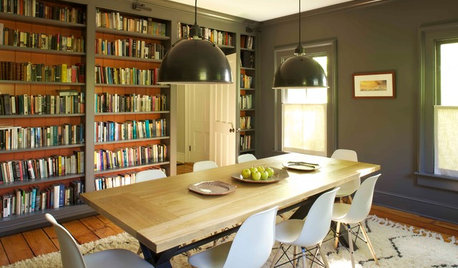
DECORATING GUIDESDinner and a Good Book: 12 Double-Duty Dining Rooms
Create your own library-inspired reading room by pairing a dining table with bookshelves
Full Story

DECORATING GUIDESWhat We Can Learn From the Minimalists
Discover the power of simplicity and how to employ a less-is-more approach in your decorating scheme
Full Story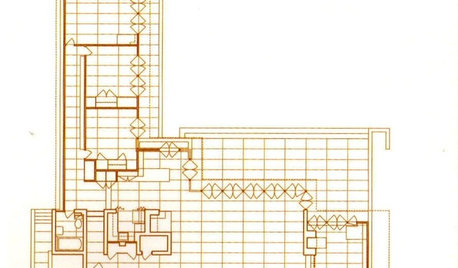
REMODELING GUIDESSee What You Can Learn From a Floor Plan
Floor plans are invaluable in designing a home, but they can leave regular homeowners flummoxed. Here's help
Full Story
DECORATING GUIDES9 Lessons We Can Learn From Drawing Rooms
Let these formal rooms inspire you to create entertaining spaces that encourage conversation, music and games
Full Story
WORKING WITH PROSInside Houzz: What You Can Learn From a Houzz Photo
Get access to the designer's info, product names, other photos in the project and much more by clicking on a Houzz image
Full Story
WORLD OF DESIGNWhat We Can Learn From Regional Architecture
The relationship between a traditional regional home and its environment is informing sustainable design
Full Story
INSPIRING GARDENSWhat We Can Learn From Longwood Gardens’ New Meadow
Sustainability, ecology, native plant communities ... this public garden is brimming with lessons on horticulture for home gardeners
Full Story

KatieC