

Shopping at Latin (or other ethnic) markets
5 years ago
last modified: 5 years ago
Featured Answer
Sort by:Oldest
Comments (42)
 5 years ago
Related Discussions
Brom Shops at Chatuchak Plant Market
Comments (43)Stephania, thank you for posting those pictures. It looks like the Thai people like very much growing plants, your country must be full of gardens with flowers and plants. Is it difficult to deflask the artificial propagated orchids in your climate? Here nobody would take the effort of doing that. Do you know what is the material in #17, that with the brom that looks like alcantarea ? It seems like somebody has the same idea I use for growing orchids that are difficult to keep humid in our dry climate. Mine "support" is made of tuff. Tomas...See Morewhat good unique crops to sell at farmers markets?
Comments (41)Nothing NEW, but from the last couple of years experience at a small-town market, 30+ vendors, that gets a customer mix of local farmers/ex-farmers, "townies" and cottagers from the city, here are some of basic twists that have worked well for me: * fresh carrots w/ tops right through the season: not baby but picked quite young 5"-6". These go at way higher prices for a 1lb bunch, competing with quarter-bushel baskets of regular big mature topped carrots all around me, and they sell out. * fresh basil: sells well at a good price, and is great for the smell, which everyone notices walking by * heirloom tomatoes: Ours is not a trendy high-end market, there's a good mix of people as noted above, and heirlooms (as in big, "oddly" colored and shaped, sometimes "ugly", always tasty) still attract attention, and definitely get repeat customers from taste (and I guess the novelty helps). A basic like Brandywine is fine, and I had a several varieties last year with different looks and tastes (Green Zebra was a distinctive favorite), which helped even more. Curious people try one or two and keep coming back for more(!), and they were going for $1.50-2.00 a pop (12-16oz) - I just made up the price, since no one else had 'em at the market. *snap peas (edible pod): I was amazed by how many people didn't know these even existed! I'd go, "You can eat the pod" and hand 'em one and they'd automatically start shelling it. "No, you can eat the whole thing!" Wow! Child-like amazement :) They're also great to maximize the pea growing and picking effort because you can use 'em young as a snow pea, or mature, which gives more overall useful harvest time. You can maybe premium price 'em, but they're also good just for the word-of-mouth. *mesclun: I'm not sure what my various customers each think they're buying, the idea of mesclun has kinda trickled down to a real mainstream thing from a trendy idea. I sell a couple of mixes, one that's only lettuce (around nine lettuces), which I'll explain to anyone who wants to know, and of the various regular customers who buy a bag (1lb) a week, I don't think any of them really cared about the exact ingredients, they just like colorful, baby leaf salad mix, for their own individual reasons. At $5 a bag, a heavy seller. *spinach: This is probably more specific to our market, where there are several quite big local family farm growers that all concentrate on the basic carrots, potatoes, tomatoes, beans, peas, etc, (easier handling/storage), but not on the fresh greens. So this depends a lot on the other vendors, but here, mounds of spinach is a good thing to have (and other greens, like lettuces, chard, etc, are quick and easy and add to the selection). *radish that's out of the typical early season is quick and easy to grow, and attracts a surprising number of people when no-one else has 'em. *miscellaneous specialty stuff: I plant small quantities of tons of things and bring some in. They're all good for novelty and attracting attention, but (for me in this specific situation...), none most alone don't do much for the bottom line. Stuff like: Eight Ball zucchini (lots of comments), Lemon cukes (comments and some regulars), white icicle type radish, rainbow chard (like, Bright Lights), purple snap beans (comments, but people mainly like the green and the yellow...), and so on, I even sold a few daikon radishes... All fun to grow and present but no magic. Half the fun seems to be trying new things without getting buried in a lot of odd and unusual ;) stuff... The general strategy of growing out of season really does work. This is practical if you're small. Having the earliest stuff is great, and just having it when no-one else does to me is just as much of an advantage. Superfreshness is also great, and probably most easily done when you're small. I mean, extreme freshness: stuff cut/picked the afternoon/evening before, salad greens the morning of... People really notice that: "hey, I forgot your mesclun in the fridge for TEN DAYS and it was still fine..." Also, if you grow natural, even if not certified organic, all kinds of people you mightn't expect to respond to that... Hope that's useful stuff in their! (I've got lots to learn, but passing on the little I have noticed already is always FUN!!)...See MoreNew year and considering a new market
Comments (14)I am worried that if I go to the larger market that I will lose my niche as a small organic grower and not be able to compete with the other small growers. Ever wonder why every city has "dealer's row" ... a couple of miles of car dealers, side by side? It helps comparison shopping and increases sales for all of them. Same with the larger market - you will be one of many organic growers, but will have far larger numbers of people looking for what you are selling. it's a 'watering hole" and you benefit from the others. Keep your competitive edge by working on being the FIRST with something popular, or by offering less common items. One area to explore would be things used by "ethnic" chefs ... check out the international student population and cater to their recipes and let it be know that you will do it. ASK them what they can't find - locate their Facebook page and ask what things they want to cook with they can't find grown locally. Often it's not something exotic and hard to grow, it's just not being grown....See MoreWhere do you grocery shop most of the time?
Comments (64)I only noticed one person specifying where they buy wine. We buy ours at Beverage Warehouse, which is very close to us and easy to get to - less than 10 minutes, and just off of the Marina Freeway. They have an excellent selection of wines, and so we stock up when we go there, which is maybe once every two months. We do not always have wine with meals, but there are certain times when we do. Our favorite wines are Sangiovese, Sauvignon Blanc, Chardonnay, Pinot Grigio, Pinot Noir, and Côtes du Rhône (both red & white). We also keep Cabernet Sauvignon on hand but it is not really a favorite. I mention this because I have noticed that in certain parts of the country, wine is not available in grocery stores. I think I noticed this in Philadelphia - at least we were directed to a specialty liquor store when we were there. I also remember that in Washington State, one had to go to a state owned liquor store, similar to what I had to do in British Columbia. In BC, the government would threaten to have liquor strikes, and so everyone would rush to buy out all of the inventory, and then the government would decide not to have the strike after all - probably because they had all of their inventory cleared out, which may have been the reason for threatening to have the strike in the first place. I remember going to a special liquor store in Salt Lake City, but I don't remember whether grocery stores in St. George had wine or not. I would expect Utah to be a bit strict about this. When I was growing up in Texas, counties were either wet, dry, or damp, and I grew up in a damp county, meaning that you could buy beer and wine, but liquor was illegal, unless an incorporated city decided to legalize it. Harker Heights, just outside Ft. Hood decided to legalize it and grew tremendously because of that. I think that this has all changed by now, however....See More- 5 years ago
 5 years agoLars thanked dcarch7 d c f l a s h 7 @ y a h o o . c o m
- 5 years ago
 5 years ago
- 5 years ago
 5 years ago
 5 years agolast modified: 5 years ago
- 5 years ago
- 5 years agolast modified: 5 years ago
 5 years ago
- 5 years ago
- 5 years agolast modified: 5 years ago
- 5 years ago
 5 years ago
- 5 years ago


Related Stories

FUN HOUZZDon’t Be a Stickybeak — and Other Home-Related Lingo From Abroad
Need to hire a contractor or buy a certain piece of furniture in the U.K. or Australia? Keep this guide at hand
Full Story
HOUZZ TOURSMy Houzz: Flea Market Glamour in Texas
A crafty design blogger transforms her suburban ranch home into a free-spirited space with reimagined secondhand treasures
Full Story
SELLING YOUR HOUSE10 Low-Cost Tweaks to Help Your Home Sell
Put these inexpensive but invaluable fixes on your to-do list before you put your home on the market
Full Story
UNIVERSAL DESIGNWhat to Look for in a House if You Plan to Age in Place
Look for details like these when designing or shopping for your forever home
Full Story
ARCHITECTUREHouzz TV: Christmas in Chicago Will Make You Want to Move There Now
See Millennium Park, historic brownstones and other architectural landmarks lit up for the holiday season
Full Story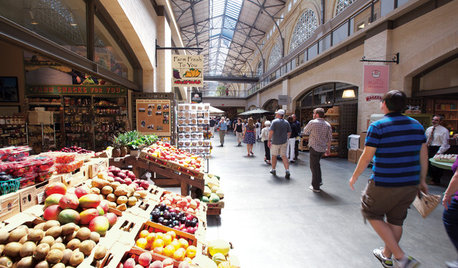
CITY GUIDESTravel Guide: San Francisco for Design Lovers
Visionary architecture, great museums, amazing food and shops — you don't have to leave your heart here to take inspiration home
Full Story
GARDENING FOR BUTTERFLIES3 Ways Native Plants Make Gardening So Much Better
You probably know about the lower maintenance. But native plants' other benefits go far beyond a little less watering and weeding
Full Story
MOST POPULARWhy We Love Midcentury Modern Design
There's a method to all this 'Mad Men'-ness — just look to psychology, tough times and, believe it or not, Apple
Full Story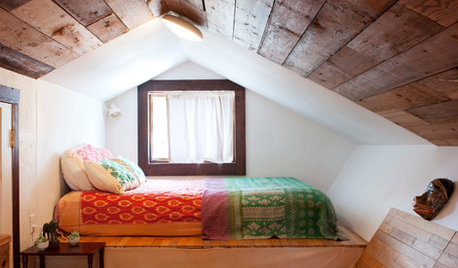
COLLECTIONS15 Reasons to Get Addicted to Kantha Quilts
You can use kantha quilts, made from old saris, throughout your home — on beds, as upholstery and as wall hangings
Full Story
DECORATING GUIDESTeach a Tansu New Tricks
Traditionally used for transporting treasures, the tansu is now a classic casegood in today's homes
Full Story
tvq1