

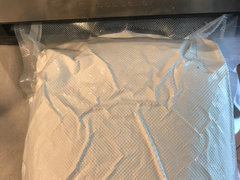
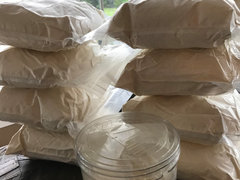
How would you split/store a large amount of flour?
6 years ago
Featured Answer
Sort by:Oldest
Comments (31)
 6 years ago
 6 years ago
Related Discussions
Amount of feed for large breed pup?
Comments (24)Runsnwalken may be thinking of ethoxyquin, which is a preservative believed to be carcinogenic. Runsnwalken has consistently posted about the poor quality of commercial dog food, and while I agree with that basic premise, Ann Martin is guilty of overly-emotional fear-mongering and yellow journalism. The book is seriously light on REAL statistics and actual data. Quoting her book and making statements like dog food kills babies ("I'm quite sure somewhere in the us that a child has died/gotten sick from pet food")is conjecture, speculation, innuendo, sensationalism and histrionics. The top problems with Purina One are 1. The first ingredient is chicken inclusive of its water content (about 80%) and this ingredient will weigh only about 20% of its wet weight once water is removed (as it must be to make kibble) it is unlikely that this is the true first ingredient in the food. It would have been far better is chicken meal was the first ingredient listed. 2. Therefore, the true first ingredient is corn gluten, a waste product. Whole grain corn appears again as the 6th ingredient. Corn is grain that is difficult for dogs to digest and the cause of a great many allergy and yeast infection problems. 3. Brewers rice is the third ingredient. Brewers rice is a low quality grain and by-product. 4. The next ingredient is by-products. By-products that are of such low quality as to be rejected for use in the human food chain, or else are those parts that have so little value that they cannot be used elsewhere in either the human or pet food industries. 5. The fifth ingredient is wheat. Wheat is believed to be the number one cause of allergy problems in dog food. 6. Beef tallow is a very low quality fat. It's also used to make fabric softener. 7. Pea bran is filler. No way could Purina One be considered a decent food. There are plenty of decent foods in the same price range. OH, and comparing Purina One to Science Diet is certainly comparing apples to apples since the main ingredient in science Diet is also corn. Try comparing Purina One to Kirkland or Canidae, both of which have a named meat source as a true first ingredient for a more valid experiment. As a bonus, both Kirkland and Canidae are CHEAPER. Healthwise is another decent food that is cheaper than Purina One. I've done the comparison and have found a remarkable difference in coats, eyes, teeth, ears, energy and overall health between grocery/feed store crap and even the cheapest super-premiums. I've also compared cheaper super premiums and the more pricey super premiums. For me, there was no visible difference between Kirkland and Wellness. I had to discontinue an all-meat product (EVO) because it was too rich As chickadeedeedee stated, the claim that euthanized pets are rendered into dog food has been debunked. Part of the study is quoted below "Because pentobarbital is used to euthanize dogs and cats at animal shelters, finding pentobarbital in rendered feed ingredients could suggest that the pets were rendered and used in pet food. CVM scientists, as part of their investigation, developed a test to detect dog and cat DNA in the protein of the dog food. All samples from the most recent dog food survey (2000) that tested positive for pentobarbital, as well as a subset of samples that tested negative, were examined for the presence of remains derived from dogs or cats. The results demonstrated a complete absence of material that would have been derived from euthanized dogs or cats. The sensitivity of this method is 0.005% on a weight/weight basis; that is, the method can detect a minimum of 5 pounds of rendered remains in 50 tons of finished feed. Presently, it is assumed that the pentobarbital residues are entering pet foods from euthanized, rendered cattle or even horses. " Still not particularly appetizing, but not nearly as sensational as some would have you believe. Avoiding foods with ingredients such as "meat meal" and "meat by-products" (ahhhh...the mysterious "meat") is a good idea. I thought Shroppie gave a decent, general answer to your original question, Carmen_Grower_2007. Instead of thanking him (her?) you chose to snark at others and giggle at a spelling mistake. So others have SOHDD, but AMDD (Appropriate Manners Deficit Disorder) is OK?...See MoreBurying to the root of this problem: how to do you store yours?
Comments (13)OK, so potatoes and onions are fine playmates. Bad apples, OTOH, are a problem. Everyone gets along with cold ale (isn't the wet sides of the bottles a problem? Plus, I prefer my ale room temp, but that's OK). Plllog - I am having a hard time analyzing the experiment: 'do these last'? I think "these" is a very moving target. I think when onions come from the store the freshness is hugely variable. When they come from a farmer, though, they can vary a lot as well - sometimes soggy in which case they won't last, quickly. I've had some that go on and on though. I just can't really quite make out what determinants really are at play. I haven't made a careful study but it's bedeviling enough that I just might (though I know I won't; I'll rely instead on all this seemingly-knowledgeable hear-say. Life is just too short...) Thanks, all, for the explanations and photos. I haven't yet seen any eureka! product for my needs, and I I'm thinking creativity will be adequate -- that is, there don't seem to be obvious rules beyond - air flow, darkness, coolness. I don't think anyone's worked out the ideal mousetrap yet for this, seemingly. I wonder if there are wicker colanders? I think that might be ideal - small, non-metalic mesh.... Plllog, I may have relatively good unrefrigerated luck due to our microclimate - at the base of a hill (=wind generator), relatively close to the ocean things are often fairly refrigerated ambiently around here. Couple that with dh's obsession with growing shade and lath-and-plaster on at least two rooms, plus high vented ceilings, and the house stays pretty cool all on its own. For example, I'm freezing right now.... (indicating it's time to go hang out some laundry, boost the vit D levels, dry the clothes and stir the blood into warmth in one fell swoop)....See MoreQuick, how many cups in 5 lbs of flour?
Comments (51)jemdandy - You're right, sorta.... It's a huge mistake trying to convert dry volume cup measurements to an exact weight, especially when people confuse liquid measurements and dry measurements, and dry measurements with scale measurements. But there are other reasons. There are NO standards for the actual size of a "cup" to manufacture a dry 1-cup measuring cup in the United States. You will find they vary in size if you were to test enough varieties of them - especially when you get into novelty shapes (such as a heart-shaped dry measuring cup made with ceramics - and you discover your recipe was altered/failed because that "cup" was bigger/smaller than your usual measuring cup). Take a 1-cup dry measuring cup (one that has a flat rim and you can level off the contents) and fill it by dipping it in the flour and dragging it up the side of the bag/container (a common method) and weigh that amount on a scale. Now, aerate/fluff the flour and spoon it into the cup and level (the preferred method) - and measure that amount. Years ago it was recommended you sift the flour before measuring it, so try that method and measure it. Some people bang the cup of flour to settle it, then add more flour before leveling it off, or tap it with the leveling devise to settle the flour and add more - and both are incorrect methods which will add anywhere from 10-20% more flour per cup. Some people don't bother leveling - just give it a shake and eyeball it.... Every cup of flour measured by each and every person weighs something different and can be as much as 1-2 ounces of weight different. This is why when you give 10 people the same brownie recipe to make for a bake sale, the finished brownies will vary greatly due to the use of volume measuring tools and the way people use them, and don't even get me started with the inaccuracy of baking pan sizes..... ***The reason recipes work using this highly inaccurate method of measurements (cups and spoons) is because it's a ratio of one ingredient to another more than the exact measure. So you can make a cake, as an example, using a professional-grade stainless steel dry measuring cup, a coffee or tea cup out of your cabinet, a canning jar (an old favorite before measuring cups were readily available), or any other container you like, as your dry measuring devise as long as you keep to the standard ratio of ingredients using the same measuring devise, and don't fill the baking pan more than 3/4 full of batter. So you can make one cake or a hundred cakes by sticking to the ratio of ingredients. A standard plain cake has, by measure (whether by dry measure or scaled measure), one-third as much fat as sugar; two-thirds as much milk as sugar; and about three times as much flour as liquid (bakers ratios or percentages). This is why you might not get the same results using grandma's recipe. She may have used a large coffee cup or a mason jar for measuring, while you are using a cheap set made in China from the Dollar Store that are much smaller than what grandma used. Your "let's say the weight of one cup of flour was 6 oz." is off already because there are no standards for the weight of a cup of flour, just some "suggested" amounts. King Arthur Flour used a 4.5 oz. (weighed on a scale) measure for a cup of flour in their first cookbook and changed their mind in another to 5 oz., while other "experts" use a 5 or 5.5 oz. measure for a cup of flour. And now your 6 oz. arbitrary measurement.... Who's "right"? The weight per cup of different kinds of flour vary as well.... A cup of whole wheat flour weighs more than a cup of National brand of bleached all-purpose flour, which weighs more than a cup of Southern All-Purpose flour, which weighs more than cake flour. This brings us to the moisture content of flour, which is unstable and will contribute to the weight - or lack of it - of a "cup" of flour. This is why we give a generalization of 18-20 cups of flour for 5-pounds. Even if you use a scale weight as the "exact measurement for a cup of flour", it too will be flawed due to the amount of moisture in the flour, which varies from brand-to-brand, bag-to-bag and home-to-home. And for this exact reason, amounts of flour in a recipe are just a good (or bad) guess. When you make yeast bread and the flour is really dry in the winter, you may need more flour than the recipe calls for, while during months with high humidity, you may need a lot less flour, because we add flour to yeast bread according to the "feel" of the dough, not the stated amount in the recipe. Add to that, the amount of protein in flour, which also varies from brand-to-brand and bag-to-bag. The higher the amount of protein in flour, the more moisture it will absorb. So if you happen to normally use Pillsbury All-Purpose Flour in a recipe and you switch to King Arthur All-Purpose, you will need less King Arthur because it has a much higher protein content than Pillsbury. If you substitute whole wheat flour for all-purpose flour in a recipe, you may need to take 1 T. of flour from each cup....See MoreLarge Amount of 5/1/1 Mix - Looking for Advice for First Time Mak
Comments (34)ThunderBear48, I had a little bit of a hard time time following you on your last post. It's possible we're emphasizing two different topics based on different parts of the conversation. Maybe to clarify a bit: As I said in my original post, this is for a vegetable garden which would sort of implicitly exclude azaleas and blueberries. I understand that some species have different requirements but I'm interested in a more or less "generic" mix. My list at the beginning was (as I mentioned in another comment) an attempt to build a shopping list. Accuracy would be nice, but I'm not going to be dumping those amounts into a big bin & mixing at once. Having a surplus is fine, I just wanted to be sure that I didn't have too little to complete the project. I reached 15 cups based on the following (assuming at the time [inaccurately] 15 cu ft of pine bark and extrapolating Al's recipe): Big batch: 2-3 cu ft pine bark fines 2 cups dolomitic (garden) lime (or gypsum in some cases) Assuming that I used the least amount of pine bark in the mix (thus the highest amount of lime I'd need): (15/2) * 2 = 15 cups lime Obviously, there may be some flaws in the way I reached that number. Since that point, I've learned plenty (much of it from information shared in this thread) so I don't think the original numbers are as relevant as they were at the start. I've already purchased my materials so at this point I've moved on from those original bulk numbers, feeling confident that I have enough to complete my total mix. At that time I'll be following, more accurately Al's recipe quantities. Admittedly, I don't yet know enough to understand soil PH well, and I have to start somewhere. I'm relying largely on other's advice, so now the remaining question would be "is Al's recipe a good one". Given the number of times I've heard others reference it, I'm inclined to believe that it is. If anyone can share specifics (or information sources) on soil PH and how you are all arriving at your numbers, that would be great. The results of my research have been kind of across the board. Al's recipe calls for 4 tbsp per 1/2 gallon of peat, while Seysonn recommends 0.5 tbsp per half gallon. I've read other sources cite 8 tbsp per 1/2 gallon of peat. That's a pretty dramatic difference from all sources unless I'm entirely misunderstanding the information at hand. I'd love to understand it better if anyone has any (preferably quantifiable, not just anecdotal) info they'd like to share. I know the chemistry can get pretty complex so if we can keep tips at the kindergarden (pun intended) level, that'd be swell. :-) Thanks everyone for the time you all take to share your thoughts!...See More 6 years agolast modified: 6 years ago
 6 years ago
 6 years ago
 6 years ago
- 6 years ago
- 6 years ago
- 6 years ago
- 6 years ago
- 6 years ago
 6 years ago
- 6 years agolast modified: 6 years ago
 6 years ago
- 6 years ago
- 6 years ago
- 6 years ago
- 6 years ago
- 6 years ago
- 6 years agolast modified: 6 years ago
- 6 years agolast modified: 6 years ago
- 6 years ago
- 6 years ago
- 6 years ago
- 6 years ago
 6 years ago
- 6 years ago
- 6 years ago
- 6 years ago
- 6 years ago



Related Stories

FIREPLACESDesign Workshop: Smart Ways to Store Wood Outdoors
Consider size, location, protection, air circulation and, of course, style for storing your firewood
Full Story
MORE ROOMSJunk-Storing Garage Becomes a Cabana Getaway
See how a family short on space swapped storage for a steam shower, a wet bar and room to play
Full Story
KITCHEN STORAGE16 Ways to Store Your Herbs and Spices
From super neat and organized to surprisingly artistic, there’s a seasoning-stashing solution for everyone
Full Story
KITCHEN STORAGEHow to Store Kitchen Tools and Flatware
Find out the ideal width and depth of drawers, get ideas for vertical storage and see how to work with existing cabinets
Full Story
BATHROOM MAKEOVERSWasted Space Put to Better Use in a Large Contemporary Bath
Bad remodels had managed to leave this couple cramped in an expansive bath. A redesign gave the room a luxe hotel feel
Full Story
GARDENING 101How to Grow Tomatoes in Pots
Don’t have much space for a garden? All you need is a sunny spot and a large container to grow this favorite summer crop
Full Story
DECLUTTERING10 Reasons Not to Have That Yard Sale
Are the potential rewards of selling your stuff large enough to justify your time and labor?
Full Story
MATERIALSShould You Use Composite Timber in Your Landscape?
This low-maintenance alternative to wood is made from varying amounts of recycled plastic. Consider it for decks, fences and more
Full Story
DECORATING GUIDES10 Ways to Hide That Air Conditioner
Feeling boxed in designing around your mini-split air conditioner? Try one of these clever disguises and distractions
Full Story
foodonastump