Help With What I Did To My Bread Machine
6 years ago
Featured Answer
Sort by:Oldest
Comments (14)
- 6 years ago
- 6 years ago
Related Discussions
calling all bread machine owners (help)
Comments (15)Like everyone else, I use my bread machine to mix the dough and for the first rise, then pull it out, shape it, rise it again, bake it. Salt and yeast should be kept separated, as was mentioned. I put the liquid in the bottom, then add the salt to the liquid, then the flours on top, then a well with the yeast. That way it is quite separated and will take a little while to come in contact with the salt. It makes sense to me to put the liquid in the bottom because it would be very difficult for the blade to mix if there is a lot of flour and only a little liquid (as would be the case if you put dry in first). With liquid on the bottom, it will more gradually bring in the dry ingredients. IME, when I use a "regular" recipe in the bread machine it comes out a little bit drier - I think because it is mixed better. You can open the machine when its running (even though the instructions say not to). Let it mix for a few minutes, till everything is mixed together, then open it and see if it needs either more flour or water - you should be able to tell by the texture of the dough. Otherwise, you shouldn't have a problem adapting recipes. Have fun! I make an average of two loaves a week - one for sandwiches, one french or italian type for dinner. Here is the French bread recipe I use (with comments from the book and my own comments): PAIN ORDINAIRE Plain French Bread Light and fluffy with a thin, crisp crust, this is the everyday bread of France thats only at its peak for about 8 hours after baking. Master this recipe and you can have French bread any time you want. Dont believe for a minute that you can bake real French bread in your bread machine on the French bread setting. Technique is all. Use your bread machine on the dough setting, then form the loaves by hand, bake them on a stone or in a French baguette baking pan. That, friends, is French bread. The ordinary kind. 1 ¼ cups water 3 cups bread flour (I use 3 ¼ cups) 2 ½ teaspoons bread machine yeast 1 teaspoon salt 1 egg white whisked together with 1 tablespoon water for glaze Combine the ingredients except egg wash in the bread machine pan and process on the dough setting (I keep salt separated from yeast). Remove the dough to a lightly floured work surface and punch it down. Form it into a tight ball and cover it with the bread machine pan (I cover with a light cloth napkin). Let the dough rest for 30 to 45 minutes. Divide the dough into two pieces, form each piece into a tight ball, and set aside uncovered for 10 minutes. Flatten each piece into a rectangle about 6 x 3 inches, then form into 2 baguettes. Place on parchment or in special baguette pans (I use the pans which I ordered from The Bakers Catalogue) and cover with plastic or a tea towel while the loaves rise one final time, about 30 minutes. Meanwhile, preheat the oven with a stone in place on the middle rack to 450°F. for at least 30 minutes (I dont use the stone if I use the baguette pans). Just before baking, brush the loaves lightly with the egg wash, and make 3 or 4 diagonal slashes in the top of each loaf. Bake the loaves in the preheated oven until golden brown, 25 to 30 minutes. Spritz the oven with plain water 3 or 4 times during the first 10 minutes. Turn the bread out and cool on a rack. Eat it the same day its made. Forming baguettes With a rolling pin, roll the dough away from you into a long oval about eight by twelve inches. Fold the dough in half lengthwise by bringing the twelve-inch edge farthest away down over the edge closest to you. Seal the edges by pressing the seam with your extended thumbs. Now roll the dough a quarter turn up so that the seal is on top. Again flatten the dough into an oval with the rolling pin. Press a trench along the twelve-inch-long center of the dough, then fold it in half toward you again, and this time, seal the edges by pressing with the heel of your hand. Now roll the dough back and forth, sliding your hands along the length, making a sixteen-inch-long sausage roll (mine are never this long). Place the roll seam side down on a cornmeal-dusted peel or parchment, or in a special baguette baking pan to rise a final time before slashing and baking. Make three or four quick, sure diagonal slashes in the bread just before baking....See MoreBread machine liquid sub (or Easter bread in machine recipe)
Comments (2)Hot Cross Buns and Greek Easter Bread come to mind, and Greek Easter Bread is a basic enriched Danish dough with anise flavoring or aniseed, and formed in a braid in a circle. #1. Find out how much the flour capacity is for your bread machine before using a non-bread machine recipe. For instance, my Zojirushi bread machines (V-20 and X-20) have a 5-cup capacity if I'm going to bake in it. The old Zojirushi S-15 had a 4-cup capacity. If I'm only use it to mix/knead the dough, I can use a larger amount of flour for a recipe - BUT - I take the dough out of the bread machine as soon as kneading is complete and proof it in a dough-rising bucket - NOT the bread machine. 2. As chas045 pointed out, check your dough. Check the condition of the dough during the first 5 minutes of kneading and adjust it for hydration at that time by adding more flour or adding more liquid - whatever is necessary - if the dough doesn't form a soft tacky ball. The amount of flour necessary for any bread recipe is just a good (or bad) guess. If the recipe called for high-gluten bread flour, and you used all-purpose flour, it would take more all-purpose flour (or less liquid) because of the lower gluten (protein) content in all-purpose flour. Gluten soaks hydration like a sponge, so you have to adjust to those differences if you switch from one flour type to another. 3. Do a search on-line for a bread machine recipe for "Easter bread" and try to locate one that is similar to what you are wanting to make and one that will work in your bread machine. Have a blessed Easter! -Grainlady...See MoreBread bakers - how can I adapt this to a non-bread machine method
Comments (11)The yogurt shouldn't be a problem reacting with yeast. Yeast actually works best in a mildly acidic environment, which is why ascorbic acid is often mixed with dry yeast products. To improve the rise of breads containing wheat germ and whole wheat flour (which contains wheat germ), I always add an acid ingredient to counteract the gluten-damaging effects of glutathione in the wheat germ. Bacteria (in yogurt and also present in bread dough made without yogurt) produces those tasty acids in bread dough that improve the flavors of bread when we refrigerate it. The acidity already present in sourdough starters help sourdough breads keep longer, inhibit mold growth and also slows staling, and you'll see the same qualities in breads made with yogurt. -Grainlady...See MoreHelp with Bread Machine Recipes
Comments (12)Marilyn (fammsimm) - "Must this be done immediately or is it possible to freeze (or refrigerate) the dough for future baking? Any tips you could share?" The dough cycle on your bread machine is designed to make the dough only, up to the point where it needs to be formed, allowed to rise once more, then baked. This particular cycle feature comes in handy when you want to take the dough and make dinner rolls, hamburger/hot dog buns, cinnamon rolls, English Muffins, bread sticks, pizza, calazone, bierocks, kolaches, panned or free-formed loaves, etc. Things that must be formed and baked in your conventional oven. I'm a do-it-now personality, so I remove the dough from the bread machine and form, rise, and bake. The only time I retard bread dough (or items made with bread dough) is if I have too much to be accomodated in the oven and I don't want to risk over-proofing the dough before I can get it baked. So if I make 4 loaves and my oven only accodomates 2 loaves, I'll form the loaves, cover with plastic wrap, place 2 in the refrigerator to slow down the rising, allow the other two to raise, and bake. About the time the first two go into the oven, bring out the refrigerated loaves, and allow them to finish proofing. They should be ready to go into the oven about the time the first two come out. I also refrigerate half the dough when I make English Muffins because it's easier to work with in smaller amounts. It's all about timing and years of mistakes and experience. Bread is a very humbling thing... Here's where it can get tricky...especially for newbies. Can the dough be refrigerated? Yes. It's called retarding the dough. You can retard formed loaves for a few hours or dough for up to 5 days. To retard dough, you will need to remove it from the bread machine BEFORE it goes through a rise cycle (as soon as it stops kneading, remove it) to retard the dough in the refrigerator for later use. The dough will continue to rise, even in the cold confines of the refrigerator, and you may occasionally need to knock the dough down. The dough needs to be well-covered in a sealed dough-rising bucket, or a bowl covered with plastic wrap so the "skin" of the dough doesn't dehydrate in the refrigerator. A helpful hint when making refrigerator dough: they keep best if there is some potato - or any pureed vegetable - (mashed potatoes, potato flakes, etc.) in the recipe. The potato preserves moisture in the dry climate of the refrigerator. But any type of dough can be refrigerated successfully for a short period of time, up to 12-24 hours. If you are going to keep it for several days, you will want to choose a recipe with some potato in it. Most refrigerator dough is ready to use after 8 hours, and will keep for up to 5 days. When you are ready to use refrigerated dough, punch it down. Shape, cover, let rise and bake. One of the famous recipes for this type of dough is Betty Crocker Potato Refrigerator Dough. You can Google the recipe to give you an idea of what you can make with refrigerator dough, even though it's not a bread machine recipe. Retarding dough in the refrigerator is also a way to add flavor to the bread. Can the dough be frozen? Yes. It is best if you form it before you freeze it, and needs to be used within 4 weeks, whereas baked bread can keep for 3 months in the freezer. Check the link below for complete information about freezer dough. I'm like many of the others, I only use my bread machine for making dough. I don't even let it rise in the bread machine. I use a dough rising bucket instead, so that I can judge when the dough has doubled. Dough doesn't rise to a clock and it's easy for dough to over-proof in a bread machine. But bread machines are great labor-saving devices when it comes to kneading. I have carpal tunnel and tennis elbow in both arms and wouldn't trade my Zojirushi for anything (other than another Zojirushi). The bread machine is what I use to make all our yeast and sourdough breads and I bake some kind of bread/s at least once or twice a week. -Grainlady Here is a link that might be useful: Baking 911 - freezing bread dough...See More- 6 years ago
- 6 years ago
- 6 years ago
- 6 years ago
- 6 years agolast modified: 6 years ago
- 6 years ago
- 6 years ago
- 6 years ago
- 6 years ago
- 6 years agolast modified: 6 years ago
- 6 years ago
Related Stories
PAINTINGHelp! I Spilled Paint on My Clothes — Now What?
If you’ve spattered paint on your favorite jeans, here’s what to do next
Full Story
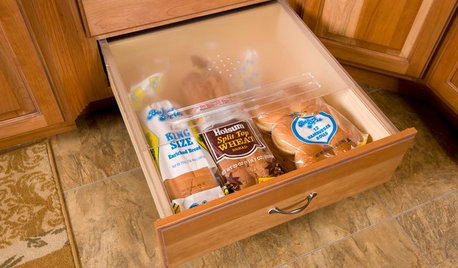
DESIGN POPBakers’ Home Storage Tips for Sliced Bread’s 90th Birthday
In honor of the bread slicer’s debut in 1928, we offer the best bread storage tips since, well ... you get it
Full Story

FUN HOUZZEverything I Need to Know About Decorating I Learned from Downton Abbey
Mind your manors with these 10 decorating tips from the PBS series, returning on January 5
Full Story

BUDGETING YOUR PROJECTHouzz Call: What Did Your Kitchen Renovation Teach You About Budgeting?
Cost is often the biggest shocker in a home renovation project. Share your wisdom to help your fellow Houzzers
Full Story

GARDENING GUIDESHow I Learned to Be an Imperfect Gardener
Letting go can lead to a deeper level of gardening and a richer relationship with the landscape. Here's how one nature lover did it
Full Story

MOST POPULAR9 Real Ways You Can Help After a House Fire
Suggestions from someone who lost her home to fire — and experienced the staggering generosity of community
Full Story
LIFEDecluttering — How to Get the Help You Need
Don't worry if you can't shed stuff and organize alone; help is at your disposal
Full Story

HOUSEKEEPINGWhen You Need Real Housekeeping Help
Which is scarier, Lifetime's 'Devious Maids' show or that area behind the toilet? If the toilet wins, you'll need these tips
Full Story

SMALL SPACESDownsizing Help: Think ‘Double Duty’ for Small Spaces
Put your rooms and furnishings to work in multiple ways to get the most out of your downsized spaces
Full Story

DECLUTTERINGDownsizing Help: How to Edit Your Belongings
Learn what to take and what to toss if you're moving to a smaller home
Full Story

bcskyeOriginal Author