

Chefs on their most hated ingredients .......
7 years ago
Featured Answer
Sort by:Oldest
Comments (26)
 7 years agolast modified: 7 years ago
Related Discussions
Bon Appetit Ingredient of the year-Sriracha?
Comments (31)I used to make my own, particularly when I had chili plants in my yard. However, for the past few years I've been using the Huy Fong Sriracha because it is cheap, and I really like the flavor. I also like that it is thick. When I made my own, I used ripe (red) jalapeños, garlic, white balsamic vinegar, and kosher salt. I put everything in the blender and then stored it in a jar. The good thing about making it yourself is that you get to choose what kind of vinegar goes into it, and that makes a big difference. I also took out all the seeds so that I could get more chili flavor for the same amount of heat. I haven't noticed seeds in Sriracha, and that is another plus. Before, I would buy Chinese chili paste, and I started making my own just so that I could make it without the seeds. I use Sriracha when I make Bloody Caesars, but I also use it in eggs in place of black pepper. In most recipes, I prefer to use fresh chilies (and I go through a lot), but it's great to have something to adjust a recipe after it is finished. Also, I can make things a little blander for Kevin and then add the hot sauce to my servings. Lars...See MoreCostco rotisserie chickens: ingredients
Comments (25)Sushipup-- I am no better or worse at present and continue to search for the cause of my discomfort--severe burning pain in any muscle used even for light work. I am now in the allergy testing phase and the doctor suspects metformin, a diabetes medication. I follower the gluten free diet faithfully because I wanted to either confirm or deny the diagnosis. When I found the GF chicken in BJ's I was thrilled because the diet is so restrictive and also because I am the pickiest eater in the world and hate most of the allowed foods on the diet. I immediately emailed my local celiac disease club of my find and I hope it helped the members to find an easy source of a quick and tasty meat. Nancy...See MoreExploring New Ingredients
Comments (41)Much as I like to cook, I like to go out even more! We go for foods I won't cook at home, which saves money (no buying pkgs of this and bags of that of which I only need a little and rest goes unused), ensures portion control, and I never, ever have to spend time doing prep or washing dishes. Woohoo! Anyway, here are some of the more interesting dishes that have crossed our path in the last couple of months as we journey from restaurant to restaurant. Maybe some of you will find some inspiration for your own kitchens: Inexpensive ethnic: - A small Portuguese grocery store offered five different brands of linguiça (they have many more, but they rotate them according to availability and limited freezer space). We chose three to pan-fry and taste-test, two local Northern CA and one from Boston MA. Spouse is Portuguese-Chinese so linguiça is one of his Favorite Foods. The Boston brand was too smoky and had too much red wine vinegar in it to be eaten alone, but baked with cannellini beans was excellent. Locals win, which made us proud, LOL. - Tea-smoked salmon at a "this is California BBQ" place. Nice-sized filet, with gentle smoke flavors, not overcooked. A bright green cilantro sauce goes well with the fish. It's derived from a Barbara Tropp recipe in her long-ago China Moon restaurant/cookbook (still available on Amazon: http://www.amazon.com/China-Moon-Cookbook-Barbara-Tropp/). Tea smoking is a classic Chinese cooking technique, usually used on poultry. It's great with the salmon; even pleased my Spouse who is not a salmon lover. - Khashi Ko Masu, goat in a rich gravy which the menu describes as common in Nepalese households. We specified hot for the chile level. This Ko Masu curry showed how what is good home cooking can be as fine as anything at a four-star bistro. It had a complex and well-balanced spice mixture, richly flavored without being oily. We've had a lot of curries in our lives, but this ranked as one of the best gravies ever. A great bistro would drizzle this sauce over a few slices of lamb tenderloin and charge $30 a plate. This small friendly neighborhood Indio-Nepalese restaurant uses throwaway neck bones with almost as much meat on them, along with a full cup of gravy, for a bargain $8.99. - Thai coconut soup: Spouse chose chicken, with a heat level of "hot." Not the usual clear broth, but a creamy bisque-type soup. Flecked with chile flakes, full of juicy thin-sliced chicken breast strips and generous shavings of fresh young coconut, this was a phenomenal bargain at $3. The coconut cream was rich and thick, lightened up with not only lemongrass but kaffir lime leaves. We love Thai soups, and this was one of the tastiest versions ever. - In the SF Bay Area, KFC has a very different meaning for foodies. With our large Asian population, it means Korean Fried Chicken. Batter-fried wings are generously doused with a sweet, mildly hot gojuchang. At a new restaurant we tried, their version was tasty although not great. It's always been a one-dimensional dish, with nothing complex or subtle about it. Everything is in the execution, and this restaurant delivered a slightly better than average version. It wasn't quite our style preference; we prefer a lighter batter, juicier chicken, and less goopy sauce. But we're in the minority here; a great many people like hard-fried battered chicken with lots of goopy sauce. - Stewed tripe, Ethiopian style. Very tender strips in spiced butter and onions, but actually a little bland. We'd like to try it with a souped-up chile level, the way they make zigne, their stewed beef. Spicy stews with great injera, one of our favorite bargain loves. Upscale eateries: - Stopped by a local gourmet marketplace and chose a Prosciutto di Parma to taste-test against a Jambon Serrano. The winner was…both. We liked them equally well, especially in Spouse's beloved Croque Madame. Toasted ciabatta rolls with Swiss Gruyere, with gently fried eggs on top: the best breakfast sandwich ever. We also bought some merguez sausages, which are in the freezer so they'll get super-chile-hot! Perfect with eggs or creamy polenta, I haven't decided which to do yet. - Prickly pear crème brulee. Most fruit custards are unsuccessful creations; either watery and weak-flavored, or too thick and sweet. This was a well-executed balance of fruit and creamy custard, sweet but not overly so. A lovely rosy pink color, too. - Standard fritto misto of shrimp, green beans, artichoke hearts, shishito peppers, and fennel. It was the dip that made it outstanding: an "onion ash mayo". This was one of the few Scandinavian/Modernist touches we've enjoyed, a remarkable creation. It had great depth of flavor without any 'ashy' taste, or even a strong onion taste. It was just simply…yummy. All three diners wiped the dip ramekin clean! - A Southern version of minestrone: white bean soup with tasso ham, full of diced vegetables, sliced shiitake mushrooms and whole small white beans. The tasso ham was generously diced and gave the soup a gently spicy edge. Really lovely, well-balanced but not heavy. - Fried chicken which was fabulous (lightly battered, exquisitely juicy and flavorful) but even better were the Caribbean-style accompaniments: collard greens in spiced coconut cream, black-eyed peas, and spicy Ghanian peanut sauce. The peanut sauce was lightly spiced but not chile-hot, and when the coconut cream from the collard greens was mixed into it, this was a great combination. Many times peanut sauces are cloying in texture and taste; this was not. Some lightly pickled vegetables (cabbage, sweet green pepper slices and raw carrot slices) garnished the dish. Just that little hint of acidity livened up everything. - Duck paté salad, which wasn't a salad in the traditional sense. It was a long straight piped line of slightly foamed duck liver mousse, sectioned with three thin baguette toasts that were full of airy holes, toasted to the golden brown of Melba toast. Colorful segments of barely cooked kumquats were sprinkled over the plate. This was rich yet airy, visually stunning, and Spouse loved it. He said it was a perfect starter for a day that felt like summer. - Poached egg with caviar. The sous vide poached egg was on a bed of melted leeks. The caviar is sprinkled generously on top. On the side, in a napkin to keep them hot, were six fluffy blini, so good that Spouse kept urging me to request more blini so he could eat them himself! When you break the egg yolk, you get a wonderful soup of egg, leeks, butter and caviar to eat with the blini. A luscious, amazing dish. - Asparagus salad. White and green asparagus just-picked from the restaurant's garden, barely cooked. Tiny halves of hard-boiled quail eggs decorated the top, along with a scattering of pink rings of pickled pearl onions. Underneath was a housemade sauce gribiche. The asparagus was cooked but still crunchy, the eggs amazing with the gribiche. Traditionally another hard-boiled egg is sieved on top as a garnish, but the small size and delicate taste of the quail eggs made this unnecessary. Although the pickled onions weren't needed, they were surprisingly good with the asparagus by itself. It was a lovely, fresh, satisfying salad. - Fried calamari with apricots. The baby calamari rings had a light golden batter and were delicately tender. They came with a creamy vadouvan sauce, a judicious amount of finely diced barely-cooked carrots, and a few tart fresh apricot quarters. This was a wonderful combination of flavors and textures. Vadouvan is the French curry spice mix, and I suspect the name is often used on menus to coax reluctant diners into experiencing the flavor of curry mixtures as a seasoning, rather than just cheap Indian buffet food. Regardless of whether the mayonnaise was seasoned with true vadouvan or merely a mild fragrant curry, this dish turned out to be the winner of that evening's dinner. We literally fought over this one. ================ * One notable loser: Truffled chicken nuggets. Spouse was unable to resist seeing what an upscale McNuggets would be like. He received half-a-dozen two-inch neatly-cut cubes, with a crisp golden-brown crumb coating. Alas, they had an odd texture, as if the chicken breast had been cooked, shredded, and then recombined into the cubes. The black truffle flavoring on the chicken shreds was very heavy, almost overpoweringly so. It was an awkward pairing with the whole-grain creamy mustard sauce that underpinned the plate. Spouse ate it, but said he didn't really care for it and wouldn't order it again....See MoreRECIPE: 6 Timesaving Ingredients to Keep on Hand
Comments (0)6 Timesaving Ingredients to Keep on Hand ....by Jean Anderson author of Dinners in a Dish or a Dash Broccoli florets: Divide broccoli into small florets (no more than 1 1/2 to 2 inches across the top), leaving 1/2 inch of stem on each and trimming to a thickness of 1/4 inch. Blanch florets 2 minutes in large pan of rapidly boiling unsalted water. Drain florets and quick-chill 5 minutes in large bowl of ice water. This stops the cooking and sets the bright green color. Drain florets well, then layer with paper toweling in a plastic zipper bag and store in the refrigerator until ready to use. Maximum storage time is 5 to 7 days. Minced garlic: Separate 2 or 3 bulbs of garlic into individual cloves and peel. The easy way to do this is to whack each clove with the broad side of a large heavy chef's knife; this loosens the skin, which can be quickly stripped away. Mince garlic moderately fine. (I use a food processor, pulsing to just the right degree of fineness; if you mince by hand, sprinkle chopping board with salt \-\- that way the garlic won't stick to the knife or your hands.) Spoon minced garlic into a glass or porcelain ramekin and press plastic food wrap flat over surface of garlic. Slip ramekin into a small plastic zipper bag, press out all the air, seal, and store in refrigerator. Every time you dip into the garlic, reseal as carefully as you did the first time around. Because most recipes call for garlic by the clove, here's a handy table that translates minced cloves into teaspoons: 1 small clove garlic \= 1/2 to 1 teaspoon minced 1 medium\-size clove garlic \= 1 to 11/2 teaspoons minced 1 large clove garlic \= 2 to 2 1/2 teaspoons minced Fresh lemon juice: It's a pain to have to stop and juice a lemon mid-recipe, so I like to keep a little jar of "freshly" squeezed lemon juice in the refrigerator (and sometimes separate jars of orange and/or lime juices, too.). My favorite storage container is a half-pint preserving jar with a dome lid because the jar fits directly underneath the spout of my electric juicer and holds the juice of about 6 lemons (or 8 limes or 2 medium size oranges). I squeeze the juice directly into the jar, cap it tight, and set in the refrigerator. It remains amazingly fresh and is infinitely superior to bottled juices (I won't give them house room). Maximum storage time is 2 weeks for lemon or lime juice, 1 week for orange juice. Chopped yellow onions: You'll save tons of time if you chop 2 or 3 pounds of yellow (all\- purpose) onions whenever you have time and store them in fridge. But I recommend this only if you have a food processor. Here's the technique that has served me well over the years: Halve each onion lengthwise, slip off the peel, then cut each half in two both crosswise and lengthwise. Drop onion chunks into food processor fitted with the metal chopping blade and pulse briskly until moderately coarse\-further chopping may reduce the onions to mush. So will trying to chop too many at a time: for best results, no more than half\-fill the processor work bowl. Once the onions are chopped, bundle into a large plastic zipper bag (a heavy\-duty freezer one), press out all the air, and seal. Place this bag in a second large, heavy\-duty plastic zipper bag, press out the air, and seal. Store in the refrigerator. Whenever you need onions, simply reach in with a measuring spoon or dry cup measure and retrieve the amount you need. Carefully reseal both bags as before after each use, pressing out all air (this keeps the onions from smelling up the fridge and/or absorbing refrigerator odors). Many recipes call for onions by the piece (2 medium\-large yellow onions, chopped), rather than by the cup (2 cups chopped onions). No problem. Here's a handy conversion table geared to today's onions, which tend to run large: 1 small yellow onion \= 1/4 cup chopped 1 medium\-small yellow onion \= 1/2 cup chopped 1 medium\-size yellow onion \= 3/4 cup chopped 1 medium\-large yellow onion \= 1 cup chopped 1 large yellow onion \= 1 1/2 cups chopped Minced parsley: Here's a trick I learned some years ago. Unband the parsley but do not wash. Discard the stems, also any wilting or discoloring leaves, then mince the parsley as coarse or fine as you like. Place in water to clean. Bundle washed parsley in several thicknesses of paper toweling and squeeze as dry as possible. Next spread the parsley on several thicknesses of dry paper toweling, fold left and right sides of toweling in, then roll parsley up in toweling. Slip roll into a small plastic zipper bag and set in the refrigerator. Chopped bell peppers: Wash peppers, pat dry, then quarter lengthwise, starting about 1/4 inch from the top: stack 3 or 4 scored quarters and slice crosswise, stacking the cuts about 1/4 inch apart. This will give you a good even chop. Even easier, cut quarters into 1\-inch chunks, drop into food processor fitted with metal chopping blade, and pulse quickly until coarsely chopped. Cooked rice: Many years ago I learned to cook rice ahead of time and stash it in the refrigerator or freezer. The trick is to cook it just until al dente (firm\-tender) so that the grains remain separate instead of clumping. Few staples are handier to have because cooked rice can be slipped \-\- refrigerator cold, even solidly frozen \-\- into casseroles, soups, salads, stews, and stir\-fries. Then too, it can be reheated and used a backdrop for dozens of other recipes. ~~~~~~~~~~~~~~~~~~~~~~~~~~~~~~~~~~ This is the method I've evolved for cook\-ahead rice. It continues to serve me well: Bring 2 quarts water to a rapid boil in large (at least 4 1/2\-quart), heavy saucepan over high heat. Add 4 cups uncooked converted white rice (no substitute), stir well, then return to rapid boil. Adjust heat so water stays at gentle but steady ripple and cook uncovered until all water is absorbed, about 20 minutes. Do not stir. Fluff rice gently with fork and cool 1 hour. Do not cover. Fluff rice gently again, then spoon lightly \-\-do not pack \-\- into plastic storage containers, snap on lids, label, and date. Set in refrigerator or freezer. To reheat refrigerated or frozen rice, pile rice in large fine sieve, fork lightly apart, and balance sieve in top of large, heavy saucepan over 2 inches boiling water. Cover loosely with lid or foil and steam just until heated through, 3 to 5 minutes, but times will vary according to amount of rice being reheated and whether it's refrigerated or frozen. Fluff with fork and serve....See More 7 years ago
 7 years ago
 7 years ago
 7 years ago
- 7 years ago
 7 years ago
- 7 years ago
 7 years ago
- 7 years ago
 7 years ago
 7 years ago
- 7 years ago
- 7 years ago
- 7 years ago
 7 years ago
 7 years ago
 7 years ago
- 7 years agolast modified: 7 years ago
 7 years ago


Related Stories
FARMHOUSESAn Iron Chef’s Farm Kitchen Gets Some Kick
Pro appliances and improved accessibility prove the right recipe for a kitchen that now multitasks with ease
Full Story
KITCHEN MAKEOVERSA Chef’s Kitchen Renovation in Wine Country
A team of design professionals helps transform a Sonoma County recipe tester’s family den into her dream kitchen
Full Story
MY HOUZZA Chef’s Kitchen at Home in San Francisco
Master chef and restaurant owner Joanne Weir is always fine-tuning her colorful, treasure-filled kitchen. Take a tour
Full Story
TASTEMAKERSPro Chefs Dish on Kitchens: Michael Symon Shares His Tastes
What does an Iron Chef go for in kitchen layout, appliances and lighting? Find out here
Full Story
HOMES AROUND THE WORLDAn American Chef Remodels in Paris (and Lives to Write About It)
Fixing up an apartment in a foreign land gives pastry chef David Lebovitz the ingredients for a new book
Full Story
KITCHEN DESIGNPro Chefs Dish on Kitchens: Paul Kahan Shows His Urban Sanctuary
Peek inside Kahan's newly redone home kitchen and learn what he considers most important for a cooking space
Full Story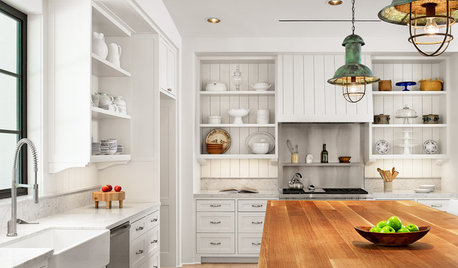
MOST POPULAR3 Top Ingredients of Modern Farmhouse Style
Want this popular look to have staying power in your home? Follow this recipe for a design that endures
Full Story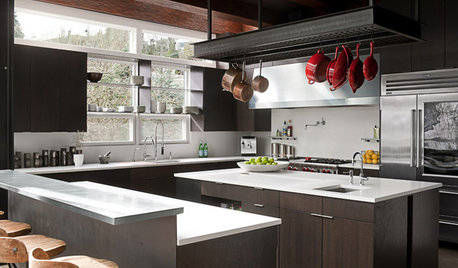
KITCHEN DESIGNPlain-Sight Storage for the Kitchen Stuff You Use Most
Turn essential cookware, tools and even spices into design assets by displaying them out in the open
Full Story
ENTERTAININGTrending Now: 10 Ideas From the Most Popular New Home Bars
Pull up a stool and get inspired by this collection of home bars with sublime style and clever storage
Full Story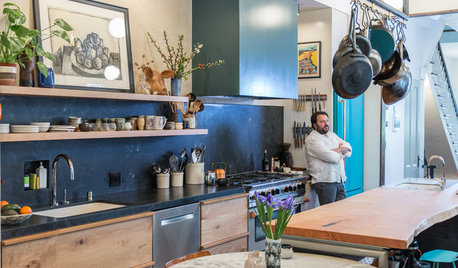
KITCHEN DESIGNRestaurant Chefs Put Function First in Their Home Kitchen
The proprietors of San Francisco Bay Area restaurant State Bird Provisions remodel their kitchen for cooking at home
Full Story
gardengal48 (PNW Z8/9)