

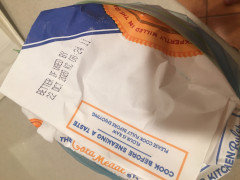
Gold Medal All Purpose Flour recall -- Toss muffins?
7 years ago
Featured Answer
Sort by:Oldest
Comments (16)
 7 years ago
Related Discussions
What brand of all purpose flour?
Comments (10)What all-purpose flour you use should be determined by what you want to make with it and how much protein/gluten you need. Southern All-Purpose Flour (White Lily, Martha White, Gladiola, Red Band) - 9 g. protein - milled from soft wheat varieties - work best for baked goods where you don't want a lot of gluten development, such as pie crusts, biscuits, quick breads, muffins National Brand All-Purpose Flour (Gold Medal, Pillsbury) - 11 g. protein - milled from a blend of hard and soft wheat. A little too much protein for best pie crusts, quick breads, muffins, or pancakes; too little protein to make outstanding yeast breads. As the name indicates - all purposes - but it's not the optimal flour for most things we make with it. Northern All-Purpose flour (Robin Hood, Hecker's) - 11-12 g. protein. Use for yeast breads, cream puffs, puff pastry. King Arthur Unbleached All-Purpose Flour - 13 g. protein. Use for yeast breads, cream puffs, puff pastry, pasta, pizza. We are fortunate enough to have some good flour mills here in Kansas and I would suggest Hudson Cream (milled in Stafford Co., KS) and W-R Flour milled in McPherson, KS, which have excellent flour products (similar to National Brands), if you happen to have those available to you. -Grainlady...See MoreComparing flours
Comments (4)Something caught my eye in the link cloudy christine provided -- about "strong" flour -- which might need a little more explanation. Strong vs weak wheat is an interesting study and information we don't generally get when it comes to a bag of flour. But we may have noticed it if we purchased an inexpensive bag of flour somewhere along the line and it didn't perform as well as good old ___________ (fill in the blank) flour. When I teach bread classes I advise people NOT to purchase off-brands of flour from discount places like the Dollar General Store, Aldi, etc., because it can be an inferior flour product that can lack enough gluten for making good bread - or a weak flour in other words. Professional bakers use the terms strong and weak to indicate a wheat or flour's "baking strength", or whether it's suitable for specific baked goods. Hard and soft wheats are terms primarily of interest to the fine folks who mill the flour and it describes the texture of the endosperm and how it breaks down in milling - but we also attribute these names to the protein/gluten levels. If I forget whether I have soft wheat or hard wheat milled into flour, all I have to do is take a pinch of the flour and rub it between my fingers. Soft wheat is just that, soft, like a fine silky powder, while hard wheat is grittier. Soft wheat kernels are usually plumper and have a larger endosperm - and appear more transparant than hard wheat. The commercial uses for flour from soft wheat is often used for crackers, cookies, cakes, doughnuts, pancakes, waffles, muffins, soft noodles, ice cream cones, flaked breakfast cereals, granola, soup thickeners, gravy thickeners and wheat germ (according to one source). Strong wheats are generally in the hard wheat variety, small and wrinkled in appearance with a small endosperm, and the dominate protein in the gluten group are glutenins - so they are best used for yeast breads. Weak wheats have a deficiency of glutenins - but can also be milled from hard wheat varieties. So it's not just the amount of protein, but the type of protein in the flour. Weak flours can be milled from hard wheat varieties, and this happens around here to the wheat crop when we have too much rain during the growing season. This is why you don't see wheat being irrigated like you do corn. Too much moisture is a bad thing for producing high-gluten, high-protein wheat that makes great bread. To add to the confusion, there is also durum wheat - which has the highest amount of protein of all wheat varieties, but the dominant protein in the gluten group are gliadins - which is what you want for making pasta, and generally what durum wheat is used for. You can find a mix of strong and weak wheat in most fields. If there is an area shaded by trees, or a low-lying area where water tends to pool, the protein in the wheat in those areas will tend to be "weak" (lacking quality gluten levels) due to the growing conditions. FYI - White (bleached and unbleached) bread flour is milled from medium-strength wheats. Too much gluten in flour will make your bread tough and it takes a LOT longer to knead and develop the gluten. That's why adding a lot of vital wheat gluten to recipes isn't a good thing - unless you like rubbery bread. Another interesting point, all wheat used for making flour were soft wheat varieties until the mid- to late-1800's with the advent of hard wheat varieties. Especially Turkey Red Wheat, which became the source of many new varieties of hard wheat we grow today. Turkey Red was hand-picked and carried to Kansas in 1874 by Mennonites from Crimea, Russia. Turkey Red wheat once covered over 90 percent of wheat acreage in the Great Plains - now it's considered an heirloom wheat variety and I've only seen it entered at the Kansas State Fair as an heirloom variety. It's still available, if you know who to ask, but you probably won't like the bitter-tasting flour it produces due to the dark bran color. It has three genes that determine bran color, while most of today's varieties of red wheat only have 1 or 2 genes for bran color. Contrast that to white wheat that is the "albino" of wheat, which has none of the genes that determine bran color. -Grainlady...See MoreBatter bread & muffin problem...And fav recipes!!
Comments (11)Well, I made some corn bread last night. 24 gem muffins and one mini-loaf. Kept mixing to an absolute minimum, there were plenty of lumps (like Mom always told me to leave alone) and the results were very tasty. Like I said before, good flavor and crumb, no tunnels. But still, I got the Sombrero look. Not as much as I have gotten with straight muffin recipes but there. The loaf had more of it than the gem muffins. The flour info is interesting. I knew different flours had different gluten levels (never could make a decent wheat loaf until I heard about adding a wee bit of gluten flour) but as I use the same flour from batch to batch, that in and of itself doesn't explain why this only happens sometimes! A couple of weeks ago, I made a pan of cornbread that looked beautiful...modestly and evenly domed. Sigh. Okay, promised Lemon Bread Recipe: Lemon Bread 1 c oil 2 c sugar 4 eggs 3 c flour 1/2 t baking soda 1/2 t salt 1 c buttermilk 1 c chopped walnuts (see my notes) 2 T grated lemon peel Topping: 1 c sugar 1/2 c lemon juice Cream oil and sugar together; add eggs, slightly beaten. Mix together flour, baking soda and salt. Beat into mixture, alternately with buttermilk, until smooth. Stir in chopped nuts and lemon peel. Spoon into greased 9"x5" pans. Bake for 1 hour in a 350 F preheated oven. Cool Slightly. Remove from pans. Heat topping ingredients until sugar is melted. Place loaves on pieces of foil. Pour topping over bread. Cool, wrap and store in refrigerator or freezer. Makes 2 loaves. The above is the recipe as it appears in, "The Tastes Of California Wine Country Napa/Sonoma, written and compiled by Sonnie Imes. It is a cookbook I've had for years, featuring recipes from various Bed & Breakfasts in that area. The Lemon Bread recipe comes from a place called, "Healdsburg Inn on the Plaza" which, to my knowledge still exists, though whether they still serve this bread is anyone's guess. My Notes: This bread is fine made with your basic lemon. But I far prefer Meyer Lemons for their rich flavor. I do not add walnuts for two reasons,for one thing, I've never cared for nuts in quick breads. They lose any crispness, becoming mere chewy lumps as far as I'm concerned. For the second thing, walnuts give me mini blisters on my tongue. I sometimes do add dried cranberries, plumped slightly in some sort of fruit liqueur. Most often, I just let the lemon flavor stand alone. One can always serve the bread with a fruit puree on the side or a good, home made jam. The recipe calls for you to "pour topping over bread." I have found that direction to be inadequate. Place the loaf in a large baking dish or serving dish, something that has sides to catch the liquid topping and large enough for room to spoon it up as it pools so you can drizzle it back onto the loaf. The loaves should absorb every bit of the topping. Turn the loaves on their sides to soak up pooled topping as well. The top and sides of the loaf should be well inundated. Just before serving, I sprinkle the loaves with lemon flavored powdered sugar. I make this by whirring sugar, more lemon peel (I grate extra when I make the loaves and leave it out to dry a bit while they bake) and a few drops of lemon extract in a spice grinder. Plain powdered sugar would do, of course. This must be done just before serving because the sticky topping will soak into the sugar if given time to do so, leaving it icky looking. This is wonderful served as a "strawberry shortcake" in lieu of the shortcake....See Moresouthern flour?
Comments (8)We all mourn the loss of White Lily flour - the original, made in TN. After the big-bad-corporation took them over, it's just not the same. If you could find Red Band, Martha White or Southern Biscuit Flour from Midstate Mills, these would be what I call southern flour brands. The southern soft spring wheat is used for cakes, muffins, biscuits, quick breads, scones, yeast rolls, etc. Hard winter wheat grown in the nation's bread basket is used for yeast breads that must be kneaded. Or....at least that's the way it was for many years. Perhaps you could use the cake flour and Gold Medal, half and half to see if that will give you the results you want? Teresa...See More 7 years ago
 7 years ago
- 7 years ago
 7 years ago
- 7 years ago
- 7 years ago
- 7 years ago
 7 years ago
- 7 years ago
- 7 years ago
- 7 years ago
- 7 years ago
 7 years ago
- 7 years ago

Related Stories

DECLUTTERINGEscape the Inheritance Trap: What to Do With Sentimental Pieces
Too meaningful to toss but too hideous, precious or unusual to display? These ideas can help
Full Story
KITCHEN DESIGN11 Must-Haves in a Designer’s Dream Kitchen
Custom cabinets, a slab backsplash, drawer dishwashers — what’s on your wish list?
Full Story
MOST POPULAR4 Obstacles to Decluttering — and How to Beat Them
Letting go can be hard, but it puts you more in control of your home's stuff and style. See if any of these notions are holding you back
Full Story
DECLUTTERING10 Decluttering Projects You Can Do in 15 Minutes or Less
Try these ideas to get organized at home one small step at a time
Full Story
KITCHEN DESIGN7 Steps to Pantry Perfection
Learn from one homeowner’s plan to reorganize her pantry for real life
Full Story
KITCHEN DESIGNSoapstone Counters: A Love Story
Love means accepting — maybe even celebrating — imperfections. See if soapstone’s assets and imperfections will work for you
Full Story
DECORATING GUIDES10 Popular Home Design Trends — Timely or Timeless?
Weigh in on whether these of-the-moment decorating elements will have staying power or become a memory of these times
Full Story
MOST POPULARTrend Watch: 13 Kitchen Looks Expected to Be Big in 2015
3 designers share their thoughts on what looks, finishes and design elements will be on trend in the year ahead
Full Story
FUN HOUZZDon’t Be a Stickybeak — and Other Home-Related Lingo From Abroad
Need to hire a contractor or buy a certain piece of furniture in the U.K. or Australia? Keep this guide at hand
Full Story
KITCHEN DESIGNHouzz Call: Tell Us About Your First Kitchen
Great or godforsaken? Ragtag or refined? We want to hear about your younger self’s cooking space
Full Story
sleevendog (5a NY 6aNYC NL CA)