

Nope, once was enough
7 years ago
Featured Answer
Sort by:Oldest
Comments (16)
 7 years ago
 7 years ago
Related Discussions
Passages of Rose Growing, and Knowing when Enough is Enough?
Comments (20)Very good post, and it's interesting to hear what people have to say. What Suzy says is worth the most serious consideration. I'm confused on the subject. First, I've been gardening for over twenty years, and am on my third serious garden (there have been some minor ones in between), which I've been working on for about a decade now. Currently I have about 350 varieties of roses and about 500-600 plants, not to mention hundreds of other shrubs, subshrubs, perennials, and so on. The garden is currently about two acres in size and will increase a bit more before we stop expanding. All this is to explain my situation. My garden is many things to me. It's a plant collection, with emphasis on old and older roses; I'm particularly fond of the once-flowering old roses which are so little grown in Italy, and of the Teas, also little cultivated. It's my aesthetic experiment, my lifetime work of art, my form of creative expression, and I can't put into words how important this is to me. My garden is also a long term experiment in low-impact gardening. I want to see what happens if I grow roses and other plants with just water the first year, mulch, pruning, weeding, cutting the grass, and not much else. The results have been encouraging enough that I keep on going with the same basic practices. In terms of consumption, my conscience is in pretty good shape. The land the garden takes up was grassland, some of it very weedy and poor, marginal areas given over to weeds, and one part, the shade garden, was a mixture of brushy woods and swamp and the site of our predecessors' burn pile and dump. Our fertilizer is the old hay we use as mulch, a local resource which would otherwise be simply thrown away. The water the garden uses, not a lot, is balanced out by the increased fertility of the soil and greater volume of plant material growing on the land, which also inhibits landslides, which are a very real consideration on our property. I've introduced exotic plant species, but also look for and introduce local native plants to the garden. If I haven't made it clear before, this is anything but prime farmland I'm gardening on, and it would be either grass, brush turning to woodland, or weeds--all three locally abundant--if I weren't gardening there. My husband and I plan on expanding the garden, and we're in a hurry, as he's my chief labor force and is currently in his late seventies, and won't be able to dig planting holes and steer the motor scythe forever. We get poorer every year and I don't see how we'll be able to hire anybody to do the work he does now. Everyone has a limit, or so I suppose, and I suspect that mine is somewhere in the neighborhood of 600-800 varieties of roses. But I don't know whether we'll get there before our resources, of money and manpower, give out. I'm wondering if I can't borrow a horse to be a living lawn mower: I'm told they eat only grass. The money isn't that big a deal. Some people buy clothes or go to the movies or eat out; I buy plants, at moderate expense. I also give and receive a lot of plants, and this cooperative aspect of gardening is one of its aspects that matters to me. But I certainly do wonder at times why I'm dedicating my life to a garden that no one ever sees. This is frustrating, and it also offends, quite deeply, my sense of thrift. I will feel my garden has been a failure if it remains unknown and never touches anyone's life, no matter how beautiful I succeed in making it. It's too much for one person alone to enjoy. I'm familiar with the sensation of greed, and it's an uncomfortable feeling. In spite of the ambitious scale of my garden, my desire to keep working on it doesn't feel like greed to me, not quite, and I certainly have thought about the matter. Could I spend my life more usefully? Quite possibly, as the chief practical result of my decade of labor seems to be that two acres of dirt are more fertile than they were before. I could be earning money, perhaps, staving off starvation and power cutoffs in my old age. That would certainly be useful, to me at any rate. As far as the work I might do is concerned, how many people do truly useful work, work that benefits society? Would I be doing something more globally useful if I had a job in advertising, say, instead of going out right now to shear grass and vetch in my rose beds? So many questions, so few answers. Melissa...See MoreZucchini -nope
Comments (6)It's my understanding that they enter the vine from the soil. The tube creates a barrier. Personally, I think the best preventive is remay (that light-weight gardening fabric that lets in UV) covers so the moths don't lay the eggs. It's been a while since I did this research so I may have some stuff mangled in my head - that is possible ;-) . I've simply avoided hollow vined squash. If you grow tromobcino, for example, no SVB's because the vine itself is solid. There's other solid vine squashes too....See MoreNope...we're not done here in TX yet!!! (pics)
Comments (16)Hello everyone and many thanks for the compliments. I'm starting to prepare to pull plants. I've got three plants of Cherokee Purple, 2 Red Brandywine, 1 Yellow Brandywine and one plant of variety 444 that are ready to be pulled up. By the end of the week, I'll probably add Champion, Viva Italia, Jet Star and others to that list. Early Goliath has set 6 more fruit within the past couple of weeks so that will be one variety that should be around for a while. figfarmer, as a rule, tomato plants are done in June where I live. Tomato plants will flower throughout the summer but they will not typically set fruit. The temperature and humidity stays consistently too high for any fruit production to take place. We would have to experiance an extended rainy/cloudy period during the summer for any kind of decent fruit to be produced. gardenmommy, I grow at three different locations but at home, I grow about 100. The numbers above are from 52 plants. Regarding dehybridizing, it all depends on your interest....getting into this area is really all about what your goals are. You need to be prepared to grow out a large number of plants and then select for traits that you observe to be desireable. This can take a few years to end up with a stabilized variety of choice. I'm attempting to dehybridize Big Boy. Regarding Brandywine and other late season varieties, I don't let the difficulty factor stop me from experiancing those varieties. In fact, I've had very good success with Brandywine....some years are great and some years are so-so. It looks like I will only harvest 10 fruit from Brandywine this year but that's okay with me. I've had one weigh just over a pound. It all depends on where you live in Texas. Texas is such a large state that it emcompasses many zones and can climatic conditions can vary widely. Emily, counting tomatoes on a variety such as Sungold can be quite the task (LOL). But really it's not that difficult. I only count when I harvest them and you would be surprised how quickly you can pick a hundred or so. By the way, I harvested 608 Mexico Midget at 9.1 pounds so far. Probably still have another 150 to 200 on this one....See Morenot working, not working, nope
Comments (15)Reiteration of ole joyful's rant re: appliances. Seventy years ago, they had one-horse-covered wagons going down the street carrying bread, milk and ice. Chop a chunk of ice off of the big block, haul it with tongs to install into top compartment of a wooden box looking much like a modern fridge, dumping the water from a pan in the bottom every three or four days. We folks on the farm kept perishables in dishes in a tub of cold water in the basement. Sixty years ago, they started building fridges. Of the fridges built fifty years ago ... many lasted for forty years. The fridges that they build now last for about ten years. I've told this story many times in recent years, and about here, many join in the story, with about a third of the responders saying the same three words, "IF ... YOU'RE ... LUCKY!!)! The engineers can put a man on the moon, but they've forgotten how to build a fridge that'll last for while? Not quite - they call it, "planned obsolescence" ... ... gotta have the stuff wear out, well, ... "die" ... early, so folks'll buy more stuff, to keep the economy going around, to keep workers working. (Read that, "manufacturers making profits"). Electronic .products have an even poorer track record of early die-ability. Lets shame them into making quality products, once more. ole joyful...See More 7 years ago
 7 years ago
- 7 years ago
- 7 years ago
- 7 years ago
- 7 years ago
- 7 years ago
- 7 years ago
- 7 years ago
- 7 years ago
 7 years agolast modified: 7 years ago
- 7 years agolast modified: 7 years ago
- 7 years ago
Related Stories

MOST POPULARBlast Decluttering Roadblocks Once and for All
Change your thinking to get the streamlined, organized home of your dreams
Full Story
MOST POPULARA Fine Mess: How to Have a Clean-Enough Home Over Summer Break
Don't have an 'I'd rather be cleaning' bumper sticker? To keep your home bearably tidy when the kids are around more, try these strategies
Full Story
ORGANIZINGHow Much Stuff Is Enough?
Play the numbers game to streamline your belongings, for a neater home and a less-stressed you
Full Story
HOLIDAYSHow to Have a Just-Simple-Enough Holiday
Make this the year you say no to holiday stress and yes to joy and meaning
Full Story
KITCHEN DESIGNTrending Now: 25 Kitchen Photos Houzzers Can’t Get Enough Of
Use the kitchens that have been added to the most ideabooks in the last few months to inspire your dream project
Full Story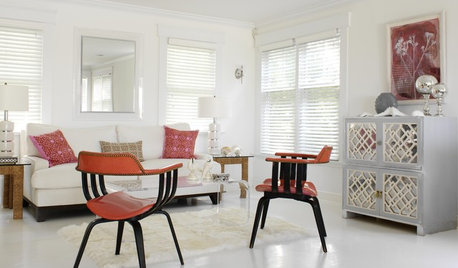
REMODELING GUIDESAre You Gutsy Enough to Paint Your Floor White?
Sleek and glossy or softened by wear, white floors charm
Full Story
COLORGoing Bold With Just Enough Color
Using color with restraint inside and outside can be far more effective than a less subtle approach
Full Story
HOUZZ TOURSMy Houzz: Once a Rebel Capitol, Now a Storied Home
Painstaking work turns an 1809 building with many past lives into a homey, inviting residence for a Louisiana couple
Full Story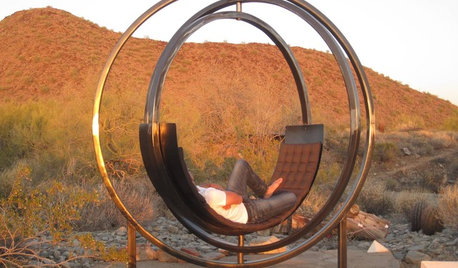
GARDENING AND LANDSCAPINGIs It a Gyroscope or Sculpture? Nope, It’s a Chair
With an inner ring that rotates 360 degrees, this student-designed seat is positioned to turn some heads
Full Story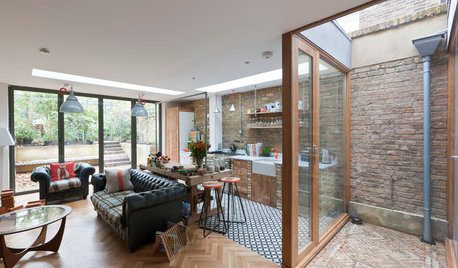
ECLECTIC HOMESHouzz Tour: Light Streams Into a Once-Dark London Flat
This ground-floor apartment’s layout was reconfigured in an innovative and airy transformation
Full Story
seniorgal