

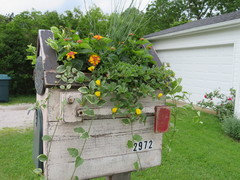
Mailbox cover for 2019
7 years ago
Featured Answer
Sort by:Oldest
Comments (20)
 7 years ago
Related Discussions
HAVE: Magnetic Garden Mailbox covers, Gardening Made Easy
Comments (1)Hi Flowrgir11 I just emailed you, please let me know if you received it or not. I have troubles sometime with my emailings. Thanks, Pixie...See MoreSan Antonio Spring 2019 Plant Swap, April 13
Comments (106)Ok plant swap nutters, FYI, mike asked the ICSA (Islamic center of San Antonio) On Fairhaven/Datapoint of wurzbach if any future plant swaps could be held there. They gave permission to use the picnic area tables and benches that are under some trees but no pavilion incase of rain storm however people can use the school cafeteria for the swap if the weather is bad. There is also bathroom facilities in the cafeteria. The cafeteria is a singular mobile home type building which is next to the picnic area with ample parking spots. There is no fee and usually there is no school activities going on Saturday between 9am and 12noon. We just have to make sure the place is left clean after the swap. Mike will take some pictures of the place and we will post it here if people decide to take the offer....See MoreOctober 2019, Week 2
Comments (54)Jacob, Welcome to OK. Hope your brief stay is/was enjoyable. October weather is usually almost perfect---this year it stayed too hot in early Oct and then went straight to last night's freezing and near-freezing temperatures, so I guess we had our 3 or 4 days of autumn, then a winter-like day/night, and now hopefully we'll have a few more weeks of autumn before it gets cold and frosty again. I'm not even a little bit jealous of all you guys who grow your own rocks and watch them multiply every year. We're in the creek hollow beneath the nearest rocky ridge, and it is much easier to garden down here in our low-lying area than to try to garden on higher ground with rocks everywhere. Larry, I'm not surprised you had a frost. We dropped to 27 degrees and had a hard, heavy frost, so my plants experienced the sort of temperatures that lead to a killing freeze if they lost long enough, and also frost damage. It is unusual to get that cold this far south in zone 7b in October, but that's what happened. I am not too upset by it---the ground was really warm from the previous hot days and that may have helped save some of my plants. Most of the plants in the garden have severely freeze-damaged and freeze-killed foliage and flowers, but some plants, including lantana show only the most minor damage. The roselles and tomato plants have the most damage---the pepper plants and pineapple sage are barely damaged at all. Oddly, one of the most tropical plants I have in the ground, the candletrees (Senna alata, formerly Cassia alata) are among the least damaged. I'll wait and see how things look tomorrow though, because sometimes the plants don't seem too badly damaged for the first few hours after sunrise, but then as time goes on throughout the day, more and more damage becomes obvious. At this point I'd say at least half the garden plants have major freeze and frost damage, but mostly I'm just surprised it isn't 100% of them. We were already down to 33 degrees at midnight, so the garden spent a great deal of time at and below freezing. I think we hit 32 around 2 a.m. here and stayed at or below freezing for slightly over 6.5 hours. The amusing thing that made me laugh? The Johnson Grass in the bar ditch has worse freeze damage than my candletrees and roselles. Jennifer, Most of my basil looks fine this morning, but only because it was planted beneath the roselle plants and they shielded it from the cold. I had lots of shorter plants planted underneath and between the roselle plants, and all of them look pretty good today since the monster roselle plants pretty much buried them underneath all the roselle foliage. In this case, it worked out well for the plants since it protected them. If all your hatched chicks are pullets, that is simply amazing. Good for you---more eggs to feed and not so many rooster fights as young cockerels try to assert themselves and prove their superiority. Nancy, How odd is it that y'all stayed a dozen degrees warmer than we did? I expected the upper 20s here though, as we're in a low-lying creek hollow in the already low-lying Red River Valley, which is the perfect setup for early freezes and early frosts. It is sad that the cold microclimate doesn't help us at all in summer, but that's because there is no cold air in the summer. I need to get busy processing roselles. They are piled up in buckets and bowls everywhere just like tomatoes normally are in summer. By the time I get all the roselles processed and preserved in one way or another, I'm going to be sick of looking at them and handling them. Dawn...See MoreNovember 2019, Week 1
Comments (42)Larry, I just hate that it is so expensive to heat a greenhouse. We had neighbors right next door to us who had a small greenhouse when I was a kid, so at least I knew the perils and pitfalls of greenhouse gardening. When we built ours, I swore I would not spend money to heat it, and I haven't, but that does mean I use it less in winter than I thought I would....and, I don't care. I'm going to make the right financial decision for us even if it isn't the fun garden decision. I still can do a lot with a greenhouse heated with natural sunlight and a large mass of water in containers. With the sort of cold we're expecting in the next couple of days, there is little one can do anyway, except try to protect edible cool-season crops with frost blanket weight row covers and such. It is just so early for all of this. Most years we don't even have our first freeze down here until well into November, often right around Thanksgiving, and it was so very early this year, around October 11 or 12 at our place. I just hope this doesn't mean we are in for a wickedly cold winter although I am afraid that's exactly what it means. I am glad your winter peas are sprouting. I expect the wildflowers will be fine. Sometimes mine sprout in fall, sometimes in spring, and we tend to get a great show of flowers either way, it is more a matter of how early or late the show is. After all, the existing wildflowers drop seeds that survive all the weather and sprout on their own with no help from us anyway. The only thing that's ever really hurt our wildflowers are the drought years, like 2011, 2008, 2005 and 2003 when the flowers burned up in the drought/heat before they could set seed. It hurt (obviously) the annual reseeding wildflowers a lot more than the perennial ones. The years I overseed the pastures with wildflowers seeds are meant to make up for years like that when the wildflower population struggles in the heat, or just because I notice that a particular area needs more wildflowers than it has had in recent years. Our native prairie grasses seem to be more aggressive growers and would force out most of the flowers if they could, so I continually counter that by sowing more wildflower seed. Jennifer, I've learned so much from Jackson Galaxy's show and it has helped me understand that for every problem cat, there's a root cause behind the problem. I think it is up to all of us (since we can't have him on speed-dial) to study our pet's situation and try to figure out what is causing the behavior they exhibit. So often it seems to be because of territorial insecurity, but then you know, every now and then there's a cat that has an underlying medical condition causing pain, so they last out at people or other animals because of their pain, or maybe PTSD because of some trauma they experienced that the pet guardian might not be aware of. I can see where it would be very hard for average pet guardians like us to figure out those tough cases. It has shocked me that there have been a few cases where they've had to put a cat on tranquilizers or some sort of prescription meds because of a mental/psychological/physiological condition they have, but why does it shock me? We have people on all kinds of medications because of brain chemistry issues. Why not cats? I hope y'all can figure out what is causing Diana to be so mean. Usually when a mother cat eats her kitten it is because something is wrong with the kitten and she is trying to protect the rest of the litter from the illness by removing it from the scene. It is hard to think about, isn't it, but it comes from an instinct to protect the group, not from meanness. I suspect Diana has a territorial insecurity issue with the dogs---she doesn't feel safe, perhaps? My solution would be to give her a place to retreat to where she's out of their reach? I'd probably buy her a tall cat tree, and maybe put up some of those elaborate cat shelves on the walls where a cat can climb for safety. (They sell them at places like Chewy's.com but a person could make their own pretty easily.) I love the one I'm going to link, but the price tag is scary. I think it wouldn't be that hard to DIY something similar though. Elaborate Cat Shelf System Our cats have no dog issues. Our dogs may bark at the cats, or may think about chasing them, but one little swipe of the cat claws across a dog's nose reminds the dog or dogs who's the boss and that is that. Sometimes, though, a cat is too afraid of the dogs to swat them with his/her claws so then the dogs think they have the upper hand. Jesse is petrified of cats because he's been clawed a couple of times but, being a puppy, he persists in trying to engage the cats in 'play'. One of these days he will learn that such engagement always ends badly for him and he'll leave the cats alone all the time, not just most of the time. This is my year off from veggie gardening so I can focus, focus, focus on the landscape renovation, even though y'all know I have to have a few peppers and tomatoes in pots or I'd lose my mind. I'm not going to raise them from seed though. I'm just going to grab a handful of plants when they arrive in the stores in March---I expect to be about ready to harvest the first fruit by the time the Spring Fling arrives, and that is why I rarely bring home tomato or pepper plants from the SF---it is too late for my location as the plants need to already by growing, blooming and producing in order to beat our wicked heat. I'm worried we are getting spoiled by the wet springs---we have been wet and mostly cool in spring since 2015 and that long run of abnormally wet, cool spring weather that persists into May or June cannot last forever. It is easy to forget that prior to 2015, we had wicked drought in 2011 through 2014 that made getting a good tomato harvest hard because it got so hot so early. Amy, The mother cat is an irresponsible, fat, lazy white thing who lives about 1/4 to 1/3 mile away from us, I believe, based on her direction of travel when she leaves our place to travel across the fields. She is showing up here every evening and every morning wanting to be fed when I feed the three big kittens (not her kittens, which are in the house) out at the garage. Yesterday she brought 3 friends with her. I fed the big kittens their canned food inside the garage and closed the door to keep the adult visitors outside, and gave them dry food. They ate it, but they weren't impressed, and they didn't act especially hungry. I think they'll stop showing up here if they cannot access the kittens' canned food. None of these are skinny or act particularly feral---I just think they probably have dry food at their homes and discovered that the kittens get canned food here at night, in particular, to lure them into the garage so they can be inside of there all night for their own safety. Because she is so large (i.e. fat) and clearly well-fed, and also because she seems to have a home, I don't understand why she had her kittens in our garage and later abandoned them twice. Perhaps she has poor mothering instincts. I do think her family (whom we do not know) have dogs, so maybe she didn't feel safe having kittens on that property---it has two homes, two families, and multiple dogs. I agree with you, Amy, about no more falling! Oh, and our skin does get thinner as we age, and I sure can tell it with my own. I'm perpetually scratched or bruised from the cats and dogs. They don't mean to hurt us, as you know, but they sure manage to do it. Nancy, You're so lucky you didn't break a bone. We go on lots of broken bone calls here....people getting thrown off horses, getting pinned to a fence or wall by a cow, falling off porches or decks or ladders or tractors or whatever. It is scary how often their overall health, especially if they are older folks, declines after a fall. Having said that, one of our neighbors got thrown off a horse on leased cattle land a few years back, and had to be brought up out of the river bottom area in the back of a pickup truck, lying in the bed on a rough ride across pastures, with a broken hip or pelvis or both.....he was 89 and his motivation to do all the proper healing and physical therapy was so he could get back on his horse and ride again. I don't know. I might have taken that injury as a sign that I should give up horseback riding myself. There is NO book on this earth that would compel me to plant hackberry trees for any reason. LOL. Our next door neighbor had them in Fort Worth, did not control them, let them reseed everywhere, and those trees grew up in our fenceline and destroyed our fence. I hate them. Oh, we have them (and sugarberries too) here in our woodland and they are aggressive and re-seed everywhere, but I'd never ever under any condition plant one on purpose because of the way they spread aggressively. Of course they feed wildlife---so does poison ivy, but I don't plant it either. If Tim and I had nothing to do with our time and energy except cut down trees, we'd cut down all the hackberries and sugarberries, and just doing that on our few acres would take the rest of our natural lives, so we'll never be rid of them but maybe we can keep them from spreading more. The ones growing on the southern edge of our woodland are moving towards my garden, year after year, creeping ever closer and that's going to cost them their lives after Tim retires one of these days. Native plants are great and we have acres of them, but one reason they survive, thrive and do so well in the first place is that often they are aggressive spreaders and growers and can take over an area. My goal as a nature-loving gardener is to have many native plants, but not too many of the super-aggressive ones that take over every square foot of space. There has to be balance. We are lucky because we never bulldozed and clear cut our property, so we don't have to restore native plants to it. There's also plenty of non-natives we perpetually work to eradicate because of their extreme aggressiveness. We also work to control natives that are aggressive spreaders. All these years of watching how the plant community members interact with each other has given me the opportunity to observe how the plants, both native and non-native, have advanced and spread ever since we bought this land way back in 1997. What have I learned? Too much to write here, but one of the big lessons is that most plants are relentless in their desire to spread and grow, and if we don't control them, the aggressive spreaders will crowd out many equally desirable (or more desirable) plants. Knowing in your mind that, logically of course, this sort of thing happens, but seeing it first-hand can be a rather shocking experience. When we first moved here, my attitude was that I would not cut down a tree for any reason because we need all the trees. Ha! I sure learned, and very quickly, how wrong I was about that. We have to cut down trees and hack back the jungle or they'd crowd us, our gardens, our house and outbuildings, and our animals right off the property. It is easy to think you'll just sit back and let the plants slug it out among themselves, but that doesn't really work either because a few aggressive species will spread so much that they hurt your property's overall biodiversity. If I never see another hackberry, sugarberry, eastern red cedar or honey locust tree on our property ever again, it will be too soon. They are here, and we'll never get rid of them, but part of our landscape reno is to cut out and remove a honey locust tree we left near the dog yard for shade, and now it and its suckers are overtaking the entire dog yard fence and need to be removed, and their suckers and stumps need to be killed with a stump/brush killer or we'll be fighting them the rest of our lives, and we don't need their thorns near the dog yard. Our native persimmons also sucker and spread as groves, and I've tried to leave them alone, but they are moving into the back garden, so they're going to be removed this winter too. Dawn...See More 7 years agolast modified: 7 years ago
- 7 years ago
- 7 years ago
- 7 years ago
- 7 years ago
- 7 years agolast modified: 7 years ago
 7 years ago
- 7 years ago
- 7 years ago


Related Stories
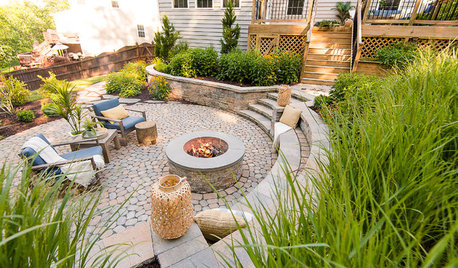
TRENDING NOWThe 10 Most Popular Patios of 2019
Breezy lounges, covered dining spots and luxurious outdoor kitchens had Houzz users saving these outdoor retreats
Full Story
TILE5 Trends for Tile in 2019
See what’s on the horizon for tile colors, patterns and shapes, as seen recently at The International Surface Event
Full Story
EVENTS6 Nature-Inspired Trends at the Fall 2019 High Point Market
Grasses and spices influenced color palettes, while organic materials added texture to designs at the furniture show
Full Story
TRENDING NOWThe Top 10 Bedrooms of 2019
A floor-to-ceiling headboard and a swinging bench are among the highlights of this year’s most-saved bedroom photos
Full Story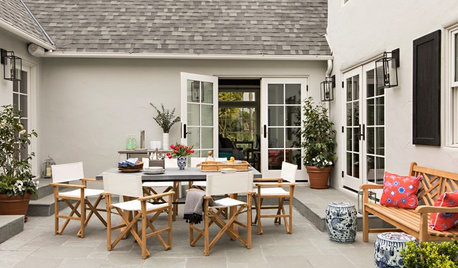
TRENDING NOWStep Outside to the 10 Most Popular Patios of 2019 So Far
Let the most-saved patio photos of the year inspire you to extend your living space to the great outdoors
Full Story
DESIGNER SHOWCASESVersailles Comes to the 2019 San Francisco Decorator Showcase
For the monthlong event, designers mix trendy and classic looks in a 1904 house modeled after Le Petit Trianon
Full Story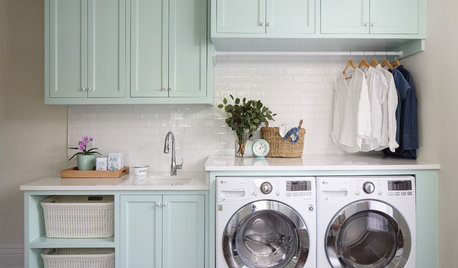
TRENDING NOWThe Top 10 Laundry Rooms of 2019
Green-blue cabinets, cement floor tiles and open shelving are among the most popular features of laundry rooms this year
Full Story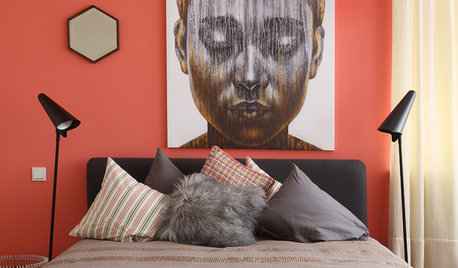
COLORS OF THE YEARDesigners Around the World React to Pantone’s 2019 Color Choice
International design pros offer tips on how to use Living Coral, Pantone’s Color of the Year 2019, in home decor
Full Story
TRENDING NOWThe 10 Most Popular Sunrooms of 2019
Coastal palettes, wood-clad walls and views of nature have Houzz users saving these sun-filled spaces
Full Story
TRENDING NOWThe 10 Most Popular Powder Rooms So Far in 2019
Bursting with color, pattern and style, these powder rooms may inspire your next half-bath renovation
Full Story

gyr_falcon