

The Houston fire
7 years ago
Featured Answer
Sort by:Oldest
Comments (56)
Related Discussions
Ants overwhelming Houston
Comments (3)great, yet another invasive species. just what we need. then again.. we humans are by far the worst invasive species.... if it wasn't for us the darn things wouldn't have been brought here in the first place!...See MoreSouth Houston Blueberry Update
Comments (30)Here's some info on another great blackberry for LOW chill areas.....May not be available in the USA...not sure....Really would love to try growing these.... http://www.freshplaza.com/news_detail.asp?id=92918#SlideFrame_1 Six years of research and development have paid off for pioneering produce marketer Pure Fresh with the first harvest and successful retailing of a new, improved blackberry variety, Stella. Stella, a medium-sized berry slightly bigger than the popular and flavourful Tupy, has a higher sugar content and longer shelf life than other varieties. The exciting new Pure Fresh blackberry also has a more cylindrical shape for a better, more durable fit in clamshell packaging, a significant benefit for retailers and consumers of the delicate fruit. The elongated shape of the Pure Fresh Stella allows for better arrangement in the clamshell, minimizing pressure on the high-water content blackberries and preventing bursting and leaking during transit, said Roberto Castaneda Sr., the founder of Pure Fresh and its parent company, Guatemala and Mexico based grower Planesa. We are very happy, announced Castaneda. We call the blackberry Stella because it is now the star of the Pure Fresh berry program. Stella means star in Italian. We see a lot of future in it. It is a new and modern variety,Castaneda said. Pure Fresh is the exclusive importer and marketer of the Stella under the Pure Fresh brand, and Planesa is the exclusive producer of the Stella in Guatemala and Central America. The Quest for a Better-Shaped Blackberry with Improved Flavor Planesa has been working on improving blackberry varieties since 1998 with Dr. John R. Clark at the University of Arkansas, which has one of the world's most successful blackberry variety programs, said Castaneda. Clark and Planesa introduced the commercially popular Kiowa variety to Guatemala and the high-yielding Kiowa today accounts for 90 percent of the blackberry volume out of Guatemala, one of the few countries in the world where the Kiowa has been produced successfully, said Castaneda. The Kiowa replaced the Brazos variety which was not as superior to the Kiowa. Building on Castaneda's philosophy that new and better varieties are the key to staying ahead in the produce business, Planesa sought a blackberry even better than the Kiowa. The innovating company had seen excellent results with the Brazilian Tupy blackberry on its farms in the Mexican state of Michoacan. The international grower began growing Tupy in Guatemala and it has shown some success but yields are lower than those in Mexico. So the search began to find a new berry that would have better yields in the sub-tropical Guatemala climate. Planesa and the University of Arkansas set up a testing agreement to evaluate several unreleased selections for possible adaptation to Guatemala, said Dr. Clark. This selection was tested by Planesa in Guatemala and found to perform well in the low-chill environment in Guatemala. It is a thornless plant, and produces large, long berries of good quality. Postharvest evaluations have indicated superior postharvest capability compared to Kiowa, a key attribute for shipping a fresh-market blackberry. .......... Here is a link that might be useful: News article on Stella Blackberry...See MoreMolasses: Sweet and Super by Malcolm Beck
Comments (10)Here's another little tid-bit regarding this same article. This is from my favorite soil scientist. Those that know her will recognizer her writing style. She's got a unique way of putting things (yes, there may be a little crush going on here): The way I look at molasses is that it is a great bacterial food resource. Add molasses to anything, at the right concentration, and bacteria bloom! Quite a bit of what Malclom Beck talks about in the post linked below (that Louis sent in, thank you for that!) is the necessity of having the right sets of microbes in the compost or soil in order to get the benefit you want from growing a whole bunch of bacteria. Malcolm makes sure that there is a good inoculum or addition, of Nitrogen-fixing bacteria present. Most of the time, by managing the composting right, those bacteria are present in the compost. Where did those bacteria come from? They were on the organic matter originally put into the pile. But you can hedge your bets and add the particular sets of microbes to make sure you have them. The bacterial species to get are: 1. Any FREE-LIVING Nitrogen-fixing bacteria, such as Azotobacter, Azospirillum, Frankia, Azomonas 2. "Bad-guy" fungi suppressors, such as Bacillus subtilis, Bacillus megaterium, B. flourescens, 3. If concerned about pesticide residues in your soil or compost, then buy a mix also containing Pseudomonas laterosporalis, P. licheniformis, or other some fungal species know to do a good job breaking down pesticides. Sorry, can't remember the names of the fungi. When you buy an inoculum, check to make sure it actually has the bacteria in it you want. If you learn to use a microscope, or have a local friend who can use one, you can check easily to make sure there area at least bacteria in the mix. Bacillus species are distinctive, so you can check for them just by appearance - big fat rod shapes.....some short, some longer, some really long, single, or chained. ---------------------------- Folks have spoken a bit about EM on this list serve, and if you have severely compacted soils, areas of your lawn that puddle and do not drain properly, then making a little bit of your compost with an EM addition might be a good idea. EM is a particular mix of a number of bacterial species. Sorry, no fungi in this mix that survive in soil (or, let's hope they don't survive in your soil, the yeasts that are normally in EM aren't beneficial in soil). EM is prepared in a way that means the species you buy will be low-oxygen environment organisms. They work in compacted or low-oxygen environments WITHOUT making alcohol (which is the danger when your compost goes anaerobic). These species don't volatilize ammonia, rotten egg smells, or make phosphine gas. So, you don't lose your important nutrients if the compost or soil goes anaerobic and these guys win out against the more "rotten" bacterial species. So, if you have soil, or compost that is stinky or smelly, or have areas of puddling in your lawn, make a compost where you have added these organisms, can put a light dusting of this compost on that area and water it in. Or make a tea from that compost, and drench the area. But REMEMBER, in two weeks to come back with an inoculum of AEROBIC organisms, such as a compost with no addition of EM, or a compost tea made from a normal aerobic compost. The species that should be in EM are: 1. Lactobacillus Long slender rods, may be single, two in a chain, or multiple in chains. But always slender rods (to differentiate from Bacillus species) 2. Pseudomonas species - but mostly the low-oxygen environment ones. They do have ability to chew up pesticides, so possible a good place to get a good mix of these species. 3. Actinobacteria - a herd of species. These bacteria grow in filaments, so they look like very slender threads. They look alot like fungi, but are too thin to be real fungal strands. So, when you see "pencil-lines" in your microscope, those are actinobacteria. In all my experience, having high amounts of actinobacteria in a productive pasture or row crop / broadacre soil is an indicator of bad things. These bacteria do not help the crop species most of us grow. They do help brassica though, and riparian and wetland plants. So........ are these good bacteria? Depends on what you want to grow. 4. Non-sulfur, purple photosynthetic cyanobacteria. Very distinctive purple to violet color in the cells of this organism. Doesn't typically survive transportation in the mail, doesn't survive in bottles stored in the dark. It is a photosynthetic organism after all, and despite the fact some EM salesmen say it doesn't need sunlight to survive, all the data we have from looking at the product shows no survival of this organism once the product gets to us through the mail. 5. Yeasts...... these are fungi that grow in low oxygen conditions. They look like big round to oblong balloons that some times grow in clumps, and look rather like little cactus clumps. Not good to be seeing alot of these in soil. Definite indicators of compaction and lack of oxygen. Yeasts aren't good at building structure or helping make things better in soil, at least that I have ever seen. An EM without lots of yeasts would be better than one that has lots. Hope this helps clarify why molasses can do good things in soil. Okay, it's me again. I wanted to point out that when she talks about adding compost to your soil, she doesn't mean the usually recomended rate of 1/3" or a cubic yard per 1000 sq.ft. She means a light dusting of the best compost you can make. What's more is that when you have a soil chemistry test performed, and that test makes recomendations based on Ca:Mg ratios and available NPK, you can achieve the same results using 1/600th the recomended rate by applying those elements to GOOD compost and using that to amend your soil. The reason being that the nutrients are held in suspension by the microbes in the compost. Someone start a new thread if you want to discuss this more. Are you guys keeping up with me here? Info overload or what? Heh, heh...keep it comin'. If you guys like these types of discussions and want to dig a little deeper email me and we can talk. We're havin' fun now! Greenjeans...See Morewhen to plant pumpkins and winter squash in Houston
Comments (7)Here's what the Natural Gardener in Austin has to say: "Note to veggie gardeners: this holiday is your yearly reminder to plant pumpkin seeds in order harvest for Halloween and Thanksgiving. Also, itÂs getting close to fall tomato time; aim for getting your plants in the ground the second to third week of this month." Go to their website and sign up for weekly newsletters. I love getting them!...See More- 7 years ago
- 7 years ago
- 7 years ago
- 7 years ago
 7 years ago
 7 years agolast modified: 7 years ago
 7 years ago
- 7 years agolast modified: 7 years ago
- 7 years agolast modified: 7 years ago
- 7 years ago
- 7 years agolast modified: 7 years ago
 7 years ago
- 7 years agolast modified: 7 years ago






Related Stories
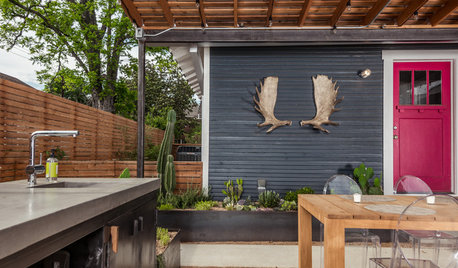
PATIOSPatio Details: See What Makes Up This Outdoor Room in Houston
Want to get the look of this patio and outdoor kitchen? Here's the lowdown on design, materials and costs
Full Story
HOUZZ TOURSHouzz Tour: From Shocker to Stunner in Houston
Once moldy and decrepit, this 1920s bungalow is now a neighborhood gem
Full Story
PATIOSSee How 20 Patios Celebrate the Fire Pit
Just steps from the house, these outdoor fire features offer warmth and backyard style
Full Story
HOUZZ TVRetired Houston Couple Replaces Starter Home With Forever Home
See how the Elders built their dream home while preserving the memory of the home they lived in for nearly 4 decades
Full Story
HOUZZ TOURSHouzz Tour: Fire-Tower-Inspired House of Glass, Wood and Steel
A new vacation home in Texas rises up to take in the lake views — and to work with a challenging hillside site
Full Story
DISASTER PREP & RECOVERYHouston Renovation Spending Up 60 Percent After Hurricane Harvey
California cities top the list for priciest places to renovate a home, according to the 2018 Houzz & Home Report
Full Story
LIFEStay Strong: A Love Letter to Houston
Readers offer words of support and encouragement to a city that’s cleaning up after Hurricane Harvey
Full Story
PATIOSA Modern Backyard Trumps the Texas Heat
New shaded areas offer a respite in an outdoor Houston living room, while a fire pit re-creates fond memories
Full Story
TRENDING NOWThe 10 Most Popular Patio Photos on Houzz Right Now
Pergolas, fire pits, landscape lighting and durable yet beautiful outdoor furniture fill these recent most-saved photos
Full Story
LIFE‘I Saw a Glowing Orange Flame Racing Down the Hill to My House’
With more wildfires raging in California, a Sonoma County artist comes to terms with escaping the October fires intact
Full Story
User