

A bunch of baby beets, baby carrots, asparagus in recipe
8 years ago
Featured Answer
Sort by:Oldest
Comments (12)
 8 years ago
- 8 years ago
Related Discussions
How do I save beet and carrot seeds?
Comments (8)You're sure welcome, Cabrita. "The book you mention sounds like a good addition to my library. ... I think I need to learn a bit more about plant sex ;-)" Heh-heh! Seed to Seed explains a whole lot of "the birds and the bees" when it comes to vegetables. ;) It's an excellent book on isolation techniques for saving pure seed. It'll explain in great detail caging, bagging, hand pollinating and all sorts of other things involved in saving pure seed. The best part is it tells you which techniques to use on which plants. EXCELLENT resource for that imho. And it's less than 17 bucks on Amazon. I just put in an order for another one as a friend came over today and I gave her mine. *blush* But that gave me an excuse to buy Great Garden Companions by Sally Cunningham, a book on companion planting that I've been wanting for a while. Gotta' spend $25 to get that free shipping you know. *snicker* "I am confused about caging, how will the bees get in there? then you say hand pollinating. I don't know how to do that. I heard (read) this on the tomato forum too." The bees won't get in there. That's the entire purpose of caging. If you don't cage the ones you want to keep pure, a few bees will visit some Queen Anne's Lace nearby (really, I'd bet money you have it growing near you), pick up some QAL pollen on their legs/hair, land on your carrot blooms on the way back to the hive and deposit some of that QAL pollen on them. Now your carrots are cross pollinated with the QAL. Bummer. And you very well may not be able to tell ~ just avoiding saving seeds from white-rooted carrots won't be enough of a guarantee that they didn't cross since sometimes a cross will look just like one or the other parent, but won't taste or grow like them. Just like humans ~ some people look a whole helluva lot like Mom, but they're not her twin. To keep that from happening, you build cages with some sort of screening on them that will allow air, sun and rain through but not bees. Window screen works nicely on a wood frame, as does light floating row cover on hoops tall enough to keep the cover off the carrot blooms. You cover your carrots with them, a bunch of plants at a time. Here are some pictures of what I'm talking about: Pic 1 Pic 2 ~ second picture on that page And here's a thread with a good picture and lots of info on how to build them. Since there are no bees, you'll have to take their place and hand pollinate. It's as simple as moving pollen from one flower onto another. (Be sure to only do this between plants that are showing the trait you want ~ heat tolerance in this case.) This can be done with a small paintbrush ~ just touch the pollen parts, loading it up with pollen, then touch a bunch of blooms and the pollen will get desposited. Do this all over all the blooms and you're done. Another way is to pick one bloom and use it as the paintbrush, brushing the other blooms with it ~ pick a few different blooms and brush each one on all the other blooms to ensure a good genetic mixup. But if you pick those blooms, that'd be that much less seed you'll get since of course the blooms you've picked and used as your paintbrushes won't go on to set seed. Don't think that you can just avoid that by picking the blooms of the plants that aren't showing heat tolerance and use those ~ you need to use blooms from plants showing the trait you want since their genetic traits are going to be crossed into the other blooms and their resulting seed ~ the blooms you pick are going to be Daddy to your next generation of seed. But in the coming generations when you have hundreds of plants growing out, you may find it so much easier to do it that way that it's well worth sacrificing those blooms. The Seed to Seed book will explain all this in better detail and more accurately than I can. It's really a great book. I highly recommend it to anyone and everyone who wants to save true vegetable seed. I've given away two of them so far and doubt that my third one will stay with me for very long before it gets passed on as well. ;) It's really that good of a book. There's also a book on breeding new vegetable varieties that was recommended to me, but I haven't bought it yet (one of these days...). I can't remember exactly what it's called ~ something like "Breeding Your Own Vegetable Varieties" or something....See MorePickling Asparagus, Carrots, Broccoli etc. - same BWB time?
Comments (9)Robin, here is a pickled carrot recipe that isn't too sweet. I don't like sweet pickles, but this recipe has just enough to offset the vinegar, I think. It calls for baby carrots, so you could use carrot sticks no thicker than baby carrots. Coin slices should be ok too, as long as they're not too thick. By the way, I find the pickled peppers unappetizing to eat in such small mushy pieces, so I might leave them out next time...I didn't notice them in the flavor. Pickled Baby Carrots with Oregano and Peppers from Small Batch Preserving 3 T finely chopped oregano or 1 T dried 2 T each chopped sweet red and green pepper 1/4 t hot pepper flakes 2 small cloves garlic 1 lb peeled baby carrots 1 1/2 c white vinegar 1/2 c granulated sugar 1/3 c water 1 t pickling salt 1. Combine oregano, peppers, and hot pepper flakes. Remove hot jars from canner and divide pepper mixture between them. Add 1 clove garlic to each jar and fill each with half the carrots leaving 1/2 inch head space. (There may be a few carrots left over.) 2. Meanwhile, combine vinegar, sugar, water, and salt in a small saucepan and bring to a boil. 3. Pour hot liquid over carrots to within 1/2 inch of rim (head space). Process 15 minutes for pint jars. Makes 2 pint jars. If you want, you could choose to process all your jars for the longest time (e.g., if asparagus = 10, carrots = 15, broccoli = 20, you would process all for 20). That would make things unnecessarily mushy...I would just do separate boilings. If you can do them all pretty quickly in a row, you wouldn't be using too much extra fuel to boil the water since it's not cooling down in between. One other thing, note the brine here is more than half vinegar, which means you can't assume a 1:1 water:vinegar mixture is a safe brine for carrots. I would try to find specific vegetable recipes to check the ratio of water to vinegar for each, then you can always use the same spices to get a similar taste to the pickled asparagus. Good luck! Melissa...See Morecarrots & beets in Oklahoma
Comments (23)I don't seem to have much luck with root crops. I get great looking tops, but the carrots and beets just never seem to grow. One day we were eating out and the youngest of my grown sons said, "Mom, did you see that they had beets?" I said, "Yes, but I usually like them best if they are pickled, and I don't think those were." He took one bite, and said, "Well, I guess I only like them pickled also." Hey, when you the cook, you can serve them anyway you want, right? I guess that was all I had ever put on the table. LOL Now, for the easy way out...........When you want pickled beets and you didn't can any, just buy two cans of sliced beets and drain the liquid. Now mix one cup vinegar with one cup sugar in a quart jar and shake or stir until sugar disolves. Add the drained beets to the vinegar mixture. Put in the refregerator and wait 24 hours. You can add other spices if you like, but they aren't necessary. They will keep a long time in the refrigerator and you can save the juice and use it one more time. It's one of those things that I usually make ahead when I am going to have a relish dish (like holiday meals) because it adds color and is an easy "make-ahead"....See MoreMaking your own baby food, my experience
Comments (29)The funny thing that got me ready for motherhood the most was that while I was pregnant with Rhiannon and couldn't get a teaching job, I worked in a nursing home. I did just about anything, and towards the end I did mostly baths. After changing all the adult undergarments a babies diaper was nothing. Also learned lots of tricks about putting on clothes on those who aren't cooperative. But the biggest thing was that we had residents that couldn't eat solids so every meal that they served, they would put in a blender. It could be a ham sandwich, pizza, roast, apple pie, broccolli, anything that the regular meals consisted of was purreed for the residents who needed help eating or didn't have teeth or other problems. I learned so much about respecting the elderly and have such an appreciation for them now because of my experiences. Stacie...See More- 8 years ago
 8 years agolast modified: 8 years ago
- 8 years ago
 8 years ago
- 8 years ago
- 8 years ago
- 8 years ago
- 8 years ago
- 8 years ago
Related Stories
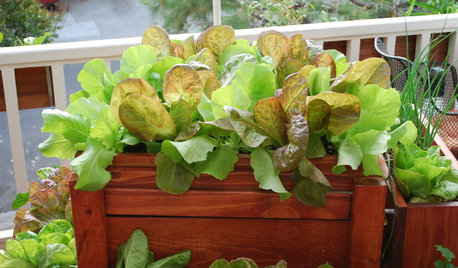
FARM YOUR YARDCheck Out These Recipes for Delicious Themed Edible Gardens
It’s garden-planning time! What you grow often inspires meals, but in these cases the reverse is true
Full Story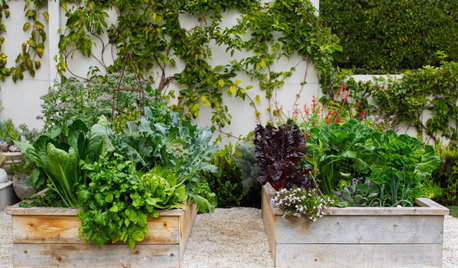
MOST POPULARHow to Start a Cool-Season Vegetable Garden
Late summer and late winter are good times to plan and plant cool-season crops like salad greens, spinach, beets, carrots and peas
Full Story
KITCHEN DESIGNHouzz Call: What’s Cooking in Your Kitchen?
Most of us turn to recipes, videos and culinary shows when we cook. Where do you set your cookbook, tablet or TV screen?
Full Story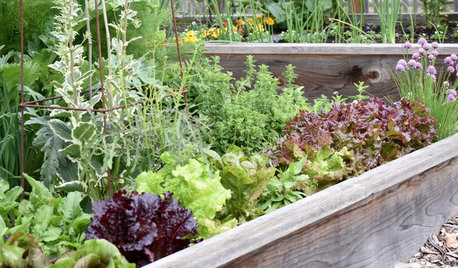
GARDENING GUIDESSeeds or Seedlings? How to Get Your Garden Started
Growing delicious herbs and vegetables starts with knowing your goals and when you want to plant
Full Story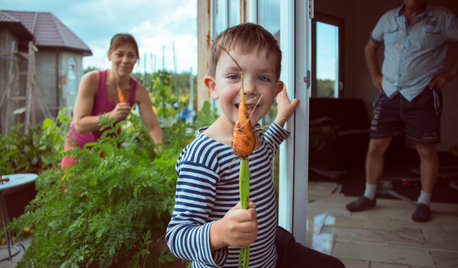
GARDENING AND LANDSCAPINGWorld of Design: 10 Home Gardeners Show Us Their Sweet Summer Harvests
From New York to Tokyo, these gardeners have turned their yards, terraces and rooftops into places of bounty
Full Story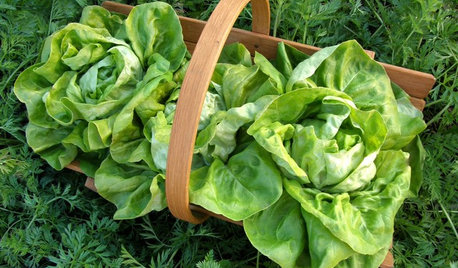
GARDENING GUIDES10 Easy Edibles for First-Time Gardeners
Focus on these beginner-friendly vegetables, herbs, beans and salad greens to start a home farm with little fuss
Full Story
PETSSo You're Thinking About Getting a Dog
Prepare yourself for the realities of training, cost and the impact that lovable pooch might have on your house
Full Story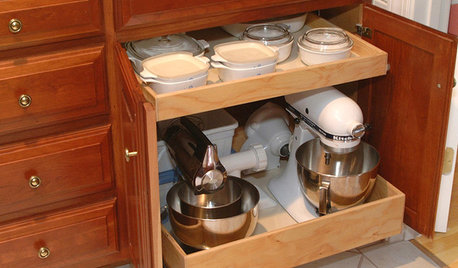
KITCHEN APPLIANCESConsidering a New Kitchen Gadget? Read This First
Save money, time and space by learning to separate the helpers from the hassles
Full Story
CHRISTMASGift Giving the Simple-ish Way
If buying holiday gifts drives you to the spiked holiday punch, try these easier but still rewarding traditions
Full Story

jimandanne_miOriginal Author