Houzz Logo Print
kathleen_smith6227819

Are you concerned about all the plastic trash?

7 years ago

I'm especially worried about it being in the oceans. I recycle but not everything is allowed in the local recycling here. I've decided to quit buying bottled water. I bought a reusable aluminum "bottle" to take hiking and to work with me and will buy another soon. I also finally bought a Trader Joe reusable grocery bag since I have about 50 of their paper ones that will last me the rest of my life. I use them to put recycleables in until it's full, then I dump it into the outside bin. I reuse them until they tear.


I'm also thinking of going back to using bar soap, that are wrapped in cardboard or paper. I used to throw out my trash at work that I brought my lunches in but now I take it back home with me to recycle. Any more ideas you could pass on to me and others?

Comments (76)

  • 7 years ago
    last modified: 7 years ago

    It is heartbreaking to see the plastic islands in the oceans, ruining the homes of so many species and killing so many animals. We've switched to pyrex (made in USA :) glass storage containers for leftovers and other storage. They do have plastic covers but they last for years and years and help to avoid plastic wrap and ziplock bags. At the store, I avoid using small plastic bags for loose fruit and veggies unless it's something like grapes or other very small fruit. And I always cut apart plastic rings and knot up mesh bags for onions and other veggies so no creature gets tangled in them. But sometimes it seems futile because so many people just could not care less.

  • 7 years ago

    Recycle. Recycle. Recycle.

  • Related Discussions

    Concerned about lawn prep for slit seeding - Many questions!

    Q

    Comments (9)
    A quick way to sift is what I did. I got a milk crate. I dumped a few shovel fulls into the crate and then shook it back and forth. It took a while, but I think was worth it. The pieces that stayed in had no ill effect on the overseeding. A few weeks back someone asked about the top dressing and a slit seeder. It seemed that some felt that topdressing first would result in the slit seeder dropping the seed into the topdressing and not the soil beneath - which would not be idea. I am not sure what the answer is. However, here is what I did (though my lawn is a fraction of the size of yours): 1) I dethatched. 2) I did the slit seeder in two different directions. 3) Then I literally threw the topdressing down on the lawn, I flung it at an angle so it actually covered pretty evenly. Then I did the same thing with peat moss. HOWEVER, seeing how light and fluffy compost is, I bet you could run the slit seeder right over it and turn out ok IF you only do a really light covering of it, like 1/4 inch. And here is something completely untested, but if you are concerned that the seed will just sit atop the compost, consider using your spreader and spreading a really light (1/3 the recommended seeding amount) coverage of seed prior to applying the topdressing. Then you can at least rest assured that SOME seeds are making at least some contact with the native soil. Then topdress and run your slit seeder .
    ...See More

    Johnmerr, you are right about Citrus regarding plastic pots

    Q

    Comments (9)
    Yellowthumb, are you still here with me? I must say that I was a bit leery of taking my lime and lemons out of my clay pots too. But after seeing mine improve, and I mean remarkably, I decide to do the same to this one just now after totally forgetting about it! Would you believe that I have had this one in this same clay pot for TWO YEARS!? It looks like a stick with one piece of new growth after all this time. I fed it, provided a great mix, and gave it lots of sun light. It has been given the same cultural needs as the others. Look at the size of the root ball and the lack of leaves, if I must say so myself. Let's see how fast this one improves. I am finding it hard to think it is all in our heads.lol Before: Look at the size of the root ball! And, they don't even look healthy. And now after. :-) Let's keep you updated from here. Here is a few doing very well after only 2 months in plastic. Now I have NO reason to buy another Meyer Lemon to start one looking great just to see it decline. I got tired of looking at less than healthy lemon trees just to replace them with another healthy one. No worries now. I can keep the ones I have and get them looking like they were when I bought them. The ones I am about to post were in a sick condition a couple months back for years, with just a few leaves, small root balls, and just constant flowering on bare branches. Now they are full and seem to be thriving in this short time. I have always complained that Meyer Lemon trees for me, are the hardest to please. My view point has changed now: thanks to John:-) This is an added BONUS for me. This Ponderosa Lemon had had only 3 leaves and was all bare for THREE YEARS! It would flower, but that is it. Now look at the leaves and new growth. I am so excited about this one.:-))))) Now this one is next! Mike
    ...See More

    About all of those plastic bags.

    Q

    Comments (9)
    Often I remember to put the bags in the car, but forget to take them in the store to recycle -- But, when I open the hatch to put the groceries in the car, I then see the bags I forgot. Sometimes I just put the bags in the shopping cart before returning to coral. I keep my fingers crossed that the next person to use the cart (or the store attendant) will bring them to their proper place. Here is a link that might be useful: Creative Ways to Use Plastic Grocery Bags
    ...See More

    Saving potting soil in a trash can....plastic? Metal?

    Q

    Comments (3)
    I don't understand any issues about "temperature changes" - why would this be an issue when storing potting soil? It's not like freezing (or heat) is likely to harm or damage the stuff!! Galvanized metal containers are not very likely to rust or fall apart any time soon - they are often used as raised planter beds when the larger forms like stock tanks are used for this purpose. And ideally, the soil should be somewhat dry before shifting into any closed storage container otherwise it will become mucky and anaerobic over the winter. While I don't bother to store for winter - all my containers are year round - I do store my extra potting soil in the large plastic storage bins sold by every home improvement store - the 20G lidded totes.
    ...See More
  • 7 years ago

    Here in Michigan we have bottle/can return. At 10 cents each it makes it worthwhile to return then. Wish water bottles were included!

  • 7 years ago

    Speaking of milk, think I'm going to switch back to another brand, as I can buy it in a carton instead of plastic. I've been using those meal kits and they use a lot of plastic. They say their packaging is all recyclable but it's still plastic. Anyone know of a meal kit company that uses no or almost no plastic?

  • 7 years ago

    I've often wondered why dairy products such as yogurt, cottage cheese and sour cream aren't packaged in paper/cardboard containers. Milk is so I know it can be done.

  • 7 years ago

    DawninCal probably those are not in paper containers because of the amount of acid in them. People used to complain about the wax coating flaking into cottage cheese so most of the coatings on paper products subjected to liquid is sprayed on plastic.

  • 7 years ago

    I'd gladly go back to paperboard coated with wax. for those dairy products. Then I could compost them at home, return them to the earth.

  • 7 years ago

    Matthias have you thought of what the wax is made from?

  • 7 years ago
    last modified: 7 years ago

    I'm stuck with, my city's recycling says no wax coated cardboard. So is it recyclable? ETA: or maybe it's that you can't put wax coated in the cardboard, but have to put in the paper bin? Something like that.

  • 7 years ago

    Moni, that is fantastic, what they did in Germany! Yes, we're literally drowning in plastic and it's verrry difficult to not bring a ton into the home. I tried putting veggies in the netted bags but within two days they were drying out; not so many people have the option of going to the store for fresh produce daily; do they still do this in Europe? It's appalling, the number of plastic bags of all kinds I collect, which I then drop off at a bin at Target. Where they go from there, I'm sure I don't want to know. The bottom line is money, and manufacturers ALWAYS find plastic cheapest.

  • 7 years ago

    Recycling where I live is voluntary, but I am lucky in the fact that the recycling center is only a couple of miles from where I live, and only a few blocks out of the way when I go to the library, a grocery store, or on just about any errand I might have. Yet I still don't go often enough, usually have a lot of 'stuff' when I do go. They do have a page on the city/county website that lists what they take for recycling and what they don't take. They will also give you a list of recyclables if you ask. I do recycle everything that I possibly can. They quit taking glass a few years ago, so now that is a problem to dispose of.

    Any beverages I buy are in cans, and I rarely buy more than one at a time, so there are no plastic rings to dispose of. I do cut them up on the rare occasion I do have one. I also cut up the type shown in Jasdip's picture. I don't buy bottled water except when preparing for a hurricane.

    I have also noticed that since the grocery stores have added collection boxes for the plastic bags there aren't nearly as many blowing in the wind around the parking lots and surrounding areas. Walmart also has rather large collection boxes for other recyclables and trash. HEB doesn't, so their parking lot is trashier than Walmart's. The only thing I have noticed on Walmart's parking lot lately is dirty diapers, and I can't help but wonder what kind of slob does that. I have often thought about how neat it would be if someone could pick up those dirty diapers and through them on the lawn of the person who left them there.

    So to answer the OP's question, yes, I am concerned about it. Perhaps not seriously worried, but concerned enough to do the very best I can to reduce the amount of plastic going into landfills. And trying to teach my kids and grandkids to be responsible caretakers of the this planet.

    Rusty

  • 7 years ago

    maifleur01

    Matthias have you thought of what the wax is made from?
    Yes I have. No doubt the wax used industrially is made from petroleum, just as is, say, "Gulfwax," which some people still use for sealing homemade jellies and jams and which is still sold in grocery stores with canning supplies. But the end product wax is biodegradable. There are microbes that degrade waxes, as waxes are produced naturally in plants. I would have no qualms about composting waxed paper products. As is, I do compost the wax paper that we use in our kitchen.

  • 7 years ago

    Today I went to the butcher at a chain store and bought a large boneless chicken breast. I told her I didn't want Styrofoam, and I asked her to wrap it in butchers paper. She HAD no coated paper. She reminded me the chicken would *stick to* the brown paper she did have. I'll see when I unwrap it. My inclination is to Just Go Next Door! Fresh Market has coated brown paper. (Is that a pollutant?)

    I was thinking of this forum, looking at all pre-packaged meet displayed ON STYFOFOAM. There was enough of the stuff to fill a commercial dumpster.

    I'm thinking about how to leave excess packaging behind at stores in a way to attract public attention. Could I rent a dumpster to put in a mall? It would have a sign: Why take that PLASTIC and STYROFOAM home? You know it can't be recycled. DUMP IT HERE to be sent back where it came from. Tell manufacturers you want them to fine a way to safely dispose of this TRASH stop making it. Are other options more expensive than killing our PLANET?

  • 7 years ago

    We could politely leave as much excess packaging as possible at the customer service desks, briefly explaining our concerns. Of course we should write letters to the companies and to the local managers as well. Perhaps some stores would begin to request less packaging from their sources.

  • 7 years ago

    It's a shame bio-based plastics aren't more widely manufactured and used. They biodegrade within months, not centuries, they don't leach toxic chemicals, and their production doesn't require fossil fuel. Even replacing 50% of petroleum based plastics with bio-based would have a huge, positive impact on the environment. If they could replace most or all of it, even better. But I guess plastics manufacturers and the oil industry don't see it that way.

  • 7 years ago
    last modified: 7 years ago

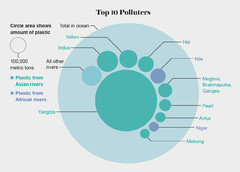
    Actually nearly 90% of the plastics carried to sea are carried by 10 rivers in Asia and Africa. Developed countries in Europe and North America that have waste management facilities contribute very little to the problem.

    Recycling has become big business. $$$ So are so called environmentalist "solutions" banning things like plastic bags and now going after drinking straws. It's not so much about saving the environment as how can we ride the movement and use public sentiment to make money.

    Decades ago people who ran the numbers tried to explain how recycling was not the the answer. Today the truth is leaking out bit by bit on the failure of many recycling programs. So now we have moved onto the ban it bandwagon. Many of the products made to replace the banned ones contribute more environmental pollution in their manufacture and their disposal than the originally banned items did.

  • 7 years ago
    last modified: 7 years ago

    In this area the main way to recycle glass is to take it to a Ripple Glass bin. The glass is then broken up and some is used by what we consider a local beer company, Boulevard, to make their bottles. There are several companies that if you have large amounts they will come and collect it from you. If you are in a larger metro area you might want to do a search for glass recycling companies.

  • 7 years ago

    Our county stopped accepting glass for recycling 2 or 3 years ago. Said it was too expensive. Even 40 years ago in Germany, we brought the cases of empty bottles back to the store and got a bit of money for it.

  • 7 years ago

    Iris when I came to the USA in 72 pop came in glass bottles. We would take empties back, when we bought full ones... thus, didn't have to pay a deposit again.

    Now a days almost all European countries have glass collection containers in their towns. There is a small opening, that a bottle/jar will fit through. Usually 3 containers... one for clear glass, one for brown and one for green. the glass breaks, when it fall in... thus, it should take a while till they are full.

    Now the eastern block countries were not as "clean" as France, Germany and Austria. They are just starting with containers for recyclables.

  • 7 years ago

    I think the bottles we brought back to the store back then were just washed and reused. The “Brause Mann” came every other week to the house to exchange the empty bottles for the full ones. When they stopped the recycling of glass here, I had a lot of bottles and jars around. I had a really hard time to put them in the trash. Tried to use them for something or the other.

  • 7 years ago

    I'm going to buy small biodegradable bags for the small garbage cans around the house. I don't have a lot of plastic bags anymore since I quit doing a lot of grocery shopping, mostly use meal service or eat out with just me in the house.

  • 7 years ago

    Now a days almost all European countries have glass collection containers in their towns.

    Glass collection containers have been in use in the USA and Canada for as long as I can remember.

    Europe doesn't have the answer.They have been shipping their waste to China just like the rest of the world. .
    Europe, USA, Canada, and the rest of the world will need to scramble for a solution now that China has refused to accept our waste. It's easy to look good when your waste is shipped elsewhere. Let's see what happens next.


    Waste Crisis in Australia

  • 7 years ago
    last modified: 7 years ago

    The chicken breast that I asked to have wrapped in plain brown paper did NOT 'stick to the paper' as the butcher warned me it would. I think it was too *watery* to stick!

    Now I am seeing single-use plastic everywhere I look in my house. Glad Wrap, gallon baggies with twist ties, garbage bags, pill bottles. There are plastic bottles of shampoo, conditioner, body soap, dish soap, bleach, vinegar, ammonia, ketchup, yogurt, *every non-solid on earth* -- all of them in containers with no secondary use. In the freezer are vegetables in flimsy plastic bags. I wash and re-use zip-lock freezer bags, but they eventually hit the garbage too.

    At least we are *thinking* about it. I'll keep refusing Styrofoam at the meat department and look for other ways to avoid plastic.

    Every individual act is good in and of itself. I can't expect to 'change the world', but I must be responsible for my actions.

    Kathsgrdn -- Do you use bags in wastebaskets in your house? (Understand them in commercial/medical settings.) We only put dry trash in our wastebaskets. I dump the contents into the kitchen garbage and clean the wastebaskets as needed.

  • 7 years ago
    last modified: 7 years ago

    "Europe doesn't have the answer."

    I think you're lacking some information on this. I'm not sure if the rules are EU-wide or country by country, but I know (as an example) that there was a push some number of years ago in Germany to limit excess packaging and require products to have a minimum recyclable content. (That applies to cars too, a large and important industry in Germany). Whether the materials are ultimately reused or not is another question but it's a start. Product packaging in Germany is light and skimpy compared to what we experience here in the US. It does make a big difference.

    Europe also incinerates a lot of trash to produce electricity. They have high tech installations that do so cleanly by capturing harmful chemicals emitted from the burning. That's a form of recycling in my mind, a recovery and repurposing of the materials in the trash.

    If you think about it, a large chunk of the trash from a home is packaging for products purchased. It's nice (and mostly a feel-good effort) to say that I'll use less plastic wrap or whatever but the fact remains that small acts have only minor effects. The major effort needs to come with product content and product packaging.

    If our society were serious about recycling, and if the previous used routes (shipment to China) are no longer available or economically viable, then the only alternative would be to find some way to charge households extra fees that could subsidize recycling, no matter what the cost.

  • 7 years ago

    I believe the major effort needs to start where 90% of the ocean trash originates: Asia and Africa. It's like me recycling one bottle while you toss 90 in the river. I won't win.

  • 7 years ago

    I wonder how the numbers will change once China stops accepting the huge piles of American trash including plastic in its backyard .

    We will probably export our trash to Africa and make it their problem.

    IMO This cannot be treated just as a third world problem .

  • 7 years ago

    Chisue, yes but am running low. I've found some on amazon.com that are biodegradable and am going to buy a box and see how they work.

  • 7 years ago

    I dont drink a lot of soda. I do like a Dr Pepper, or a rootbeer now and then. I buy both in glass bottles and then to the recycle bin. I look for ways to X plastic all the time.

  • PRO
    7 years ago

    We tend to be pretty good with trash in general. Most of my neighbors put out 1-2 cans every week, but we tend to put out our 1 can every 2-3 weeks depending.

    I compost everything that I can, with mailing junk, cardboard from the kitchen and around the house often ending up as mulch base layers around the yard.

    I use my glass canning jars a lot... I make my own jello and fruit cups instead of buying the more expensive and disposable version, get the big cans of tinned veggie juice and store it in glass portions instead. I can a lot of stuff too that reduces a lot of tinned and glass stuff.

    For my lunches, I bought a pair of microwaveable bowls with snap on lids, use plastic ice cubes that I can refuse endlessly. And I have a few liquid bottles, some insulated, some not, that I reuse for home tap water, milk, teas hot and cold.. I use frozen juice concentrates a lot more than jugs of shelf stable juice.

    I use a lot of cloth and insulated grocery bags. And I still get paper bags because those are great in the garden. And still get some plastic grocery bags too for messy waste like litter boxes or boiled off bones from stock, I don’t toss bones into compost. But mostly I keep them to slice up and braid into garden twine during the winter.

    plastic mesh bags... the onion bags get set aside to become dish scrubbies. I haven’t had to buy a plastic scrubbie in ages. Gentle enough for glass and nonstick, tough enough to get the baked on stuff. I use them loose, like a wash rag, makes it easy to rinse well and if it gets too hunky or shredded, I toss it. Other color ones I save for bagging up flower bulbs and such.

    I am bad on another side with plastic. I do a lot of bulk buying of meats and break them down and vacuum seal in plastic.

  • 7 years ago

    Yes I am worried about the plastic pollution problem. Despite the fact that I stopped using plastic grocery bags over 30 years ago we still end up with way too many plastic bags. I just have no idea how to cut it down further. It's the packaging for food and the bags that we put our vegetables and fruits in that doesn't help the situation. I have not come out with a solution for the loose vegetables at the grocery store that need a bag.

    We have never used plastic for taking our lunches. we've always used the glass squares and jars.

    We each have our own travel mug and do not get paper cups or at least we get them very seldom. We eat off of dishes from home when we go for a picnic or anything like that.

    Here they take away all the recycling except for large stuff from Curbside. Garbage which is fairly minimal is picked up every two weeks. They do extra garbage on Christmas holidays but you have to pay otherwise for the rest of the year if you have extra gaarbage. People don't like spending their money so everybody seems to do recycling just fine here Composting is also picked up curbside.

  • 7 years ago

    I just use glass containers with freezer bags over them for storing my bulk meats. I wash and reuse the freezer bag the same way.

  • 7 years ago

    I thought of this thread yesterday while at the hospital visiting hubby. All of the hospitals now use little plastic cups to bring your meds in. Remember when they used to be the paper cups, like the ones you squirt ketchup in? And these plastic cups are for pills. Pops them into his hand and the little container goes into the trash.

    With the food as well, there's a lot of waste in hospitals. Single serving juices, fruit cups, salad dressing, yogurt, packaged cookie or muffin. Everything packaged and processed.

  • 7 years ago

    Most hospitals have an incinerator for housekeeping waste and biological waste.

  • 7 years ago

    I saw on the evening news tonight where some young guy has invented a method of corralling that massive floating plastic island out in the middle of the ocean. It traps the mess so that boats can come in and load it. It will take a couple trips to get all of it. I thought they said years?

    And then someone commented that altho that island of trash will get cleaned up, there will just be more if we don't learn how to not create it in the first place.

  • 7 years ago
    last modified: 7 years ago

    There is no massive island of plastic floating in the middle of the ocean. The plastic is dispersed in the ocean. Mostly at the bottom of the ocean.

  • 7 years ago
    last modified: 7 years ago

    " Most hospitals have an incinerator for housekeeping waste and biological waste."

    Haha, more expertise from afar. I don't know for certain but i'd be willing to bet that no waste incineration of any kind is permitted in California. Nor in other areas with moderate or higher levels of population density.

  • 7 years ago

    " There is no massive island of plastic floating in the middle of the ocean. The plastic is dispersed in the ocean. Mostly at the bottom of the ocean. "


    Unfortunately, watchme, there is such a large patch of floating or near floating trash in the mid Pacific. An island, in a literal sense, no, but a very large collection of junk at or just below the surface. Much of it plastic and, as stated, most of it from Asia.


    Here's a link to a wikipedia writeup.


    Pacific garbage patch

  • 7 years ago
    last modified: 7 years ago

    Elmer, you may not see smoke stacks of yesterday, but medical waste incineration is required in 31 states. California and other states probably ship medical waste and trash elsewhere. High technology on-site and off-site incinerators are being built. The newest outdoor location Clean Harbors is located in Arkansas.

    Stericycle also collects and incinerates medical waste.

  • 7 years ago

    Product packaging in Germany is light and skimpy compared to what we experience here in the US. It does make a big difference.

    Elmer,

    It may well be, compared to the USA. However, in Europe, that's not true about Germany.

    The truth.

    You may think of Germany as a recycling mecca - but the country is the
    number-one producer of packaging waste, and a top per capita trash
    producer in Europe
    . And curbing that is trickier than it seems.
    And the problem is mounting: packaging waste has grown by 13 percent
    over the last decade in Germany, reflecting a worldwide trend.

    Mounting Packaging Waste in Germany


  • 7 years ago

    watchme, thanks for the NOAA enlightenment. I appreciate it.

  • 7 years ago

    Brushworks,

    You seem to have a habit of responding by trying to change what you said.


    If 31 states require waste incineration, that means nearly one-half DON'T. As I said, I'm certain that wouldn't be permitted in California. There may be 31 states with coal burning power plants too. The site you cite is in Arkansas. Per Wikipedia, Arkansas has a number of coal fired plants and so it can't be viewed as a leader in environmental protection. So if Arkansas is the medical waste equivalent of the third world countries that get other bits of American (and European) trash and junk, it's their choice.


    I happened to cite Germany because over the years I've gone there pretty regularly, including recent visits, and I speak the language pretty well. How about you, do you know much about it other than from internet searches? I'm not at all surprised its per capita waste production is high by European standards. Without knowing how this was determined, it's an easy guess as Germany is a very affluent country in comparison to many of its neighbors. The article you linked was on DW (Deutsche Welle), Germany's equivalent to the BBC World Service. Like its cousin, it does tend to have off the wall reporting.


    My comment stands about skimpier packaging and more emphasis on recycling.

  • 7 years ago

    I thought of this thread yesterday when we went to a well known fast food chain for lunch. When we were done eating, hubby looked at the tray and said "look how much trash our meal generated for just two people." There were two plastic containers with lids, several paper wrappers, a pile of napkins both used and not used and two plastic cups. Looking at that pile, I then mentally multiplied it by the thousands of people who go out for fast food every day and my head was filled with images of mountains and mountains of fast food trash.

    That led me to think that maybe it's time for fast food outlets to start using plates, glasses and silverware that can be washed and re-used. But then I started thinking about how much water and electricity it would take to wash that amount of dishes each day. There just are no easy solutions to this trash/plastic problem.


  • 7 years ago

    Elmer,

    Your response seems to be out of disappointment. I knew you would be the one to discredit any news source that disagrees with you. Typical.

    How about the sources that discredit the myth of garbage patches? Do you discredit those scholars?

    31 states require medical waste incineration. Has nothing to do with poor people in Arkansas or coal fired power plants.

    Europe doesn't have the answers. Their incineration has become detrimental to recycling. Look it up on a site you trust. If there is one.

  • 7 years ago

    No, no disappointment at all, you're welcome to have whatever views you want. Even when they're not well informed. And when you say something of that nature that I think I have another view of, as in this thread, I'll say so.

  • 7 years ago

    "Their incineration has become detrimental to recycling." Perhaps but there is more to recycling than just collecting stuff that is too expensive or dirty to be reused. Somethings like sewer wastes that were touted as the answer for useful as manure or to build land have been found to be too toxic to use. The test fields here finally were used last year to grow corn. Supposedly had too many heavy minerals in it for use. So far the tests to incinerate the waste has had mixed results as although it could be burned it costs more to dry it enough to be burned. That is just an example. Although places here still take paper products for recycling more technology needs to happen before it no longer costs more environmentally and monetarily. The up thread about the waste at a fast food place is a good example. The paper products could be smashed and reused but getting to a state that could be reused is expensive. They would need to be taken somewhere then processed. They could just as easily be taken to an incinerator, burned and turned into heat or electricity. Any residue to be processed could if the technology was there be separated further into useful products. The technology is being worked on but the simplistic solutions that some talk about do not take into account everything.

  • 7 years ago

    I think if people stopped eating processed foods as much as possible, and ate REAL food (you know the stuff, it grows on farms and doesn't have a list of ingredients), the amount of ANY trash whether it be plastic, tin or paper would dramatically decline. I know I've posted already, but in Calgary we recycle almost everything. My blue recycling bin is full almost every week (we fell off the keto wagon but not all the way... ;) ) but all the packaging we buy, goes in there. I don't understand why some states don't recycle. We have brought back our beverage containers to the bottle depots for as long as I can remember. Tossing out a water bottle is throwing away money. You get a dime for the single serve, a quarter for a litre or larger. Why throw it away? That also includes juice boxes and milk jugs.

  • 7 years ago

    There is no massive island of plastic floating in the middle of the ocean. The plastic is dispersed in the ocean. Mostly at the bottom of the ocean.


    This seems simply like a semantics issue. I don't think that anyone is suggesting that these are actual islands. Yes, there is lots of trash all over the ocean and to the bottom. But even NOAA says there are garbage patches. And someone is making an effort to reduce the size of the one in the Pacific.