

Bread Making
8 years ago
Featured Answer
Sort by:Oldest
Comments (18)
 8 years ago
Related Discussions
Bread making help....the salt, actually.
Comments (7)Both Morton's kosher salt and Diamond Crystal kosher salt have bigger grains than regular salt, and therefore weigh less per volume. A cup of table salt weighs about 10 1/2 ounces, a cup of Morton's about 8 3/4 oz, and a cup of Diamond Crystal about 4 3/4 oz. To substitute regular salt for kosher, use about 1/2 the amount by volume. Here is a link that might be useful: weight of different salts per volume....See MoreA Bread-Making Fool!
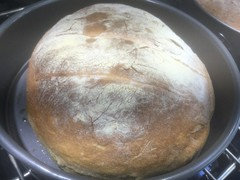
Comments (16)No-Knead Dutch Oven Bread 1/4 tsp active dry yeast 1 1/2 cups warm water 3 cups all-purpose flour, plus more for dusting. You may use white, whole wheat or a combination of the two. 1 1/2 tsp salt Cornmeal or wheat bran for dusting In a large bowl, dissolve yeast in water. Add the flour and salt, stirring until blended. The dough will be shaggy and sticky. Cover bowl with plastic wrap. Let the dough rest 12 to 18, at warm room temperature, about 70 degrees. The dough is ready when its surface is dotted with bubbles. Lightly flour a work surface and place dough on it. Sprinkle it with a little more flour and fold it over on itself once or twice. Cover loosely with plastic wrap and let it rest for about 15 minutes. Using just enough flour to keep the dough from sticking to the work surface or to your fingers, gently shape it into a ball. Generously coat a clean dish towel with flour, wheat bran or cornmeal. Put the seam side of the dough down on the towel and dust with more flour, bran or cornmeal. Cover with another towel and let rise for about 1 to 2 hours until doubled in size and will not readily spring back when poked with a finger. At least 30 minutes before the dough is ready, heat oven to 450 degrees. Put a 6- to 8-quart heavy covered pot (cast iron, enamel, Pyrex or ceramic) in the oven as it heats. When the dough is ready, carefully remove the pot from the oven and lift off the lid. Slide your hand under the towel and turn the dough over into the pot, seam side up. The dough will lose its shape a bit in the process, but that's OK. Give the pan a firm shake or two to help distribute the dough evenly, but don't worry if it's not perfect; it will straighten out as it bakes. Cover and bake for 30 minutes. Remove the lid and bake another 15 to 20 minutes, until the loaf is beautifully browned. Remove the bread from the Dutch oven and let it cool on a rack for at least 1 hour before slicing....See MoreUsing dry Yeast in Bread-making
Comments (6)The liquid in the recipe includes the liquid for proofing. I just add the dry yeast and the liquid I might have used for proofing. And even back when I used to proof the yeast I never measured the liquid...I just put the luke warm liquid in a bowl, added the yeast and started mixing in the flour....and when I have added aboput half the four, add the salt and oil or whatever else. Yeah...dough sticks to your hands when kneading....just rub your hands together, and incorporate the rubbins back into the dough...have some flour on the board and dust the dough ball with flour. Yes you can wet your hands or oil them before kneading but in 8 to 10 minutes of kneading, you will find that the oil or the water wear off and your hands will still get sticky. I often use a dough scraper to help the dough come together before I get into full blown kneading. But once the dough makes into a good mass, it shouldn't stick to your hands much at all....just a few fluffs of flour should keep it working well. Linda C Here is a link that might be useful: kneading by hand...See MoreQuestion for the bread makers-thoughs on bread making for income
Comments (8)It's really difficult to start up a home business--you have to be properly registered, you have to keep impeccable records, charge and pay the appropriate taxes. And when you decide to do something in the food line? Multiply the red tape by ten. You'd probably better start with the health department. In many jurisdictions, it's not legal to bake/cook food in a home kitchen for sale--if that's true where you live, you'll need to find an approved commercial kitchen to rent--and that's going to cut into your profits. Look, I hate to be a wet blanket, but I've done the home business thing--many years ago, and it didn't involve food. It turned into a nightmare. You have to do every little tiny thing by the book. Perhaps check in with the agency that promotes small businesses in your area. Or what about contacting a restaurant or two, to see if they might be interested in paying you to come to THEIR locations to bake your bread for their use--you might have to do that in the middle of the night, when they aren't preparing meals, but it might be an interesting solution. Pack up some samples of your best wares and visit some of the local independents. Good luck, but please be sure to do all your research before jumping into something that could end up costing you more than you'll make. And hey, if you're good at creating recipes? I'd highly recommend considering recipe contesting. That costs you next to nothing, and can bring in truly big bucks (I've made up to $25,000 for a single recipe, some contests pay even more)....See More- 8 years agolast modified: 8 years ago
 8 years ago
 8 years ago
 8 years ago
 8 years ago
- 8 years ago
 8 years agolast modified: 8 years ago
- 8 years ago
- 8 years ago
- 8 years ago
- 8 years ago
- 8 years ago
- 8 years agolast modified: 8 years ago
- 8 years ago
- 8 years agolast modified: 8 years ago
- 8 years ago
Related Stories
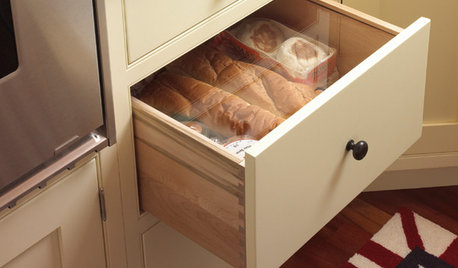
KITCHEN DESIGNKitchen Ideas for Bread Lovers
Any way you slice it, a kitchen designed with bread in mind conveys warmth and homeyness
Full Story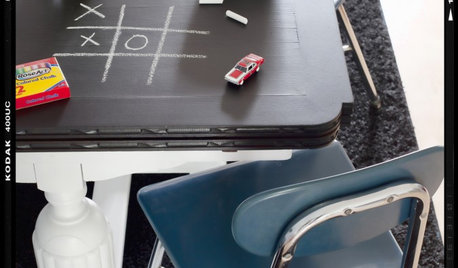
DECORATING GUIDESDIY Project: How to Make a Chalkboard Tabletop
The perfect table for grownups and kids — no power tools required
Full Story
MOST POPULAR8 Little Remodeling Touches That Make a Big Difference
Make your life easier while making your home nicer, with these design details you'll really appreciate
Full Story
FEEL-GOOD HOMESimple Pleasures: Make Do and Mend
Experience the satisfaction of fixing, repurposing and creating things yourself around the home
Full Story
HOME TECHMake Home Sweet Home Even Sweeter With a Brewery Or Winery
New high-tech products make small-scale home beer and wine production easy and fun
Full Story
LIFEHouzz Call: What Has Mom Taught You About Making a Home?
Whether your mother taught you to cook and clean or how to order takeout and let messes be, we'd like to hear about it
Full Story
THE HARDWORKING HOMESmart Ways to Make the Most of a Compact Kitchen
Minimal square footage is no barrier to fulfilling your culinary dreams. These tips will help you squeeze the most out of your space
Full Story
FEEL-GOOD HOMEWhat Really Makes Us Happy at Home? Find Out From a New Houzz Survey
Great design has a powerful impact on our happiness in our homes. So do good cooking smells, family conversations and, yes, big-screen TVs
Full Story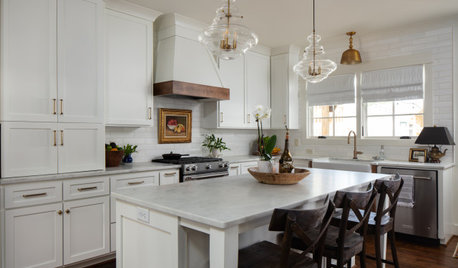
KITCHEN LAYOUTSHow to Make the Most of Your L-Shaped Kitchen
These layouts make efficient use of space, look neat and can be very sociable. Here’s how to plan yours
Full Story
CHRISTMASMake Holiday Tasks Fun With a Dining Table Takeover
Set up your table for wrapping, baking or writing, and you'll set yourself up for less stress and more festivity
Full Story

H B