

Opinions on the NFL’s recently approved national anthem policy
8 years ago
Featured Answer
Sort by:Oldest
Comments (65)
- 8 years agolast modified: 8 years ago
Related Discussions
Big companies wanting approval for 2,4,D!
Comments (38)The following was stated: "Are you just simply going to ignore it because I'm not going to go search around Google for links? You couldn't even "keep up" in that thread (because it's out of your realm of study/knowledge), yet you chose to dismiss all of it because I didn't hunt down some Google links for you." H.Kuska comment. Yes, without scientific documentation, it is merely your opinion. Please note how the Podevin and du Jardin, 2012 paper was commented on in this very recent review reported in Google Scholar: PDF][PDF] SCOPING REPORT C Marris, C Jefferson - 2013 - kclpure.kcl.ac.uk 169 days ago - ... Document Version Preprint ��" the version submitted for publication Link to publication record in King's Research Portal Citation for published version (APA): Marris, C., & Jefferson, C. (2013). ... This report should be cited as: Marris, C. and Jefferson, C. (2013). ... "One reason for the scepticism displayed by some actors in response to such declarations is that at the time when genetic engineering first merged, strong claims were also made by proponents of the field about the precision of the new techniques. Thus, molecular biologists in the 1980s emphasised the lack of sophistication of previous techniques to emphasise the enhanced predictability of the then new recombinant DNA (rDNA) techniques, as exemplified in the seminal OECD report of 1986 (OECD, 1986)11:" H.Kuska comment, the following is a quote from the 1986 report. "While rDNA techniques may result in the production of organisms expressing a combination of traits that are not observed in nature, genetic changes from rDNA techniques will often have inherently greater predictability compared to traditional techniques, because of the greater precision that the rDNA technique affords to particular modifications. […] It is acknowledged that additional research and experience with rDNA micro-organisms, plants, and animals, should certainly increase our ability and precision to predict the outcome of introductions of rDNA organisms into the many varied ecosystems." (H.Kuska comment, end of 1986 quote, now back to recent review quote.) "Despite these claims of greater predictability and precision, studies have now found that unintended additional fragments of DNA are often present (Rang et al., 2005; Windels et al., 2001), and that unintended re-arrangements of sections of the host genome flanking the genetic insert were present in GM crops that have been placed on the market (Hernández et al., 2003; Windels et al., 2001). Also, a recent study by scientists from the European Food Safety Authority demonstrated that some long versions of the cauliflower mosaic virus 35S promoter, very commonly used in genetic constructs and present in a number of GM crops on the market, unexpectedly contain an overlapping viral open reading frame which, when expressed, might result in unintended phenotypic changes (Podevin and du Jardin, 2012). This demonstrates that even seemingly well-characterised and routinely used noncoding regulatory DNA sequences can produce unpredicted, unintended effects, yet such sequences are commonly assumed to present little risk when assessed within the EU regulatory framework, and “intergeneric microorganisms resulting only from the addition of well-characterized, non-coding regulatory regions” are excluded from the US Biotechnology Coordinated Framework. Opinions among scientists and other stakeholders are sharply divided about whether any future forms of genetic engineering, including synthetic biology, could ever result in the creation of organisms with reliably predictable behaviours, especially when released into complex, diverse and variable natural ecosystems; and this is directly related to divergent evaluations of the prospects for GMMO products that would need to be released into the environment in order to perform their intended function" H.Kuska comment. Please notice the use of the word "opinions" in the following: "Opinions among scientists and other stakeholders are sharply divided........" i.e. it is my "opinion" that the public is being used as beta testers. ------------------------------------------ Here is a link that might be useful: link to above review...See MoreOur foundation is 'illegal'!
Comments (60)Hi Caterinms, I sort of agree with brickeye in the respect of the 'One Solid' wall enclosure is a bad thing in a flood area. I believe the reason is that your foundation may float in a bad storm. Imagine your basement as a large bathtub. You have walls and a concrete slab. I agree that it will not be 100% water tight and some water will seap in. The failure mode is if the water rises sufficiently fast such that your basement become bouyant enough to shift. That will essentially take out your foundation. I think it may be worth looking into housing building techniques in Dubai. The artificual island homes build on reclaimed land have water tables just below the surface, lots of sea water pressures. The technology I used is Dutch which allows for basements below the water line. Granted however that there are fewer storms of Katrina magnitude in that area of the world. In your situation what would it take to add the extra four feet of concrete height? Also could you try and divide your basements into smaller enclosed chunks? This will add cost, the question is how much? Also I guess is will it look different to what you have already in mind. 4 Feet of fill is alot of fill dirt, and trucking will be expensive. Just an idea, say you did not fill. Your house would not be anchored, and your door will be say 4 feet above grade. For aestetics, you would like your house anchored to grade. Maybe there is a deck, porch, or other structure that may facilite this? Difficult to suggest in that I cannot see your picture for some reason. From the height requirments, it is almost as if the best solution for your location would be to build the house on some sort of stilts, almost like a pier. Then you would not have to bring in all that fill. Stilt houses are quite nice. One example is the Farnsworth house by Miles van der Rohe. This is sort of late into the process to think about a redesign, but I think some sort of redesign is required in that I think the local inspectors are not going to sign off as is. For piece of mind, I think building it higher is better. Also you would get a better view. Warmest regard, Mike....See MoreDangerous Unintended Consequences
Comments (41)Hi Bethesdamanman, My apologies then, Dave. I thought that I had recalled you posting on the other board that mortgage rates would stay low for years and years, and that we would never return to the high rates of years past. My error. Eeeesschhh .... well.... actually... kinda sorta, YES.... your apologies in this case are NOT warranted. Herein lies a case of "text failing where a verbal conversation *may* have worked better." I've never said rates would stay low "well... forever".... I HAVE said rates (30 FRM rates to be precise) will unlikely climb over 7% in our lifetimes. I *STILL* stand by that.... albeit, I am now offering that we are entering a territory of government-induced inflation at levels I (perhaps naively) thought the United States political system was above. If we continue down the path of dollar-dilution that we've begun accelerating along, there are only two end-game results; A) we reverse course back out of it before we self-destruct in revolution, B) we self-destruct (and the devil we do not know is always a potential problem.) *IF* we successfully reverse and dig ourselves out of the hole of trouble our most recent past and our current government administrations are hell-bent on digging us into... there are only two ways of "sopping back & vacuuming up" the diluted unbacked funny-money that has been injected out into the system; A) The Treasury collects more taxes than it provides to the government to spend, and/or, B) The Fed increases interest rates higher than its blended payout on the treasury bonds (and then some... the greater the positive income spread to the Fed, the more painful to the "fixed-income retired crowd" which is our baby-boomer bubble... who will rally with AARP-sponsored pitchforks.) Both A & B will be met with *MASSIVE* resistance from the only crowd that the poloticos *KNOW* will consistently show up to vote, and have almost unlimited spare time to write, call, email, and generally pester the daylights out of the politicians; The Seniors. SO.... I've learned to never rely on "common sense" when it comes to anticipating "government logic" (an oxymoron if there ever was one.) Obama has enlisted the original architect of option B... Paul Volcker... as a "senior economic advisor." ("Senior" may (MAY) work somewhat to our advantage here... as Gramps Volcker *MIGHT* have some age-gained sensitivity to his classmate comrade's plight.) Volcker is the one who decided to fight inflation in the 1970's by driving short-term interest rates up to the 20%'s... The late '70's and early '80's result was that Volcker recaptured (in a VERY painful way) the excess liquidity (flooding of funny money) our country created by going off the gold standard and adopting a "weak dollar" policy through the 1960's. WHAT WILL WA DC DO??????????????? I dunno.... (I know what I pray/chant/meditate they will do...) *IF* the government (both the loonie left & jackthug right) get OUT of the way of the naturally balancing markets... then my expectations and predictions stand, with virtually my 100% confidence. My fears are that the United States idea of a market-based capitalist self-righting system has been a grand and wonderful social experiment... but that the human frailties (compounded in mob psychology) are sabotaging the underlying DNA strands that made it possible to stand. My COMFORTING REALIZATION... is that despite my egoistic pride for being part of a "successful system".... even if that system turns out to be a decaying failure, INDIDIVIDUALLY I and my family, and those I guide, can still retain their own personal success and quality of life. Cheers, Dave Donhoff Leverage Planner...See MoreWho's to Blame for the Mortgage Mess? Banks, Not Homeowners
Comments (46)Berniek is right: Much of the blame here falls upon the shoulders of the politicians (led by then-President Clinton), who forced banks to begin some rather foolish lending practices. Alan Greenspan certainly did his share to push this concept of "everyone can borrow" during his time as Fed chairman. Between creative financing, no money down offers, and other such options, the government has given people plenty of rope with which to hang themselves. We Americans haven't proven ourselves to be particularly strong in the moderation and self-discipline categories over the last 30-40 years. Also, remember the climate that existed in the 90s, when I bought my first house: Spurred on by the soaring housing prices, people were convinced that buying "as much house as you can afford" was a good move. Housing was considered an investment that couldn't fail. Yes, the experts began preaching about "the housing bubble" long before it hit, but the masses couldn't grasp how this sure-thing could ever fall. And there's always been a (faulty) basic belief that "If I couldn't afford it, the bank wouldn't lend it to me." I fully agree with those who say that Real Estate agents will push buyers to their upper limits and beyond, and banks will lend what they can -- it's all about profits for them. Yet, the home owner DOES also bear the brunt of personal responsibility. After all, who cares most about whether I can afford my mortgage -- and still buy groceries and other things I need? Clearly, it's ME! I reap the rewards or punishments of my decisions, so I should do the math and know whether I can comfortably afford a house (or anything else) before I buy it. However, we've sort of left that thinking behind in today's buy-now-pay-later society. We're constantly told that "we deserve" this or that thing. That if we're going to finance it, we deserve to have exactly what we want. That "everyone" has debt. We've got to get past that....See More 8 years ago
- 8 years ago
 8 years agolast modified: 8 years ago
- 8 years agolast modified: 8 years ago
- 8 years agolast modified: 8 years ago
- 8 years ago
- 8 years ago
- 8 years agolast modified: 8 years ago
- 8 years ago
- 8 years ago
- 8 years ago
- 8 years ago
 8 years ago
 8 years ago
- 8 years ago
 8 years ago





Related Stories
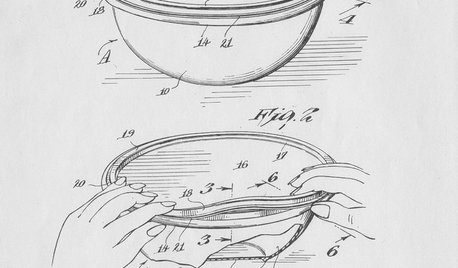
FEATURESHow Tupperware’s Inventor Left a Legacy That’s Anything but Airtight
Earl S. Tupper — and his trailblazing marketing guru, Brownie Wise — forever changed food storage. His story is stranger than fiction
Full Story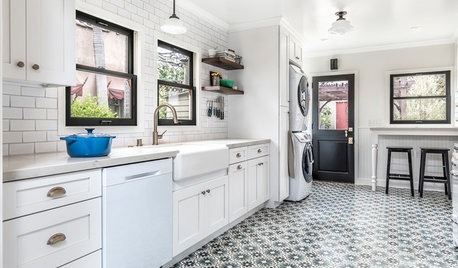
KITCHEN DESIGN11 Enduring Kitchen Ideas From the Industry’s Biggest Event
We visited the Kitchen and Bath Industry Show and found that many familiar kitchen features appear to be here to stay
Full Story
GARDENING FOR BUTTERFLIESGardening for the Bees, and Why It’s a Good Thing
When you discover how hard bees work for our food supply, you may never garden without them in mind again
Full Story
DECLUTTERINGHow to Go Through a Deceased Loved One’s Belongings
A professional organizer offers sensitive and practical advice on sorting through a loved one’s things
Full Story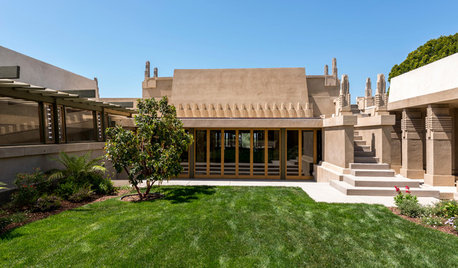
MOST POPULARExclusive Video of Wright’s Jaw-Dropping Hollyhock House
Immerse yourself in the stunningly restored Frank Lloyd Wright masterpiece
Full Story
MOVINGWhy So Many New U.S. Homes Are Supersized
A bigger share of new homes sold in 2015 were 4,000 square feet or more compared with before the recession. But that could change
Full Story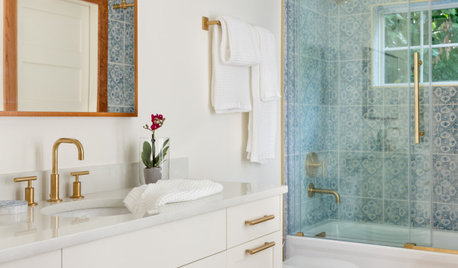
REMODELING GUIDESHow to Remodel a Bathroom
Create a vision, make a budget, hire the right pros, choose your style and materials, and get the bathroom you want
Full Story
KITCHEN CABINETSChoosing New Cabinets? Here’s What to Know Before You Shop
Get the scoop on kitchen and bathroom cabinet materials and construction methods to understand your options
Full Story
MOST POPULARThe Polite House: On ‘No Shoes’ Rules and Breaking Up With Contractors
Emily Post’s great-great-granddaughter gives us advice on no-shoes policies and how to graciously decline a contractor’s bid
Full Story
LIFEThe Polite House: On Dogs at House Parties and Working With Relatives
Emily Post’s great-great-granddaughter gives advice on having dogs at parties and handling a family member’s offer to help with projects
Full Story
maddielee