

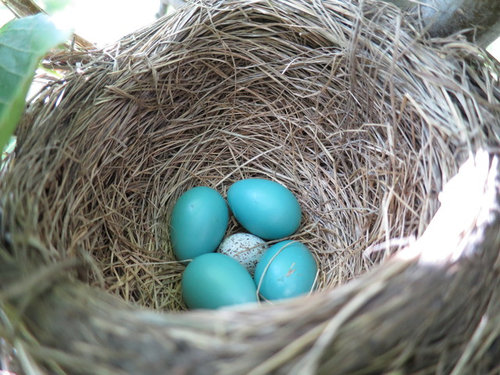
American Robin nest with cowbird egg?
8 years ago
Featured Answer
Sort by:Oldest
Comments (12)
 8 years agolast modified: 8 years ago
- 8 years ago
Related Discussions
Will human touch cause a Robin to abandon its nest?
Comments (39)I had an interesting situation at our house. Bought a flower planter and left it on our front porch about chest high off the porch. I saw a bird's nest appear a couple weeks later but never saw a bird so I tossed the nest into the bushes to mulch. Then I saw the flowers were trampled and looked to see why and found 3 Robin's eggs in the flower bed. I used utensils to retrieve the nest from the bushes and carefully laid the 3 eggs into the nest. All the while the mama Robin was squawking at me. I checked and saw the bird returned to the nest and was doing some tidying up. Then low and behold she reclaimed the nest. Later that same day I saw 4 eggs as she apparently had one in reserve. She is nesting nicely now and we can't wait to see her little hatchlings come to life. I did handle the nest by hand at first when I tossed it but who knows if the bird cared. It makes sense that birds don't have a sense of smell....See MoreWill a bird sit on another bird's nest
Comments (6)There are some birds that lay their eggs in another birds nest. The Cuckoo, Cowbird, Whyda, Honeyguide and Black-headed Duck come to mind. "These birds, called brood parasites, lay their eggs in another bird's nest and let the other bird parents feed and raise their chicks. The "egg abandoner" is then free to mate again and lay more eggs in another nest. The cuckoo is the best known brood parasite and an expert in the art of cruel deception. Its strategy involves stealth, surprise and speed. The mother removes one egg laid by the host mother, lays her own and flies off with the host egg in her bill. The whole process takes barely ten seconds. Cuckoos parasitize the nests of a large variety of bird species and carefully mimic the colour and pattern of their own eggs to match that of their hosts. Each female cuckoo specializes on one particular host species. How the cuckoo manages to lay eggs to imitate each host's eggs so accurately is one of nature's main mysteries."...See MoreOn Finding Nests...
Comments (12)It really helps if you put a zone in your address, so we can tell if you live in a temperate climate, where the trees shed in winter. If they do where you are, THEN go out and start exploring for nests. You'll find them in the bare trees. I always discover an oriole pouch every year and it's always in a different tree. Once you see where they are, you'll get an idea of why they aren't so visible in summer. In breeding season, I watch for adult birds with insects in their beaks. When they travel with food, then they are taking it somewhere. I listen! You can hear babies when the parents approach. I watch for adult birds defending territory. When you get fussy wrens or catbirds, or swooping jays, they're protecting a nest. I look for haunts where I know they would likely build nests. My hawthorn trees or any tree with thorns are favs of mockingbirds. Study up on which birds use what kind of nest when you read about them or look them up. You need to know what birds are cavity dwellers, and what birds use mud to cement nests and what birds use unlikely places, like wrens (clothespin bags, boots, hanging baskets). We once uncovered and exposed a song sparrow's nest in the heart of a clump of fountain grass one foot off the ground. Keep in mind that most birds seek secretive places to sit their eggs for a reason. Their babies are exposed to predators and they are at risk, especially when the parents are off foraging....See MoreEastern Phoebe: question re: fledgling birds' first flight from nest
Comments (64)My phoebes had skipped a year of nesting in their usual place (above the porch light fixture near my office door). My mirror set-up had scared them away. I should have realized that birds do not "like" mirrors -- but I didn't think about it at the time. I did see a bird pecking all day at the mirror, looking behind it, then pecking angrily at it when seeing the "intruder" again. That bird came back the next day to peck at the mirror again. I felt sorry for him wasting his time. But, I didn't think about the phoebes reaction being the same. So, they never nested there last year. I removed the mirror, but they still did not return to nest there this spring. Instead, they nested on another side of the house -- under our raised deck (same as last year). But, after the 1st brood was fledged -- THEY MOVED BACK TO THEIR OLD NESTING SPOT! So, the phoebes apparently got fed up with the disturbances created by our toy poodle (who is let out onto our raised deck several times a day.) The poodle would be walking directly over their nest, and possibly pissing over their nest. The nest building started May 25, 2021 and completed on the 30th or 31st. The mother was sitting on the nest on May 31, and there were 2 eggs in the nest. So, the first egg was likely delivered on May 30. By June 3, there were 5 eggs. All the eggs hatched on June 17 -- so, exactly 2 weeks after the last egg was laid. Interesting that all eggs hatched on the same day, even though each egg was laid a day apart. When I peeked, all the shells were gone. So, even tho I didn't see it, I assume that the parents removed all the egg shells. I also see the parents flying away with baby-bird poop. The poop looks like worms, and the parents carry it away from the nest. They either drop it or eat it (it is undigested food). Today is June 23, and the parents are often very busy bringing food. The bay birds are still too small to see without using a mirror over the nest. Here is a link to a very interesting article from 1937, detailing the observations of nesting habits of phoebes as studied over a 3-yr period. A few interesting details: Female does all the nest building. Incubation starts at varying times - sometimes after 3rd egg, sometimes after 4th, sometimes after 5th. The male apparently does none of the incubation. After fledging, the young birds remain close to the nest, getting farther way as the days pass. Both parents still feed the young after they fledge -- feeding them for periods of up to 18 days. Reliance on the parents gradually decreases. The parents may eventually show harsh treatment of the young to get them to go out on their own. Interesting. https://sora.unm.edu/sites/default/files/journals/auk/v059n03/p0410-p0417.pdf...See More- 8 years ago
- 8 years ago
- 8 years ago
- 8 years ago
- 8 years agolast modified: 8 years ago
- 8 years ago
- 8 years ago
- 7 years ago
 7 years ago

Related Stories
GARDENING FOR BIRDSWhat to Know About Birds Nesting in Your Yard
Learn how to observe, record data and help ornithologists with NestWatch’s citizen science project understand bird trends
Full Story
GARDENING GUIDESBackyard Birds: How to Care for American Goldfinches
The American goldfinch is a bright-in-the-summer visitor and one of the only vegetarian songbirds. Here's how to give them a healthy habitat
Full Story
GARDENING GUIDESBackyard Birds: Healthy Home Habitats for Northern Flickers
These colorful woodpeckers found across the U.S. and Canada love berries, seeds and ants and often nest in deep burrows in trees
Full Story
EDIBLE GARDENSA Formerly Weedy Lot Now Brims With Edibles and Honeybees
Photographers transform their barren backyard into an oasis filled with fruit, vegetables, honey, eggs and more
Full Story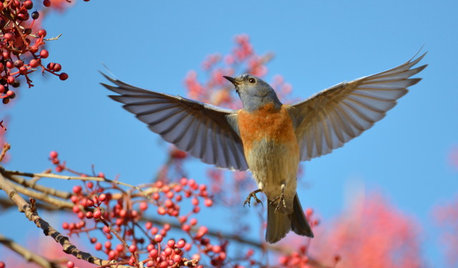
GARDENING GUIDESHow to Bring the Joy of Bluebirds to Your Garden
Attract these beautiful songbirds with nesting habitat and food sources, including berry-producing trees and shrubs
Full Story
FALL GARDENING7 Reasons Not to Clean Up Your Fall Garden
Before you pluck and rake, consider wildlife, the health of your plants and your own right to relax
Full Story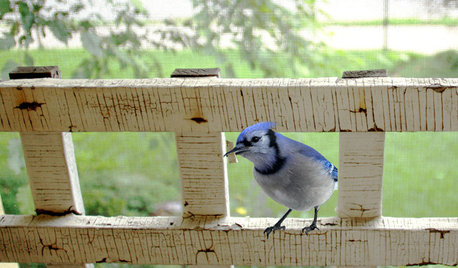
GARDENING FOR BIRDSBackyard Birds: Meet Some Clever and Curious Jays
Boisterous jays provide plenty of backyard bird-watching in winter. Here’s how to identify all the varieties and welcome them into your yard
Full Story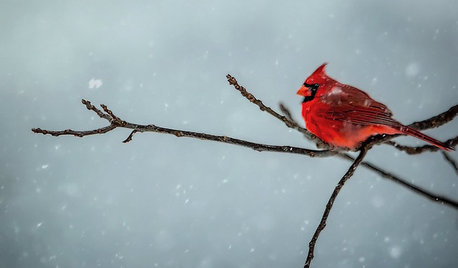
GARDENING GUIDESBackyard Birds: Northern Cardinals in the Snow, and Other Red Birds
Brilliant crimson feathers make these friends stand out in a crowd
Full Story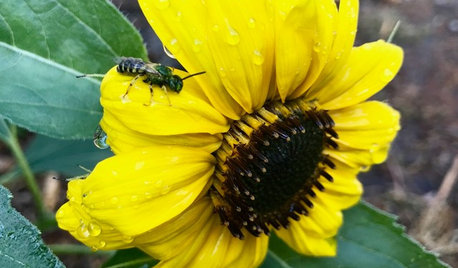
GARDENING GUIDESSee Your Garden Through the Eyes of Its Wildlife Visitors
Want to design for beneficial wildlife? Learn how to recognize cover, shelter and habitat for pollinators and songbirds
Full Story
EARTH DAYThe Case for Losing the Traditional Lawn
Work less, help the environment and foster connections by just saying no to typical turf
Full StorySponsored
More Discussions
jojoco