

food safety question--olives!
8 years ago
Featured Answer
Sort by:Oldest
Comments (11)
Related Discussions
home food safety tests?
Comments (21)Im new to canning and food preservation. So much information..".to trust or not to trust." Yet even though I hear the bottom line is to trust only the approved testing, I find that I still have questions and have a hard time trusting my end product simply because of the possibility of human error. I read that there is a field test similar to a home pregnancy test that they use to detect botulinum in 20 minutes. Has this been made available to the public and if not, why? It's a great business plan if someone can come up with the science behind it. And Ill buy it. Home testing might also make it possible for others to continue testing since the government quit. But while we're waiting for that, I would like for someone to clarify some information. I know botulinum is the bacteria which produce the toxin (gases) that can hurt us. The bacteria die at a certain temp for a certain time. I have heard some people suggest to boil a home-canned product thoroughly after opening/before eating it to kill the bacteria, but this seems insufficient as the toxins would still be present. It is not the live bacteria that are toxic but the gases that they produce. Also the bacteria die when exposed to oxygen. Does boiling somehow neutralize toxins? Or is this just false information? Lastly, since bacteria produce gases, is it safe to conclude that jars tainted with bacteria would definitely have some outward visible signs of contamination? I know that other bacteria can infect food, but in my short studies I have been led to believe that botulinum is the hardest to kill. But do all bacteria produce gases and therefore provide some indication that food isn't safe?...See MoreFood safety of butcher block countertop?
Comments (12)Are you talking about the wood/butcherblock itself harboring bacteria, or the whether a particular wood finish for a wood/butcherblock countertop is food safe? You might try searching the Kitchen forum, because both have been discussed a great deal in many threads. Also, http://faculty.vetmed.ucdavis.edu/faculty/docliver/Research/cuttingboard.htm from which: "Our research was first intended to develop means of disinfecting wooden cutting surfaces at home, so that they would be almost as safe as plastics. Our safety concern was that bacteria such as Escherichia coli O157:H7 and Salmonella, which might contaminate a work surface when raw meat was being prepared, ought not remain on the surface to contaminate other foods that might be eaten without further cooking. We soon found that disease bacteria such as these were not recoverable from wooden surfaces in a short time after they were applied, unless very large numbers were used. New plastic surfaces allowed the bacteria to persist, but were easily cleaned and disinfected. However, wooden boards that had been used and had many knife cuts acted almost the same as new wood, whereas plastic surfaces that were knife-scarred were impossible to clean and disinfect manually, especially when food residues such as chicken fat were present. Scanning electron micrographs revealed highly significant damage to plastic surfaces from knife cuts. ... wooden cutting boards are not a hazard to human health, but plastic cutting boards may be."...See MoreFood Safety---outbreaks and recalls
Comments (1)Same with spices and transparency. Those few that source directly and lab test in house. "...Traditionally, in the spice trade, middlemen take a large cut of the profits. By the time a jar of nutmeg from a farmer in Sri Lanka arrives in your grocery store, there could be up to 15 collectors, brokers, traders, processors, wholesalers, and distributors involved, estimates Nadee Bandaranayake, owner of Cinnamon Tree Organics, another mission-driven spice company. This also means it usually takes years for that nutmeg to reach a supermarket shelf, Bandaranayake says. And when it arrives, it could be mixed with nutmeg from a handful of countries, not to mention artificial colors, flavors, and preservatives to make the seeds or ground powder look homogenous and stay fresh. By that point, she says, “the whole purpose of adding spices to a meal — the flavor, the aroma, the color, the health benefits — to me, they’re all kind of gone.”..." HERE Cut out the middleman and give the farmers fair wages, not poverty wages....See MoreFood Safety Quiz From The FDA
Comments (52)I know from my own experience living in Europe that electrical resistance appliances (like toasters and tea kettles) operate with noticeably more speed and umph under 220-240 voltage there than the 110 v common here. I just checked - my Hario gooseneck kettle (designed for pour-over coffee making) holds like 800 ml and is 900 watts. A quick look on Amazon UK shows they sell tea kettles in the 2500-3000 watt category (watts are watts, regardless of voltage). So a standard tea kettle for sale there would provide 3 times as much heat as the one I use. Yes, that will work faster. Microwave ovens don't work with electric resistance, and I suspect the wattage (power) of units there and here would be more comparable....See More- 8 years ago
- 8 years ago


Related Stories
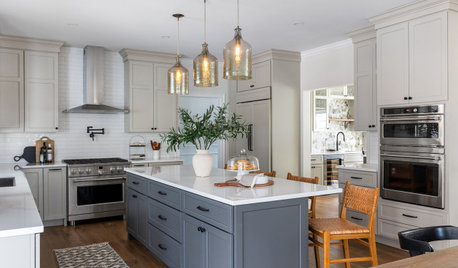
REMODELING GUIDES6 Tricky Questions to Ask When Planning Your New Kitchen
Addressing these details will ensure a smoother project with personalized style
Full Story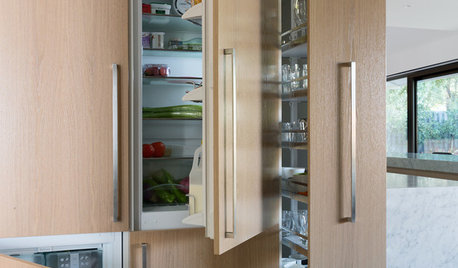
KITCHEN DESIGNHow to Waste Less Food
Here are 9 relatively painless ways to throw away less food and stretch your grocery dollars
Full Story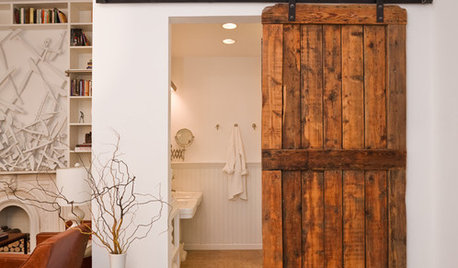
DOORS5 Questions to Ask Before Installing a Barn Door
Find out whether that barn door you love is the right solution for your space
Full Story
WORKING WITH PROS12 Questions Your Interior Designer Should Ask You
The best decorators aren’t dictators — and they’re not mind readers either. To understand your tastes, they need this essential info
Full Story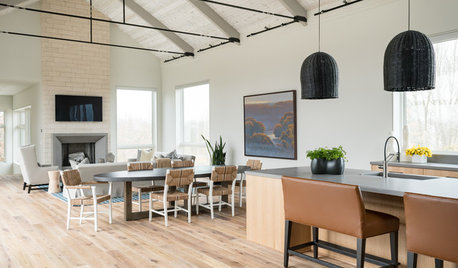
ARCHITECTURE5 Questions to Ask Before Committing to an Open Floor Plan
Wide-open spaces are wonderful, but there are important functional issues to consider before taking down the walls
Full Story
HEALTHY HOMEGet the Lead Out: Lead Safety at Home
Keep your family safe by properly testing for and dealing with lead in old painted surfaces, water and soil
Full Story
UNIVERSAL DESIGN10 Questions to Ask Before Sharing Your Home With Aging Parents
Honest conversation is key to deciding whether it makes sense to have your parents move in with you
Full Story
REMODELING GUIDES9 Hard Questions to Ask When Shopping for Stone
Learn all about stone sizes, cracks, color issues and more so problems don't chip away at your design happiness later
Full Story
STAIRWAYSHow to Get Your Stair Runners Right
Add peace and quiet, beauty (and safety) with a pretty carpet on the stairs
Full Story
KITCHEN DESIGNA Cook’s 6 Tips for Buying Kitchen Appliances
An avid home chef answers tricky questions about choosing the right oven, stovetop, vent hood and more
Full StorySponsored

Columbus Design-Build, Kitchen & Bath Remodeling, Historic Renovations
lindac92