

December - Share Your Money Saving Tips
8 years ago
last modified: 8 years ago
Featured Answer
Sort by:Oldest
Comments (9)
- 8 years agolast modified: 8 years ago
Related Discussions
Money saving tips.
Comments (4)There is a GW Money Saving Tips forum that is terrific! Lots of ways to stretch the $s or recycle what you have. By the way, I get all my buckets FREE from drywallers and restaurants. There is also FREECYCLE. Let folks know you are a recycler...amazing the calls you might get. Of course, a thank you pan of brownies, or some garden fresh produce, sweetens the memory. In a previous neighborhood, I provided the leaf bags for a friend with a forest of shedding trees. This friend put the leaves thru a leaf shredder for me and called when he had 4-6 bags ready for hauling!...See MoreShare tips on saving money on gardening
Comments (22)For nursery pots I started using old food cans, and pop bottles cut down to about 6" deep, & poke a few holes in the bottom. Seed saving from one year to the next. You can't save seed from foods you buy at the grocery store because most are hybrid varieties and won't reproduce true. You have to start with heirloom varieties, and save those seeds. Make my own compost from leaves, paper, grass and kitchen waste. You cut down on a lot of trash by composting junk mail and boxes that canned pet food comes in. Cardboard makes good compost, as does newspapers, paper grocery sacks, clothing labels, dryer lint and cereal boxes. Make your own seed starting mix from peat and perlite, because it needs to be sterile to prevent damping off and diseases that attack tender new growth. I make my own potting mix from screened compost, sand, used seed starting mix and perlite. It's especially important to have a loose, open potting mix with my nursery pots that have straight sides (cans and pop bottles) otherwise it would be too difficult to get plants out of them for up-potting. Cheryl...See MoreYour best money-saving tip...
Comments (7)saftgeek I love the name so I must reply. These were things we did that saved us big bucks (a lot of this we learned from the GW posts - so that is tip Number 1 - use the GW forums): - Shopped locally for appliances. Seemed counter intuitive until we actually went shopping and bought from a local dealer - not the applinace person recommended by the builder. - Installed my own home automation (light controls), home security system, whole house audio. Also installed the recessed lighting. Home automation is cool - but very expensive if you sub it out. If you know how to wire up a toy train set you can do most of this stuff. The recessed is also expensive - but really nice to have (was a must have for me). Installing the recessed requires some basic knowledge of electrical and I worked with my electrician to make sure it was done right and to code. - Re-designed the original house plan (purchased on line) to remove what my architect called "ginger bread". Lot's of fancy railings, ornate pieces - these cost big bucks. Also re-designed the roof pitch and floor plan so that standard trusses could be used - removed the fancy roof taper that was in the original design. By doing these thinsg we actually gained more square footage but reduce the overall cost to built the structure. - Went with the first grade of architectural shingle but not the better grads that I wanted initially. It was a lot of money that was better spent in other areas. - Purchased some of the plumbing supplies on line (like stainless sinks) - but only the items where we found the savings to be worth it. - Did our own landscaping which was basically bed prep and mulching. We will do our own planting next year. - Installed my own water softener and whole house water filter. We have a well - hard water and iron. Contractor wanted 8000 dollars to treat it. Read a bunch of posts on the Plumbing Forum and did my own system for 1100 dollars - and it works! - Spent ZERO dollars on interior designers. DW used the GW to learn about colors and posted questions on various design issues. They saved us a bundle - and the advise was really good! - In general, made sure that every price we got from the vendors used by the builder were reasonable. In many cases - we paid a little more for goods but we received design services rhat we felt were worth it. If we found an item that we felt was too high - we bought it ourselves. In a few cases (like our granite) we were very unhappy with the pricing from the prefered vendor so we shopped and found our own - now our builder uses them instead. - Made as few changes as possible after construction started. All of the chnages we made after construction started were very minor - in the cosmetic category. - Got a construction loan that converted to the mortgage - same rate for both phases. Typically they charge more for the construction phase. - Did the double move (sold house - moved to rental - then moved to new house). If we had attempted a single move, we would have been in deep dodo (probably would be paying 2 motgages right now). For the first move, we packed ourselves but had the movers take everything. In the second move, we packed everything, but we moved a lot of the bulky but light stuff ourselves using a rental truck. Second move was about 30% cheaper than the first. - When clearing our very dense tree'd lot, we decided to hide the root matt and brush on the lot to let it rot over time. The cut trees were stacked neatly in 2 places. This was cost avoidance - the cost to take all that bulky mess will be a lot less after it rots for a few years. - I maintained the silt fence myself after I realized I was getting charged a lot of money each time it had to be repaired. - Installed my own humdidifiers and a hot water recirculting system. The combo of these 2 things saved us about 2 grand. That's about all I can think of. Best of luck with your project....See MoreUnconventional Money saving tips - revisited
Comments (13)I assumed you (AdelladeBella) were being facetious. You know there are so many other issues going on in that family. To allow one's paid babysitter to send one's children into daycare/childcare/church situations that one hasn't screened and where one has NO IDEA of who is taking care of one's children should be criminal. Perhaps, or maybe obviously, those parents and that babysitter are not aware that pedophiles target church situations for the exact reason that everyone assumes "Oh, we are all nice Christians. We all love children. We don't do background checks of our workers." There was a report about a church within the last month on one of the three major networks (I think it was a major national story) about the pastor and all of the elders sexually molesting the children, even the infants. They only caught them because the pastor went to the police and confessed. I have worked in VBS as planner, director, games leader, etc. and my children are going to be safe and well-cared for as the first issue. Boy, I now need to cool down. I feel sorry for those children, who don't seem to be very wanted by anyone, even the church. You know, I'm sure that it was a hard situation for the VBS staff, but truthfully, I think dying on a cross for all of the workers, and those unwanted kids, trumps that bad situation....See More


Related Stories
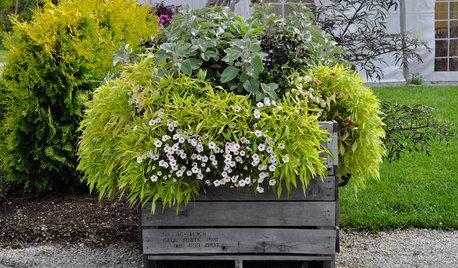
GARDENING 101This Pro Tip Will Save You Money on Your Container Garden
For large planters, use empty milk cartons or plastic bottles to fill extra space before putting in potting soil
Full Story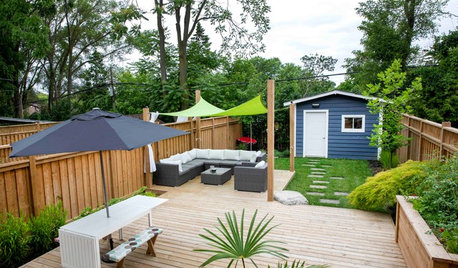
HOUZZ TV LIVEHouzz Editor Shares 3 Tips for Upgrading Your Yard
In this video, Annie Thornton uses a family’s home in Toronto to show how to create your own relaxing outdoor space
Full Story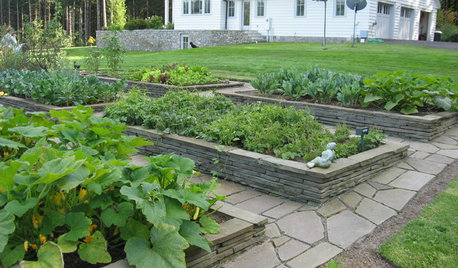
LANDSCAPE DESIGNThese 4 Planting Strategies Can Save You Money
Use seeds, plugs and more to keep costs down as you fill out your garden
Full Story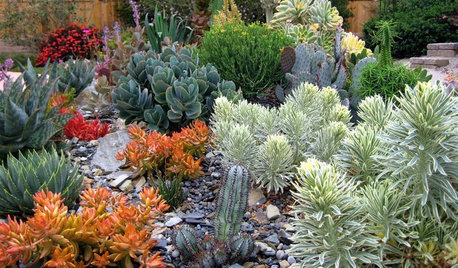
GARDENING GUIDESHow to Save Money on Succulents
Do you love succulents but not their price tags? Find out how to enjoy their beauty for less
Full Story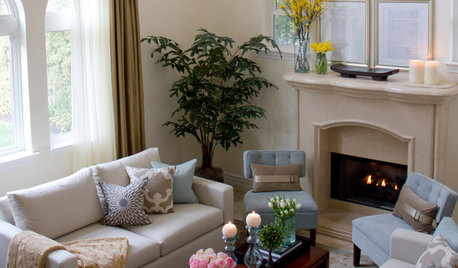
SELLING YOUR HOUSESave Money on Home Staging and Still Sell Faster
Spend only where it matters on home staging to keep money in your pocket and buyers lined up
Full Story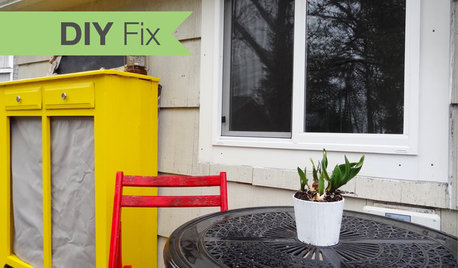
Replace Your Windows and Save Money — a How-to Guide
Reduce drafts to lower heating bills by swapping out old panes for new, in this DIY project for handy homeowners
Full Story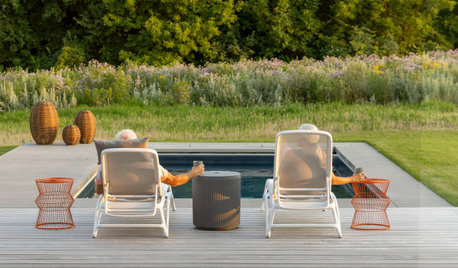
LANDSCAPE DESIGNWhere to Save Money on a Landscape Renovation
These 10 cost-saving ideas from professionals can help you stretch your budget without sacrificing style or quality
Full Story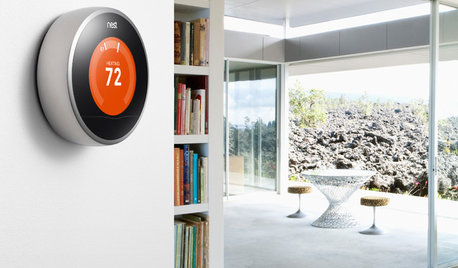
GREEN BUILDINGEasy Ways to Save Money on Energy Bills This Winter
Simple changes can cut down your electric and gas bills as the days get colder
Full Story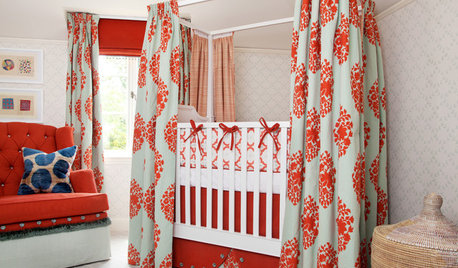
KIDS’ SPACES8 Tips for Peaceful Bedroom Sharing With Baby
Enjoy better sleep, neatness and enough space for everyone’s things with these shared-room strategies
Full Story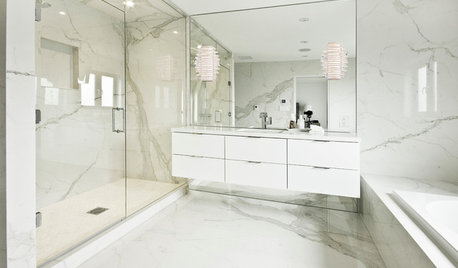
DECORATING GUIDESLook-Alikes That Save Money Without Skimping on Style
Whether in woodwork, flooring, wall treatments or tile, you can get a luxe effect while spending less
Full Story
User